

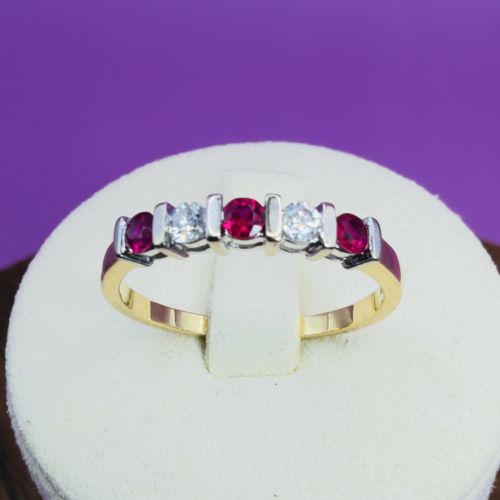
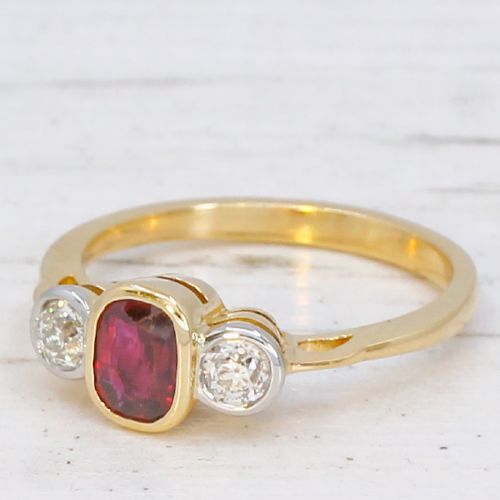
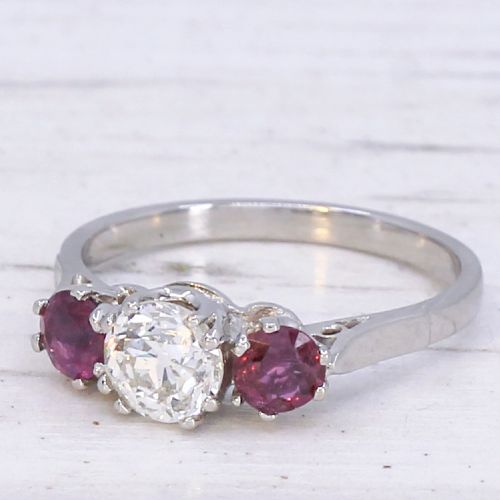
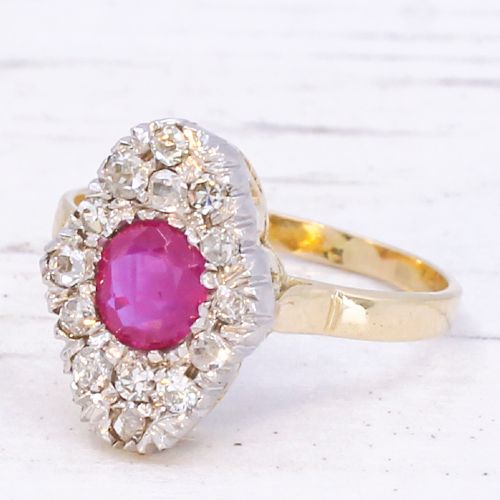


Red Stone Ring
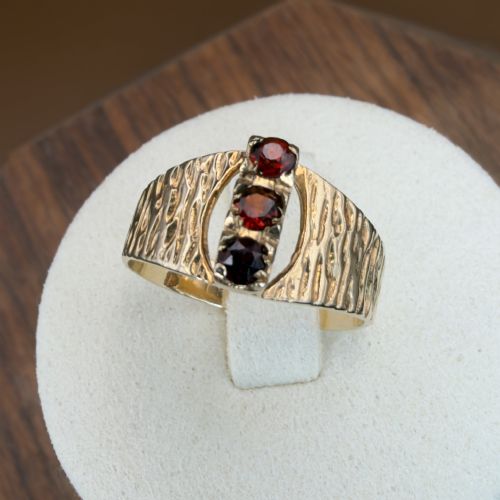
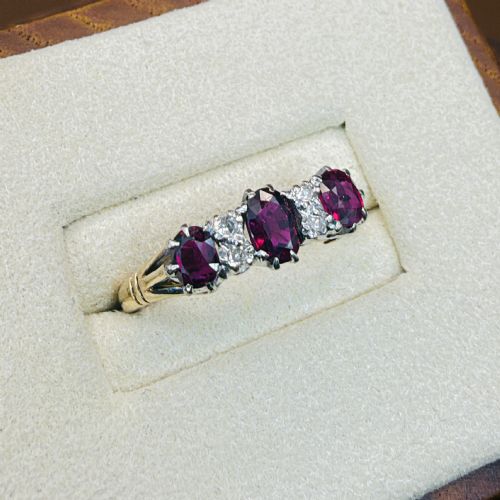
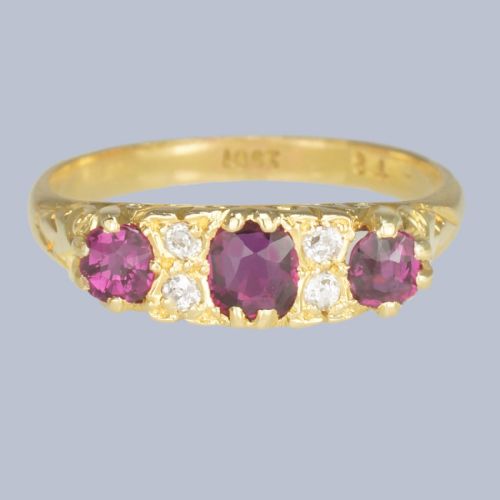
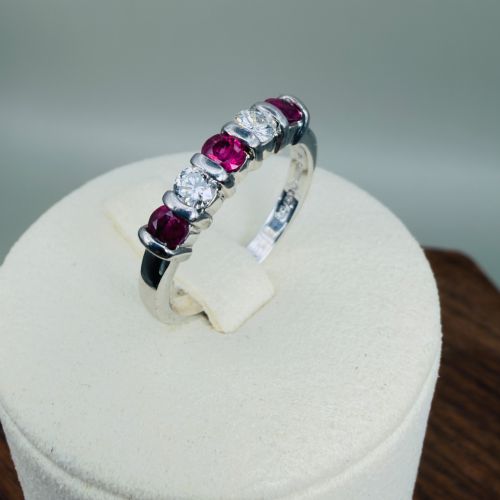
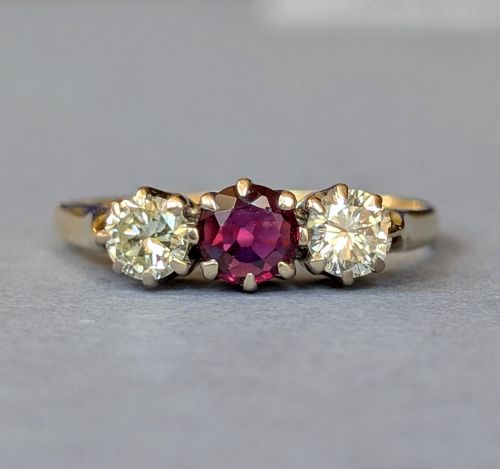
A red stone ring brings together the deep crimson of ruby, garnet, spinel, and carnelian with the bright fire of old cut diamonds.
Red Stone Ring
A red stone ring encompasses pieces set with vibrant red gems alongside diamonds, spanning the Victorian, Edwardian, Art Deco, and mid-century periods. The selection on this page relies heavily on 18ct yellow and white gold, platinum, and 9ct gold settings.
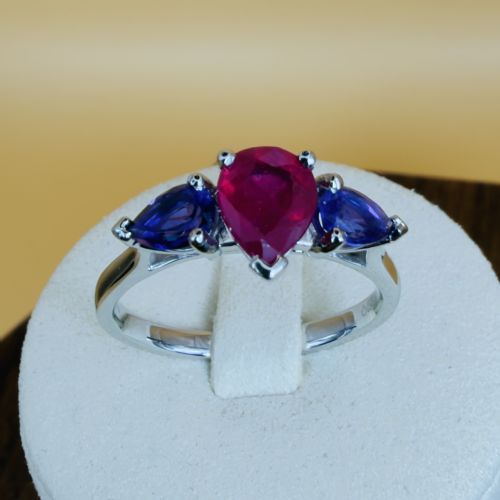
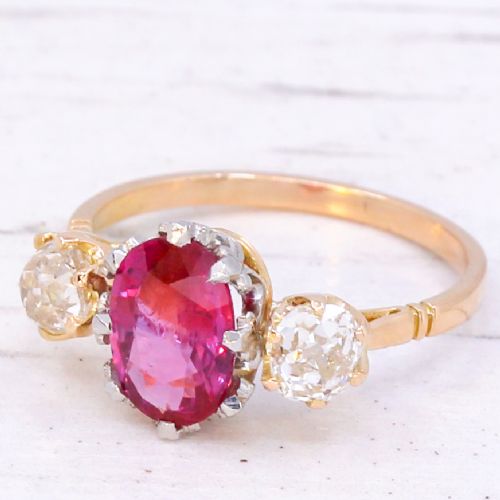
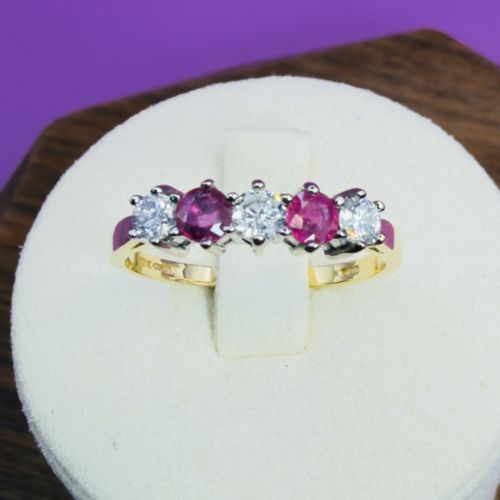
The forms range from traditional five stone band rings and three stone trilogy configurations to cluster designs, starburst gypsy mounts, and solitary carnelian or spinel settings. Victorian and Edwardian examples sit alongside vintage 1940s and 1960s pieces.
Buyers seeking a red stone ring will find that ruby is the predominant crimson gem paired with diamond, though garnet, spinel, and carnelian also appear across the nineteenth and twentieth centuries.
How they were made
Goldsmiths utilised 18ct yellow gold, 18ct white gold, 9ct gold, and platinum to fabricate the bands and settings for these crimson stones. Gemstones were secured using claw settings, flush starburst gypsy mounts, and cluster arrangements.
Diamonds incorporated into these designs primarily feature old cut facets, contributing a softer sparkle than modern brilliant cuts. Gemstones such as rubies, garnets, and spinels were shaped into round, oval, and pear cuts to fit the specific demands of each Victorian or Art Deco mounting.
Listings incorporate items spanning the 18th century, Victorian, Edwardian, Art Deco, and 1950s periods, utilising yellow gold, white gold, and platinum.
What varies in quality
The distinction between tiers rests upon the origin and clarity of the red gemstone, with natural unheated rubies and Burmese spinels commanding greater attention than treated stones or alternative red minerals. Metal weight and the precision of the gold or platinum work also dictate the calibre of the piece.
Subtleties in the hand-cut facets of old cut diamonds and the structural integrity of the claw or starburst settings separate standard production from finer artisan output across the Victorian and Art Deco eras.
The Red Stone Ring Glossary
- Old cut
- A diamond facet style popular in the nineteenth and early twentieth centuries, characterised by a smaller table and a high crown that produces a distinct, softer candlelit glow.
- Trilogy ring
- A ring featuring three primary stones set in a row, often symbolising the past, present, and future.
- Gypsy ring
- A style where stones are flush-set directly into the thick metal band, sometimes surrounded by a starburst engraving.
- Cluster ring
- A design grouping a central gemstone surrounded by a halo of smaller stones, typically diamonds, to maximise overall visual impact.
Red Stone Ring: Frequently Asked Questions
What periods do these rings come from?
The pieces span from the late eighteenth century through the Victorian, Edwardian, and Art Deco eras into the mid-twentieth century.
Victorian and Edwardian examples showcase traditional claw settings and gypsy mounts, while Art Deco and mid-century pieces lean towards geometric cluster arrangements and white gold.
Which red stones are used?
Ruby is the primary red gemstone found in these mounts, frequently accompanied by diamonds in three stone or five stone configurations.
Other red stones appearing in the selection include garnet, carnelian, and natural spinel set into gold or platinum bands.
How do I wear an antique ring daily?
Wearing an antique ring daily requires mindful care, particularly with older gold settings and softer natural gemstones.
It is advisable to remove the ring during heavy manual work or swimming to protect the claws and the red stone from knocks.