





Red Club Chair
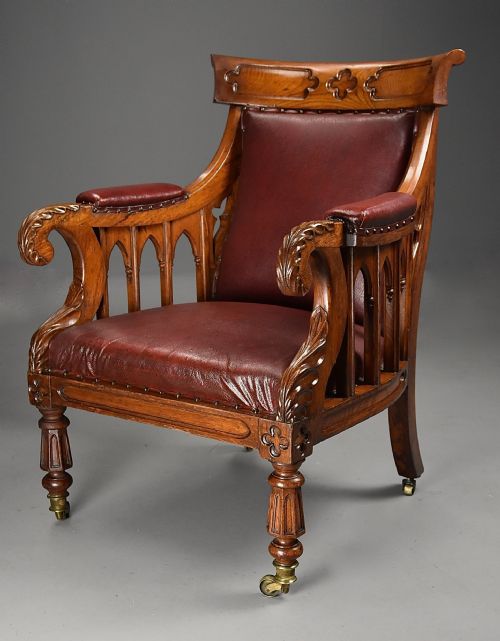
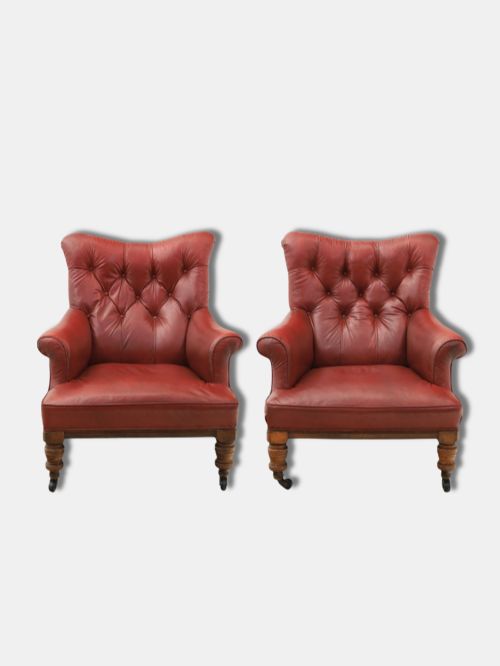
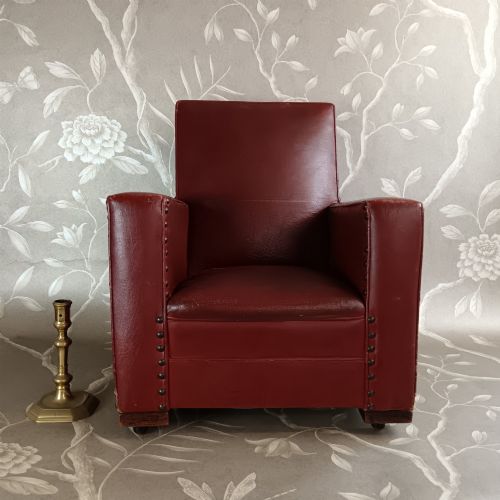
A red club chair brings deep oxblood leather and generous proportions into a room, offering a seat built for hours of reading.
Red Club Chair
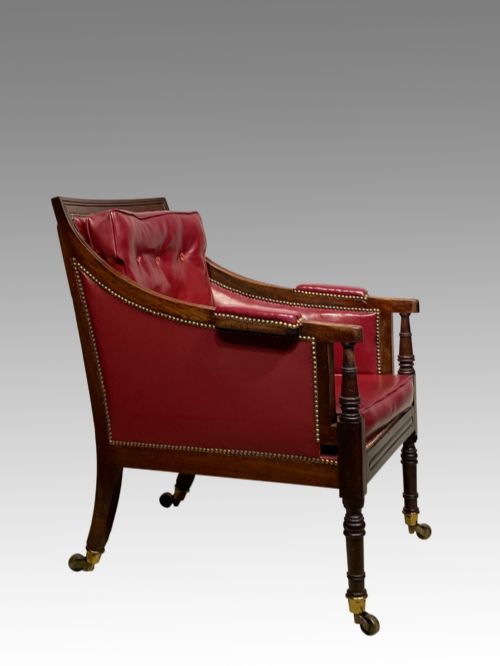
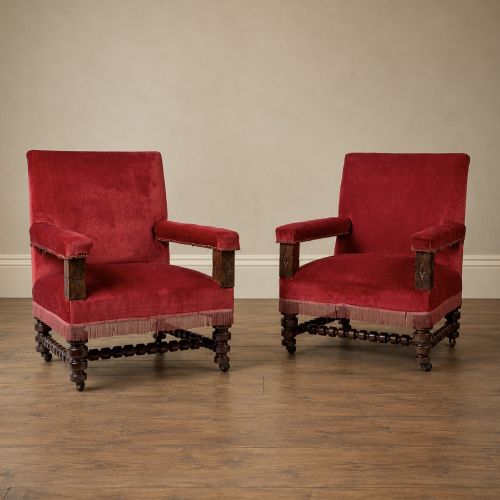
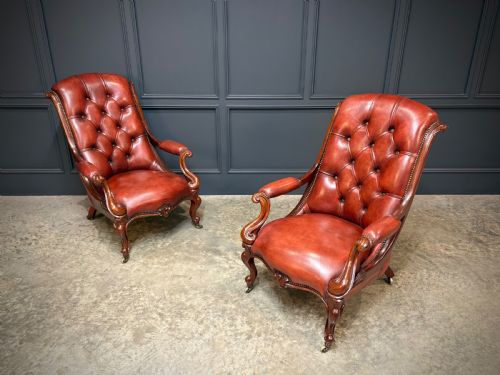
When you search for a red club chair, you encounter sturdy armchairs designed for comfort, frequently upholstered in rich shades of leather, rexine, or velvet. These pieces span several centuries, drawing on forms from the Georgian and Regency eras through to the Victorian period and the 1920s.
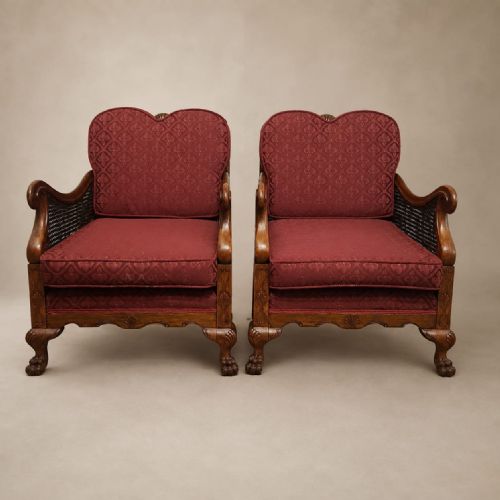
The version you are most likely to meet on this page is a substantial library or armchair featuring dark wood frames in mahogany, oak, or walnut. Many examples arrive in pairs, dressed in buttoned red leather or oxblood upholstery.
Makers and designers of these forms worked within various aesthetics, ranging from Sheraton Revival and French Renaissance Revival to Art Deco and Gothic revival styles. The resulting forms function equally well as fireside seating or study armchairs.
How they were made
Frames rely upon timbers such as mahogany, oak, walnut, and general wood construction, shaped to support deep seats and substantial armrests. Joinery methods secure these heavy wooden skeletons before any upholstery takes place.
Upholstery involves materials like leather, red oxblood rexine, velvet, wool, and woven carpets such as kilim and Ushak Turkey variants. Brass elements sometimes accent the leatherwork through decorative tacks or nailheads.
Red Club Chair Retail Price Guide 2026
Typical asking prices for red club chair among the pieces listed under this phrase on Sellingantiques today, from the lower quarter to the upper quarter. They describe what is for sale here now, not the wider market.
Listings span the 18th, 19th, and 20th centuries, incorporating materials like mahogany, oak, brass, leather, velvet, and wool.
What varies in quality
The caliber of a piece rests heavily on the integrity of its wooden frame and the depth of its upholstery materials. Solid mahogany or oak structures provide a stability that lesser woods simply cannot match over decades of daily sitting.
Surface finish and leather patination dictate the visual weight of the chair. Hand-tinted leathers that show natural wear outshine uniform synthetic replacements, while detailed wood carving elevates simple seating into high-status library furniture.
Howard and Sons·Gillows
The Red Club Chair Glossary
- Bergere
- An enclosed upholstered armchair with wooden frames and split cane panels on the sides or back. These French-inspired seats appeared in various forms throughout the nineteenth and early twentieth centuries.
- Rexine
- A leathercloth material made from cotton fabric coated with nitrocellulose, oil, and pigments, often used as a durable alternative to hide on twentieth-century furniture.
- Kilim
- A flatwoven textile originating from the Near East and Central Asia, utilised by makers like Howard and Sons to upholster distinctive club chairs.
- Oxblood
- A deep, dark shade of red resembling dried blood, commonly found on nineteenth and twentieth-century leather club chairs and library seating.
Red Club Chair: Frequently Asked Questions
What is a club chair?
A club chair is a deep, comfortable armchair designed for relaxed sitting, traditionally upholstered in leather.
These pieces often feature low backs and generous armrests built around sturdy wooden frames.
How do I date a leather armchair?
Dating relies on examining the timber frame construction, the stitching methods, and the style of the legs.
Cabinetmaking techniques and upholstery materials shifted noticeably from the Georgian period through the Victorian era and into the 1920s.
What is rexine upholstery?
Rexine is a manufactured fabric coated to imitate the appearance and texture of genuine leather.
It gained popularity during the early twentieth century as a hard-wearing and practical alternative for armchairs.
Where should I place a library chair?
A library chair fits naturally beside a bookshelf, near a fireplace, or paired with a reading lamp.
Their substantial proportions make them ideal anchor pieces for studies, living rooms, and large reading corners.