



Qing Dynasty Textile
A qing dynasty textile brings imperial court work and traditional needlecraft into a room, offering rich silk and metallic thread detail.
Qing Dynasty Textile
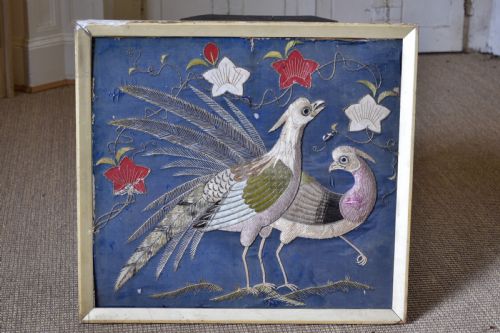
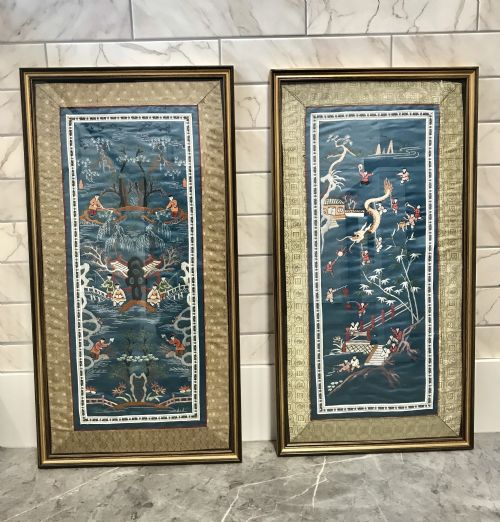
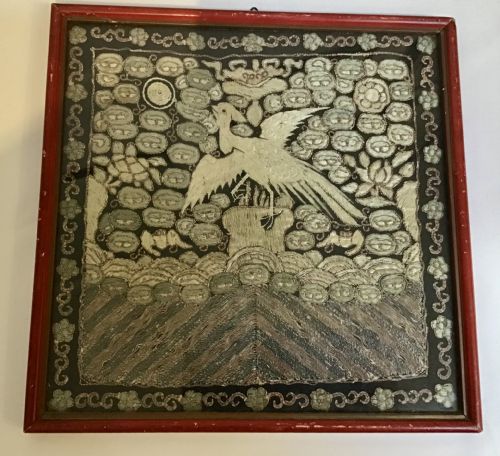
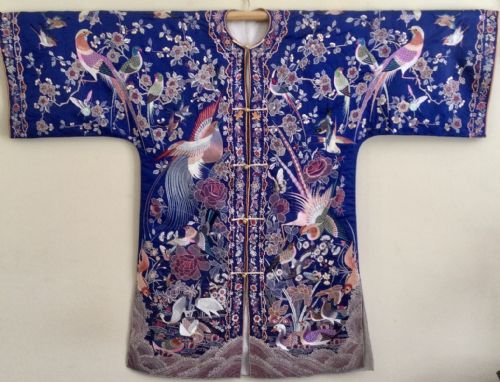
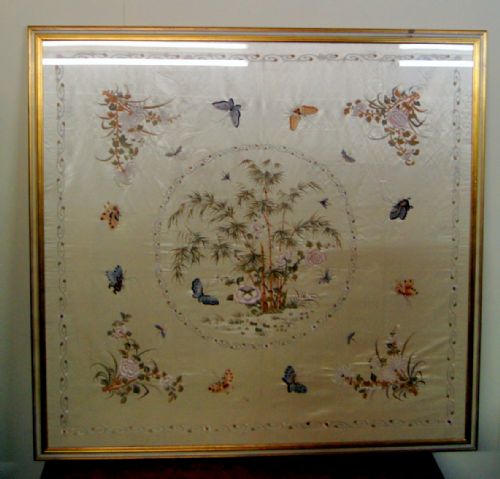
A qing dynasty textile encompasses embroidered panels, rank badges, rugs, trays, and framed silk art dating from the nineteenth and early twentieth centuries. These pieces display traditional motifs including dragons, garden birds, mandarin ducks, trees, and figures worked in fine needlework.
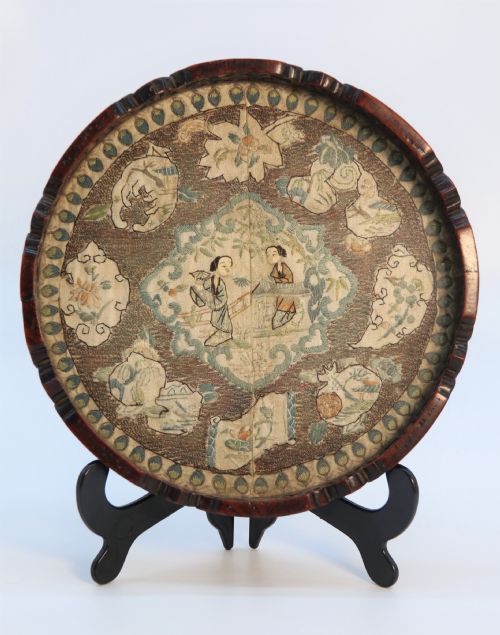
The selections available here range from mid-nineteenth century pillar rugs and carved hardwood trays inset with silk to 1900s hand sewn panels under glass and child's robes. Each item represents a distinct branch of Chinese decorative and textile art from the period.
How they were made
These textiles rely primarily on silk grounds worked with silk and metallic thread embroidery, executed by hand to render intricate figures, birds, and floral scenes. Pigments also appear on pieces like paintings on silk, while structural items incorporate carved hardwood and glass.
Floor coverings such as Ningshia pillar rugs utilise wool and cotton alongside traditional weaving methods suited to Northern Chinese production. Framing under glass and mounting within carved trays protected the delicate silk work from everyday wear.
Listings span the nineteenth and early twentieth centuries, featuring materials such as silk, metallic thread, wool, cotton, glass, and hardwood.
What varies in quality
The standard of execution in the needlework sets individual pieces apart, distinguishing fluid pictorial shading and dense metallic thread placement from simpler stitching. The complexity of the subject matter, such as multi-figure dragon scenes or detailed mandarin ducks, indicates the skill of the original maker.
The condition and survival of the secondary materials, whether carved hardwood frames, glass covers, or wool pile in rugs, influence the overall integrity of the piece. Intact panels preserved under glass retain their pigment and silk sheen more effectively than exposed textiles.
The Qing Dynasty Textile Glossary
- Rank badge
- A square embroidered patch worn on the surcoat of officials to denote their civil or military grade. These badges feature specific birds and animals that identify the wearer's exact rank within the imperial hierarchy.
- Pillar rug
- A specialised carpet woven to wrap around structural columns in traditional Chinese halls and temples. They typically feature vertical designs such as dragons or floral motifs that read correctly when viewed cylindrically.
- Ningshia
- A northern region in China renowned for producing distinctive carpets and rugs using wool and cotton. Pieces from this area often display subdued palettes and symbolic Buddhist or Daoist motifs.
- Embroidery
- The craft of decorating fabric using a needle to apply thread or yarn. In these pieces, silk and metallic threads create pictorial scenes of birds, trees, and figures.
- Chinoiserie
- A European style reflecting Chinese artistic influences, though pieces here represent authentic Qing Dynasty production rather than Western imitation.
Qing Dynasty Textile: Frequently Asked Questions
What is a qing dynasty textile?
A qing dynasty textile includes embroidered panels, rank badges, robes, and rugs produced during the Qing period. These items showcase traditional Chinese craftsmanship in silk, metallic thread, and wool.
They reflect the visual culture, official hierarchy, and decorative arts of China during the nineteenth and early twentieth centuries.
How were rank badges used?
Rank badges were worn on the front and back of official robes to signal the precise status of imperial civil servants and military officers. Each animal or bird signified a specific grade within the court.
Over time, many of these badges were removed from garments and framed as independent works of art.
Where were pillar rugs placed?
Pillar rugs were woven specifically to wrap around wooden columns in temples, palaces, or official residences in Northern China. Their designs were composed so that the imagery appeared upright when viewed around a round post.
These carpets combined wool and cotton to withstand the weight and structural demands of their architectural setting.
How should silk textiles be displayed?
Framed silk panels and embroidered pieces should be kept away from direct sunlight to prevent the fading of natural dyes and silk threads. Glass glazing helps protect delicate needlework from dust and atmospheric moisture.
Maintaining stable indoor humidity levels ensures the long-term preservation of both the silk ground and the metallic threads.