

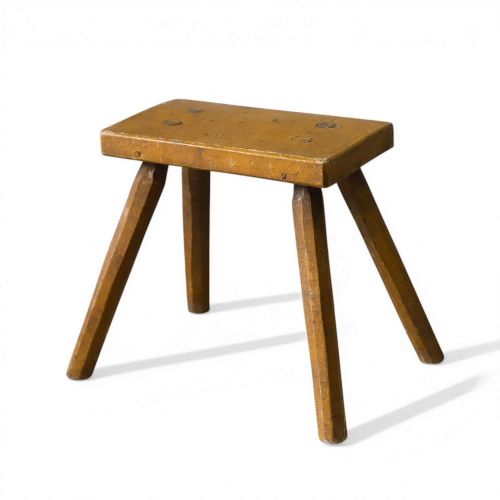
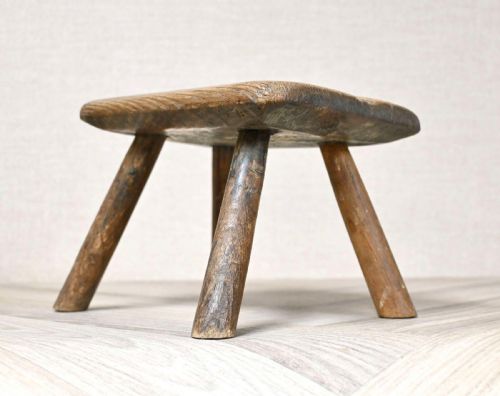
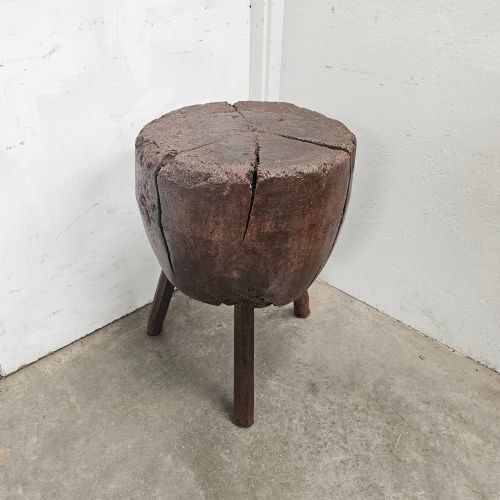
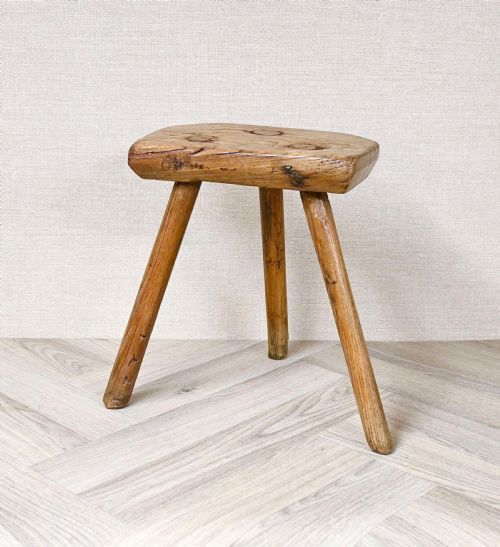
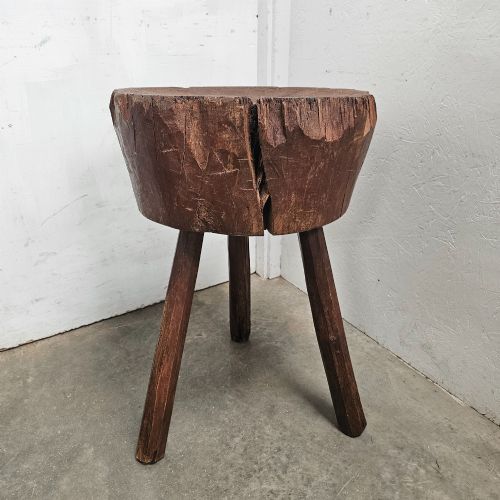
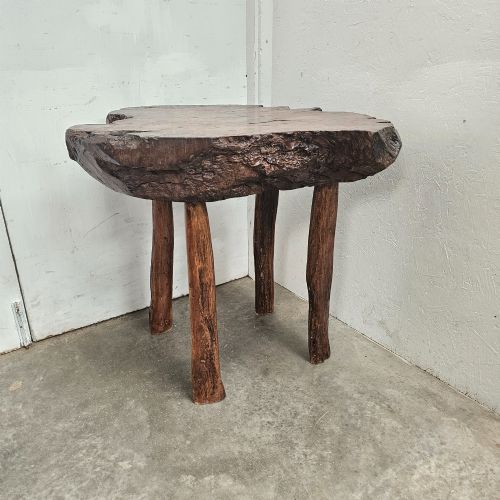


Primitive Timber Stool
A primitive timber stool offers honest, unpretentious craft that grounds a room with genuine age and tactile grain.
Primitive Timber Stool
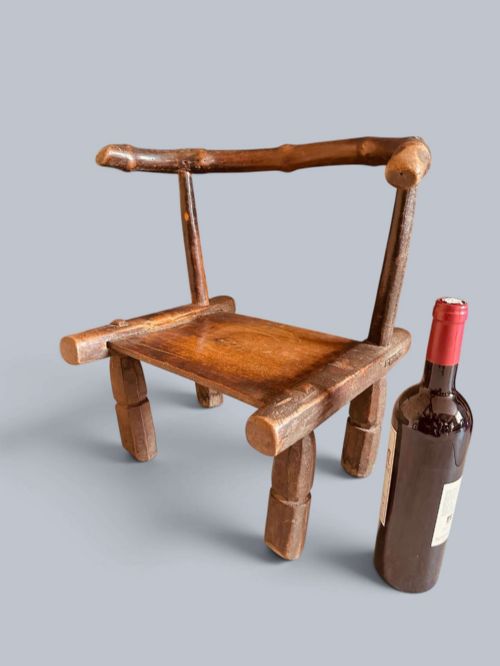
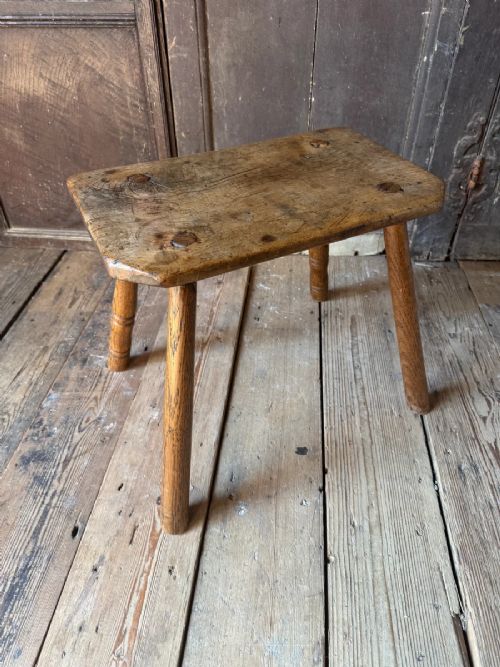
When someone searches for a primitive timber stool, they encounter functional seating fashioned by rural makers for everyday domestic or agricultural use. These utilitarian objects embody rustic folk art and vernacular design traditions, stripped of decorative pretence.
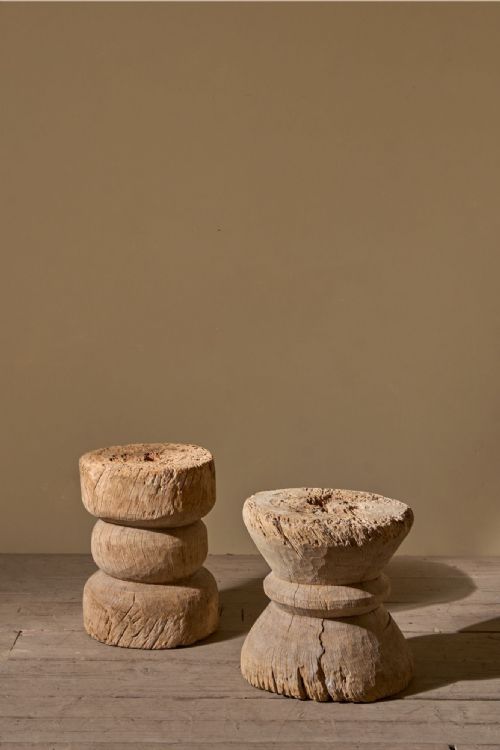
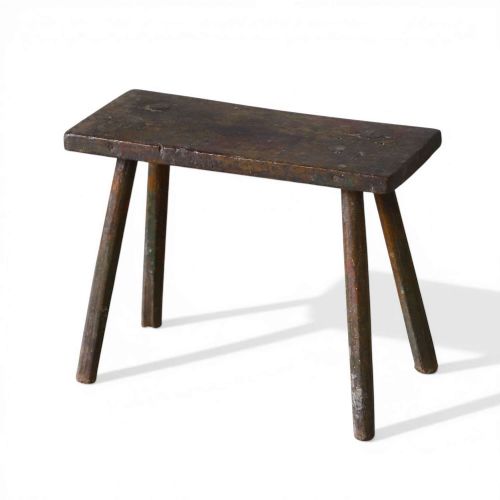
The versions most commonly met on this page span the eighteenth and nineteenth centuries, featuring simple forms shaped from solid woods. Examples range from low milking stools and hearth seats to occasional tables and chopping blocks.
Makers utilised whatever local timber came to hand, creating sturdy seating that often displays the marks of working lives in farmhouses and workshops. Their appeal lies entirely in this unpolished honesty and straightforward utility.
How they were made
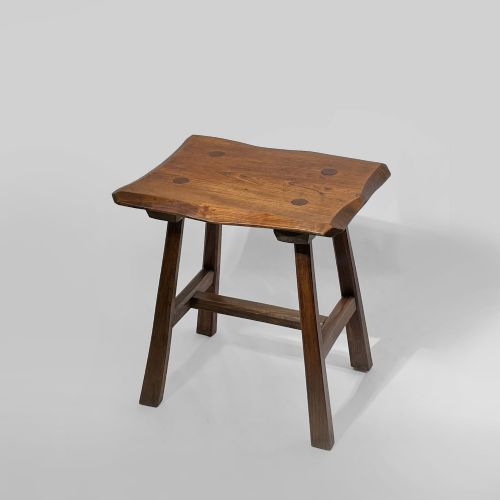
Constructed entirely from solid timber, these pieces rely on straightforward joinery and natural forms. Makers frequently combined contrasting woods, such as sycamore seats with ash legs, or relied upon beech, elm, and oak.
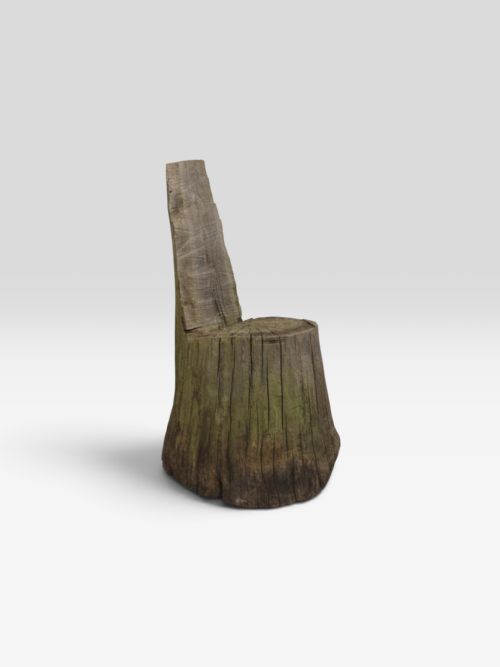
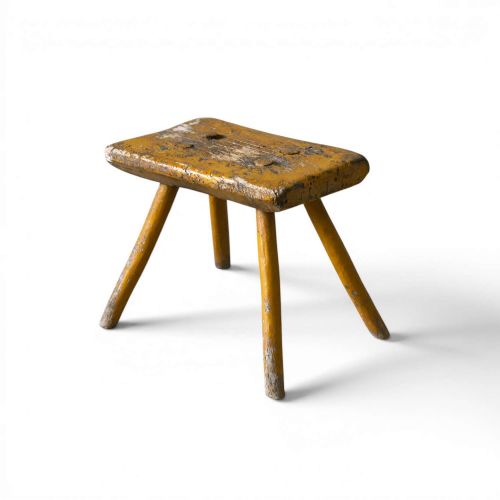
Surfaces often retain traces of original paint finishes, including ochre, yellow, and green, alongside the deep patination acquired through decades of handling. Natural tree trunk sections and burr thuya also formed the basis of these utilitarian items.
Primitive Timber Stool Retail Price Guide 2026
Typical asking prices for primitive timber stool among the pieces listed under this phrase on Sellingantiques today, from the lower quarter to the upper quarter. They describe what is for sale here now, not the wider market.
Several Eastern European milking stools survive coated in their original ochre, yellow, and green paint.
What varies in quality
The character of a primitive timber stool depends heavily on the integrity of its surface patination and the harmony of its proportions. Pieces that retain their original dry paint finishes or show deep, untouched wear carry greater visual weight.
Structural honesty and the directness of the maker's intervention dictate the standing of an individual piece. Sculpted seats and unpretentious vernacular shaping elevate simple timber work into compelling sculptural forms.
The Primitive Timber Stool Glossary
- Vernacular
- Everyday design rooted in local traditions rather than academic architectural styles. These items were built by jobbing carpenters to serve specific local needs.
- Milking stool
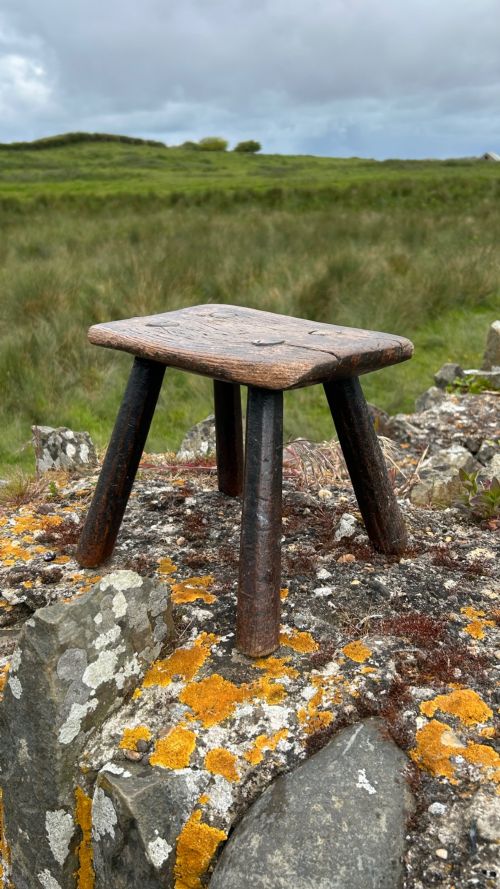
- A low, stable seat traditionally used by agricultural workers during milking. They typically feature three legs to stand steady on uneven barn floors.
- Patina
- The surface sheen and softening of edges developed through long use and age. This gradual change in wood and paint cannot be artificially replicated.
- Folk art
- Utilitarian objects made by self-taught makers without formal training. The aesthetic relies on direct expression and practical necessity.
Primitive Timber Stool: Frequently Asked Questions
How were milking stools used?
Agricultural workers used these low seats while milking livestock by hand in barns and fields. Their compact size and three-legged construction kept them stable on uneven earth.
Today, buyers place them beside chairs as small side tables or use them for low display in living spaces.
Are these stools comfortable to sit on?
They are designed for short periods of utilitarian work rather than long relaxation. Many feature sculpted or hollowed wooden seats that offer surprising comfort for their size.
Modern homes use them primarily as decorative accent pieces, plant stands, or occasional seating.
How do I care for old wood?
Keep these pieces away from direct heat sources and sudden humidity changes to prevent the timber from splitting. A light application of natural wax preserves the dry surface without building up an unwanted gloss.
Allow the natural patination to breathe rather than attempting to strip or refinish the antique timber.
What defines a primitive style?
Primitive design refers to unpretentious objects made for practical function without adherence to high-style academic furniture canons. Makers focused purely on utility, utilising basic tools and local timber.
This straightforward approach results in honest forms that complement contemporary and traditional interiors alike.