

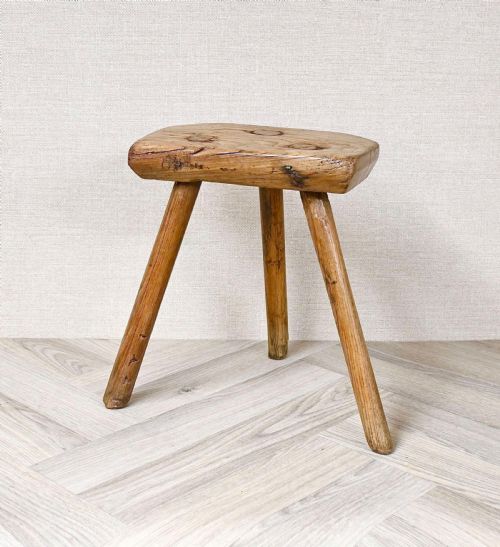


Primitive Three Leg Stool
A primitive three leg stool brings honest utility and rugged texture into a room, offering enduring simplicity through centuries of practical craft.
Primitive Three Leg Stool
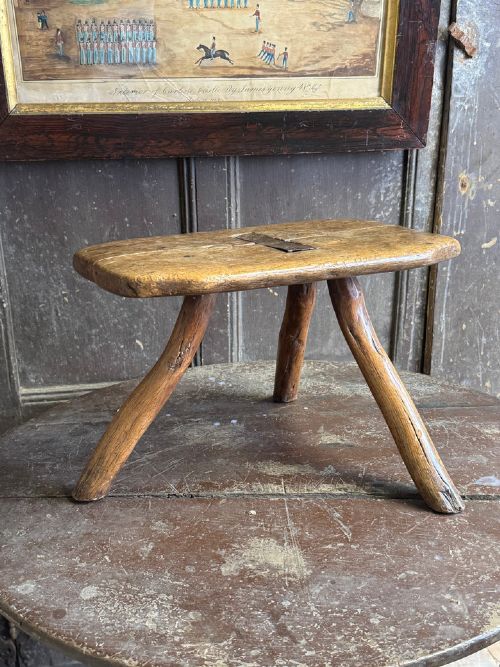
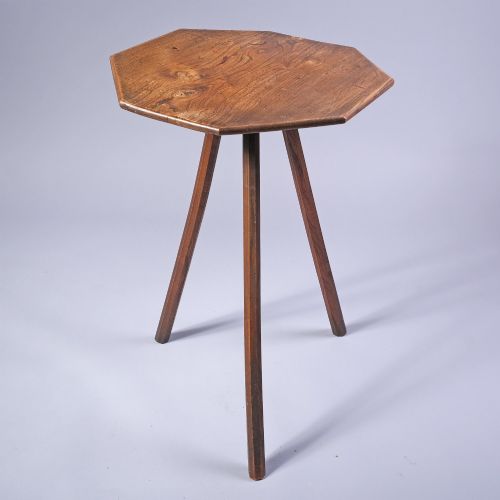
A primitive three leg stool represents the most basic form of seating and work surface, shaped by rural necessity across the eighteenth and nineteenth centuries. These pieces appear in forms such as milking stools, cutler's stools, and occasional tables, often tied to vernacular rural or rustic farmhouse traditions.
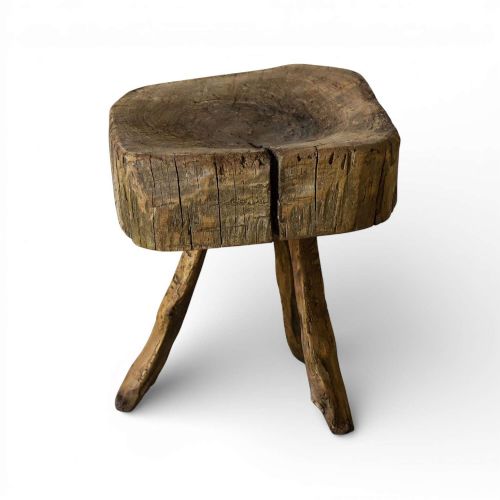
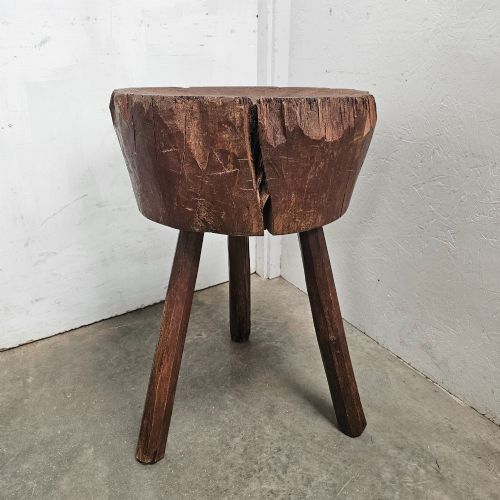
Buyers browsing for a primitive three leg stool encounter solid timber constructions originating from British, French, and Catalan traditions. The surviving pieces demonstrate functional origins, ranging from low seating to heavy chopping blocks raised on gnarled supports.
Materials and construction
Makers utilised available hardwoods like oak, elm, ash, and beech, selecting timber for strength and local availability. Legs are frequently splayed for stability on uneven floors and secured into slab tops using traditional wedged tenons.
Repairs tell the history of these objects, with blacksmith-made iron brackets and wire strengthening working joints that endured heavy daily use. Unrefined surfaces show the direct marks of chopping blocks, tree trunks, and hand tools without decorative pretense.
Primitive Three Leg Stool Retail Price Guide 2026
Typical asking prices for primitive three leg stool among the pieces listed under this phrase on Sellingantiques today, from the lower quarter to the upper quarter. They describe what is for sale here now, not the wider market.
Some nineteenth-century stools carry heavy blacksmith repairs, proving that even a humble dairy seat deserved a second chance.
Assessing quality and character
Quality in a primitive three leg stool rests in the integrity of the original timber and the honesty of its working life. Pieces with untouched patination and original gnarled supports stand apart from later replacements.
The balance between utilitarian wear and structural survival dictates the standing of each piece. Early blacksmith repairs and visible historic fixings add authenticity rather than detracting from the form.
The Primitive Three Leg Stool Glossary
- Vernacular
- Everyday objects designed for practical local use rather than high-style adherence. This style defines the unpretentious nature of rural seating.
- Splayed legs
- Legs angled outwards from the underside of the seat to provide maximum stability on uneven ground. This design prevents tipping in farmyards and workshops.
- Hedgerow timber
- Wood gathered directly from local hedges and woodland edges rather than commercially milled lumber. This accounts for the irregular, gnarled shapes of the supports.
- Cutler's stool
- A low working seat used by knife grinders and cutlers in industrial or workshop settings. These seats prioritise low-slung stability during manual labour.
Primitive Three Leg Stool: Frequently Asked Questions
What is a primitive three leg stool?
A primitive three leg stool is a functional seat or small table made by local makers using unrefined timber. They were shaped by hand for specific daily tasks in homes, farms, and workshops.
These pieces rely on three legs because a tripod design remains completely steady on uneven stone or earth floors. They reflect the unadorned aesthetic of eighteenth and nineteenth-century rural life.
How were these stools used originally?
These stools served ordinary workers, from milkmaids and shepherds to cutlers and butchers. Their low heights and sturdy builds kept workers stable during manual labour.
Over time, many functioned as makeshift side tables, chopping blocks, or occasional stands alongside primary furniture. Their utilitarian design meant they went wherever a sturdy surface was needed.
Where do these pieces come from?
The listings show origins spanning British, French, and Catalan workshops from the eighteenth and nineteenth centuries. Makers utilised local hardwoods native to their specific regions.
Regional differences appear in the choice of wood, such as beech and elm in France or oak and ash in Britain. Each area adapted the three-legged form to local agricultural practices.
How do I live with a primitive stool?
A primitive three leg stool fits easily into modern spaces as a bedside table, plant stand, or minimalist seat. Their small footprints make them useful in tight corners.
Treat the aged timber gently by avoiding excessive moisture and harsh chemical cleaners. The historic marks and repairs are part of the object's narrative history.