
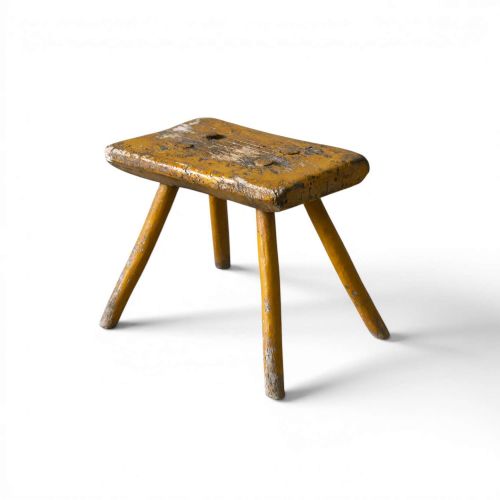
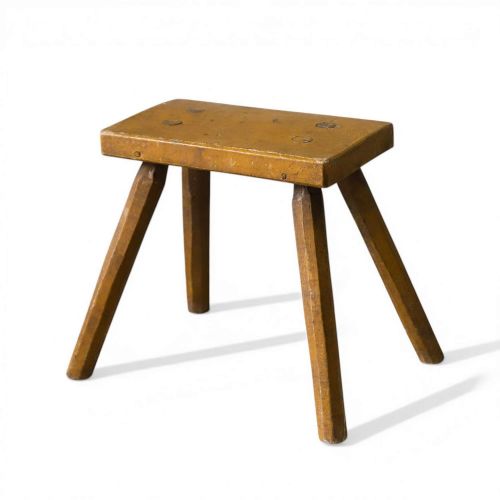
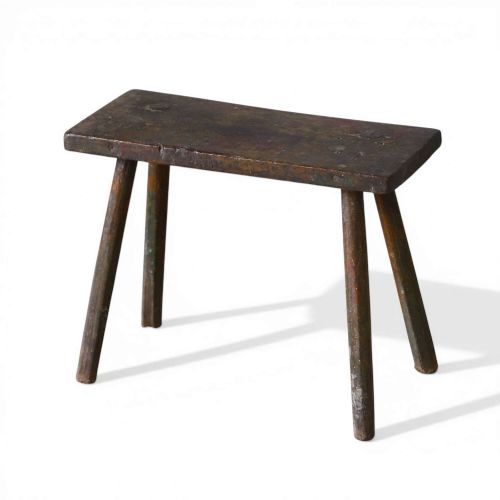


Primitive Footstool
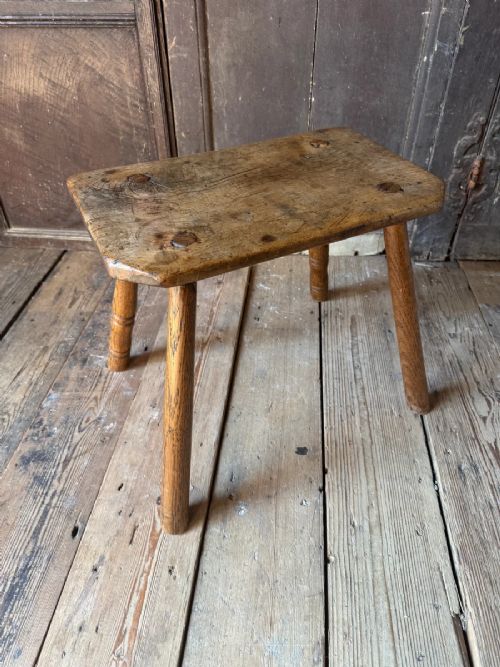
A primitive footstool offers honest utility and tactile warmth, bringing grounded country character and time-worn timber directly into daily living spaces.
Primitive Footstool
A primitive footstool encompasses low seating and supports originating from various vernacular traditions, including English country workshops and Eastern European homesteads. These pieces include hearth stools, milking stools, and small rustic tables that served practical daily needs in domestic spaces.
The versions most commonly met on this page date from the eighteenth and nineteenth centuries, alongside Edwardian examples and specific regional forms like French country seating and African tribal wooden stools. Their forms remain strictly utilitarian, shaped by the hands of local makers using available local woods.
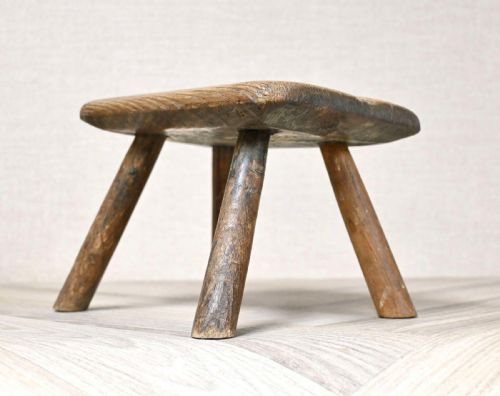
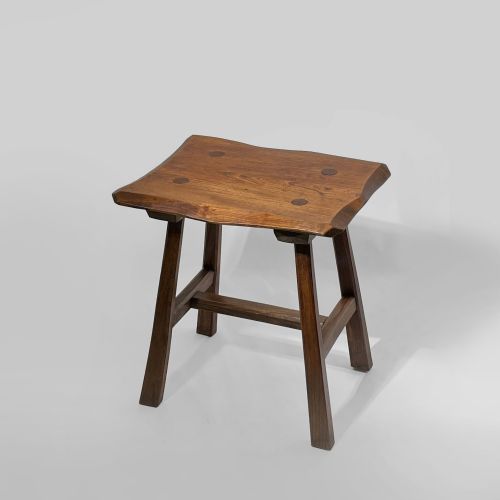
Each primitive footstool carries the distinct marks of rural craftsmanship, often displaying simple square or round tops supported by peg-joined legs. Their straightforward construction reflects an era when domestic objects were built entirely for purpose rather than ornamental display.
How they were made
Construction relies heavily on solid native timbers such as elm, ash, sycamore, pine, and oak, selected for sturdiness and local availability. Makers joined legs directly into thick wooden seats using traditional pegged or wedged joints to ensure long-lasting stability under heavy daily use.
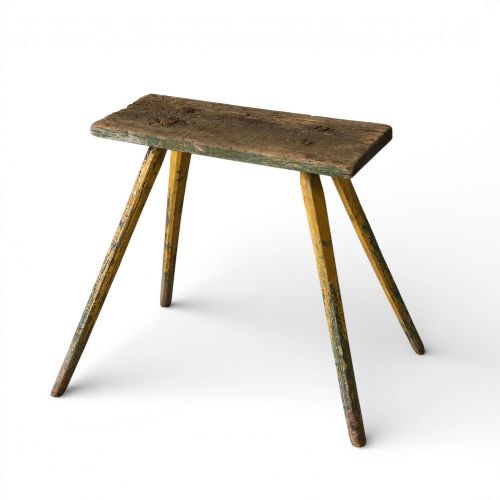
Many surfaces retain layers of original paint in ochre, yellow, green, or other pigments that have weathered over decades of domestic service. This applied colour protects the underlying timber while recording the aesthetic choices of past owners in rural homes.
Current listings feature timber materials including elm, ash, sycamore, pine, and oak across the eighteenth and nineteenth centuries.
What varies in quality
Quality rests primarily in the integrity of the timber and the honesty of the surviving surface finish, particularly where original paint remains intact. Pieces that display uncompromised patination and robust joint construction stand apart from those with excessive structural replacement.
The balance of proportions and the tactile character of the hand-carved seat surface distinguish exceptional vernacular examples from simpler workshop output. Grain movement and the natural weathering of the wood contribute significantly to the visual presence of the stool.
The Primitive Footstool Glossary
- Vernacular
- Architecture or objects made by local craftsmen using traditional methods and local materials, without the influence of academic architectural styles. These items prioritize pure utility over fashionable design.
- Hearth stool
- A low seat designed specifically for sitting close to an open fireplace or hearth for warmth and cooking tasks. They typically feature low heights to remain beneath the draft of the chimney.
- Milking stool
- A small, usually three-legged seat designed to be stable on uneven earthen floors while the user milked livestock. Their simple tripod construction prevented rocking on farmyard ground.
- Patina
- The surface sheen and textural change acquired by materials through age, wear, and handling over many decades. It serves as a visual record of an object's history and use.
Primitive Footstool: Frequently Asked Questions
How were these stools used?
These stools served practical roles around the home and farm, functioning as seats near fireplaces, milking platforms in barns, or low stands. Their modest height made them versatile aids for daily chores in restricted spaces.
Because they were easily moved, occupants carried them to wherever a low seat was required during routine household tasks.
How do I live with a primitive footstool?
A primitive footstool integrates easily into modern interiors as a subtle low table, a plant stand, or an authentic accent piece beside seating. Their quiet timber tones and weathered surfaces complement both traditional and minimalist spaces.
Placing them out of direct heat sources helps preserve the stability of the dry timber and any fragile historic paint layers.
How can I tell periods apart?
Differentiating periods relies on observing tool marks, timber selection, construction methods, and the nature of any surface paint. Eighteenth-century examples often display hand-hewn surfaces and pegged joints characteristic of early rural joinery.
Nineteenth-century and Edwardian pieces may show slightly more standardised timber preparation while retaining the simple forms typical of vernacular craftsmanship.