



Pottery Spaniel Statues
Pottery spaniel statues are charming Victorian mantelpiece ornaments that bring traditional English character to any room.
Pottery Spaniel Statues
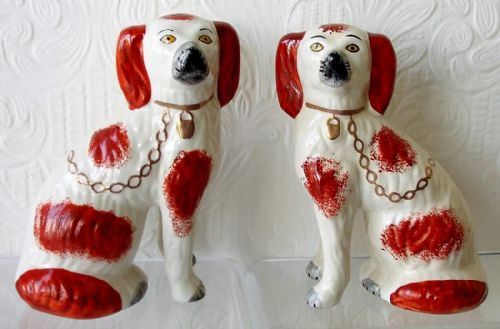
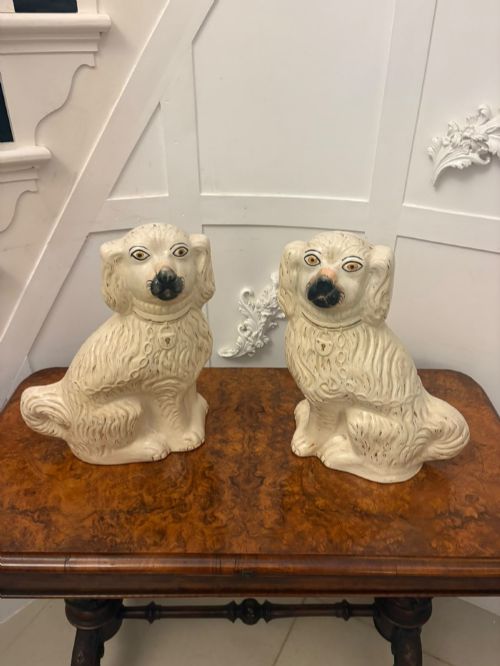
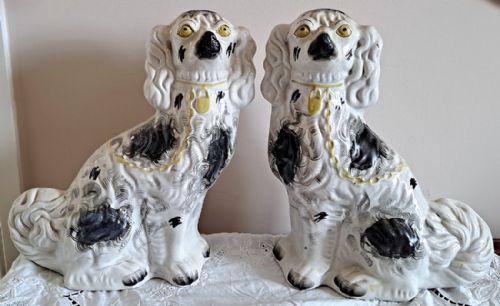
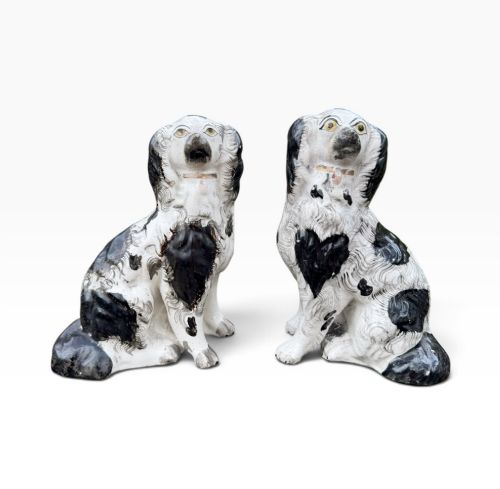
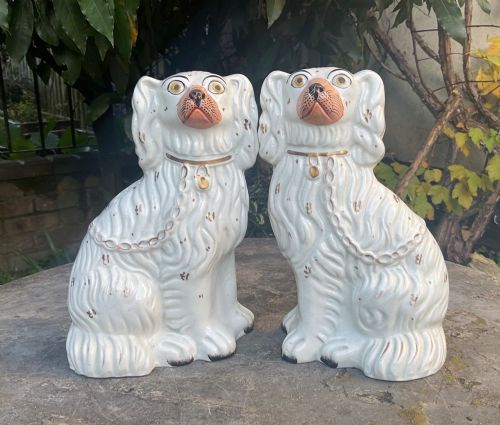
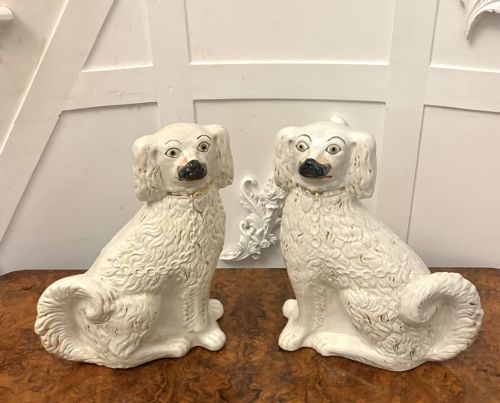
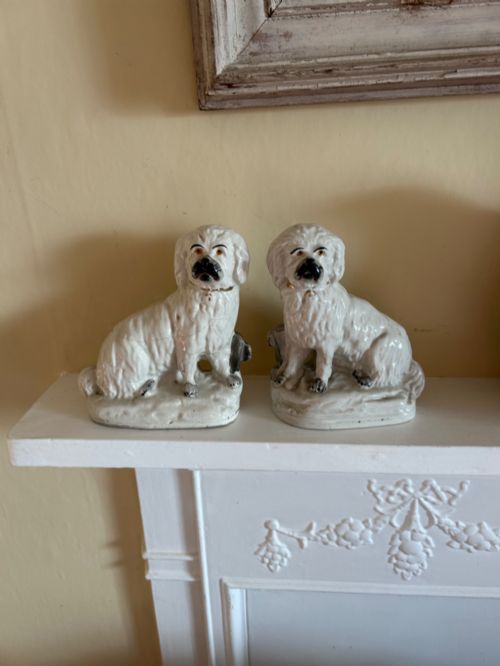
Pottery spaniel statues capture the steady loyalty of Victorian hearth dogs in cheerful pairs designed to sit at either end of a mantelpiece. These decorative figurines emerge from the nineteenth century in earthenware bodies, often finished with painted details.
Most examples found here date from the Victorian period, spanning the late nineteenth century around eighteen-sixty to eighteen-eighty. Makers shaped these ceramic figurines as seated dogs, sometimes incorporating blue cushions or gold leaf accents.
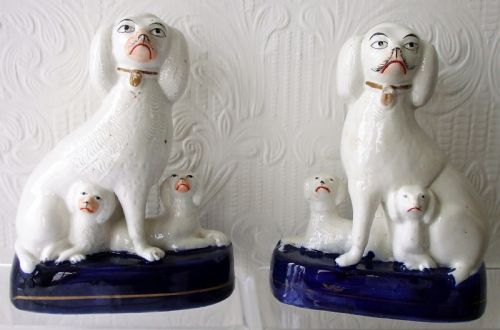
While spaniels dominate the selections, the listings also include related dogs such as poodles with pups and Maltese terriers. These English traditional pieces reflect a domestic fondness for canine companions during the reign of Queen Victoria.
How pottery spaniel statues were made
Potters shaped these earthenware figures using ceramic moulds before firing the clay to create a solid base. Artisans then applied a smooth glaze to seal the surface and provide a glossy finish suitable for display.
Pottery Spaniel Statues Retail Price Guide 2026
Typical asking prices for pottery spaniel statues among the pieces listed under this phrase on Sellingantiques today, from the lower quarter to the upper quarter. They describe what is for sale here now, not the wider market.
These ceramic guardians have kept watch over mantelpieces for over a century without ever needing a walk.
What varies in quality
Scale and presence also distinguish the range, with larger figures and pairs featuring elaborate elements like textured blue cushions or encrusted details demanding greater skill from the potter.
The Pottery Spaniel Statues Glossary
- Earthenware
- A porous pottery body fired at lower temperatures, commonly used for nineteenth century utilitarian and decorative wares. It forms the structural base for these glazed ceramic figures.
- Gilt
- A thin layer of gold or gold leaf applied to ceramic surfaces for decoration. It highlights collars and chains on many Victorian mantelpiece dogs.
- Enamel
- A durable coloured paint fused or painted onto pottery surfaces to add facial expressions and markings. Artisans utilised this to render distinctive patches on dog figurines.
- Victorian
- The period spanning the reign of Queen Victoria from eighteen thirty-seven to nineteen-one. Most traditional mantelpiece ceramics originate from this era.
Pottery Spaniel Statues: Frequently Asked Questions
Where did these dogs sit?
Victorian households traditionally placed these pottery spaniels in symmetrical pairs on the mantelpiece above the fireplace. They faced inward toward each other to guard the hearth.
Over time, collectors moved them to side tables, bookshelves, and cabinets where their cheerful glaze catches the light.
Are they always found in pairs?
Many nineteenth century ceramic dogs were produced and sold as matching pairs to flank household furniture. This symmetrical arrangement suited Victorian interior design tastes.
Individual figures and larger collections also appear, reflecting how households acquired or displayed them over generations.
What materials make up the glaze?
The glossy surface consists of a vitreous liquid coating applied to the fired earthenware body before a final kiln session. This process waterproofs the clay and creates the characteristic shine.
Enamel paint and gold leaf accents were typically added over the glaze and sometimes given a low-temperature fix.
How do I spot nineteenth century pieces?
Nineteenth century examples display the weight, crazing in the glaze, and hand-painted variations typical of Victorian earthenware production. The styles reflect the domestic aesthetics of that era.
Examining the base and the application of enamel helps distinguish traditional nineteenth century figures from later twentieth century pottery.