





Portable Carriage Clock
A portable carriage clock is a mechanical timekeeper built for travel, housed in glass and metal to keep time while moving.
Portable Carriage Clock
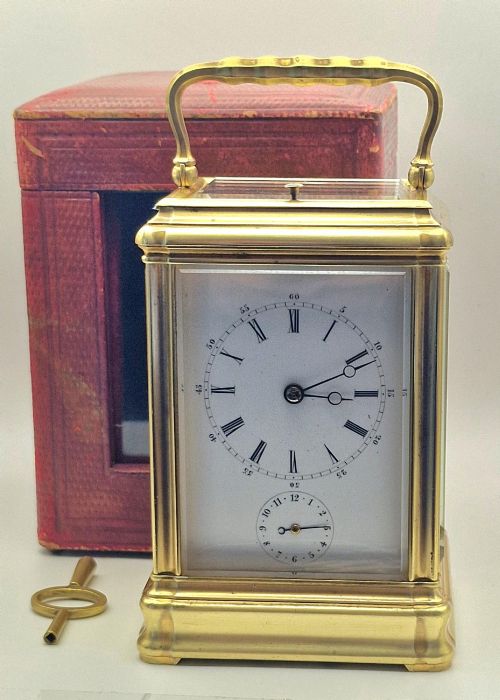
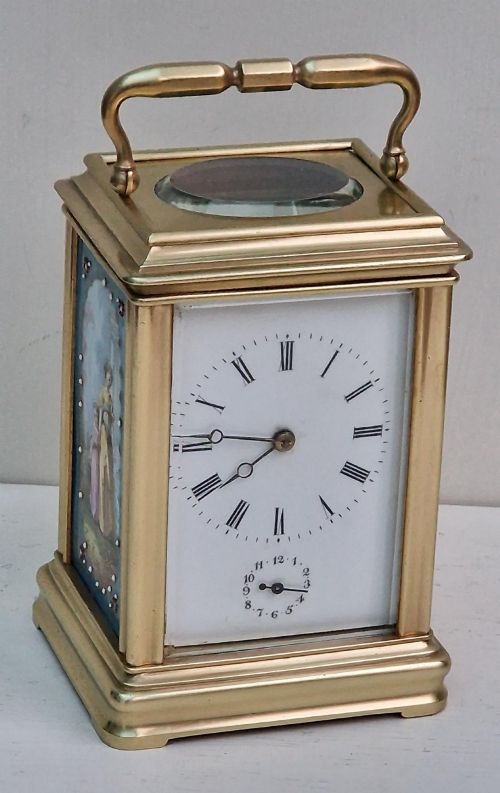
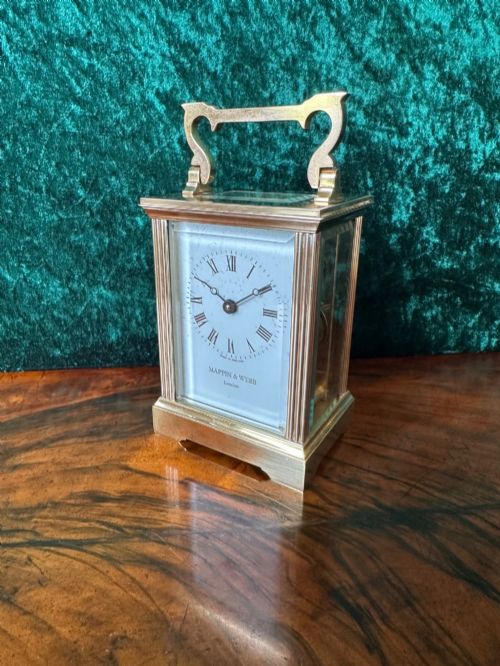
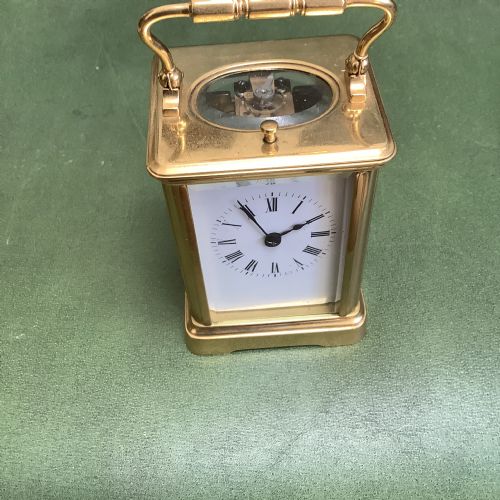
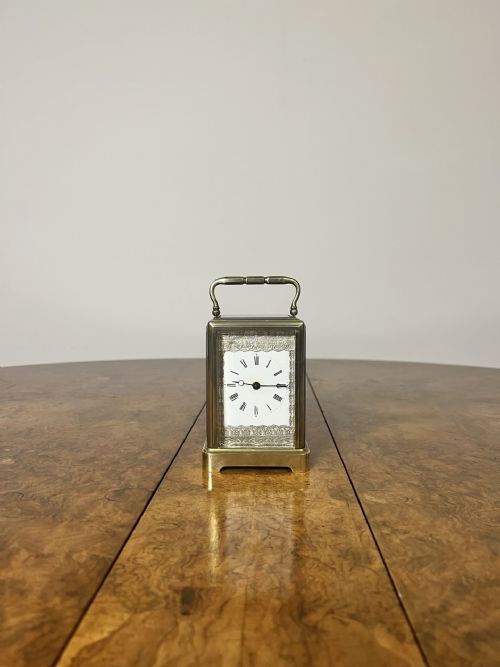
A portable carriage clock is a mechanical timekeeper built for travel, usually housed in glass and brass to permit viewing of the movement from multiple angles. These pieces originate primarily from the nineteenth and early twentieth centuries, spanning Victorian, Edwardian, and Art Deco periods.
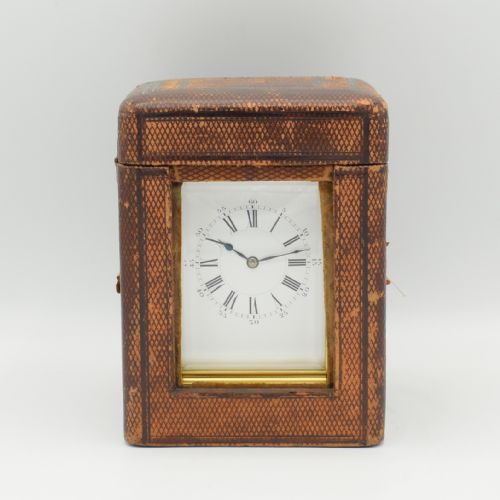
The specimens met most often on this page take the form of brass or gilt brass cases fitted with bevelled glass panels. Many examples include travel cases made of leather or fruitwood to protect the exterior during journeys.
Makers and retailers such as Henri Jacot, Paul Garnier, and Mappin and Webb produced these timepieces in standard sizes as well as smaller miniature formats. Variations extend to specialised items made for the Chinese market featuring sweep seconds.
Materials and construction methods
Brass and gilt brass form the structural skeleton of the majority of these pieces, holding the heavy glass panels securely in place. Enamel dials and porcelain panels provide the background for numerals, often decorated with painted details.
Movements utilise metal gears and springs, frequently engineered for eight-day operation and sometimes incorporating striking mechanisms or repeat functions. Protective outer elements include fitted leather travel cases and fruitwood boxes.
Portable Carriage Clock Retail Price Guide 2026
Typical asking prices for portable carriage clock among the pieces listed under this phrase on Sellingantiques today, from the lower quarter to the upper quarter. They describe what is for sale here now, not the wider market.
Listings feature pieces from the Victorian, Edwardian, and Art Deco periods, constructed in brass, gilt brass, glass, enamel, and porcelain.
Distinguishing quality factors
The standard of a portable carriage clock depends upon the complexity of its internal mechanism, such as the inclusion of a strike repeat function or sweep seconds. Heavier gilt brass cases and finely painted porcelain or enamel panels indicate superior production.
The presence of an original travel case adds significantly to the completeness of the object. Miniature formats and pieces signed by recognised makers demonstrate higher levels of horological skill.
Henri Jacot·Mappin and Webb·Pickford of London·Latshea and Sons Edinburgh·Paul Garnier
The Portable Carriage Clock Glossary
- Carriage clock
- A portable spring-driven timepiece designed for travellers during the nineteenth century. These clocks typically feature a rectangular brass case with glass sides.
- Repeater
- A mechanism that chimes the hours and quarters upon demand when a button or lever is pressed. This complication added cost and utility to the piece.
- Gilt brass
- Brass coated with a thin layer of gold to improve appearance and prevent tarnishing. This finish appears frequently on nineteenth-century French examples.
- Enamel panel
- A fused glass coating applied to metal surfaces to create smooth white or decorated dials. These panels require careful firing to achieve a durable finish.
- Travel case
- A fitted outer container, often formed from leather or fruitwood, designed to house a clock during transit. These cases protected the delicate glass and brass exterior.
Portable Carriage Clock: Frequently Asked Questions
What is a portable carriage clock?
A portable carriage clock is a spring-driven mechanical timepiece designed to be moved easily, enclosed in a brass frame with glass panels.
Originating for use by travellers, these objects combine timekeeping accuracy with robust protective housings.
How do you wind a carriage clock?
Winding is typically performed using a matching key inserted into arbors located on the underside or backplate of the movement. Care must be taken not to overwind the mainspring.
Many examples require winding every eight days, depending on the specific movement calibre installed.
What periods are these clocks from?
The pieces seen here date predominantly from the nineteenth and early twentieth centuries. Victorian and Edwardian examples are common.
Design influences range from traditional French styles to later Art Deco aesthetics.
Why do some have travel cases?
Original leather or fruitwood travel cases were made to shield the glass panels and delicate brass frameworks from damage during journeys. Finding a clock with its matching case preserves its completeness.
These outer housings often feature velvet or silk linings tailored to the contours of the clock.