





Porch Umbrella Holder
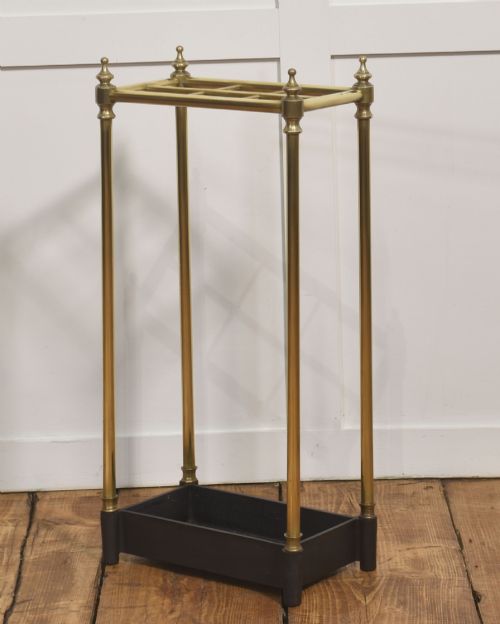
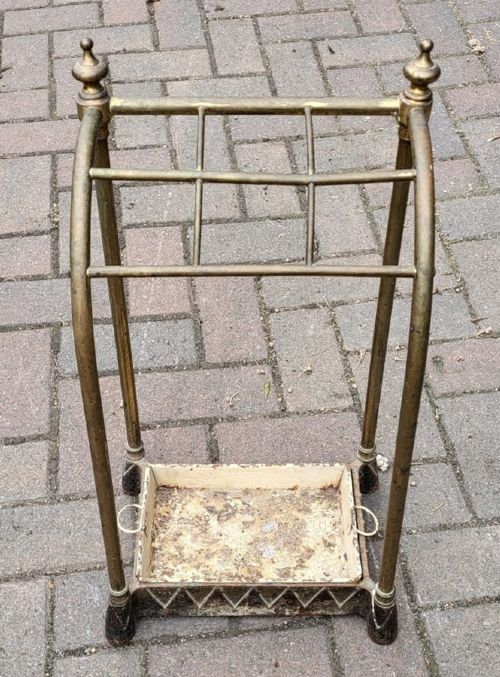
These porch umbrella holder examples gather hall stands, stick stands and umbrella buckets forged in iron, brass and oak during the Victorian and Edwardian eras.
Porch Umbrella Holder
A porch umbrella holder serves the practical purpose of storing wet walking sticks and umbrellas in a hallway or entrance. When searching for this phrase, buyers encounter varied forms including half-moon wall pieces, oval coopered tubs and upright floor stands.
The pieces listed on this page originate predominantly from the Victorian and Edwardian periods, stretching from the mid-nineteenth century into the early twentieth century. Common stylistic expressions span English country house designs alongside Gothic Revival, Jacobean taste and Arts and Crafts movements.
Most examples combine structural frames with dedicated receptacles to catch moisture from rain-soaked items. Makers utilised robust timbers such as oak alongside cast metals to withstand daily use near an entrance.
How they were made
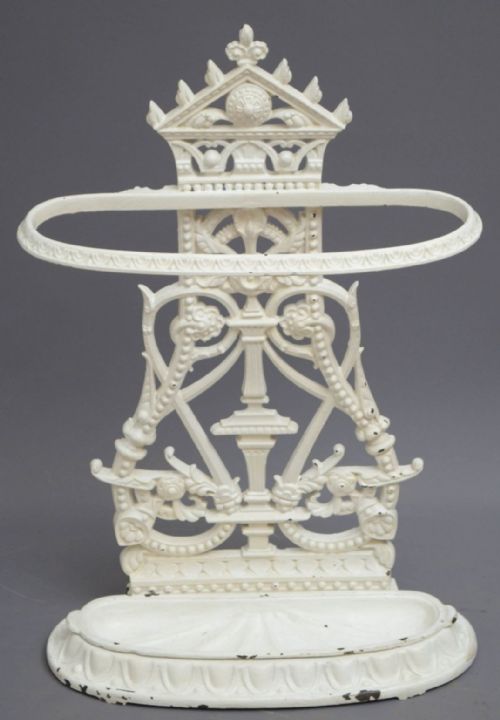
Makers constructed these stands using a foundation of heavy metals like cast iron, brass and wrought iron, frequently paired with wooden bodies. Cast iron allowed for ornate pierced patterns and relief motifs, while brass formed curved tubes and rails.
Wooden examples relied on traditional carpentry techniques, including coopered staves bound with metal hoops for oval oak buckets. Many designs incorporated removable metal drip trays at the base to protect floors from pooled water.
Porch Umbrella Holder Retail Price Guide 2026
Typical asking prices for porch umbrella holder among the pieces listed under this phrase on Sellingantiques today, from the lower quarter to the upper quarter. They describe what is for sale here now, not the wider market.
One standout nineteenth century iron stand immortalises Jack and the Beanstalk in cast metal relief.
What varies in quality
Quality rests upon the integrity of the materials and the crispness of the casting or joinery. Heavy cast iron frames with deep relief detail and intact original drip trays represent the upper tier of production.
Artisanal intent distinguishes simpler utility objects from refined pieces exhibiting Arts and Crafts or Gothic Revival characteristics. The presence of matching metals, secure joints and original hardware elevates a piece above standard domestic utility.
The Porch Umbrella Holder Glossary
- Coopered
- Constructed from curved wooden staves fitted together side by side, traditionally utilised for barrels and oval umbrella buckets.
- Demi Lune
- A half-moon shape designed to sit flush against a hallway wall, saving floor space in narrow entryways.
- Drip tray
- A removable metal basin placed at the bottom of a stand to catch water running off wet umbrellas.
- Arts and Crafts
- A design movement valuing traditional craftsmanship, visible construction methods and simple, honest materials.
- Gothic Revival
- An architectural and decorative style drawing inspiration from medieval forms, featuring pointed arches and heavy ornament.
Porch Umbrella Holder: Frequently Asked Questions
Where should I place an umbrella stand?
These holders suit an entrance hall, porch or boot room where wet coats and walking gear accumulate upon entering the house.
Positioning the piece near the front door ensures damp umbrellas find a home before moisture reaches interior wooden floors.
How do I care for a metal and wood stand?
Maintenance involves keeping the interior metal drip tray dry and free of standing water to prevent corrosion over time.
Applying a light wax to oak surfaces preserves the timber grain while metal elements benefit from gentle dusting.
What is the difference between a stick stand and an umbrella stand?
Many nineteenth century examples served both purposes interchangeably, holding walking sticks alongside rain gear.
Proportions vary slightly depending on whether the maker intended the piece for slender canes or wider umbrella loops.
How can I tell a Victorian stand from an Edwardian one?
Victorian examples often display heavier ornamentation, including Gothic Revival ironwork or dense Jacobean carved oak.
Edwardian pieces tend toward lighter constructions, sometimes utilising copper or simplified oak frames reflecting Arts and Crafts ideals.