
Pocket Watch and Chain
A pocket watch and chain combines timekeeping precision with wearable metalwork from the Victorian, Edwardian, and early twentieth-century eras.
Pocket Watch and Chain
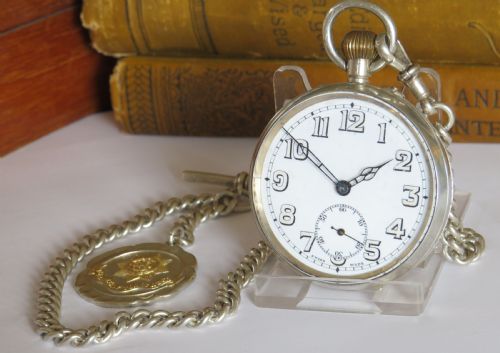
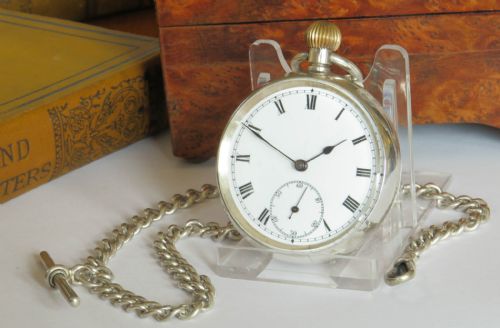
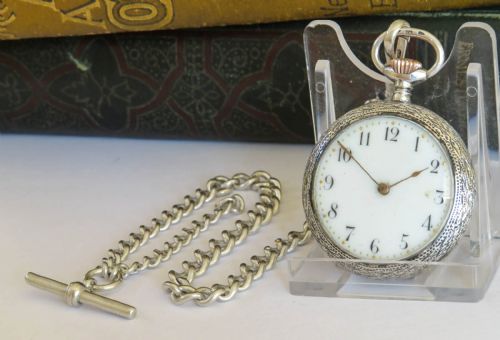
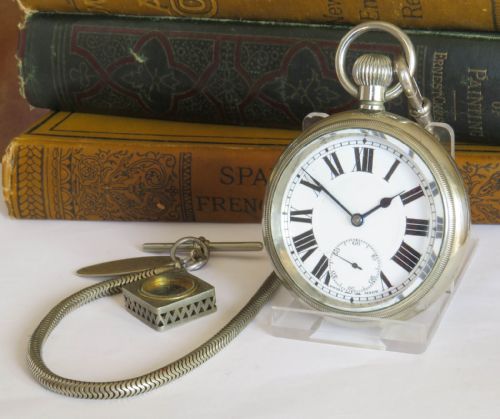
A pocket watch and chain pairing typically unites a portable timepiece, such as a half hunter or fob watch, with a matching length of metalwork designed to secure it to a waistcoat or garment. Buyers searching this phrase encounter complete sets alongside individual watch chains, albert chains, long guard chains, and accompanying fobs.
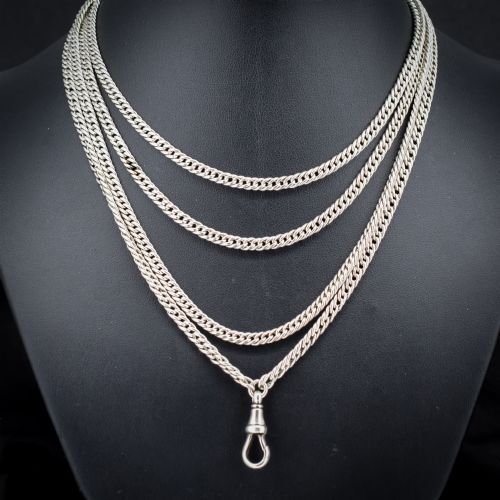
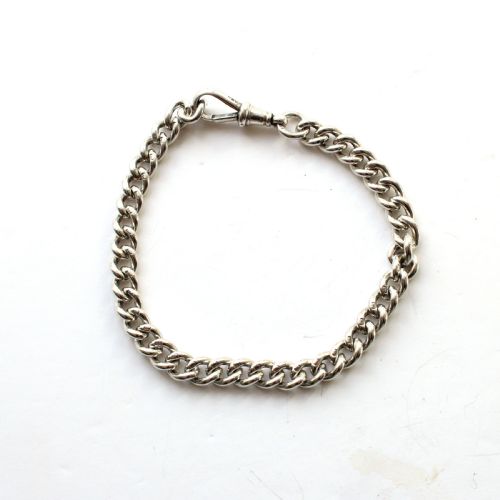
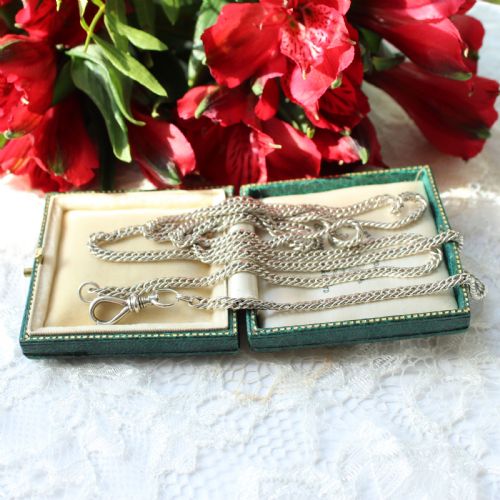
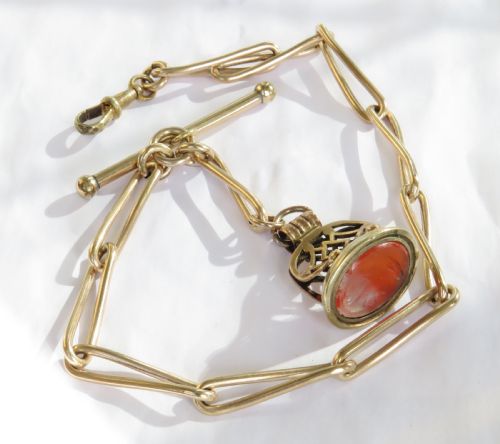
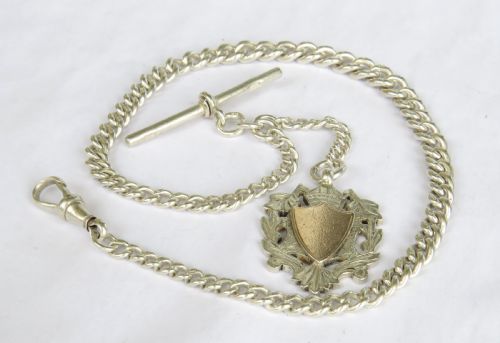
The selection spans late nineteenth-century Victorian designs through to Edwardian pieces and 1930s examples. Forms range from heavy silver double albert chains to delicate gold trombone links and extended guard chains fitted with dog clips or T-bars.
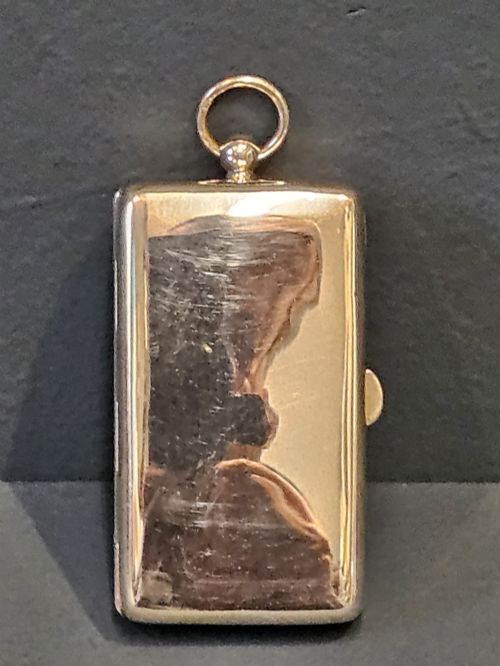
Many listings incorporate functional additions like compasses, sovereign cases, and military fobs alongside the primary watch and chain assembly. These combinations reflect the everyday utility and personal ornamentation of the periods they represent.
Materials and Construction
Metals form the structural foundation of these items, utilising sterling silver, hallmarked silver, 9ct gold, 18ct yellow gold, rolled gold, steel, and base metal. Goldsmiths and silversmiths shaped these materials into flat curb links, belcher links, trombone patterns, and love knot configurations.
Components such as dog clips, screw-lock clips, swivel fobs, and T-bars were mechanically joined to the main chains to secure timepieces and decorative pendants. Enamel and glass elements appear on dials, fobs, and specific watch faces to add colour and visual detail.
Listings span the late nineteenth century through the 1930s, featuring sterling silver, 9ct gold, 18ct yellow gold, and rolled gold.
Factors of Quality
Quality in a pocket watch and chain set is determined by the weight and grade of the precious metal, clear hallmarks indicating assay offices like Chester or Birmingham, and the structural integrity of the link connections. Solid gold and heavy sterling silver specimens demonstrate superior durability compared to rolled gold or lighter base metal alternatives.
The sophistication of the link work, such as intricate trombone and love knot patterns or matched double albert constructions, separates standard utility items from finer pieces. Inclusion of original components like signed watch movements, matching fobs, and secure fastening clips elevates the overall standard of the set.
Limit Revue·Omega·Cyma·Octava·Sackville·Stonehaven·Tavannes Crest·Elgin
The Pocket Watch and Chain Glossary
- Albert chain
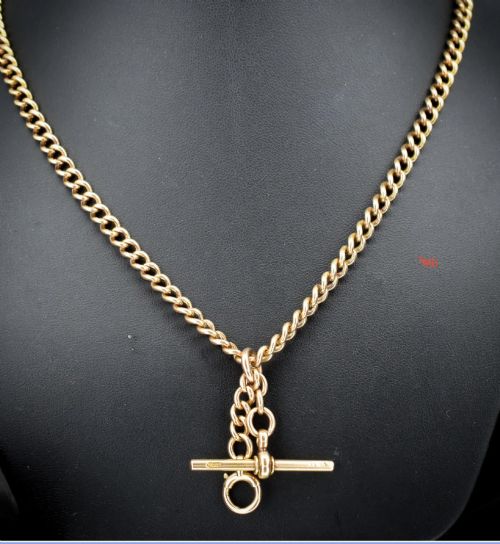
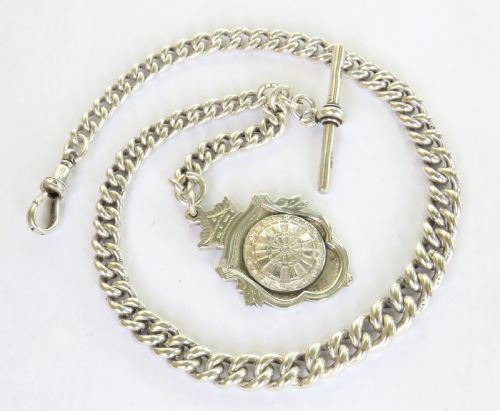
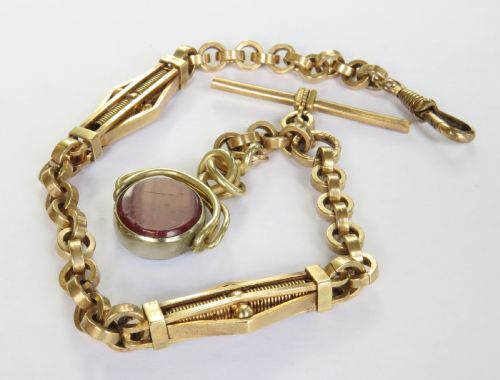
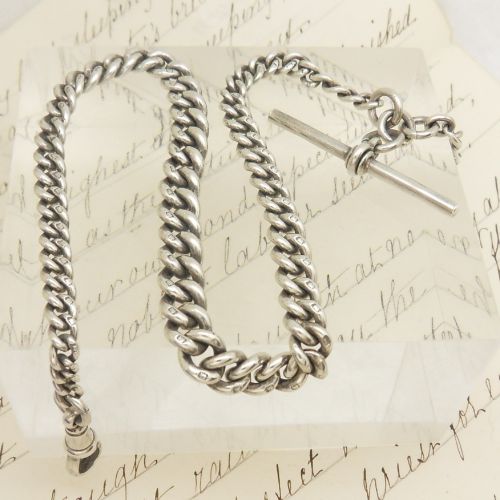
- A short watch chain designed to pass through a waistcoat buttonhole, featuring a T-bar at one end and a swivel clasp or dog clip at the other. Single alberts hold one watch, while double alberts accommodate a watch and a fob or secondary accessory.
- Dog clip
- A spring-loaded snap hook attached to watch chains and guard chains for securing fobs or pocket watches. This fastener allows for quick attachment and removal.
- T-bar
- A short transverse bar attached to the centre of an albert chain, inserted through a waistcoat buttonhole to anchor the chain securely. It remains a defining feature of traditional pocket watch hardware.
- Half hunter
- A pocket watch featuring a case with a small glass-covered opening in the outer lid, permitting the user to read the hands without opening the case entirely. This design protected the delicate enamel dial beneath.
- Guard chain
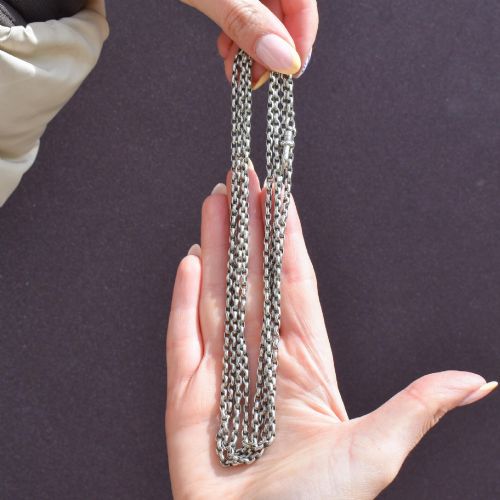
- An exceptionally long chain, often measuring over fifty inches, worn draped around the neck to support a pocket watch or lorgnette securely. Victorian examples frequently incorporate heavy curb or belcher links.
Pocket Watch and Chain: Frequently Asked Questions
How do I wear an albert chain?
An albert chain is typically secured by placing the T-bar through a central waistcoat buttonhole, allowing the draped strands to suspend a pocket watch in one pocket and a fob in the other.
Alternatively, a single strand can run from the buttonhole directly to a breast or side pocket housing the timepiece, letting the remaining links hang freely.
How do I identify the metal purity?
British pieces typically rely on hallmark stamps impressed into the metal, indicating the assay office, such as Chester or Birmingham, alongside specific purity standards. Gold items are marked for carat weight, while silver pieces display standard sterling markers.
Pieces without clear hallmarks may utilise terms like rolled gold or metal, indicating a plated surface over a base metal core rather than solid precious metal.
What is a watch fob used for?
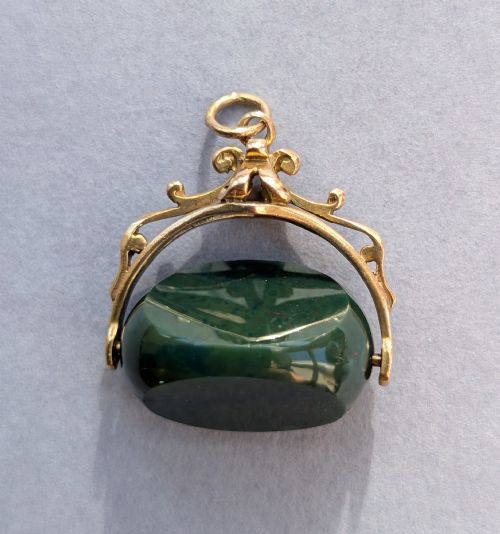
A watch fob serves as a decorative or functional pendant suspended from a pocket watch chain. Historically, these included family crests, spinning bloodstone stones, military mementos, or miniature compasses.
They added personal significance and visual weight to the chain assembly while anchoring the hardware against the wearer's garments.