






Platinum Setting Sapphire Ring
A platinum setting sapphire ring combines crisp precious metal with deep blue corundum, offering lasting elegance for daily wear.
Platinum Setting Sapphire Ring
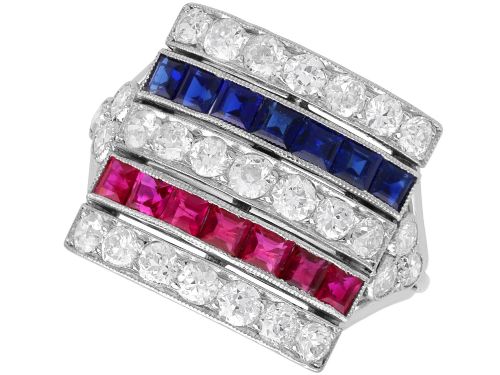
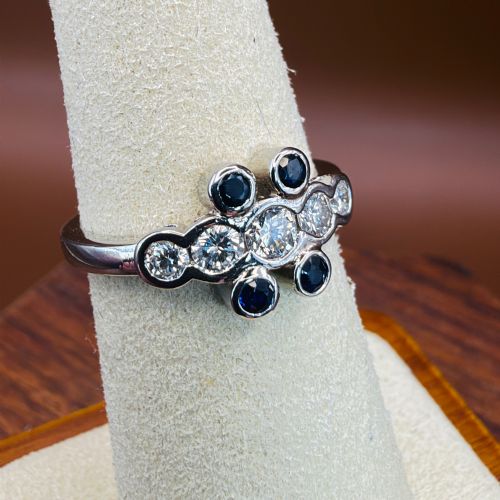
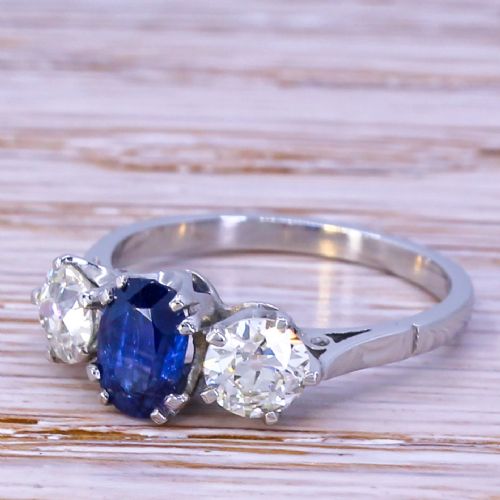
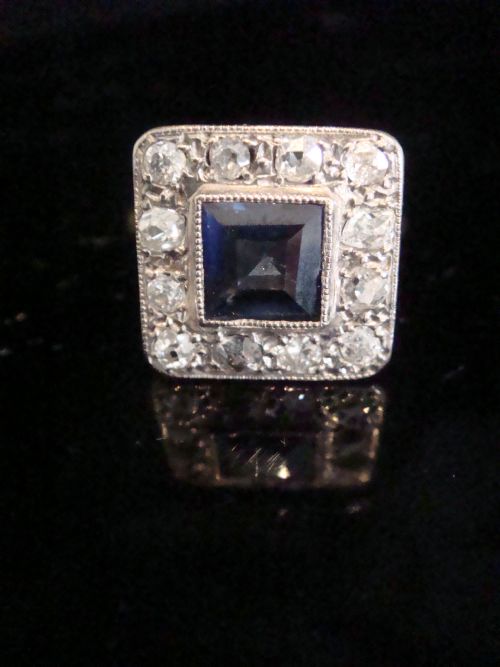
A platinum setting sapphire ring brings together durable white metal and brilliant blue stones across several distinct historic periods. Buyers examining this page find jewels ranging from early twentieth century Edwardian workshops to mid century creations.
The selections showcase traditional forms including clusters, solitaires, trilogies, and target rings. Art Deco examples dominate the selection with geometric layouts and pave work, whilst Edwardian pieces feature delicate millegrain detailing.
Makers often paired the central blue gems with sparkling white diamond accents. Platinum securely holds these stones whilst contrasting warmly against yellow gold shanks on hybrid pieces.
Materials and Construction
Craftsmen utilised heavy platinum to construct secure settings that held diamonds and sapphires without adding excessive bulk. This strong metal allowed bench jewellers to fashion fine claws and intricate gallery wirework.
Gems were selected in various cuts, from old European cuts to cabochons. Natural sapphires sat alongside diamonds set into white gold or platinum mounts.
Platinum Setting Sapphire Ring Retail Price Guide 2026
Typical asking prices for platinum setting sapphire ring among the pieces listed under this phrase on Sellingantiques today, from the lower quarter to the upper quarter. They describe what is for sale here now, not the wider market.
Listings feature periods spanning from the Edwardian era through the nineteen sixties, with a strong emphasis on Art Deco designs.
Quality and Distinction
The value and desirability of these rings rest primarily on the colour saturation and origin of the central sapphire. Stones with deep, uniform blue hues without dark patches command greater attention from collectors.
Fine craftsmanship shows in the crispness of the platinum mill grain work and the symmetry of the surrounding diamond cluster. Older rings retain original stone cuts and secure claw settings that demonstrate superior period bench skill.
The Platinum Setting Sapphire Ring Glossary
- Platinum
- A dense, durable white precious metal favoured for secure gemstone settings. It holds fine detail without wearing down over decades of use.
- Cabochon
- A gemstone cut with a smooth, rounded top rather than faceted planes. This style highlights the deep tone of the sapphire.
- Millegrain
- A decorative technique featuring tiny raised metal beads along the edge of a setting. It adds a soft texture typical of Edwardian and Art Deco pieces.
- Target ring
- A concentric cluster design with a central sapphire surrounded by a contrasting ring of diamonds. This geometric style defines many pieces from the nineteen thirties.
- Trilogy
- A ring featuring three principal stones, often symbolising past, present, and future. These commonly pair a central sapphire with flanking diamonds.
Platinum Setting Sapphire Ring: Frequently Asked Questions
How do I clean a platinum and sapphire ring?
Warm soapy water and a soft brush remove everyday oils safely from both the platinum band and the sapphire facets. Avoid harsh chemical dips that might damage softer surrounding materials.
Taking the ring to a professional jeweller periodically ensures the platinum claws remain tight and secure around the stones.
Are these rings suitable for daily wear?
Platinum and sapphires both offer exceptional hardness, making these pieces resilient enough for regular daily use. The toughness of the metal protects the stones from accidental loss.
Care should still be taken during heavy manual tasks to prevent scratching the gold shanks or chipping older diamond cuts.
What is the difference between Edwardian and Art Deco rings?
Edwardian rings feature lacy, garland styles with delicate filigree work in platinum and yellow gold. They lean towards romantic, organic floral motifs.
Art Deco pieces shift towards bold geometric shapes, sharp lines, and symmetrical cluster arrangements with heavy platinum pave work.
How can I tell if a sapphire is natural?
Examination under magnification often reveals natural silk inclusions or crystal growth lines within the stone. Laboratory certification provides definitive confirmation of origin and treatment status.
Historical pieces from specific periods may contain natural stones paired with old cut diamond accents.