


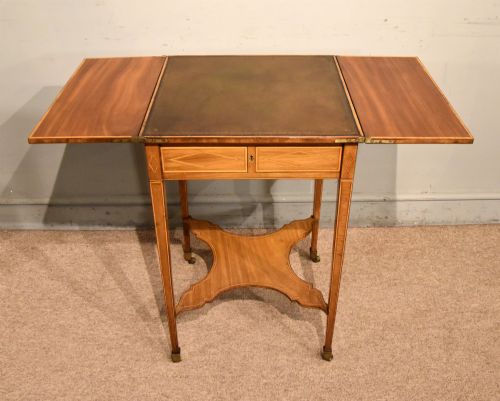
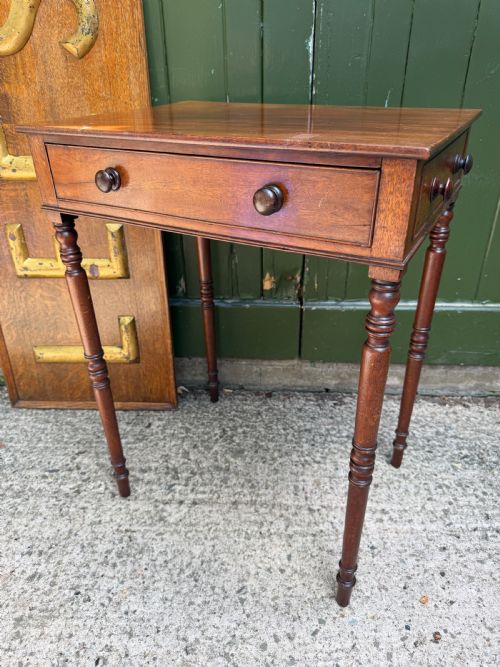
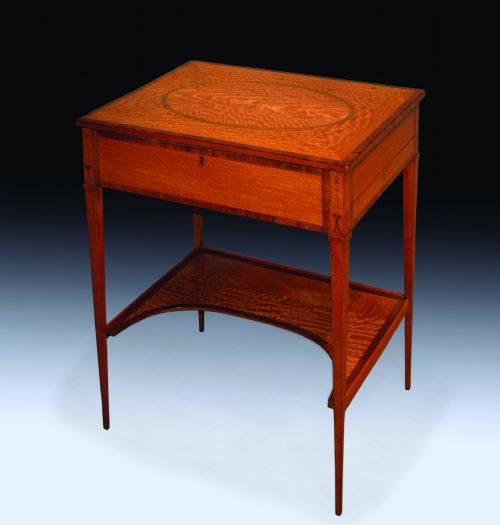
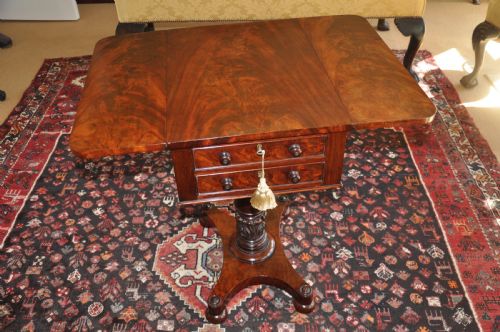
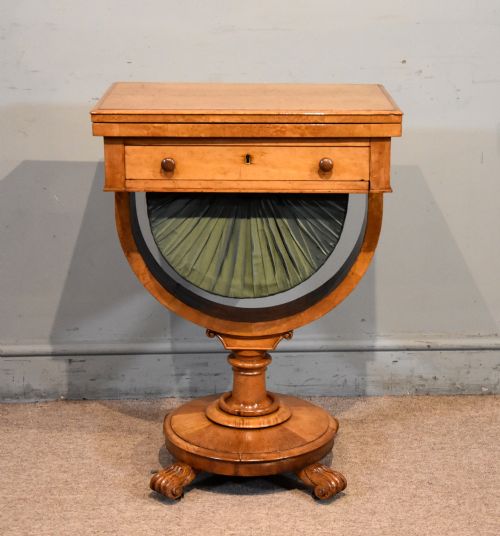

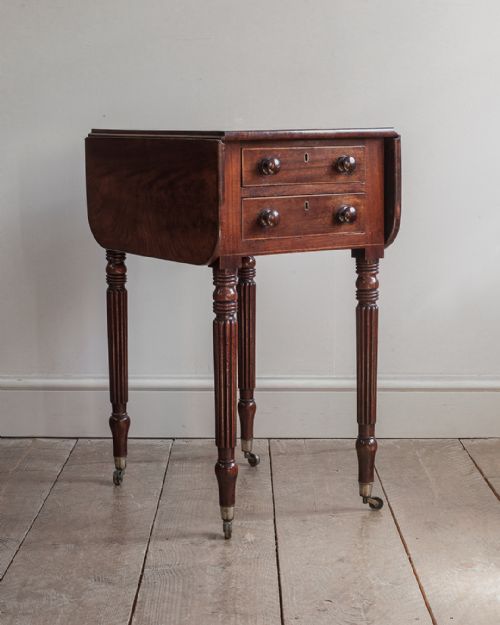
Period Work Table
A period work table brings refined utility to a room, combining compartments for sewing with polished timber surfaces.
Period Work Table
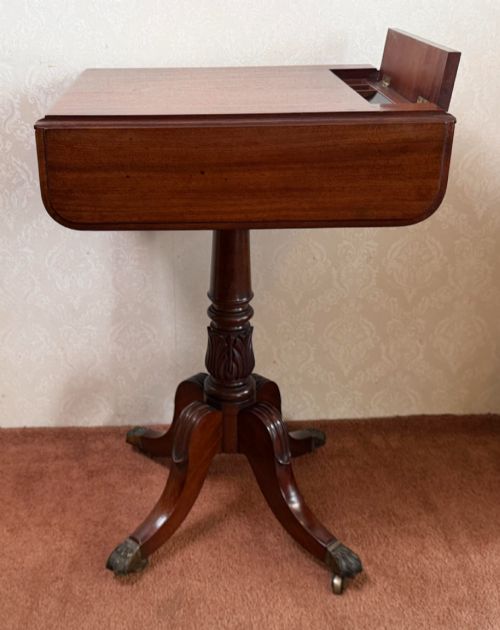
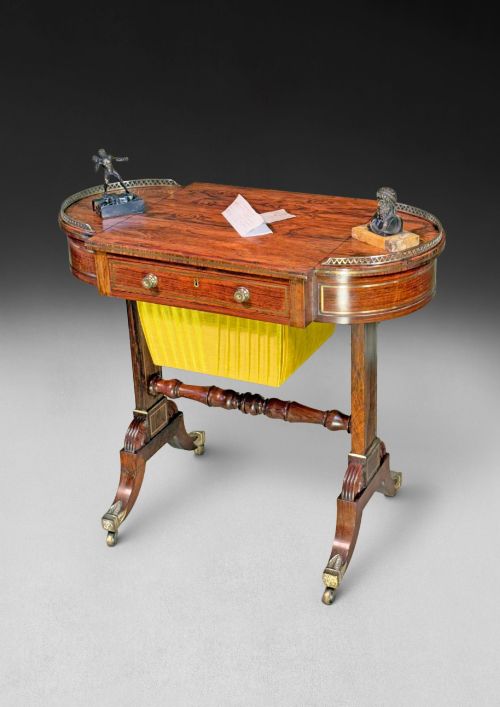
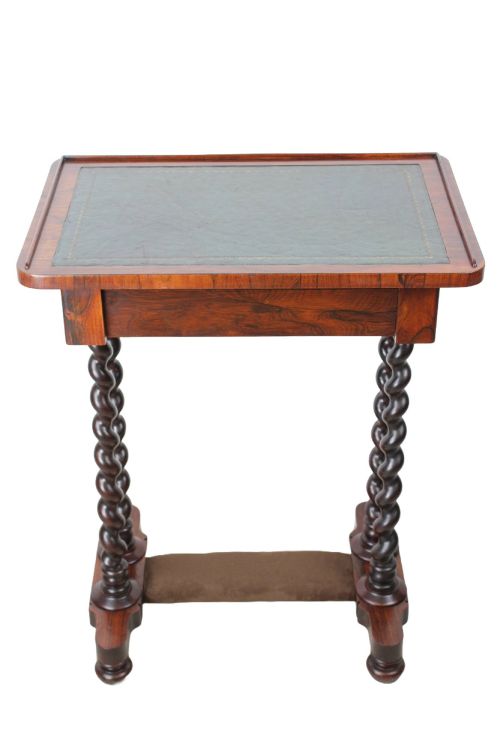
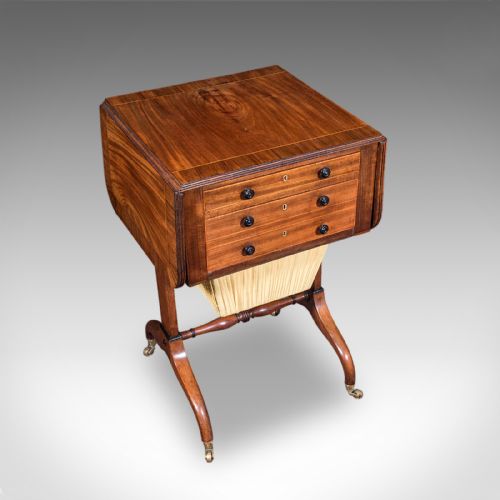
A period work table serves multiple functions, often doubling as a sewing, writing or games table with fitted drawers and drop leaves. Buyers seeking a period work table encounter diverse forms ranging from compact occasional pieces to elaborate compendium tables.
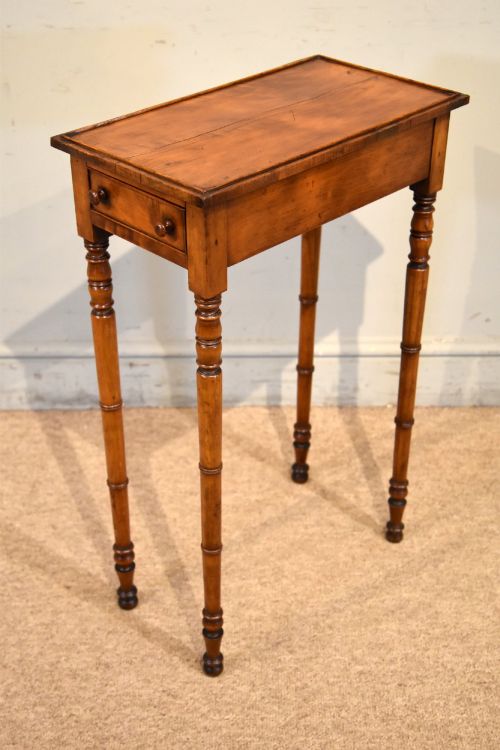
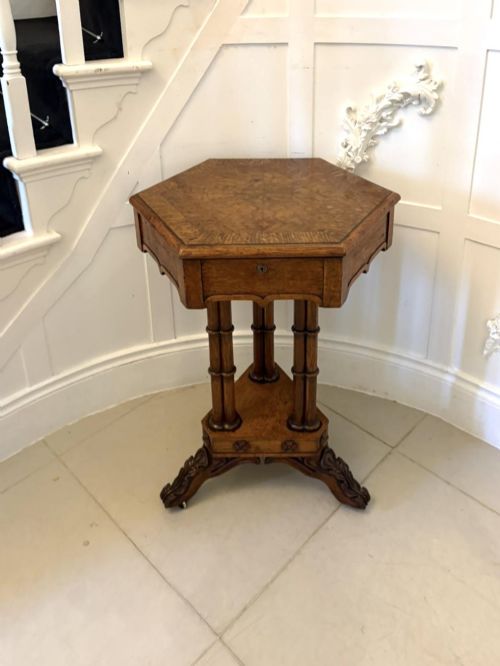
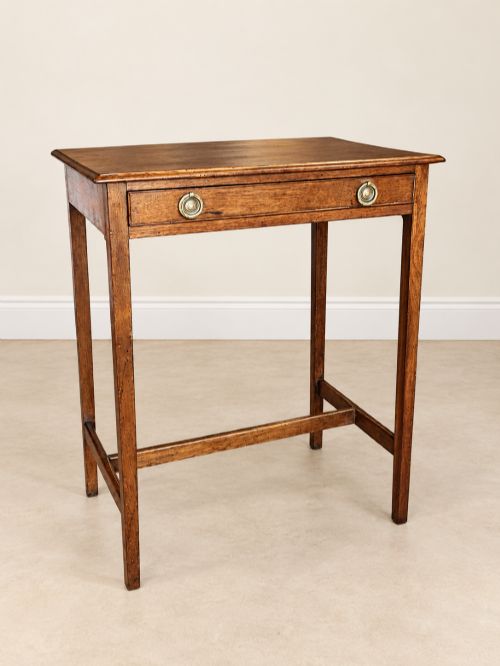
The pieces on this page span the Georgian, Regency and nineteenth-century periods, with particular emphasis on Regency designs. Makers constructed these small tables in mahogany, rosewood and satinwood, frequently incorporating specialised compartments for needlework and textiles.
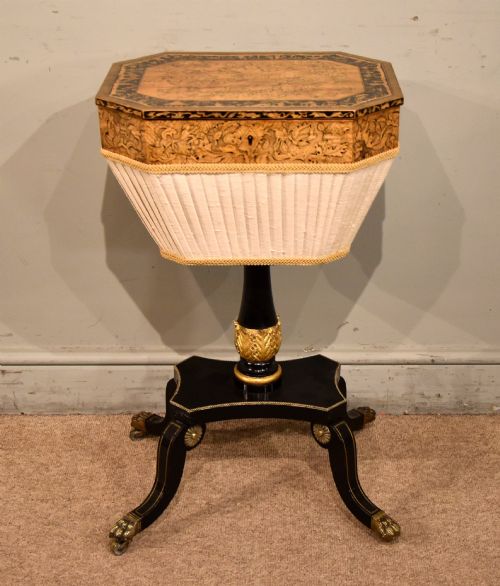
Forms include sewing tables with silk or fabric panels, penwork surfaces and chess boards, alongside occasional and side tables. These versatile items functioned in drawing rooms and boudoirs as practical furnishings of elegant proportions.
Materials and Construction
Cabinetmakers utilised fine timbers such as figured rosewood, rich mahogany and bright satinwood, often accentuating the grain with contrasting brass inlay and delicate penwork. Structural stability relied on traditional joinery applied to small-scale occasional and drop-leaf forms.
Interior compartments required precise woodworking to house sewing equipment, writing materials and games boards. Surface ornamentation included satinwood veneers, brass mounts and inset textile panels such as silk and fabric.
Period Work Table Retail Price Guide 2026
Typical asking prices for period work table among the pieces listed under this phrase on Sellingantiques today, from the lower quarter to the upper quarter. They describe what is for sale here now, not the wider market.
Listings feature woods including rosewood, mahogany, satinwood, maple and pollard oak, paired with brass inlay and silk panels.
Factors of Quality
Quality rests upon the choice of timber veneer, the crispness of brass inlay and the sophistication of the penwork decoration. Finer examples display meticulous attention to the interior compartments and the proportion of the turned or carved supports.
Gillows of Lancaster·John MaClean
The Period Work Table Glossary
- Drop leaf
- A hinged table leaf that can be folded down to save space or raised to expand the surface area. It typically operates with pivoting wooden brackets.
- Compendium table
- A multifaceted piece containing various compartments for different pursuits such as writing, sewing and games. These tables represent the more complex end of domestic furniture design.
- Satinwood
- A durable, yellowish timber prized for its lustrous grain and smooth finish. Cabinetmakers utilised it extensively for fine eighteenth-century and Regency surfaces.
- Pembroke table
- A small occasional table featuring two hinged flaps on opposite sides. It provides adjustable proportions suited to intimate rooms.
Period Work Table: Frequently Asked Questions
What is a period work table?
A period work table is a small, movable piece of furniture designed primarily for sewing, needlework and light writing tasks. These tables typically feature fitted interior compartments and drop leaves.
Originating largely in the Georgian and Regency eras, they combine decorative presence with practical storage for domestic handicrafts.
How were work tables used historically?
Women utilised these tables in sitting rooms and boudoirs to hold sewing implements, threads and fabrics inside suspended cloth bags or wooden drawers. Many designs incorporated clever additions like chess boards or writing slopes.
Beyond handwork, they served as convenient lamp tables and occasional surfaces for receiving callers.
How do I identify a Regency work table?
Regency examples frequently display dark timbers like rosewood or mahogany, often accented with brass inlay, lyre-shaped supports or pole tripod bases. The lines lean toward classical revival forms inspired by ancient Greek and Roman models.
Look for penwork decoration, brass mounts and hinged lids opening to fitted compartmentalized interiors.
Can I use an antique work table today?
These tables adapt easily to modern interiors as bedside tables, lamp stands or sofa side tables. Their compact proportions allow them to fit into spaces where larger furniture proves impractical.
Internal compartments remain useful for storing small items like stationery, keys or modern crafting supplies.