




Period Refectory Table
A period refectory table anchors a room with historic timber and generous length, offering a sturdy surface built for communal dining.
Period Refectory Table
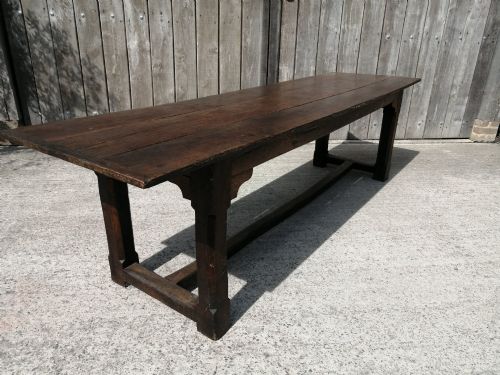
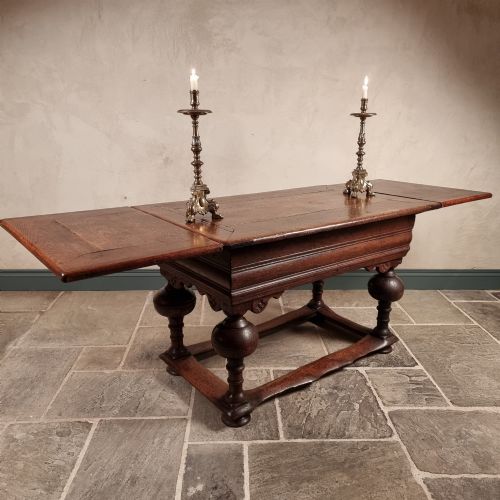
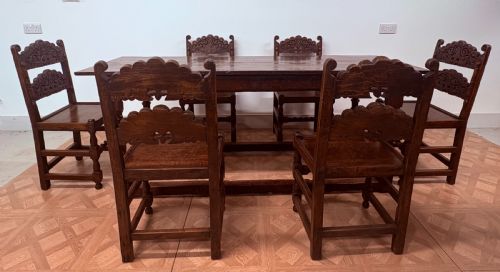
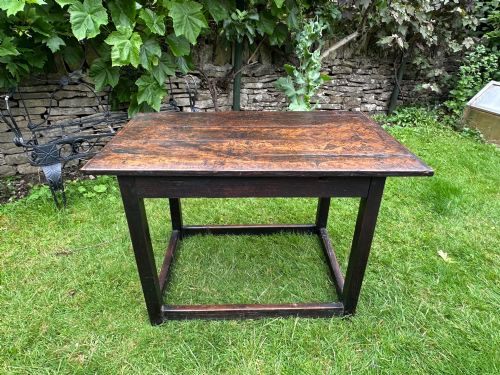
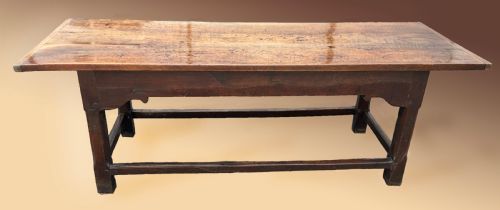
A period refectory table is a substantial dining table designed for long-term domestic use, appearing primarily in 17th Century and 18th Century formats on this page. These examples include Jacobean, Charles II, and George I styles alongside later 1920 period style reproductions.
Buyers encounter long formats featuring plank tops and trestle or framed bases intended for large gatherings. The selection ranges from authentic early examples to later farmhouse interpretations.
Origins span early English vernacular furniture traditions, utilising local timbers to create functional dining tables and centre tables. Each piece reflects the utilitarian domestic requirements of its period.
How they were made
Construction relies heavily on solid oak and elm, selected for structural strength and durability over centuries of daily use. Joinery techniques employ pegged mortise and tenon joints to secure heavy timber frames without modern adhesives.
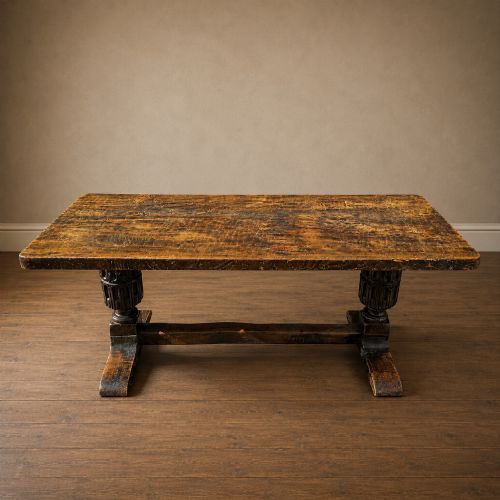
Tops are constructed from single elm planks or multi-plank oak arrangements joined side by side. Bases utilise trestle supports or four-legged frames connected by stretchers for stability.
Listings span four distinct periods: 17th Century, 18th Century, 1750, and 1920.
What varies in quality
Quality diverges between early structural integrity and later alterations, distinguishing untouched period surfaces from heavily restored examples. The proportion of the base to the top dictates visual balance.
The choice of timber grain and the survival of original surface patination separate standard examples from those retaining greater historical character. Single plank tops command specific attention for their width and continuity.
The Period Refectory Table Glossary
- Refectory table
- A long dining table traditionally used in monastic refectories and later adopted for domestic halls.
- Plank top
- A table top constructed from individual boards joined edge to edge, sometimes consisting of a single wide timber.
- Trestle base
- A support structure where the top rests on upright frames connected by a horizontal beam or stretcher.
- Stretchers
- Horizontal wooden beams connecting the legs of a table to provide structural rigidity.
- Jacobean
- A style dating to the early 17th century characterised by sturdy proportions and geometric ornamentation.
Period Refectory Table: Frequently Asked Questions
What is a period refectory table?
A period refectory table is a long, heavy dining table originating from the 17th or 18th century, built for communal dining.
These pieces use solid oak or elm and feature trestle or framed bases designed to seat many people.
How do I identify a 17th century table?
Seventeenth century tables display heavy timber construction, pegged joints, and vernacular oak or elm materials.
They often show distinct patination and construction methods typical of the Jacobean or Charles II periods.
What wood are these tables made from?
The listings show tables constructed primarily from oak and elm timbers.
These dense hardwoods provided the necessary strength for large dining surfaces and sturdy supporting frames.
How should I care for an old oak table?
Keep historic timber tables away from direct heat sources and sudden humidity changes to prevent wood movement.
Maintain the surface using traditional wax polish rather than modern silicone sprays.