
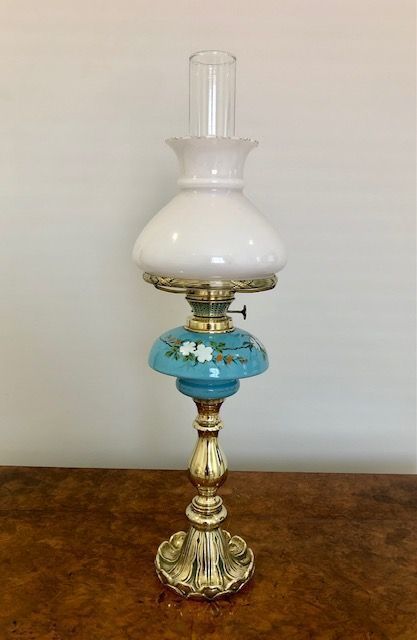


Period Brass Lamp
A period brass lamp brings the warmth of nineteenth and early twentieth-century metalwork directly into your room.
Period Brass Lamp
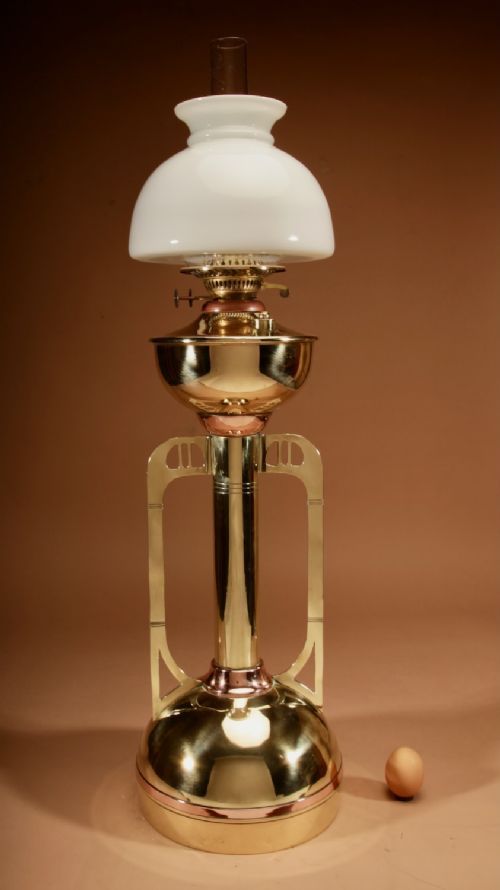
When you search for a period brass lamp, you encounter lighting fixtures spanning the Victorian, Edwardian, and Art Deco eras, alongside earlier Georgian and Regency designs. These pieces range from heavy oil lamps converted to electricity to slender standard lamps, adjustable desk lights, and wall sconces.
On this page, table lamps and standard lamps from the Edwardian and Victorian periods appear most frequently, often paired with copper, bronze, or glass elements. Many of these survive from domestic interiors of the nineteenth and early twentieth centuries, retaining their original cast details and mechanical adjustments.
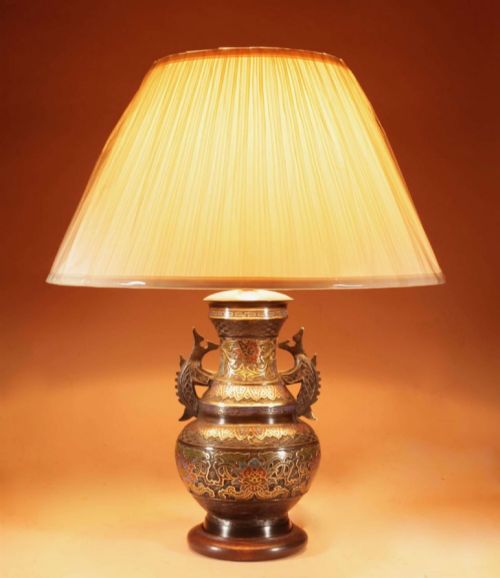
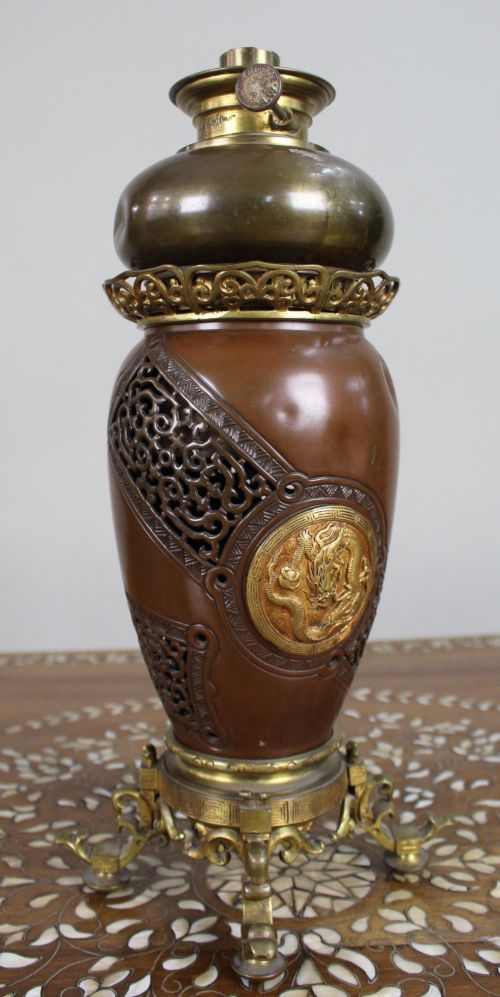
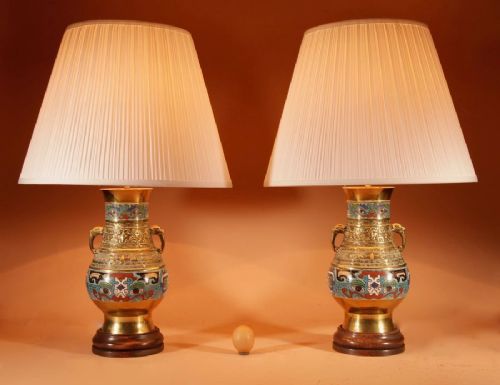
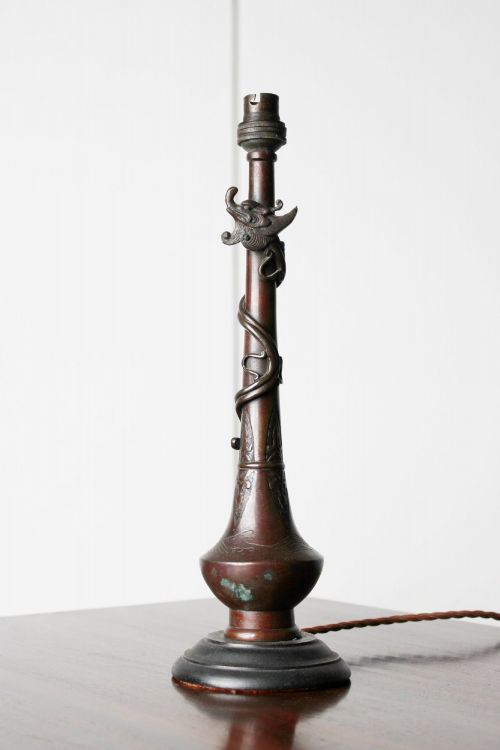
The selection also includes imported Japanese Meiji period bronze and cloisonné enamel vessels adapted as lamps, reflecting nineteenth-century taste for exotic ornamentation. Alongside these stand utilitarian pieces like church candlestick lamps and rise-and-fall desk lights designed for specific interior tasks.
Materials and construction
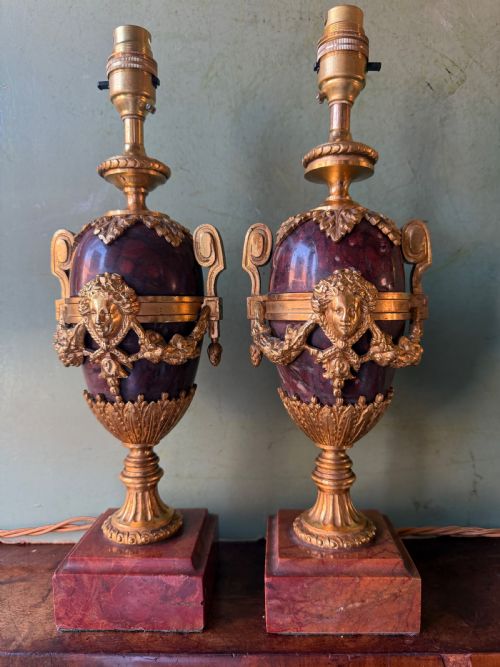
The primary metalwork relies on cast and spun brass, frequently combined with copper, bronze, or ormolu mounts to add weight and tonal contrast. Many standard lamps utilise telescopic steel mechanisms inside hollow brass columns to allow height adjustment.
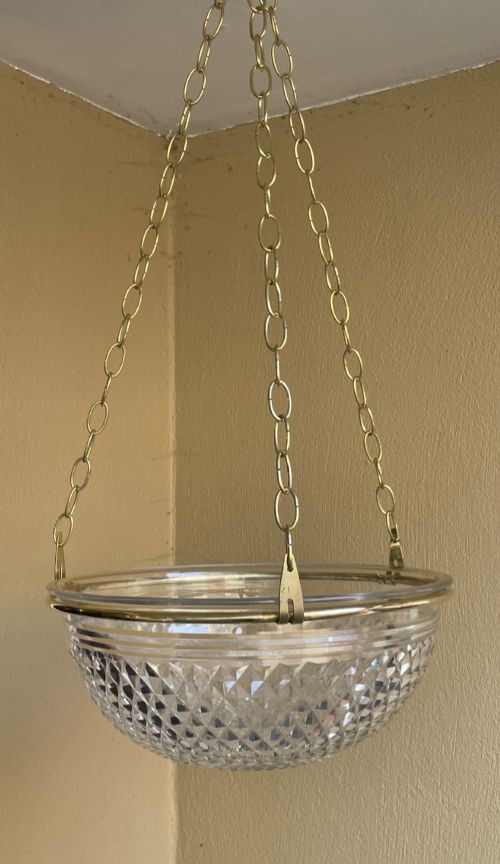
Decorative surfaces incorporate champlevé and cloisonné enamel, porcelain inserts, or applied marble, particularly on pieces originating from French and Japanese workshops. Glass components range from simple opaline shades to heavy cut crystal pendants and frosted chimneys.
Listings feature brass, bronze, glass, and copper across Victorian, Edwardian, and Art Deco periods.
Standards of craftsmanship
Quality reveals itself in the crispness of the casting, particularly around capitals, acanthus leaves, and cast ram heads where lesser pieces lose fine detail. Heavier gauge brass and solid bronze foundations provide stability, whereas thinner pressings feel lightweight and prone to denting.
The precision of functional parts distinguishes superior standard lamps and desk lights, ensuring that rise-and-fall mechanisms or telescopic joints move smoothly without slack. Superior examples also maintain integrity in their original mounts and decorative enamel work rather than relying on replacement components.
Gustave Serrurier Bovy·G.E.C
The Period Brass Lamp Glossary
- Plafonnier
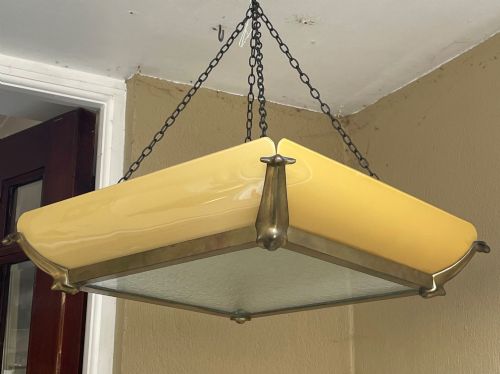
- A bowl-shaped ceiling light mounted flush or close to the ceiling. These fixtures distribute ambient light evenly across a room.
- Champlevé
- An enamelling technique where troughs are dug into the metal surface and filled with vitreous enamel before firing. This method creates bold patterns alongside polished bronze or brass boundaries.
- Cloisonné
- A technique using soldered metal wires to form compartments on a metal base, which are then filled with coloured enamel pastes. Japanese examples often feature floral or geometric motifs.
- Rise-and-fall
- A mechanical counterweight or pulley system allowing the lamp height to adjust vertically. This mechanism was common on Edwardian desk and reading lights.
- Ormolu
- Gilded bronze ornamentation applied to furniture and lighting fixtures. The finish produces a rich golden appearance on decorative mounts.
Period Brass Lamp: Frequently Asked Questions
What is a telescopic standard lamp?
A telescopic standard lamp is a tall floor-standing light featuring an inner shaft that slides upward to increase the overall height.
These pieces often include screw keys or internal spring mechanisms to lock the stem at the desired level for reading or ambient illumination.
Were all these lamps originally electric?
Many older examples began life as oil lamps, paraffin burners, or candle holders before later conversion to electricity.
Conversions often preserve the original fuel reservoirs, burners, or heavy weighted bases while adapting the internal wiring for modern domestic use.
What is a Lucerna oil lamp?
A Lucerna is a traditional Italian cast brass and bronze oil lamp design with roots stretching back centuries.
These multi-spouted hanging or standing fixtures utilised animal or vegetable oils and often included small metal picks suspended from chains to trim the wicks.