

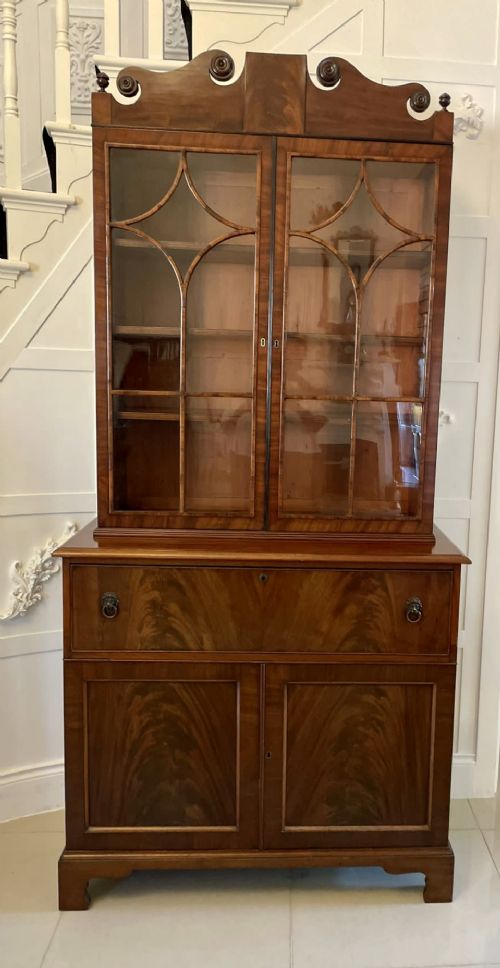
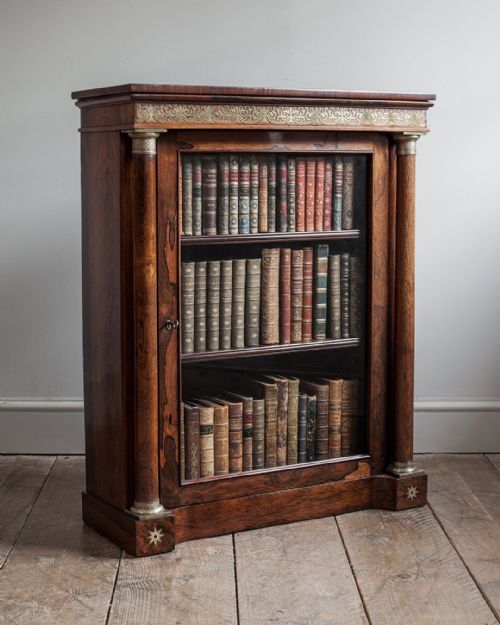

Period Bookcase Cabinet
A period bookcase cabinet organises volumes and displays treasured objects through centuries of craftsmanship, uniting utility with elegance.
Period Bookcase Cabinet
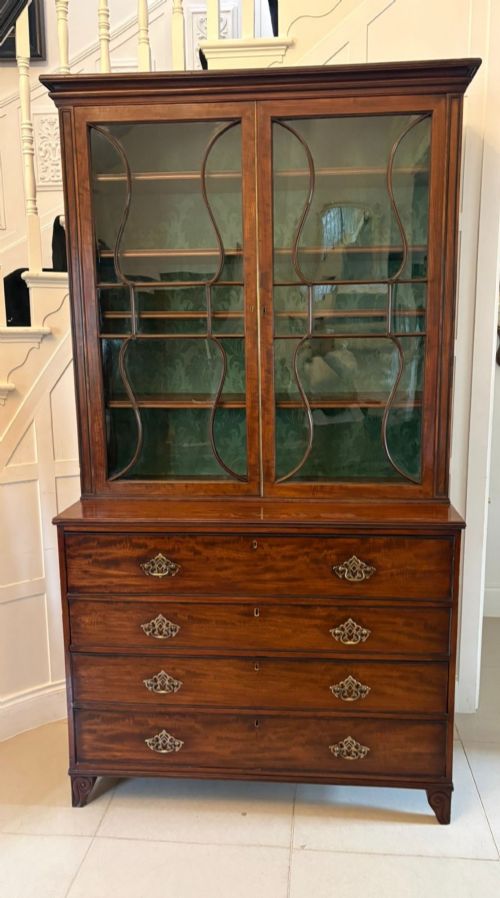
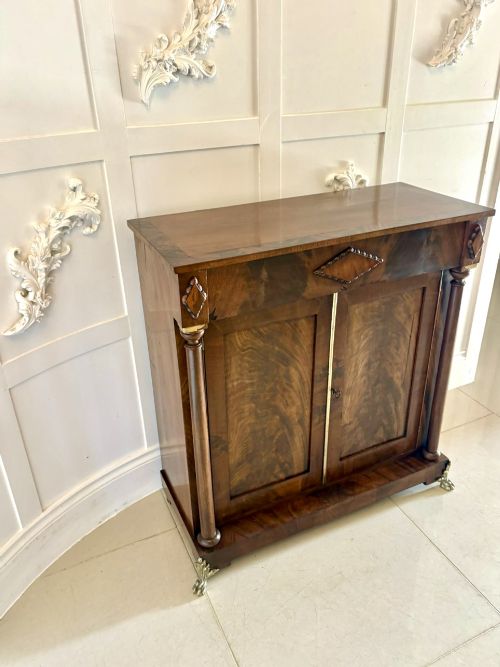
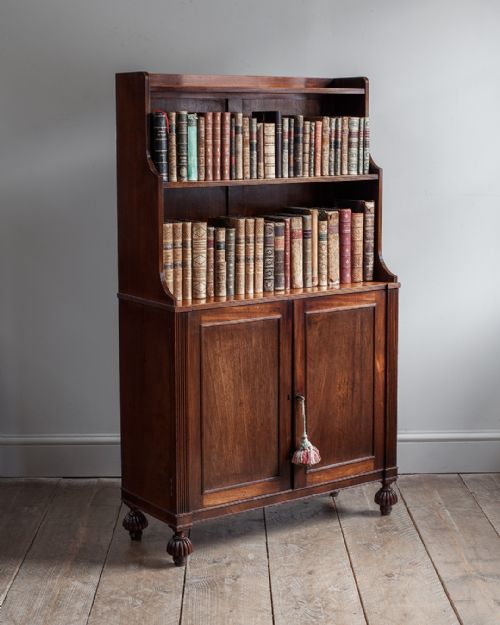
A period bookcase cabinet combines storage and display, ranging from grand George III tallcases to compact Regency chiffoniers. These versatile pieces serve as both functional libraries and elegant display furniture for the home.
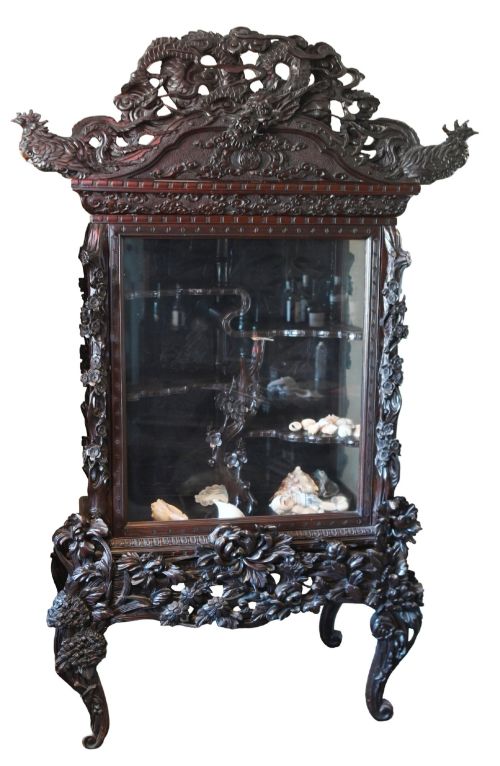
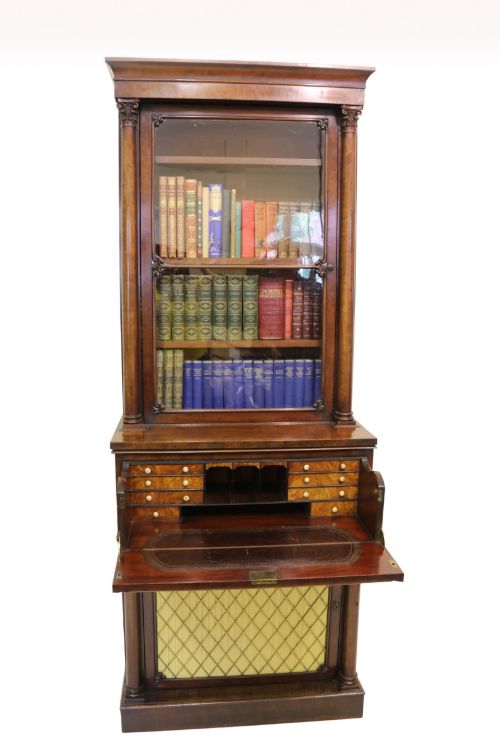
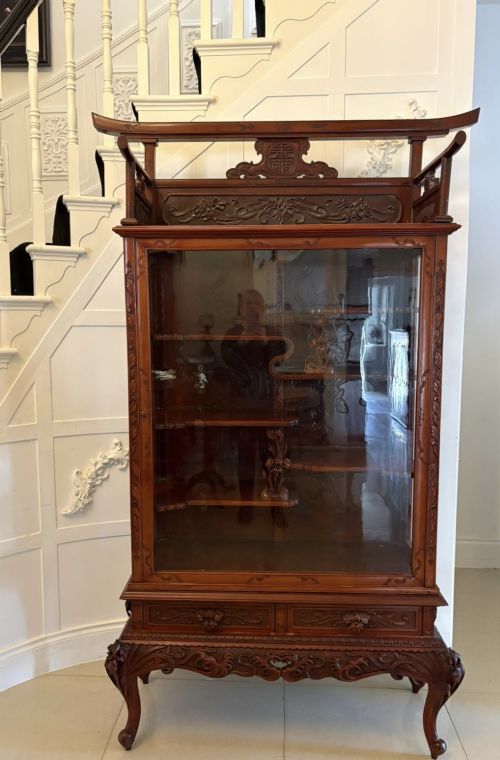
Buyers encounter various configurations including open waterfall bookcases, bureau bookcases, and glazed display cabinets. Each type reflects the domestic requirements of its original era, from formal Georgian libraries to intimate Victorian morning rooms.
How they were made
Cabinetmakers utilised dense timbers like mahogany, rosewood, and oak, frequently applying flame mahogany veneer to create striking grain patterns. Hardwood structures provide the stability necessary for supporting heavy collections of books.
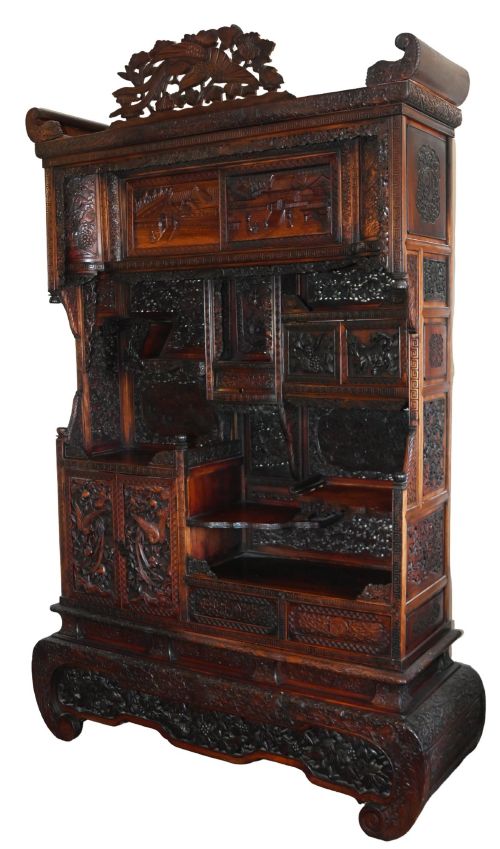
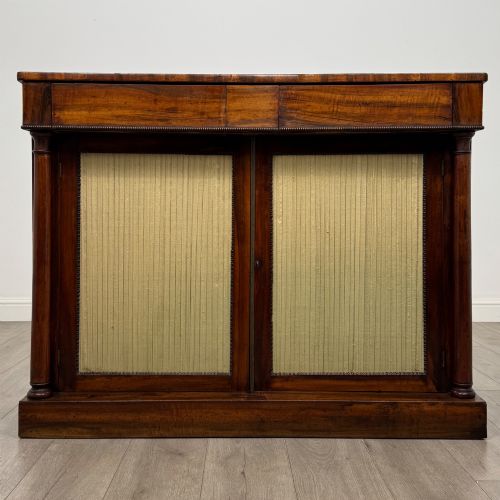
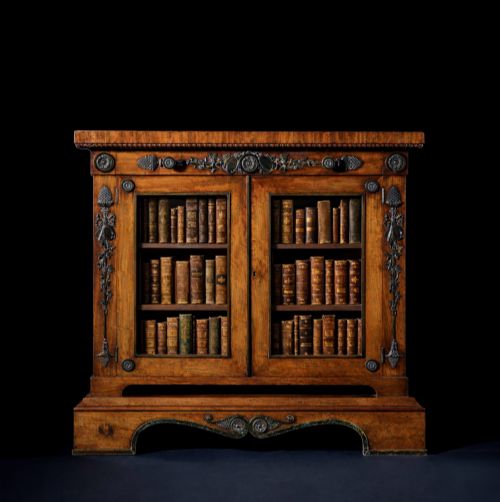
Fine decorative elements include brass mounts, inlay work, and carved wooden details, particularly visible in Japanese Meiji period pieces and English Sheraton designs. Silk panels and glass fronts offer visual contrast to the solid timber frames.
Materials recorded across the inventory include flame mahogany veneer, rosewood, oak, amboyna, and imported Japanese hardwood.
What varies in quality
The distinction between tiers rests upon timber selection and the precision of cabinetmaking joints. Figured veneers and meticulous brass inlay elevate a piece from utilitarian storage to high-status furnishing.
Proportion and original hardware heavily influence overall merit. Pieces retaining their uncompromised glass panes, interior fittings, and balanced architectural lines command greater attention from discerning collectors.
Gillows of Lancaster·Thomas Chippendale
The Period Bookcase Cabinet Glossary
- Secretaire bookcase
- A hybrid form incorporating a pull-down writing desk drawer concealed beneath upper shelving. This practical dual-purpose item flourished during the Georgian and Regency periods.
- Chiffonier
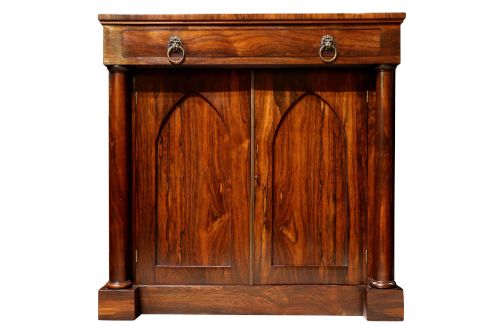
- A low cabinet typically fitted with enclosed cupboards below and sometimes a shelf above. These pieces serve well for smaller spaces while maintaining formal period character.
- Breakfront
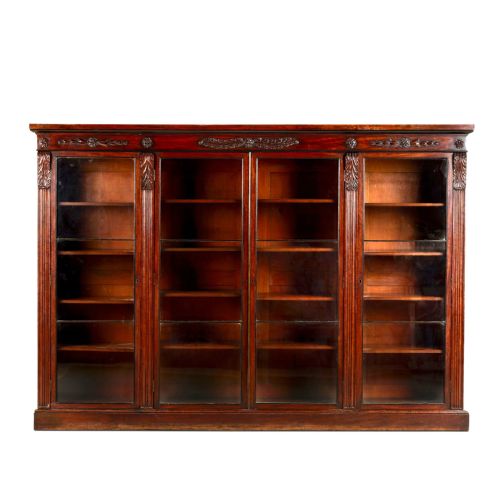
- A cabinet design where the central section projects forward from the flanking wings. This architectural arrangement creates depth and shadow across large bookcases.
- Waterfall bookcase
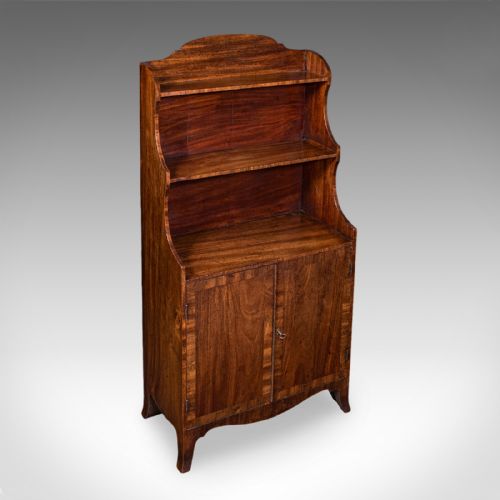
- An open shelving unit where each tier steps back progressively from the bottom to the top. The form gained popularity during the Regency era.
- Grille door
- A cabinet door fitted with fine brass wire mesh rather than glass or solid wood. This treatment allows ventilation while protecting the contents within.
Period Bookcase Cabinet: Frequently Asked Questions
How do I identify a Regency bookcase?
Regency bookcases frequently display classical architectural motifs, such as brass inlay, grille doors, and rosewood or mahogany timbers. They often exhibit clean lines influenced by Greek and Roman revival styles.
Look closely at the proportions and secondary woods to confirm the period. Brass mounts and restrained stringing distinguish these pieces from later Victorian revivals.
What is a secretaire bookcase used for?
A secretaire bookcase serves as a combined library and writing desk. The central drawer drops down to reveal pigeonholes and small drawers for correspondence.
This design maximises space in smaller rooms by eliminating the need for a separate desk. It provides a concealed writing surface while keeping reference volumes close at hand.
How should I care for mahogany furniture?
Maintain mahogany cabinets by keeping them away from direct sunlight and sudden temperature changes. This prevents the timber and underlying veneers from drying out or splitting.
Apply a traditional beeswax polish sparingly to nourish the grain. Avoid silicone-based sprays which can damage the historic finish over time.
Can these cabinets support heavy books?
Period bookcases constructed from solid hardwoods like oak and mahogany offer robust structural support for standard volumes. Adjustable shelving systems allow you to accommodate varying book heights.
Distribute weight evenly across the shelves to maintain structural integrity. Older timber can sag under extreme loads if unsupported over wide spans.