




Parquetry Vitrine
A parquetry vitrine brings geometric wood veneers and glass display together, offering a sophisticated cabinet for showcasing porcelain and curiosities.
Parquetry Vitrine
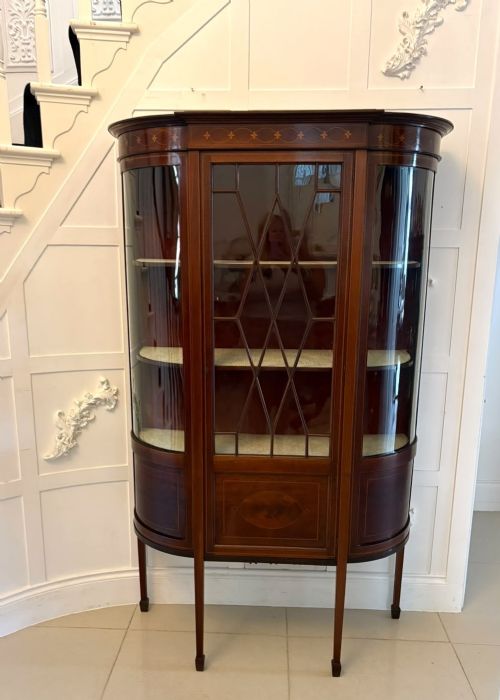
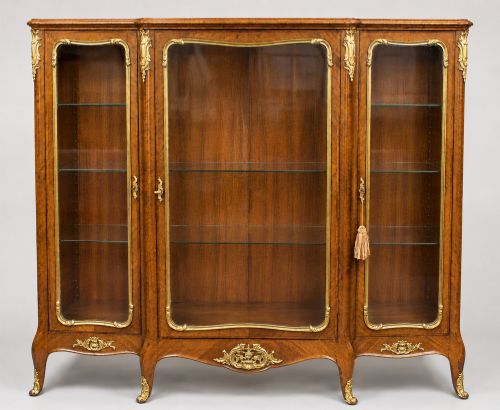
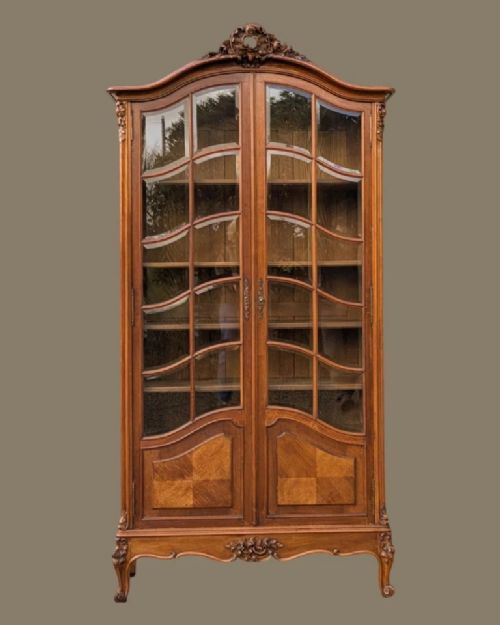
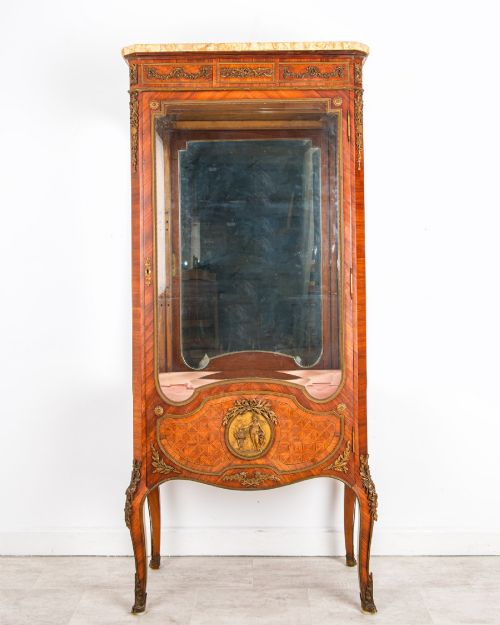
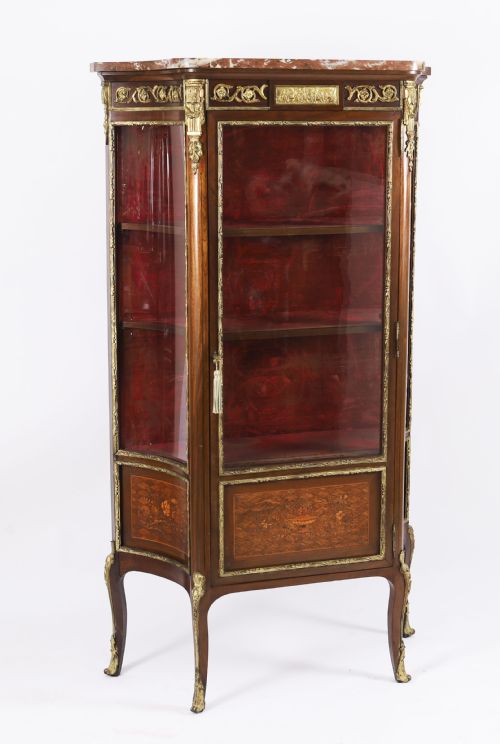
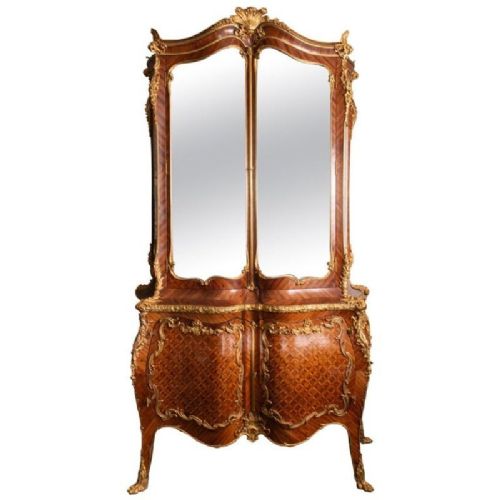
A parquetry vitrine is a glazed display cabinet surfaced with geometric wood veneers, designed to protect and display precious objects. Buyers seeking this form will find pieces spanning the nineteenth century through the Edwardian period, often reflecting French revival styles.
The objects take various structural forms on this page, including serpentine fronts, pier cabinets, bow-ended display cases, and occasional display tables. Most examples originate from nineteenth century French workshops or Edwardian English makers.
Makers and designers from the period, such as Maison Krieger and those influenced by Francois Linke, shaped the aesthetic of these cabinets. The combination of glass panels and inlaid timber surfaces defines the core utility and appearance of the category.
Assessing quality and execution
Quality rests in the precision of the parquetry pattern and the selection of cabinet timbers, where tightly fitted geometric veneers demonstrate superior craftsmanship. The weight, chiselling, and fire-gilding of the ormolu mounts further separate standard production from exceptional pieces.
Structural integration of the glass panels, the fluidity of serpentine or bow-ended fronts, and the presence of original marble tops dictate the standing of an individual cabinet. Works associated with known makers like Maison Krieger or attributed to the manner of Francois Linke command higher regard through their refined proportions.
Parquetry Vitrine Retail Price Guide 2026
Typical asking prices for parquetry vitrine among the pieces listed under this phrase on Sellingantiques today, from the lower quarter to the upper quarter. They describe what is for sale here now, not the wider market.
Some cabinets are so tightly glazed that even a whisper of dust struggles to find an entrance.
Gouffel·Linke·Verne Martin·Maison Krieger·Francois Linke
The Parquetry Vitrine Glossary
- Parquetry
- A geometric mosaic of wood veneers used to cover floors or furniture surfaces. It creates patterned wooden designs across cabinet doors and panels.
- Vitrine
- A glass-sided cabinet designed for displaying fine objects or curiosities. The term originates from the French word for glass.
- Ormolu
- Gilded bronze applied as a decorative mount on furniture. It provides metallic contrast to the timber carcase.
- Serpentine front
- A furniture front curved with a convex centre flanked by concave sides. This undulating shape requires advanced woodworking skill.
- Pier cabinet
- A low cabinet designed to stand against a wall pier between windows. These pieces often feature glass doors for displaying porcelain.
Parquetry Vitrine: Frequently Asked Questions
What is a parquetry vitrine used for?
These cabinets were historically built to display fine porcelain, silver, and decorative objects behind protective glass panels. They allowed collectors to exhibit their prized possessions while keeping them safe from dust.
Today, they serve the same function in domestic interiors, functioning as focal points for curated collections of small antiques.
How do I identify a French nineteenth century vitrine?
Nineteenth century French examples often feature kingwood or walnut timbers combined with cast ormolu mounts and marble tops. They frequently draw upon Louis XV or Louis XVI revival styles, showing curved lines or symmetrical neoclassical details.
Makers' signatures or distinctive bronze work can sometimes point to specific Parisian workshops of the period.
Where should I place a display cabinet at home?
A display cabinet requires a stable location away from direct sunlight to protect antique timber veneers and sensitive interior objects. Placing the piece against a solid wall allows the glass sides and front to catch natural light.
Ensure there is sufficient clearance around the doors for easy access to the shelved interior.
What is the difference between marquetry and parquetry?
Parquetry utilises geometric arrangements of wood veneer to create repeating patterns such as cubes, stripes, or chevrons. It relies on the grain and natural colour variations of the timber.
Marquetry, by contrast, forms pictorial or curvilinear compositions, often depicting flowers, landscapes, or scrolls using diverse veneers.