
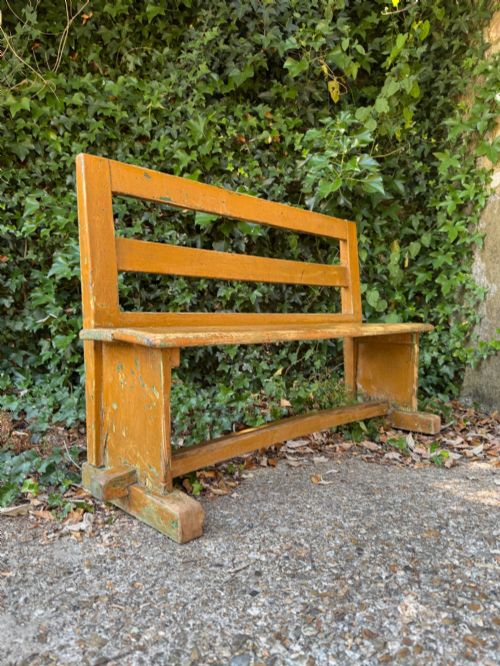
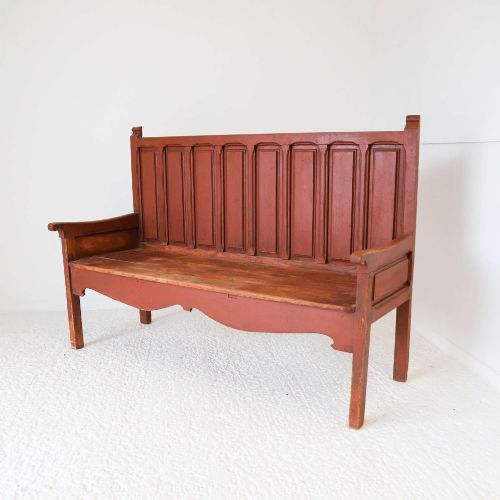
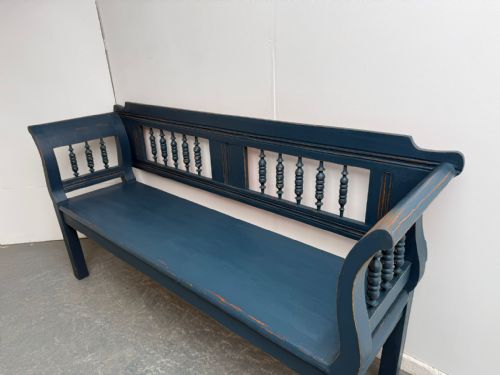
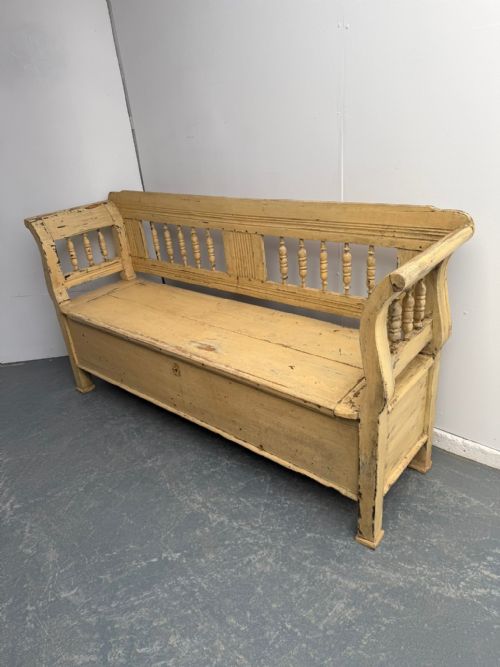


Painted Wooden Pew
These painted wooden pew options offer sturdy country seating built from honest timber and finished in period pigments.
Painted Wooden Pew
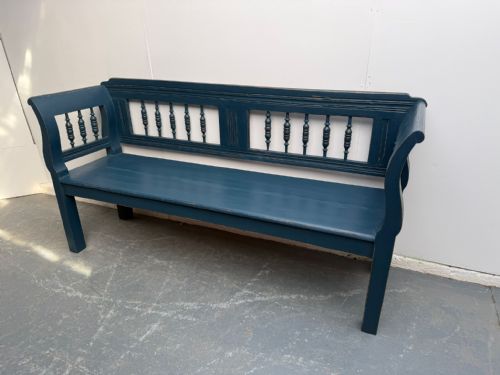
A painted wooden pew brings robust domestic or institutional seating to a room, drawing on regional traditions from English, Spanish, Hungarian, and Scandinavian makers. These pieces mostly date from the nineteenth century and the Victorian era, offering long benches, box settles, and high-back tavern forms.
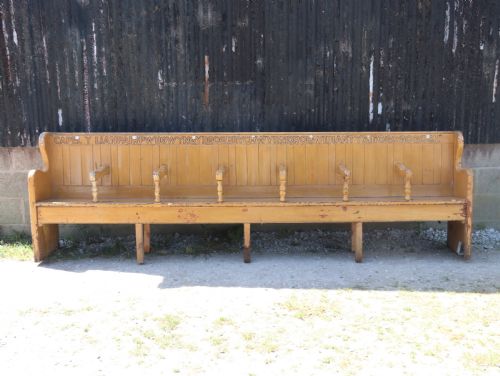
Buyers browsing this selection will frequently encounter nineteenth-century pine benches and settlement forms finished in original blue, cream, or rustic paint. The inventory spans simple planked benches through to marked chapel seating and enclosed box settles designed to block drafts.
Regional variations dominate the form, ranging from English country vernacular settles to Hungarian folk art three-seater benches and Austrian workshop variants. Each object serves as a functional anchor for hallways, farmhouse kitchens, or large dining spaces.
How they were made
Makers constructed these pews primarily from solid pine and native timber, utilising thick planks for seats and high backs to withstand heavy daily use. Joinery typically relies on pegged mortise and tenon joints, supported by iron hardware where structural reinforcement is necessary.
Surfaces were finished with oil or lead-based paint applied directly to the bare wood, often in muted creams or vibrant blues that have aged through decades of wear. This painted layer protects the underlying timber while recording the changing decorative tastes of successive owners.
One stubborn nineteenth-century chapel bench carries the literal scars of Llanfair, having survived long enough to swap Sunday hymns for hallway boots.
What varies in quality
The distinction between ordinary and superior examples lies in the integrity of the original paint surface and the intactness of the primary timber. Pieces retaining their early layers of pigment without extensive modern overpainting command greater interest from purists.
Proportion and structural honesty separate standard utility benches from finer vernacular showpieces, particularly in the architectural treatment of high backs and integrated box bases. Original markings, such as chapel stamps, add documentary value to the physical object.
The Painted Wooden Pew Glossary
- Settle
- A wooden bench with a high back, solid arms, and often a closed box base designed to keep out cold draughts. These pieces were traditionally placed near hearths in domestic and tavern interiors.
- Vernacular
- Everyday objects built by local craftspeople using regional styles and readily available materials rather than following formal academic design rules. This approach creates distinct local characteristics in furniture.
- Pine
- A soft timber widely utilised in nineteenth-century country furniture for its accessibility and straight grain. It takes paint exceptionally well and forms the structural core of most pieces in this category.
- Box settle
- A specific settle variant featuring a hinged seat lifting to reveal storage space beneath. The enclosed lower section prevents chills from creeping across flagstone floors.
Painted Wooden Pew: Frequently Asked Questions
What is a painted wooden pew?
A painted wooden pew is a heavy timber bench or settle finished with historic pigments, originating from nineteenth-century domestic, tavern, or ecclesiastical settings.
These functional seats combine sturdy pine construction with regional decorative styles, offering practical length and historic character for modern interiors.
How were settle benches used?
Settle benches were placed near fireplaces or in hallways to provide comfortable seating while blocking cold draughts from stone floors. The high backs and solid sides trapped hearth heat around the sitter.
Box variants also served as secure storage chests for blankets, candles, or household provisions within busy domestic spaces.
How do I care for old pine?
Maintain painted pine by keeping it away from direct heat sources and sudden humidity shifts that cause timber to split. Dust gently with a dry cloth and avoid harsh chemical cleaners that strip historic finishes.
Preserve the existing surface character by applying microcrystalline wax sparingly only if the exposed wood appears dry.
How are Victorian pieces identified?
Victorian pieces are recognised through nineteenth-century construction methods, standard hardware types, and characteristic vernacular designs recorded across English and European workshops. Surviving paint layers, stamps, or specific chapel markings further anchor the date.
Comparing timber thickness and joint wear helps distinguish nineteenth-century examples from later reproductions.