




Painted Demilune Consoles
These painted demilune consoles bring semicircular grace and surface colour to a room, offering practical display without bulk.
Painted Demilune Consoles
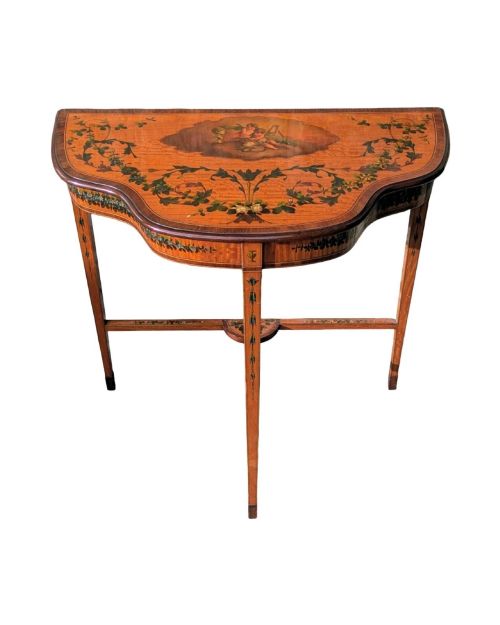
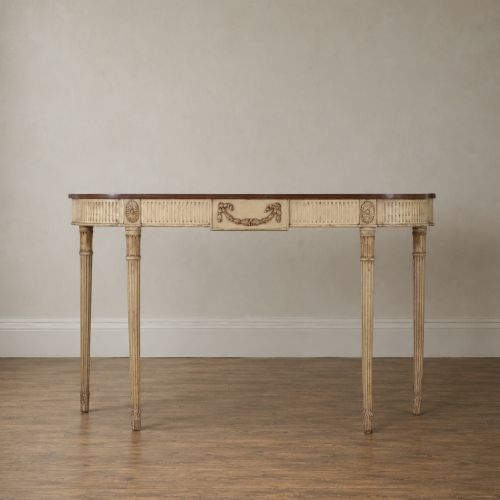
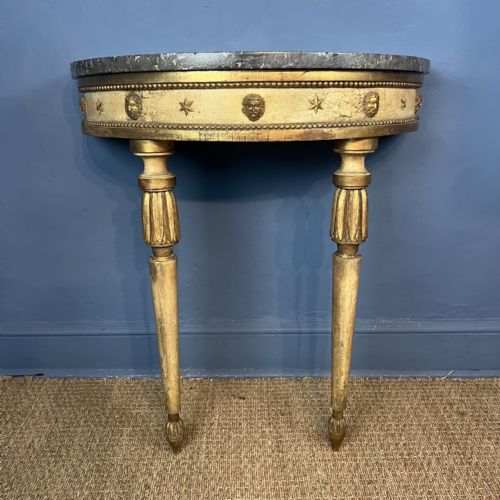
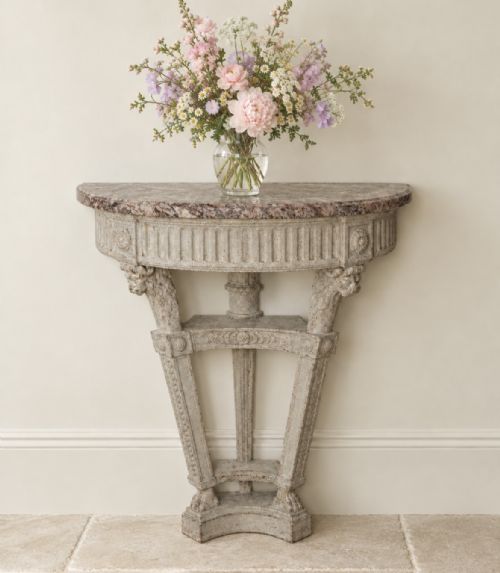
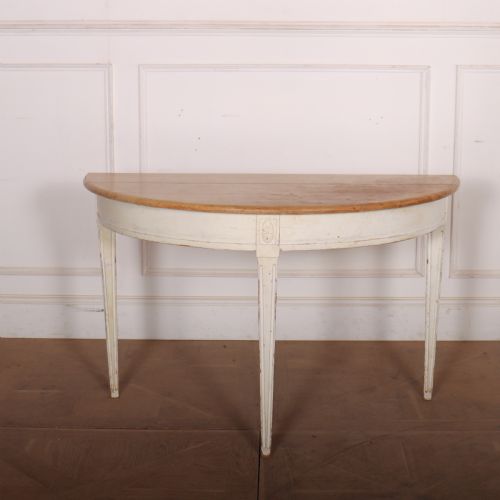
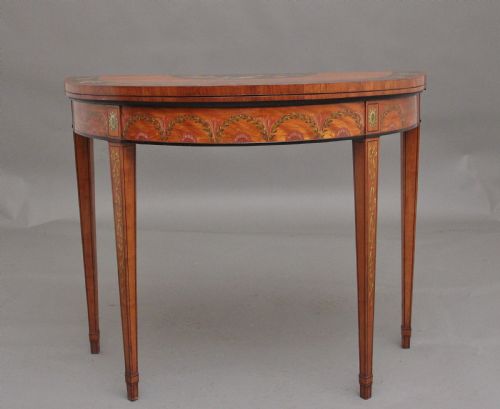
Painted demilune consoles are semicircular tables designed to stand flat against a wall, appearing across eighteenth, nineteenth and early twentieth century periods. You meet Swedish, French, Italian and English examples on this page, reflecting Gustavian, Neoclassical and Sheraton tastes.
The form encompasses console tables, side cabinets and card or games tables with turnover leaves. Many pieces feature marble tops or delicate satinwood surfaces beneath their painted finishes.
Materials and construction
Wood serves as the primary structural material, utilising pine, mahogany and satinwood shaped into curved frames. Gesso and applied paint provide the decorative skin, often enhanced with parcel gilding or inlay.
Many tables incorporate heavy marble slabs inset into the wooden framework, particularly on Italian and French Neoclassical examples. Ironwork also appears alongside timber on specific variants.
Painted Demilune Consoles Retail Price Guide 2026
Typical asking prices for painted demilune consoles among the pieces listed under this phrase on Sellingantiques today, from the lower quarter to the upper quarter. They describe what is for sale here now, not the wider market.
Listings feature pieces spanning the eighteenth century through to the 1920s, encompassing English, Swedish, French, Italian and Dutch origins.
Judging the work
Quality rests in the crispness of the carving, the integrity of the original paint surface and the subtlety of any floral or neoclassical motifs. Tables with period marble tops or hand-painted satinwood demonstrate superior craftsmanship compared to later revival pieces.
Proportion and structural joinery dictate the standing of a console, where smooth curves and stable leg attachments distinguish finer workshop output from simpler folk production.
The Painted Demilune Consoles Glossary
- Demilune
- A half-moon shape used for tables designed to sit flush against a wall. This profile saves floor space in narrower hallways and reception rooms.
- Gesso
- A plaster mixture applied to wood surfaces to create a smooth base for painting or gilding. It allows for crisp decorative moulding.
- Satinwood
- A durable timber with a natural golden sheen, frequently used in high-grade eighteenth and nineteenth century furniture. It accepts painted decoration and inlay particularly well.
- Pier table
- A table designed to stand against the wall between two windows, often placed beneath a mirror. These pieces frequently share the demilune format.
- Gustavian
- The Swedish interpretation of French neoclassical style, characterised by lighter proportions and pale painted finishes. It is common among Scandinavian console tables.
Painted Demilune Consoles: Frequently Asked Questions
Where should I place a demilune console?
These tables suit narrow entrance halls, living room walls, or beneath hallway mirrors where floor space is limited. Their flat back allows them to sit flush against vertical surfaces without blocking movement.
Because of their shallow depth, they serve well for displaying decorative objects rather than heavy use. Paired examples work effectively flanking a doorway or fireplace.
How do I care for painted wooden surfaces?
Dust the surface regularly with a soft, dry cloth to prevent dirt accumulation on the painted finish. Avoid harsh chemical cleaners or excessive moisture which can damage aged gesso and paint.
Keep tables away from direct heat sources and strong sunlight to prevent the timber underneath from warping and the paint from cracking over time.
What is the difference between a console and a card table?
A console table is built strictly for display and support against a wall, often featuring a fixed wooden or marble top. In contrast, a card or games table includes a hinged turnover leaf that opens to reveal a playing surface.
Both formats can share the same semicircular demilune shape, but games tables contain internal folding mechanisms and sometimes lined interiors.
How can I tell Swedish and French styles apart?
Swedish pieces often reflect the Gustavian aesthetic, showing restrained neoclassical carving with pale cream, grey or folk-inspired painted finishes. French examples tend to display more elaborate parcel gilding and formal carved details.
English interpretations, such as those in the Sheraton taste, frequently rely on satinwood and inlay rather than heavy paint layers.