




Padded End of Bed Bench
A padded end of bed bench brings practical seating and soft texture to a bedroom, drawing on period forms designed for versatile placement.
Padded End of Bed Bench
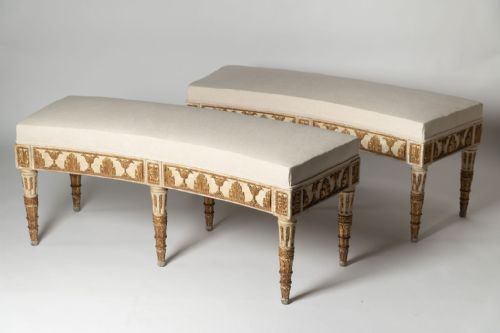
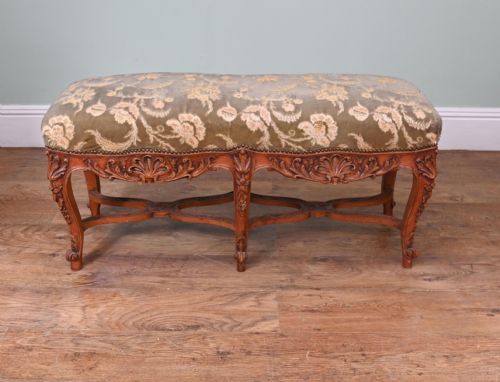
A padded end of bed bench frequently appears as a window seat, long stool, or ottoman across this selection of antique furnishings. These examples span the nineteenth century, the Edwardian era, and the early twentieth century, offering varied proportions for placement at the foot of a bed or beneath a window.
The forms encompass carved walnut frames, mahogany structures, and painted long stools alongside deep buttoned ottomans. Many pieces retain traditional upholstery, ranging from beige linen to patterned velvet.
Originating from English country house workshops, French provincial traditions, and Italian neoclassical designs, these benches combine sturdy timber frames with padded tops.
How they were made
Makers utilised solid timbers such as walnut, mahogany, oak, and rosewood to construct the structural frames of these benches. Woodworkers shaped cabriole legs, fluted supports, and claw and ball feet using traditional hand-carving techniques.
Upholstered surfaces relied on natural textiles including fabric, linen, velvet, and textile coverings padded over internal stuffing. Brass hardware and gilded detailing occasionally accentuate the woodwork and textile edges.
Some Victorian ottomans hide surprising depth beneath their buttons, ready to swallow all your stray winter woolies.
What varies in quality
The refinement of the timber frame carving distinguishes standard production from finer examples, particularly where legs display detailed shaping like fluting or cabriole curves. Superior pieces maintain structural integrity in the hardwood joints without excessive timber replacement.
The choice of upholstery fabric and the precision of the padding technique affect the overall finish, with traditional textile selections complementing the period of the wooden frame.
The Padded End of Bed Bench Glossary
- Window seat
- An upholstered bench designed originally to fit within a window recess, featuring a padded top and often supported on carved wooden legs.
- Ottoman
- A low, fully upholstered seat or footstool lacking a back or arms, frequently built with a deep buttoned surface.
- Cabriole leg
- A furniture leg that curves outward at the knee and tapers inward toward the foot, inspired by animal limbs.
- Claw and ball
- A furniture foot depicting a bird's talon clutching a ball, carved into the timber base of the leg.
Padded End of Bed Bench: Frequently Asked Questions
Where should I place a padded end of bed bench?
These benches fit naturally at the foot of a bed to provide a practical surface for dressing or holding extra textiles.
Their restrained proportions also suit hallways, dressing rooms, or beneath large windows where low seating is required.
How do I identify a Victorian window seat?
Victorian examples often feature dark walnut or mahogany frames with substantial carving, deep buttoning, or turned supports.
They frequently reflect revival styles like Georgian or Adams, combining robust wooden construction with traditional upholstery.
Are these benches comfortable for daily seating?
The padded tops provide firm support suitable for short periods of sitting while putting on shoes or resting.
Many pieces have been recently reupholstered in linen or velvet, ensuring the padding remains supportive for modern use.
What wood types are most common?
Walnut and mahogany appear frequently across the nineteenth and early twentieth-century pieces in this selection.
Oak, rosewood, and painted timbers also feature, reflecting regional preferences from English, French, and Italian workshops.