

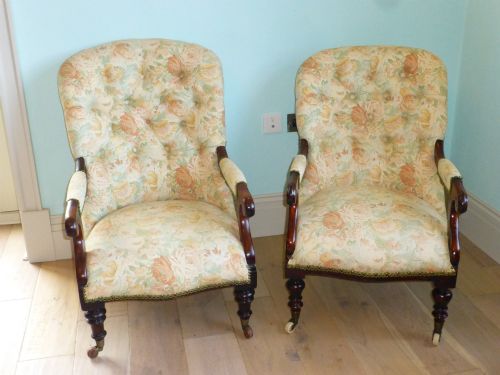
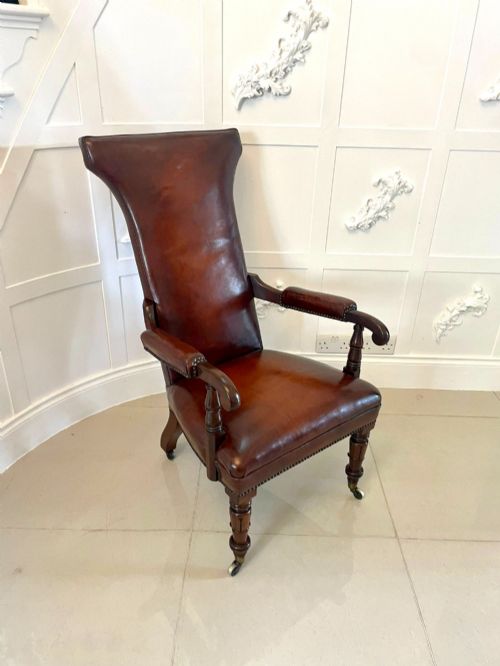
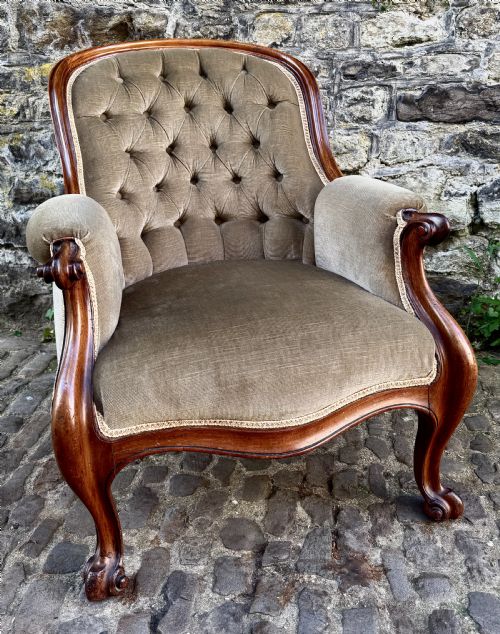
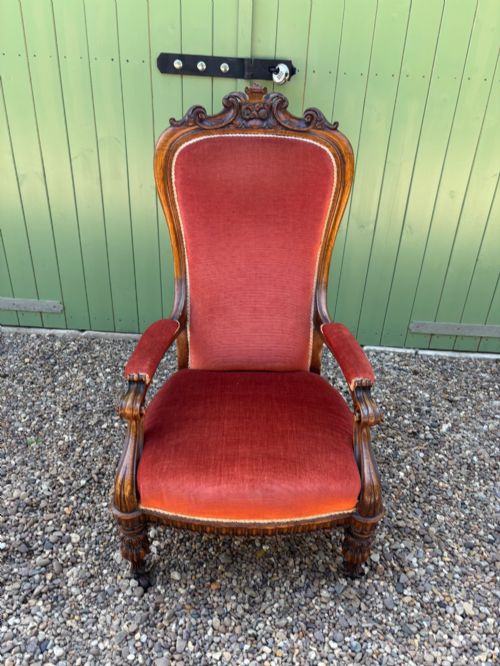



Padded Arm Library Chair
A padded arm library chair brings substantial comfort and historical character to a study, built from solid timbers and upholstered for daily reading.
Padded Arm Library Chair
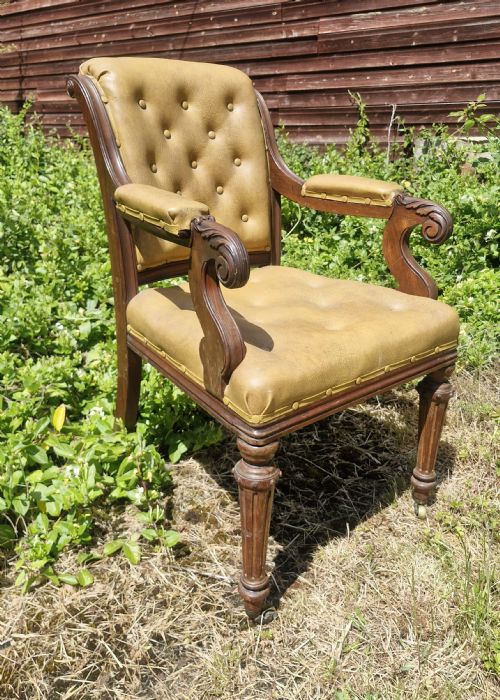
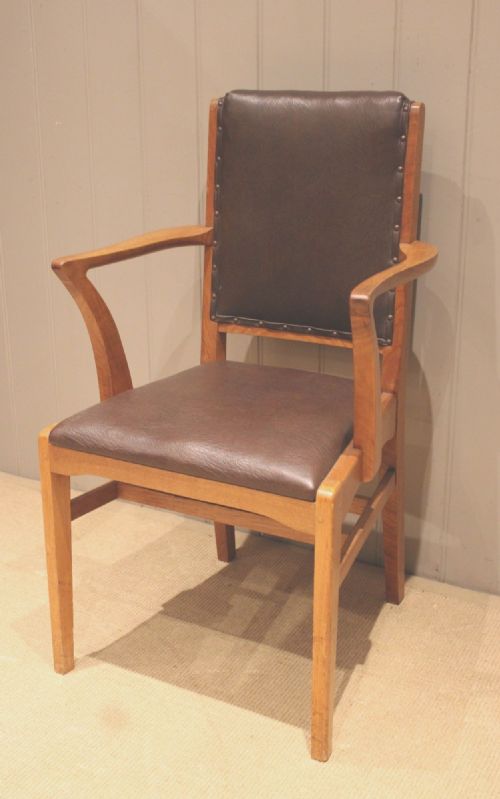
When searching for a padded arm library chair, buyers encounter seating designed primarily for studies, libraries, and large country houses across several centuries. These pieces function as desk chairs, fireside seats, and reading chairs, offering robust wooden frames paired with upholstered components.
The selections on this page span the eighteenth, nineteenth, and early twentieth centuries, encompassing Georgian, Victorian, and Edwardian examples. Forms range from Gainsborough and bergère designs to open armchairs and wide desk chairs with cane, leather, or fabric upholstery.
How they were made
Cabinetmakers constructed the primary frames of these chairs using hardwoods such as mahogany, walnut, oak, and yew, often shaping the timber into show frames, cabriole legs, and carved supports. Brass fittings appear on operational elements, whilst cane is utilised for seating surfaces in specific lighter formats.
Upholstery techniques involve padded arms and backs covered in leather, velvet, and various traditional fabrics. Joinery methods relied on traditional pegging and mortise and tenon construction to ensure the structural integrity of the frame under regular use.
Padded Arm Library Chair Retail Price Guide 2026
Typical asking prices for padded arm library chair among the pieces listed under this phrase on Sellingantiques today, from the lower quarter to the upper quarter. They describe what is for sale here now, not the wider market.
One early nineteenth-century armchair clearly decided to wear every hat by serving duty in the library, office, hall, and bedroom all at once.
What varies in quality
The distinction between standard examples and superior pieces rests upon the precision of the timber carving and the selection of primary woods. Solid mahogany and walnut frames exhibit crisper detailing and heavier proportions than simpler oak or mixed timber alternatives.
Another measure of quality involves the integrity of the original show frame and the sophistication of the upholstery specification, whether finished in hand-tooled leather or quality fabric. Pieces retaining their structural coherence and original timber patination command greater interest from discerning collectors.
Howard & Sons
The Padded Arm Library Chair Glossary
- Gainsborough armchair
- A wide, open-armed easy chair originating in the mid-eighteenth century, typically featuring a padded back and armrests supported on straight or cabriole legs. These chairs were designed specifically for writing desks and libraries.
- Bergère
- An enclosed armchair with upholstered sides and back, frequently incorporating cane work into the wooden frame. This French-influenced style gained popularity in British interiors during the eighteenth and nineteenth centuries.
- Show frame
- A wooden structural skeleton left deliberately exposed around the upholstered elements of an armchair. Cabinetmakers used this technique to display the grain and carving of mahogany or walnut.
- Cabriole leg
- A furniture leg that curves outward at the knee and tapers inward toward an ankle or foot, often terminating in a pad or claw. This profile is frequently seen on Georgian and Victorian library seating.
Padded Arm Library Chair: Frequently Asked Questions
Where should I place a library chair?
These chairs suit studies, home offices, and living rooms where a sturdy reading seat is required. Their substantial frames and padded arms provide comfortable support for prolonged sitting at a desk or beside a fireplace.
Because many examples feature finished backs and polished wooden frames, they also function effectively as freestanding pieces in larger rooms rather than being pushed strictly against a wall.
How do I identify a Georgian armchair?
Georgian armchairs, including eighteenth-century and George III pieces, generally utilise dense mahogany or walnut. They typically feature hand-carved details, open arms with padding, and proportions suited to formal domestic interiors.
Later Victorian interpretations often replicate these earlier styles or introduce broader proportions and alternative wood choices like rosewood or oak while maintaining the core layout.
Are these chairs suitable for daily use?
The solid timber construction of nineteenth and early twentieth-century library chairs makes them durable for regular seating. Their frames are built from hardwoods designed to withstand decades of physical weight and movement.
Buyers intending to use them daily should check the condition of the internal webbing and padding to ensure the support meets modern comfort expectations without compromising the antique frame.
What is the difference between a desk chair and a library chair?
Desk chairs often feature swivel mechanisms, castors, or compact proportions designed to fit neatly beneath a writing table. Library chairs generally prioritise wider armrests and deeper upholstered seats intended for relaxed reading rather than active writing.
Both categories overlap significantly in historic listings, as large country houses frequently utilised similar open-armed upholstered seating for multiple study and library purposes.