
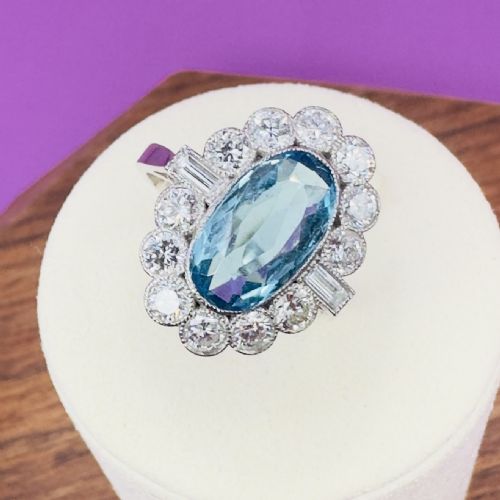

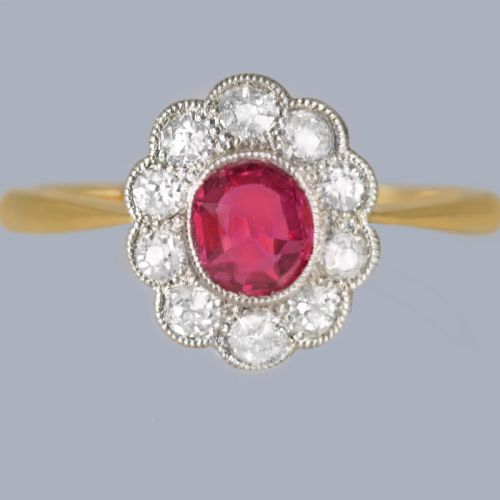

Oval Gemstone Cluster Ring
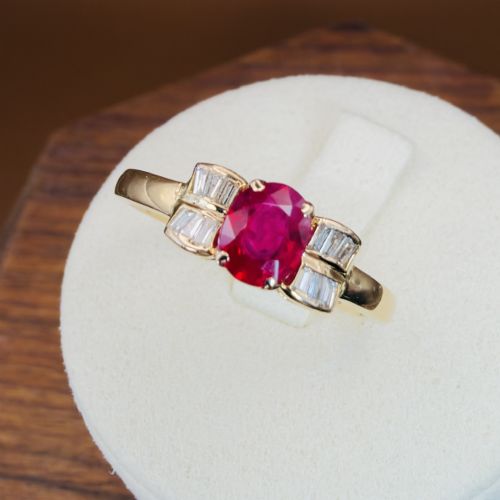
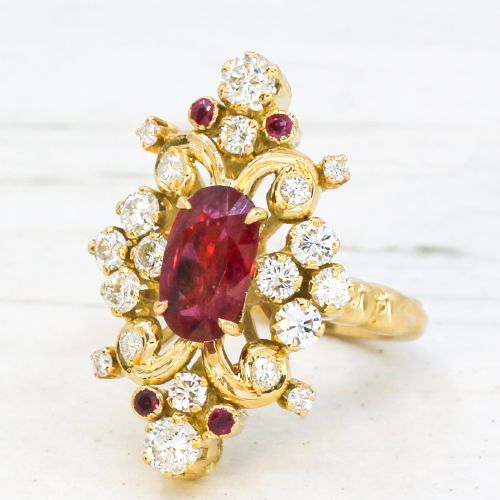
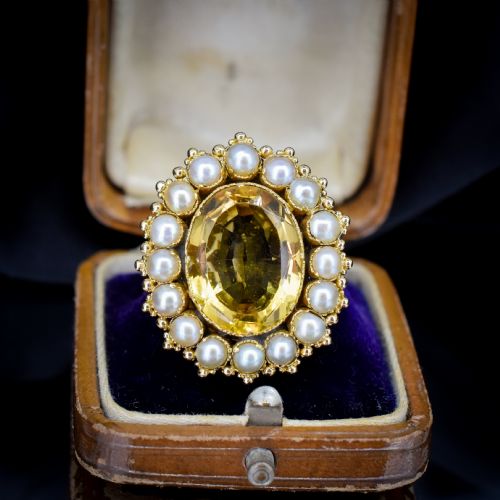
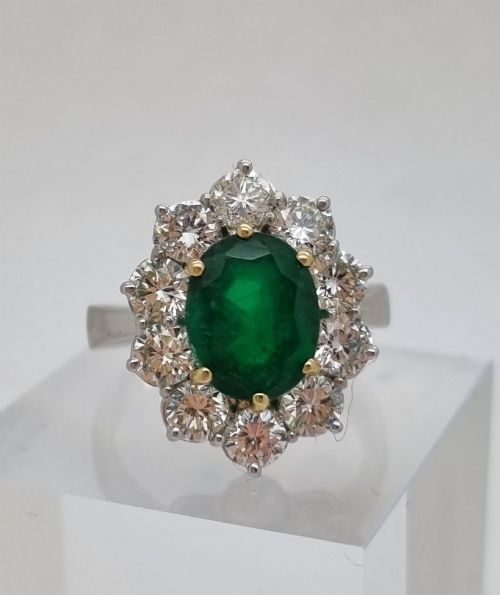
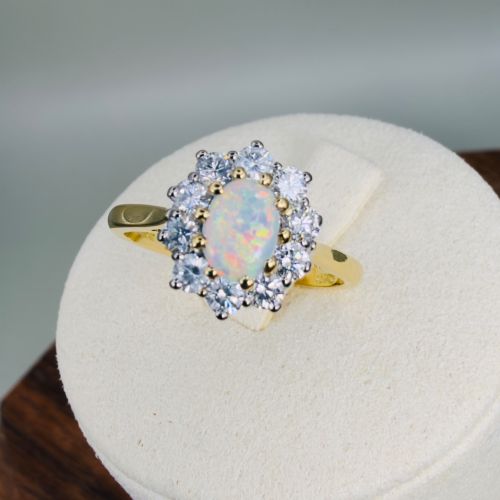
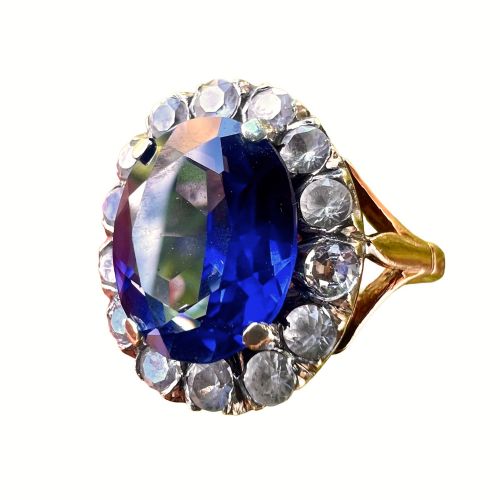
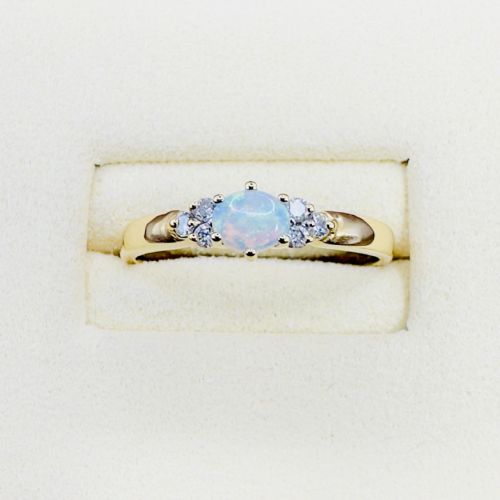
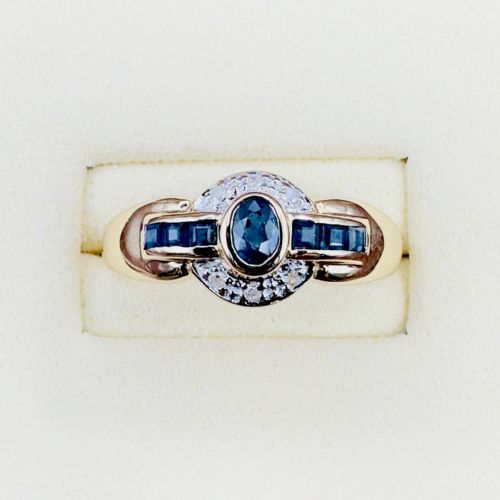
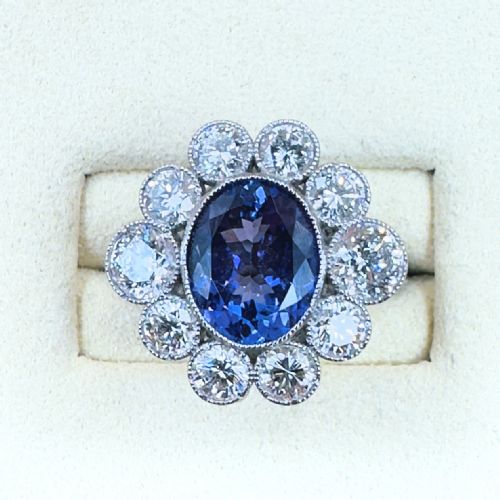
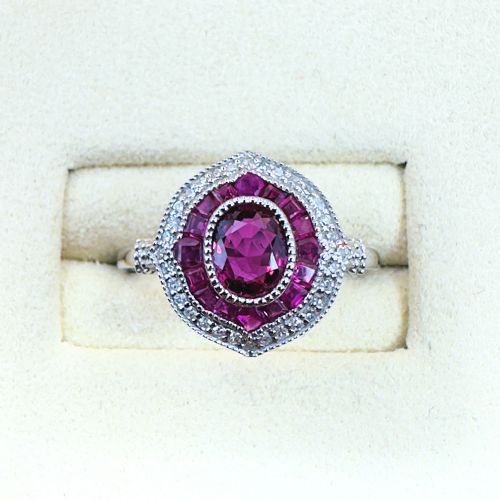
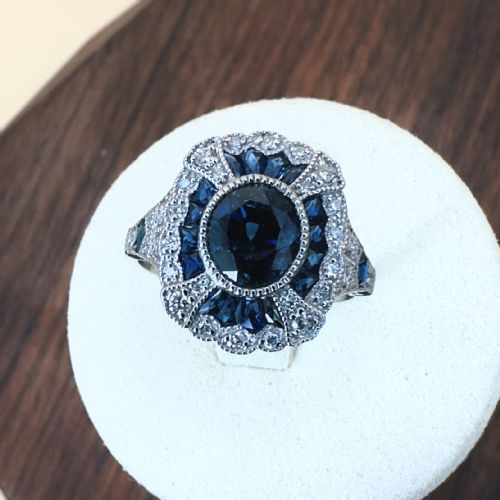
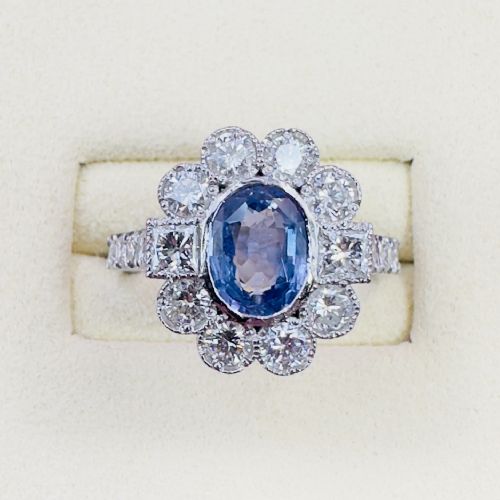
When you search for an oval gemstone cluster ring, you are looking at a central oval stone framed by smaller diamonds, creating a distinct floral outline that dominates the finger.
Oval Gemstone Cluster Ring
An oval gemstone cluster ring centres on an oval-cut primary stone surrounded by a geometric or floral border of smaller diamonds. These pieces appear frequently across mid-century designs, particularly from the 1950s and 1960s, alongside earlier Victorian and Edwardian examples.
Makers utilised various geometric arrangements, mounting the central oval stone either vertically or east-to-west across the band. Buyers encounter both delicate dress rings and substantial cocktail pieces featuring significant carat weights.
Materials and construction methods
Goldsmiths combined precious metals such as 18ct gold, 9ct gold, and platinum to mount the central stones and secure the surrounding diamond halos. Platinum settings provide structural strength for claw and bezel arrangements while maintaining a bright white backdrop for melee diamonds.
Cut styles vary from traditional oval facets to cabochon domes, paired with baguette or brilliant-cut accent diamonds. Settings range from traditional basket mounts to low-profile cluster frames designed to sit flat against the hand.
Some mid-century designs turn the oval sideways just to be contrary.
Assessing quality in cluster rings
The distinction between standard examples and superior pieces rests on the saturation, clarity, and treatment status of the central gemstone. Unheated rubies and sapphires with verified geographical origins command greater attention than treated stones.
Setting precision and the matching of secondary diamonds dictate overall visual harmony. Fine claw work and symmetrical diamond arrangements separate utilitarian production from accomplished artisan construction.
The Oval Gemstone Cluster Ring Glossary
- Cluster ring
- A ring featuring a prominent central stone encircled by a border of smaller gemstones, typically diamonds. This layout maximises visual impact and light reflection.
- Halo
- A concentric ring of pavé or claw-set diamonds surrounding the central gemstone. The halo visually enlarges the primary stone.
- Cabochon
- A gemstone shaped and polished with a smooth, rounded dome rather than faceted surfaces. This cut is common for opals and certain sapphires.
- East-to-west setting
- An oval or elongated stone mounted horizontally across the finger rather than vertically along the band. This orientation offers a distinct profile.
- Melee
- Small-cut diamonds used in secondary roles, such as framing the central stone in a cluster arrangement.
Oval Gemstone Cluster Ring: Frequently Asked Questions
What is an oval gemstone cluster ring?
An oval gemstone cluster ring is a piece of jewellery featuring a central oval-shaped coloured stone surrounded by a border of smaller accent stones, usually diamonds. This design creates a prominent focal point that resembles a flower.
Such rings span multiple eras, appearing in Victorian, Edwardian, Art Deco, and mid-century styles using metals like 18ct gold and platinum.
How do I wear a cluster ring daily?
Wearing a cluster ring every day involves considering the hardness of the central gemstone. Harder stones like sapphires, rubies, and diamonds withstand daily wear well, while softer materials like opals require extra care.
Pairing the ring with plain wedding bands prevents claw wear from rubbing against adjacent jewellery.
How can I tell the period of a ring?
Dating a ring relies on examining the metal types, gemstone cuts, and construction techniques used in the setting. Edwardian and Victorian pieces often utilise intricate millegrain work and yellow gold with silver settings, while 1950s and 1960s examples frequently employ white gold and platinum with streamlined claw mounts.
Gemmological reports also help verify unheated stones and approximate manufacturing decades.
What makes unheated stones different?
Unheated gemstones have undergone no artificial thermal enhancement to improve their natural colour or clarity. This scarcity of natural perfection makes unheated rubies and sapphires particularly sought after by collectors.
Gemmological certification usually confirms whether a stone remains untreated.