

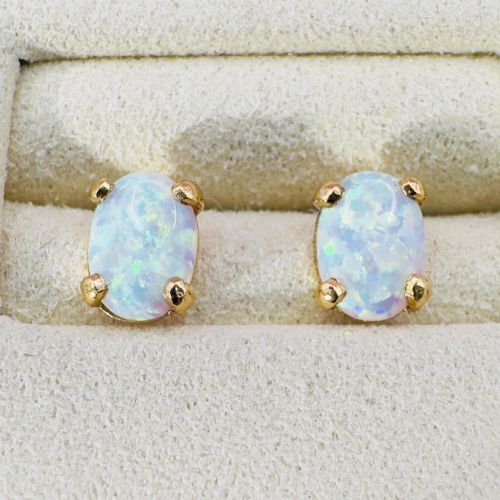
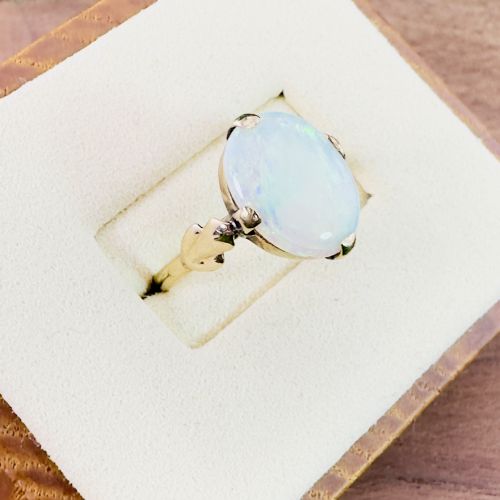
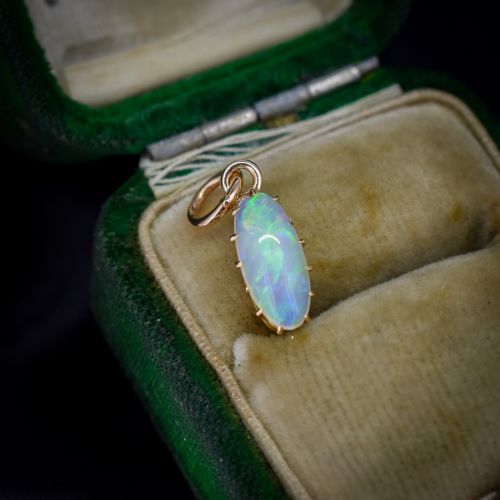
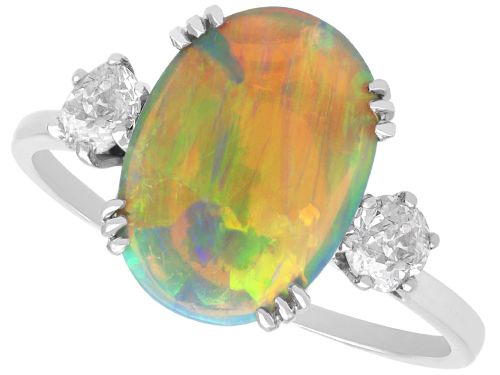
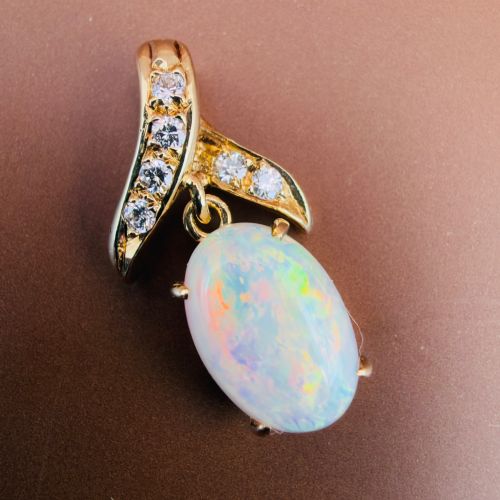
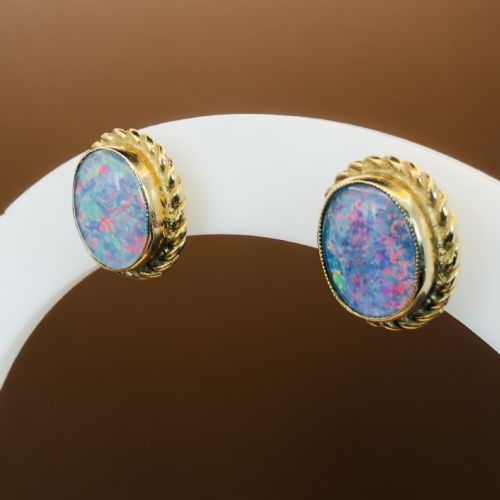
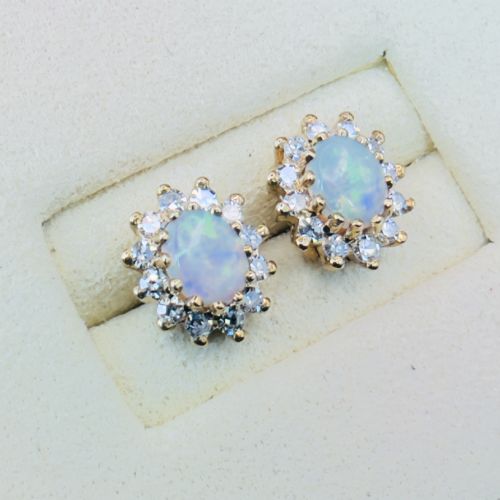

Oval Cabochon Opal
An oval cabochon opal delivers a shifting play of colour in smooth, rounded domes that catch the light from every angle.
Oval Cabochon Opal
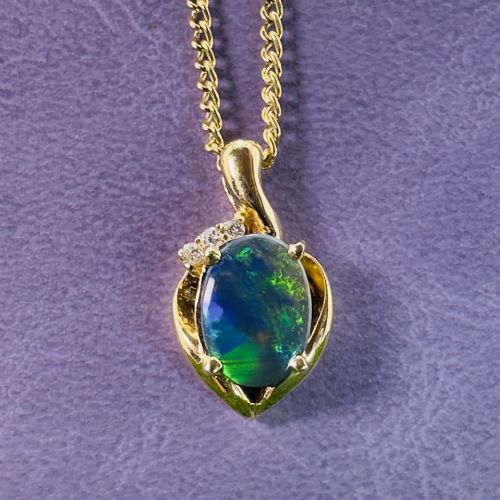
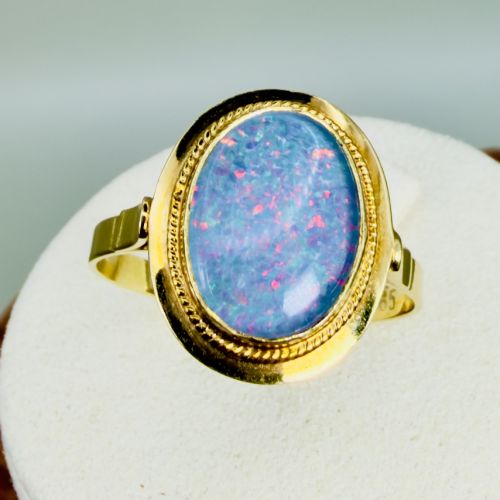
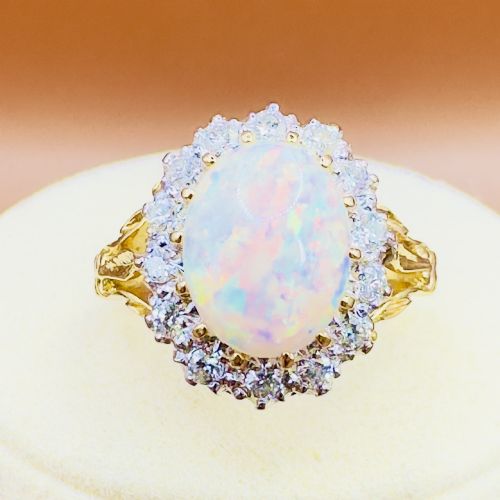
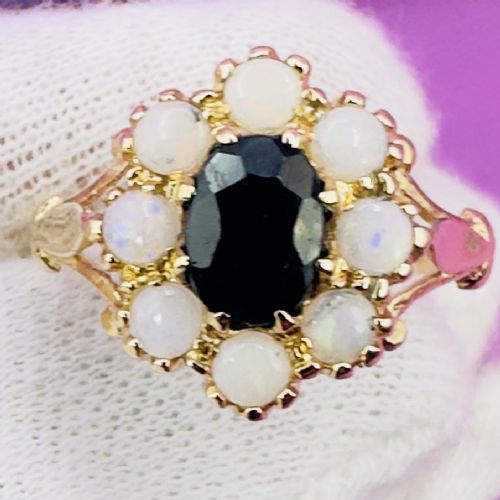
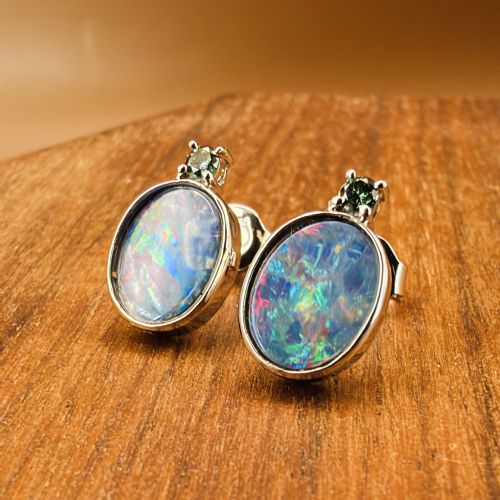
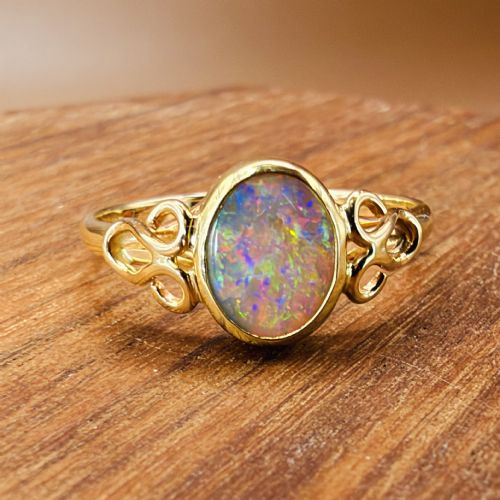
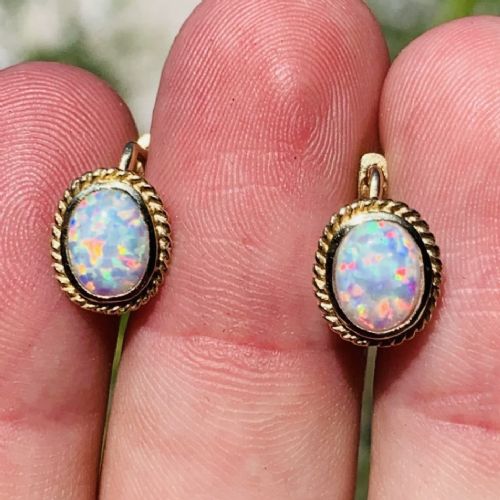
When searching for an oval cabochon opal, buyers encounter polished gemstones shaped into smooth, convex domes rather than faceted stones. These stones appear across rings, pendants, necklaces, stud earrings, and bracelets spanning the Victorian era through to the late twentieth century.
The pieces listed on this page originate predominantly from the mid-twentieth century alongside Edwardian, Art Deco, and Victorian examples. Solitaire rings, cluster rings, and pendant necklaces form the majority of the available selection.
Stones range from solid white and black opals to water opals, boulder opals, and doublets. Settings utilise yellow gold, white gold in nine-carat, fourteen-carat, and eighteen-carat purities, fifteen-carat gold, and platinum.
Materials and construction methods
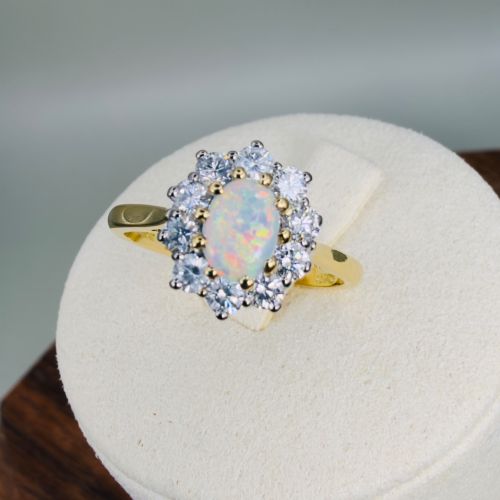
Goldsmiths shaped precious metals including nine-carat, fourteen-carat, and eighteen-carat yellow and white gold, fifteen-carat gold, and platinum to house these rounded stones. Settings incorporate bezel mountings, claw grips for diamond and sapphire halos, and detailed filigree work.
Opals are cut en cabochon to display their internal play of colour, sometimes paired with diamond accents, sapphires, or teal green diamonds in cluster and trilogy arrangements.
Oval Cabochon Opal Retail Price Guide 2026
Typical asking prices for oval cabochon opal among the pieces listed under this phrase on Sellingantiques today, from the lower quarter to the upper quarter. They describe what is for sale here now, not the wider market.
Some opals contain microscopic trapped water droplets that shift light so dynamically they appear lit from within.
Quality factors in stones and settings
The intensity and distribution of the play of colour within the opal dictate visual appeal, alongside the stone's structural variety such as solid black, boulder, water, or doublet formation. Larger carat weights, including stones exceeding six carats, represent more substantial examples.
The choice of surrounding materials, such as platinum or higher carat golds paired with supporting diamonds, distinguishes standard mountings from finer pieces.
The Oval Cabochon Opal Glossary
- Cabochon
- A gemstone shaped with a smooth, rounded dome rather than flat facets. This cut allows opals to display their internal play of colour effectively.
- Doublet
- A composite gemstone made of a thin slice of opal glued to a darker backing material to enhance the perceived body colour and brilliance.
- Cluster
- A jewellery arrangement where a central stone is surrounded by a ring of smaller gemstones, commonly diamonds or sapphires.
- Trilogy
- A three-stone setting, frequently featuring a central gemstone flanked by two smaller accent stones such as diamonds.
- Filigree
- Ornamental work consisting of fine wire twisted into delicate openwork patterns, often seen on vintage pendants and rings.
Oval Cabochon Opal: Frequently Asked Questions
How do I care for an opal ring?
Opals contain water within their structure and possess a moderate hardness, making them sensitive to sudden temperature changes, harsh chemicals, and physical impacts.
Clean your jewellery gently with a soft cloth and warm soapy water, avoiding ultrasonic cleaners and prolonged immersion.
What is the difference between solid opal and a doublet?
A solid opal consists entirely of natural opal material cut from the rough stone. These stones display a natural body tone and depth.
A doublet layers a thin slice of genuine opal over a dark backing layer, which deepens the visible colours while providing structural support.
How can I tell the period of an opal piece?
Dating relies on a combination of metal purity hallmarks, gemstone cutting styles, and the overarching design characteristics of the setting. Victorian and Edwardian pieces often feature detailed hand-work and lower-visibility claws, while mid-century designs frequently utilise cluster halos and distinct basket mounts.
Examining the construction under magnification reveals the hand-fabrication methods typical of earlier eras compared to later manufacturing.
Are all opals Australian in origin?
While Australia supplies a vast proportion of the world's precious opals, including notable black opals and boulder opals, stones are also mined in other global locations.
Specific regional sources such as Coober Pedy are sometimes documented in historical records or modern certificates accompanying the jewellery.