


Ornate Oil Lamp
These ornate oil lamp designs bring heavy Victorian metalwork and coloured glass into a room for genuine period atmosphere.
Ornate Oil Lamp
An ornate oil lamp brings together substantial metal stands and decorative glass reservoirs from the Victorian and Edwardian eras. Buyers searching for an ornate oil lamp usually encounter tall standard lamps, adjustable desk pieces, and large table lamps designed to dominate a corner or surface.
Most examples date from the nineteenth century, ranging from eighteen-fifty through to nineteen-hundred. The selection on this page relies heavily on Victorian production, featuring both British works and continental European pieces from periods like the Napoleon III era.
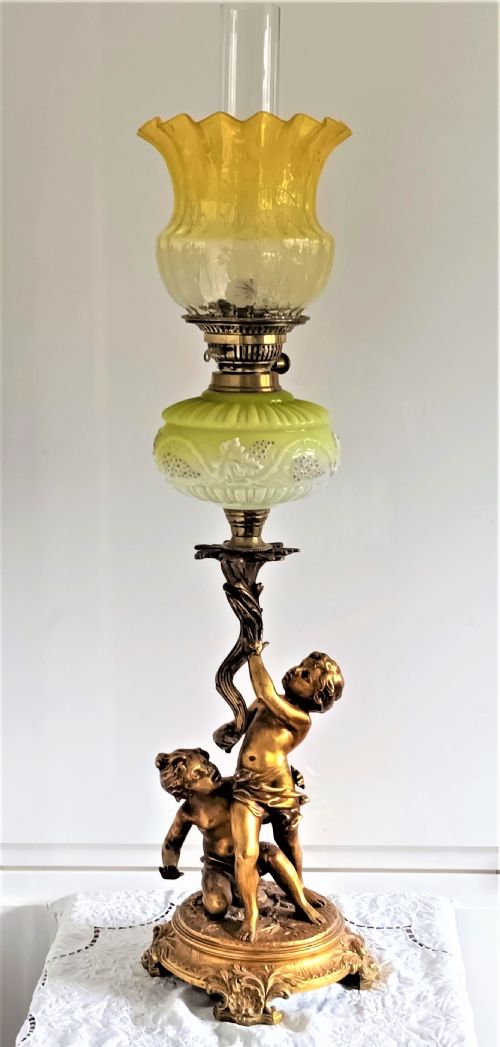
Forms vary from heavy brass extending floor standards to paired desk lamps and carved giltwood stands. Each piece demonstrates the heavy ornamentation typical of nineteenth-century domestic lighting before widespread electrification.
How they were made
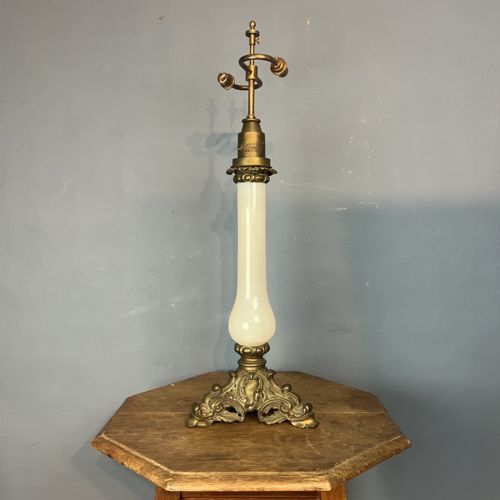
Makers utilised cast and stamped brass alongside gilt metal, ormolu, and carved giltwood for the structural frames and standards. These durable metals allowed for intricate decorative casting and adjustable mechanisms that could hold heavy fuel reservoirs.
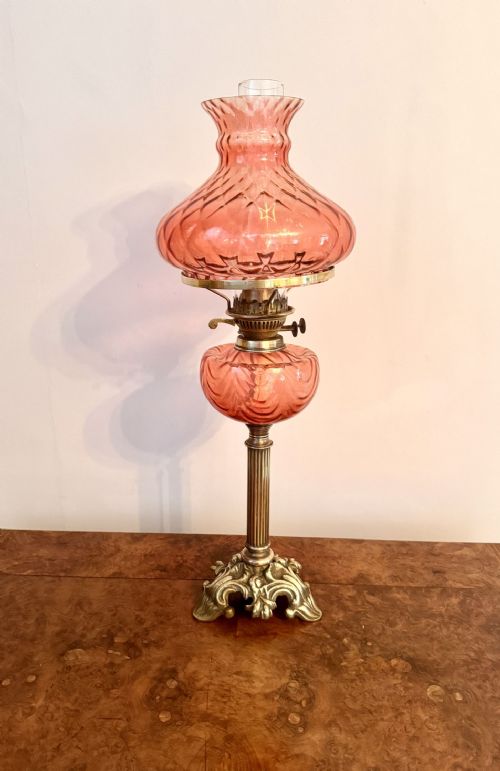
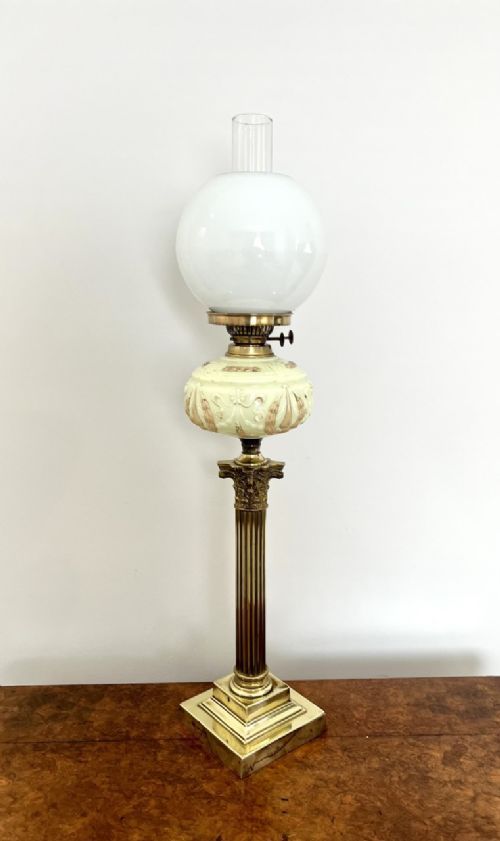
Reservoirs and shades were formed from specialist glass types including cranberry glass, opaline glass, and plain porcelain. Coloured and milk glasses provided striking visual contrast against the polished or gilded brass foundations.
The documented object types include standard floor models, adjustable desk lamps, and substantial table reservoirs.
What varies in quality
The distinction between standard items and superior pieces rests on the crispness of the metal casting and the presence of maker stamps. Patents and known workshop marks elevate a piece by confirming its origin and engineering pedigree.
The selection of glass components also dictates the tier of the piece, with richly coloured cranberry glass or hand-painted porcelain commanding attention. Heavier gauge brass and intricate chasing on the standards separate fine examples from simpler production.
Mc Gary·Wild And Wessel·Messenger
The Ornate Oil Lamp Glossary
- Cranberry glass
- A rich red transparent glass coloured with gold chloride during production. It appears frequently in late nineteenth-century reservoirs and shades.
- Opaline glass
- An opaque or translucent pale glass used to diffuse light softly. It provides a milky contrast to polished brass mountings.
- Ormolu
- Gilded bronze or brass applied to decorative mounts and fittings. It gives a bright golden finish that resists tarnishing over decades.
- Standard lamp
- A tall floor-standing lamp designed to illuminate a wider area. Many examples in this category feature adjustable height mechanisms.
- Napoleon III
- A mid-nineteenth century French design style characterised by eclectic revivalism and ornate detailing. Pieces from this period often display heavy metalwork and rich gilding.
Ornate Oil Lamp: Frequently Asked Questions
How do I date an ornate oil lamp?
Dating relies on stylistic clues, patent marks, and the specific combination of materials used in the construction. Nineteenth-century pieces often feature cast brass bases and specific burner mechanisms that evolved rapidly between eighteen-fifty and nineteen-hundred.
Examining the manufacturing techniques on the collar and font helps narrow down the decade of production. Maker stamps provide the most reliable chronological anchor when present.
Were these lamps converted to electricity?
Many nineteenth-century lighting pieces have undergone conversion to run on electricity for modern domestic use. This process typically involves routing a cord through the original central column without destroying the antique metalwork.
Converted standards and table lamps retain their decorative brass and glass bodies while offering safe illumination. Collectors look for conversions that respect the original structure of the burner and reservoir.
What is cranberry glass?
Cranberry glass is a distinctively tinted transparent red glass created by adding gold to the molten batch. It became highly fashionable during the Victorian era for decorative tableware and oil lamp reservoirs.
The deep red hue catches daylight and artificial light alike, making it a focal point of Victorian and Edwardian interior design.
Where should I place a standard oil lamp?
Floor-standing standard lamps suit corners of reception rooms or beside heavy period seating where their height provides balanced illumination. Their substantial brass and giltwood frames require adequate space to be appreciated fully.
Table and desk versions work well on sideboards or large writing desks where their decorative reservoirs can catch the light.