







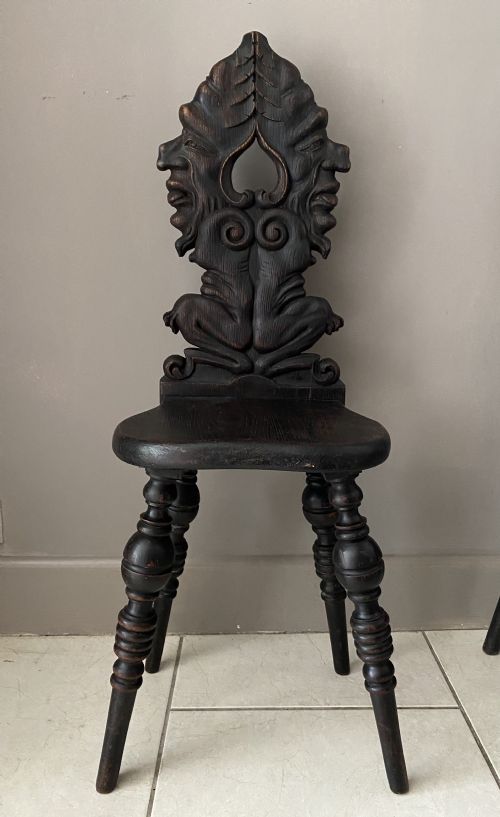
Ornate Oak Chair
An ornate oak chair brings deep timber, heavy carving and centuries of stylistic revival straight into a room.
Ornate Oak Chair
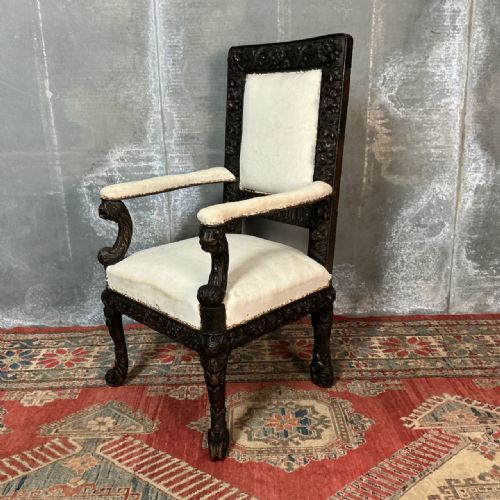
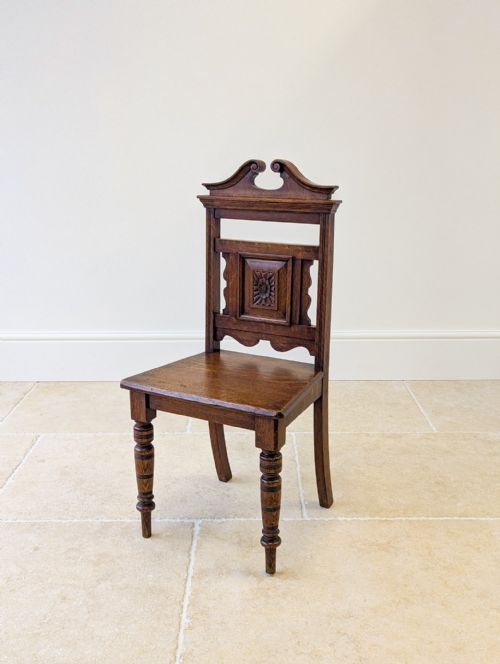
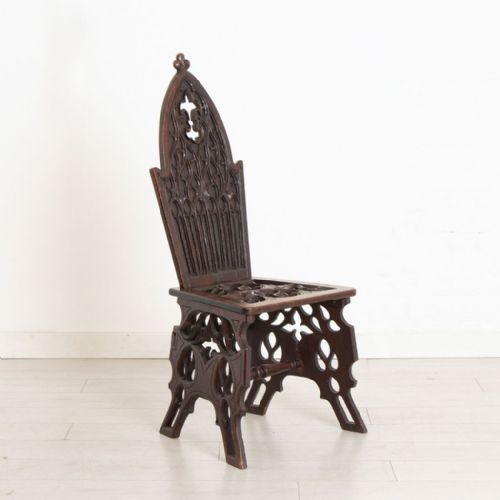
The styles span Italian Renaissance revival, Gothic revival, Baroque, and Carolean influences, often featuring elaborate motifs such as hounds, gargoyles, and dancing bears. These seats function as strong architectural statements in hallways, libraries, and principal rooms rather than casual lounging furniture.
Most examples rely on solid wood construction, occasionally paired with leather, velvet, or woven textile pads. The overarching character leans towards theatrical weight and intricate hand-carved relief work rather than minimalist restraint.
How they were made
Makers utilised solid oak, alongside bleached variants and occasional carved walnut accents, shaping thick timber components with hand chisels and gouges. Relief carvings of animals, human figures, and foliage required skilled joinery to integrate decorative panels into structural chair frames.
Upholstered versions incorporated traditional stuffing materials secured with brass tacks, while wooden seats relied on deep panel recesses and pegged joints. Surface finishes were frequently waxed or polished to enhance the natural grain and deep brown tones of the wood.
Ornate Oak Chair Retail Price Guide 2026
Typical asking prices for ornate oak chair among the pieces listed under this phrase on Sellingantiques today, from the lower quarter to the upper quarter. They describe what is for sale here now, not the wider market.
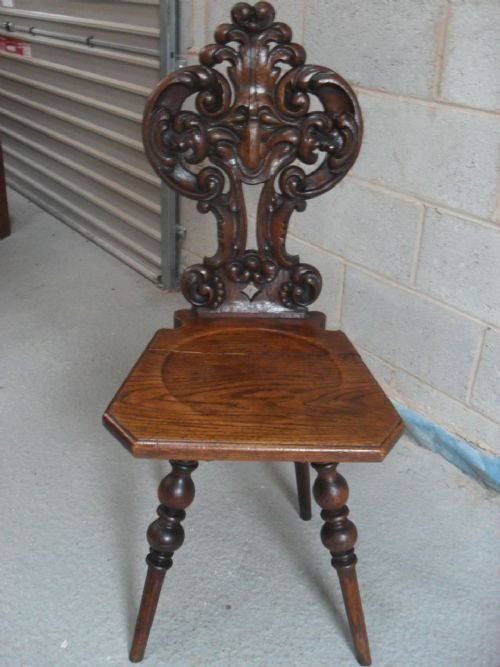
One exceptional carved chair back stars a dancing bear.
What varies in quality
The depth and crispness of the hand carving separate standard production pieces from exhibition-quality works. Sharp, undercut details on figures and foliage indicate superior artisan skill compared to shallow, machine-routed decoration.
Structural integrity depends on the tightness of the original joinery and the selection of dense, unblemished timber. Pieces displaying balanced proportions, substantial weight, and well-integrated stylistic revivals command greater respect among collectors.
The Ornate Oak Chair Glossary
- Carolean Style
- A late seventeenth-century aesthetic revived during the Victorian era, characterised by scrolling woodwork, crown motifs, and cane or upholstered panels.
- Gothic Revival
- An architectural and decorative movement drawing on medieval forms, featuring pointed arches, tracery, and dark timber.
- Sgabello
- A Renaissance chair type with a narrow wooden seat, solid trestle supports, and a decorated backrest.
- Fret Back
- A chair back featuring pierced or openwork woodwork arranged in geometric or scroll patterns.
Ornate Oak Chair: Frequently Asked Questions
Where should I put an ornate oak chair?
These chairs suit entrance halls, libraries, and dining rooms where their heavy timber and detailed carving can act as focal points without crowding the space.
Because many examples are upright hall chairs or high-back side chairs, they work best against panelled walls or in corners rather than beside low modern sofas.
How do I care for nineteenth-century oak furniture?
Maintain the timber by applying a microcrystalline wax polish sparingly and buffing gently with a soft cloth to preserve the natural sheen of the oak.
Keep these pieces away from direct heat sources and strong sunlight to prevent the solid wood from splitting and to protect any leather or velvet upholstery.
Are these chairs comfortable for daily seating?
Most historic hall chairs and carved wooden side chairs were designed for formal posture or transitional seating rather than long hours of relaxation.
Upholstered armchairs and dining sets from this group offer more padding, but buyers seeking deep lounging comfort generally prefer later twentieth-century designs.
How can I tell a Victorian revival chair from an older piece?
Examine the tool marks, timber colour, and assembly methods, as nineteenth-century revival pieces often exhibit machine-assisted preparation combined with hand carving.
Stylistic proportions and secondary woods frequently betray the Victorian or nineteen-hundred production date, even when copying earlier Renaissance or Baroque models.