


Ornate Glass Lighting
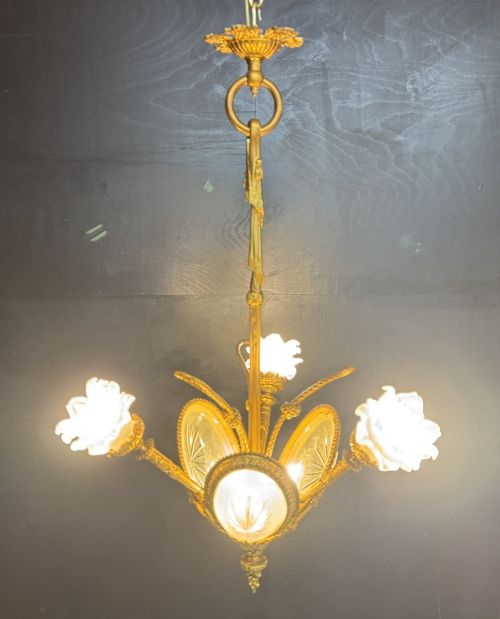
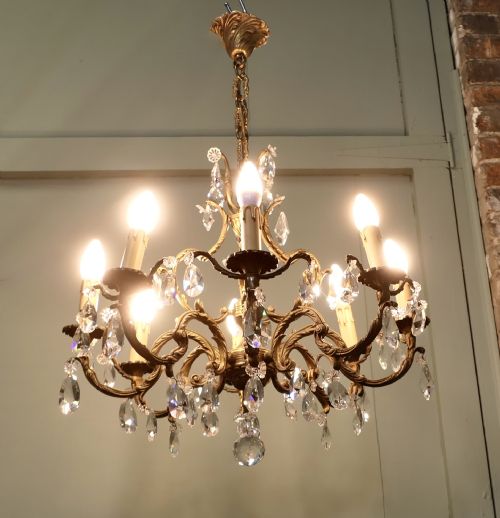
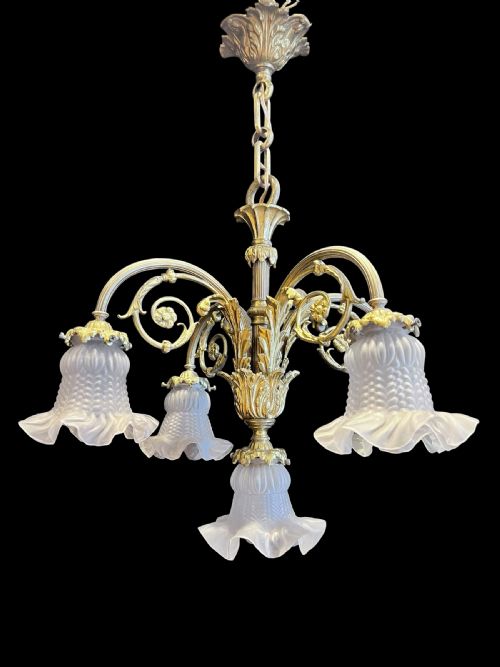
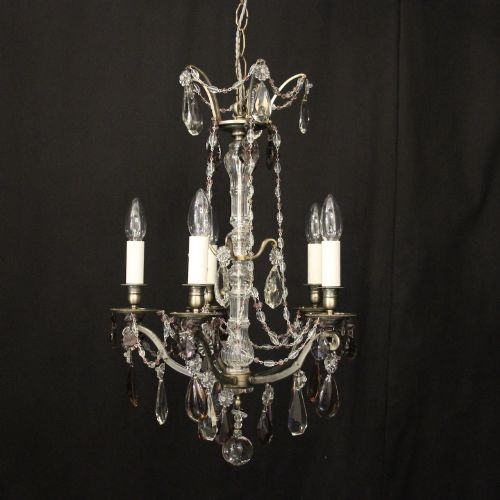
Ornate glass lighting brings dramatic radiance and tactile depth to interiors through cut crystal, opaline glass, and gleaming metal mounts.
Ornate Glass Lighting
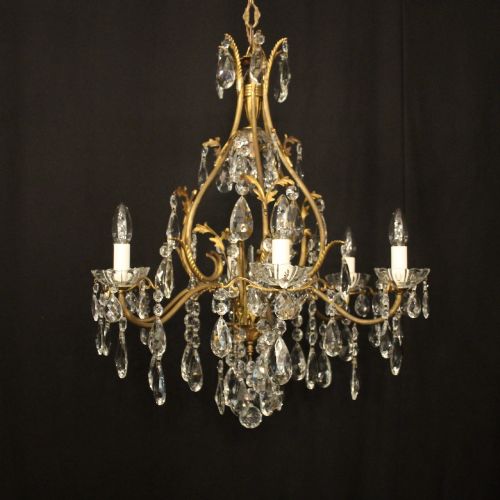
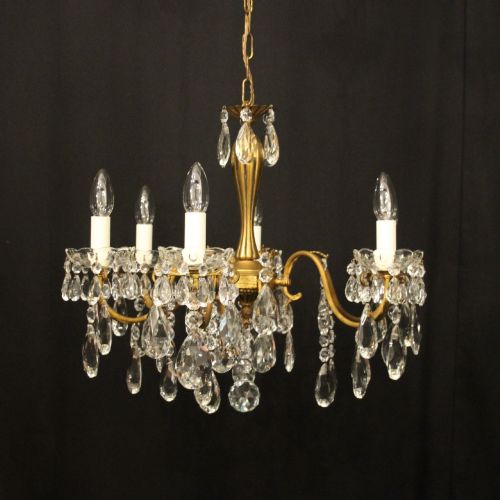
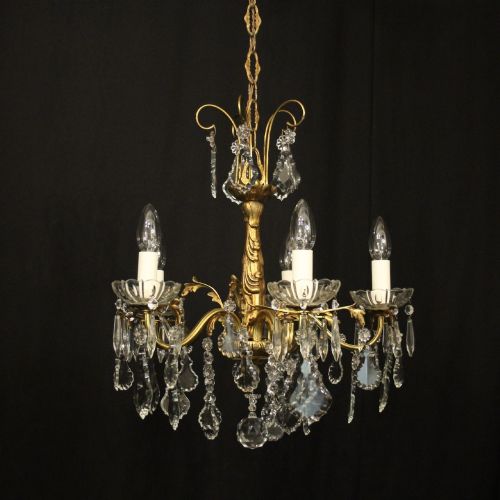
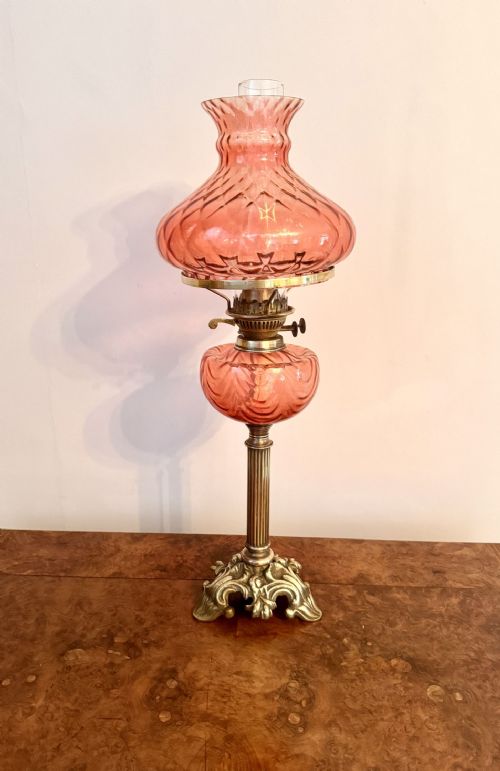
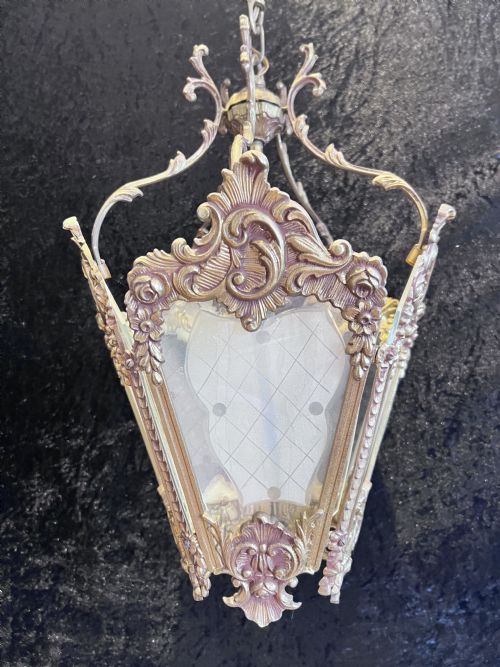
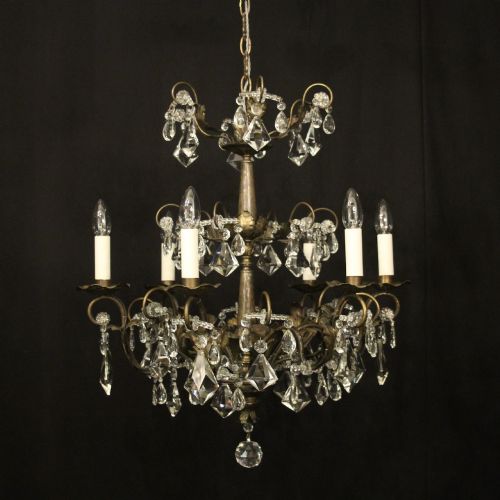
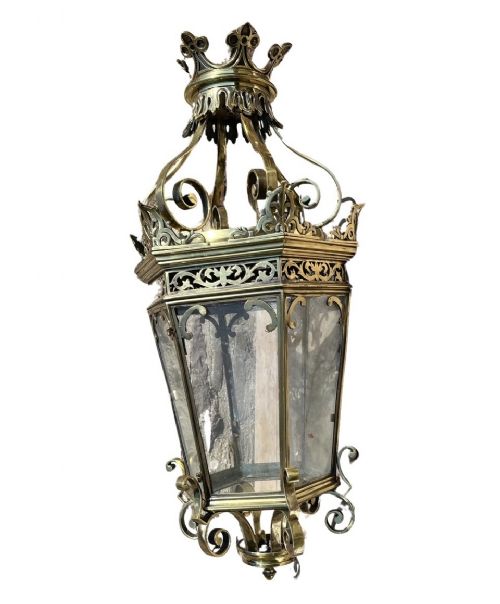
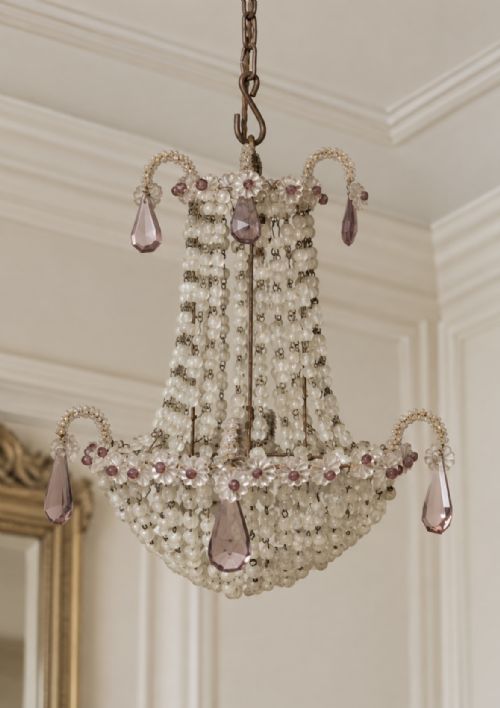
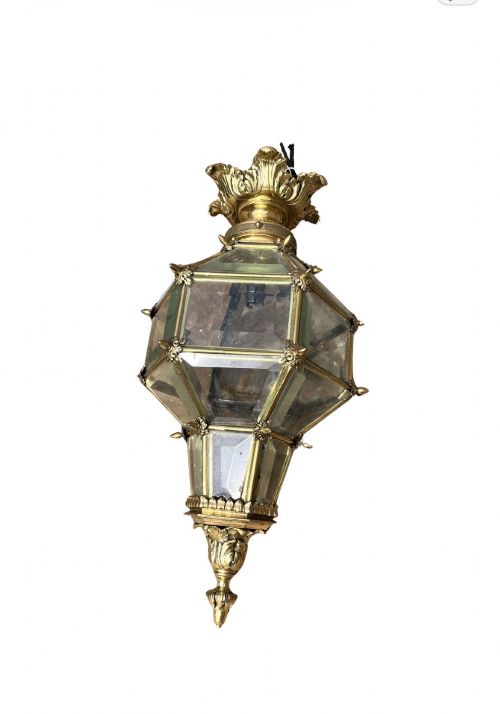
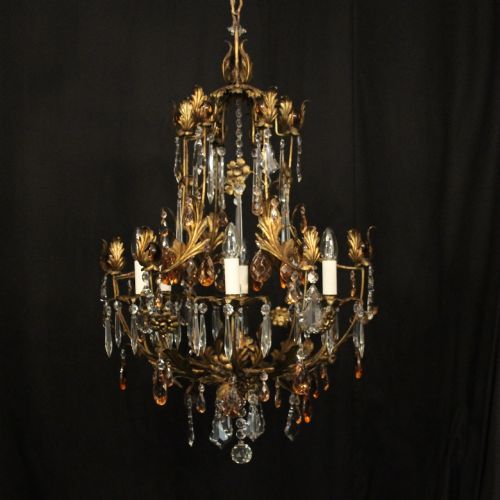
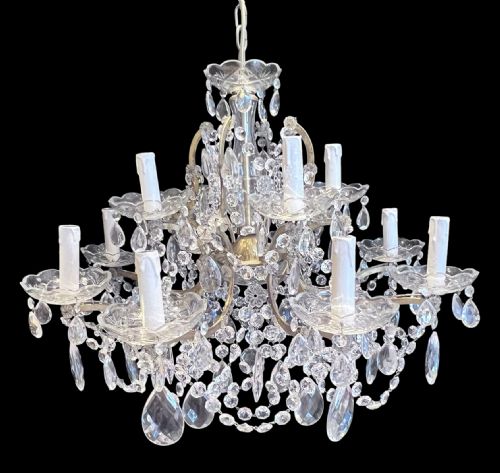
Ornate glass lighting comprises chandeliers, pendant lights, hall lanterns, and oil lamps designed to catch and refract light through intricate glass and crystal components. Pieces range from multi-armed Italian crystal fixtures to single-light French brass lanterns and Victorian oil lamps.
The selection centres heavily on early twentieth-century French and Italian pieces, alongside nineteenth-century Victorian designs featuring coloured glass and elaborate metalwork. Buyers encounter various forms spanning Edwardian chandeliers to grand Florentine and Rococo revival styles.
These fixtures serve both functional illumination and decorative centrepieces, drawing on historical aesthetics such as French Chateau, Venetian Murano production, and Arts and Crafts experimentation.
Materials and Construction
Makers combined blown or cut glass and crystal with structural metals including brass, bronze, ormolu, and gilt iron. Components were frequently cast, chased, and gilded before being hand-hung with crystal lustres and drops.
Lamps and lanterns integrated specialised fuel mechanisms or electrical wiring into housings of opaline, cranberry, or coloured glass mounted on heavy metallic bases. Frameworks relied on mechanical fasteners, hinges, and pins to secure delicate glass shades and prisms to metal frames.
Ornate Glass Lighting Retail Price Guide 2026
Typical asking prices for ornate glass lighting among the pieces listed under this phrase on Sellingantiques today, from the lower quarter to the upper quarter. They describe what is for sale here now, not the wider market.
Recorded styles span Victorian and Edwardian domestic lighting alongside ornate continental forms like Florentine, Rococo revival, and Empire designs.
Markers of Quality
Quality reveals itself in the clarity and weight of the glass, the precision of the hand-cut facets, and the depth of the metal gilding or casting. Superior pieces utilise heavy cut crystal that refracts light cleanly rather than pressed glass with soft edges.
The intricacy of the metal mounts, from chased ormolu to detailed bronze casting, distinguishes standard production from exceptional examples. Construction integrity, such as robust framing that securely bears the substantial weight of glass elements, marks the higher tier of these fixtures.
Mc Gary·Wild Wessel
The Ornate Glass Lighting Glossary
- Crystal
- Glass containing lead oxide to increase brilliance, weight, and refractive index. It allows for deep, sharp hand-cutting.
- Opaline glass
- An opaque or semi-translucent glass, often pastel in tone, popular in nineteenth-century lighting. It diffuses light into a soft glow.
- Lustre
- A cut-glass pendant or drop hung from the arms or crown of a chandelier to amplify light reflection. These prisms catch and scatter illumination across a room.
- Ormolu
- Gilt bronze produced by applying a mercury and gold amalgam to a bronze base and firing it. This technique creates a rich, durable golden surface.
- Plaffonier
- A ceiling-mounted bowl light or flush fixture made of glass held in a metal frame. It directs illumination downward while concealing the bulb.
Ornate Glass Lighting: Frequently Asked Questions
How do I hang a heavy antique chandelier safely?
Heavy fixtures require direct anchoring to ceiling joists using a steel support box rather than relying on standard plaster or electrical boxes. Professional installation ensures the weight of the metal frame and glass components is properly borne.
Weight distribution must be calculated carefully, especially for multi-armed crystal pieces from the nineteenth and early twentieth centuries. Reinforcing the ceiling mount protects both the historic fixture and the room below.
Were these glass lights originally electrified?
Many nineteenth-century and early twentieth-century pieces began as oil lamps, gasoliers, or candle-lit chandeliers. They were subsequently adapted for electricity as domestic power became widespread.
Conversions often preserve the original burners, fonts, or candle tubes while routing internal wiring through the central shaft. This allows modern use while retaining the authentic silhouette of the period.
How should I clean antique cut glass?
Maintenance involves wiping individual glass drops and prisms with a soft cloth dampened in a mild solution of warm water and gentle soap. Harsh chemical cleaners can strip protective lacquers or damage aged metal surfaces.
For intricate chandeliers, cleaning each piece in situ prevents accidental damage to fragile wire fixings and old pins. Allowing components to dry completely restores their full refractive brilliance.