
Open Mahogany Shelf Unit
An open mahogany shelf unit brings warmth and architectural order to a room, offering accessible display space for books and objects.
Open Mahogany Shelf Unit
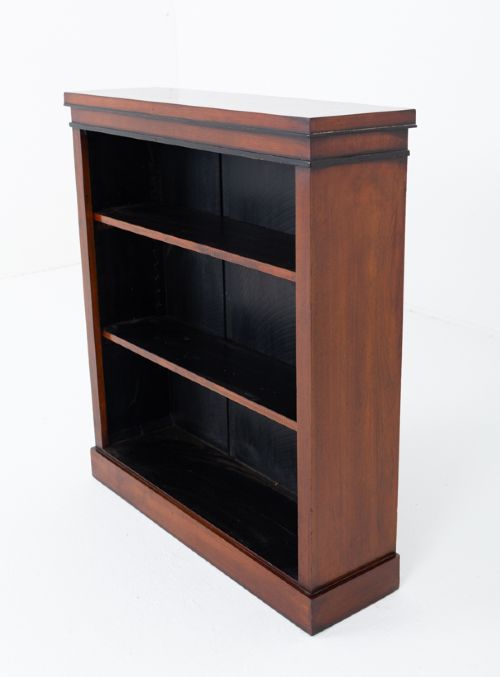
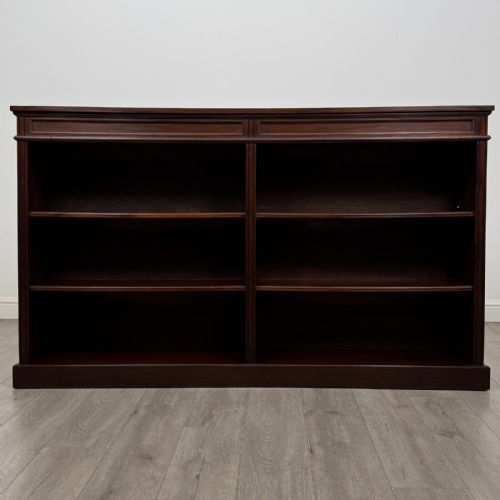
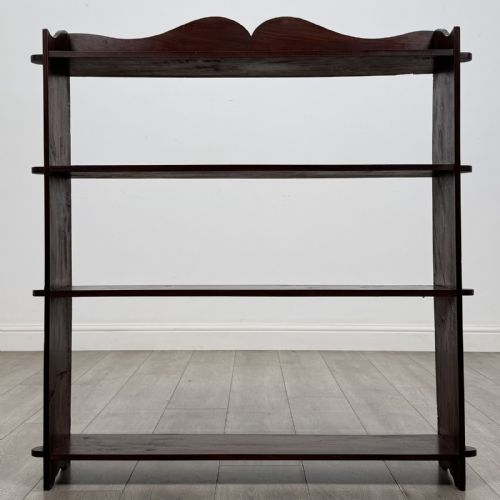
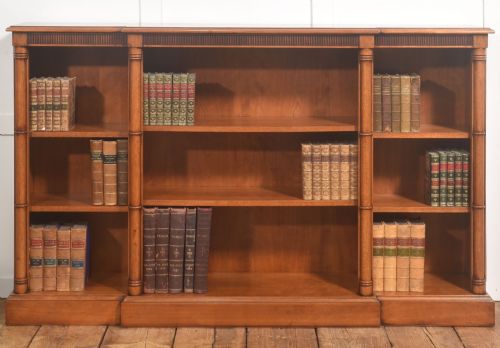
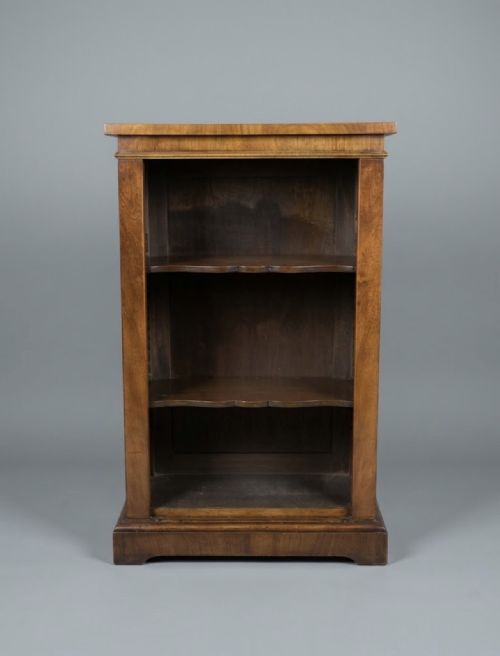
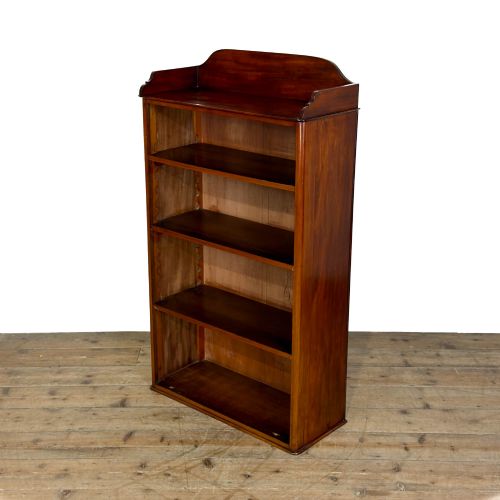
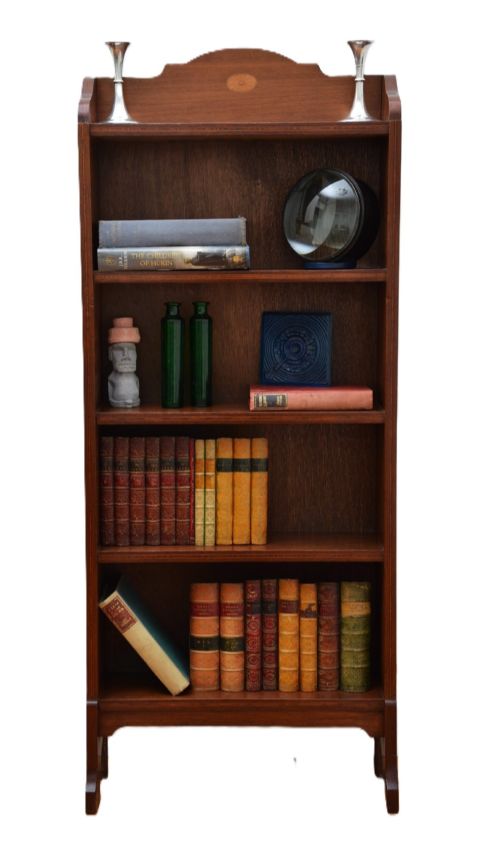
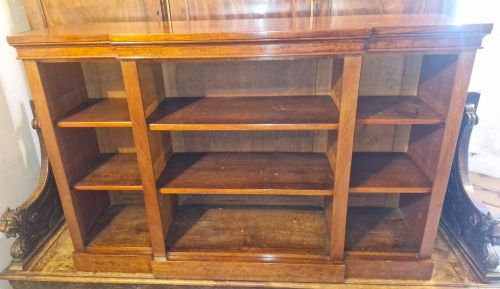
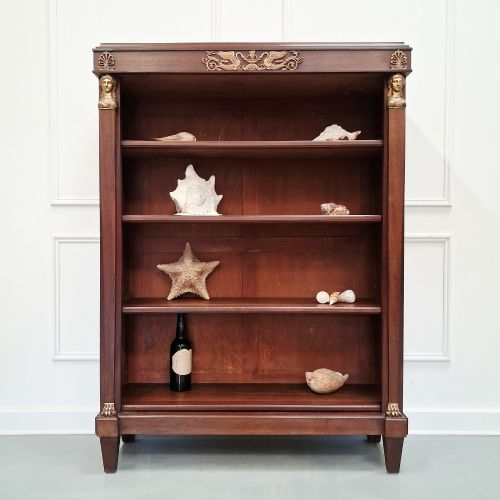
When you search for an open mahogany shelf unit, you encounter pieces spanning the Georgian, Regency, Victorian, and Edwardian periods. These take various forms, from tall library bookcases and dwarf bookcases to multi-tiered whatnots, etageres, and wall-hanging shelves.
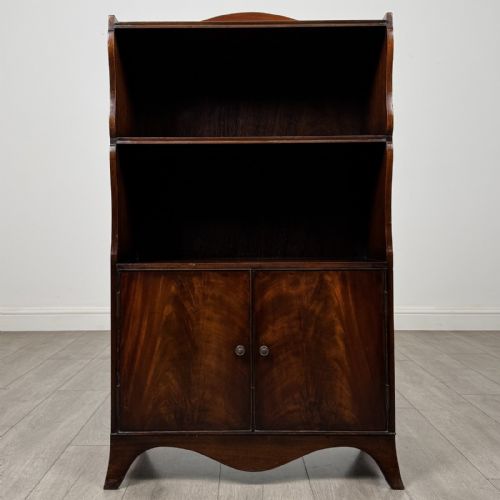
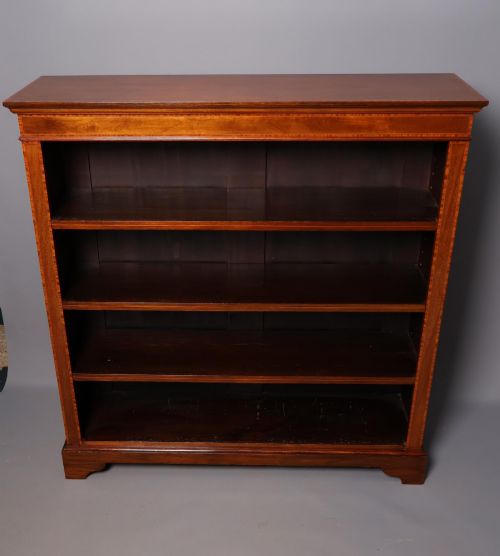
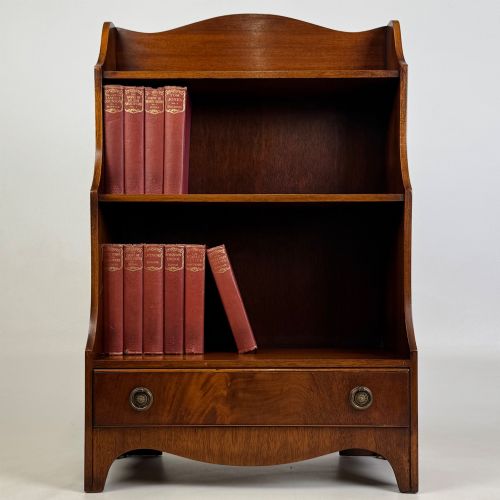
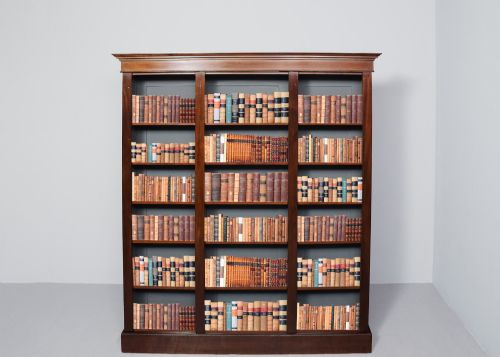
The version you are most likely to meet on this page is the freestanding Victorian or Edwardian open bookcase, often fitted with adjustable timber shelves. Waterfall bookcases with tiered graduated shelves also appear frequently across 19th-century and early 20th-century listings.
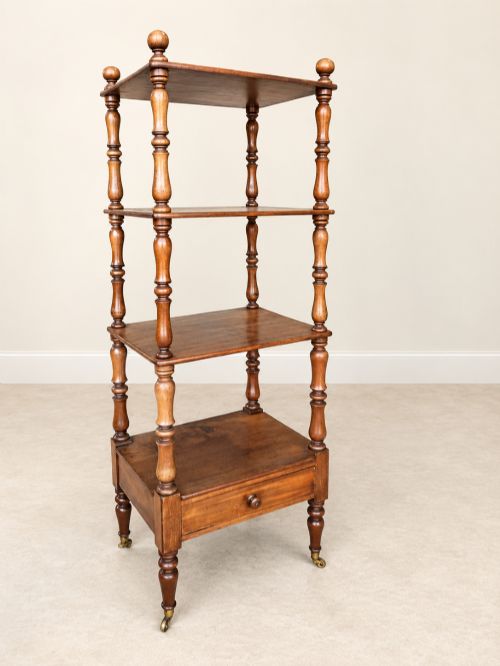
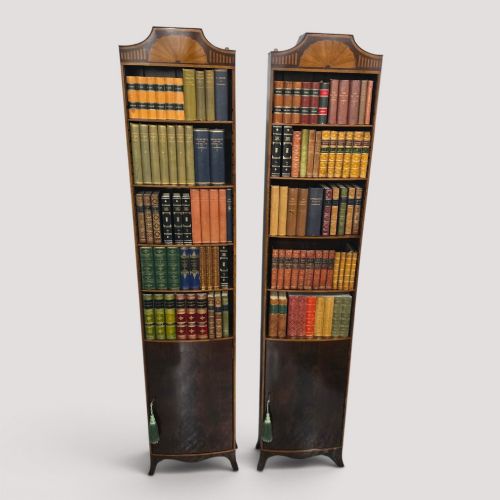
Corner shelves and narrow etageres provide practical solutions for smaller spaces, matching the timber and style profiles of larger library pieces. These items serve primarily to hold books and display decorative objects within domestic interiors.
Materials and construction methods
Makers built these pieces primarily from solid mahogany and mahogany veneers, occasionally incorporating secondary woods such as pine for internal structure. Finer examples integrate contrasting timber inlays like satinwood to accent the primary grain.
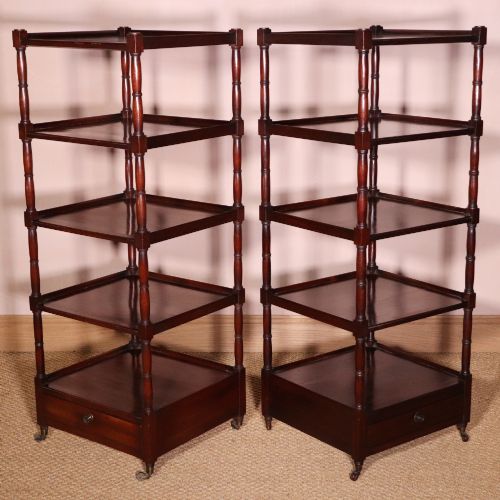
Several pieces include brass castors, ensuring your miniature library can wheel about the room at a moment's notice.
Evaluating construction and design merit
The distinction between standard utility items and exceptional pieces rests on timber selection and decorative restraint. Figured mahogany graining, precise satinwood stringing, and balanced proportions elevate certain examples well above plain workshop production.
Structural integrity and original hardware, such as functioning brass castors and clean shelf adjustment mechanisms, separate well-preserved items from those altered over time. The ambition of the design, whether a stepped waterfall silhouette or a breakfront library form, dictates the standing of the piece.
Edwards and Roberts·Waring and Gillows
The Open Mahogany Shelf Unit Glossary
- Waterfall bookcase
- A set of open shelves that steps back progressively from bottom to top, creating a cascading profile popular in the Regency and Victorian eras.
- Whatnot
- A multi-tiered stand with open shelves supported by slender columns or uprights, used for displaying ornaments and small books.
- Etagere
- A French term for a piece of furniture consisting of a series of open shelves for displaying small objects, similar in function to a whatnot.
- Breakfront
- A piece of furniture where the central section projects forward from the flanking wings, adding architectural depth to large bookcases.
- Inlay
- A decorative technique where contrasting materials like satinwood are inserted into recesses in the mahogany surface to form patterns.
Open Mahogany Shelf Unit: Frequently Asked Questions
How do I use a whatnot?
A whatnot is designed with multiple open tiers supported by slender uprights, intended for displaying ornaments, ceramics, and small volumes.
These versatile pieces fit easily into corners or against walls, adding vertical display space without dominating a room.
Are the shelves adjustable?
Many open mahogany bookcases include adjustable wooden shelves, allowing you to alter the interior spacing to accommodate books of varying heights.
Fixed shelves also appear frequently, particularly on smaller whatnots and specialised etageres built for uniform display purposes.
What distinguishes Regency from Victorian pieces?
Regency pieces often display restrained neoclassical lines, clean architectural proportions, and occasional brass inlay or gallery rails reflecting early 19th-century taste.
Victorian examples tend toward heavier proportions, darker mahogany tones, and sometimes elaborate carving or Arts and Crafts simplicity as the century progressed.
Where should I place a corner shelf?
Corner shelves and corner whatnots utilise neglected room junctions, turning empty wall angles into practical display areas for small collections.
Matching pairs of mid-19th-century corner units provide symmetry when placed on opposite sides of a fireplace or window.