
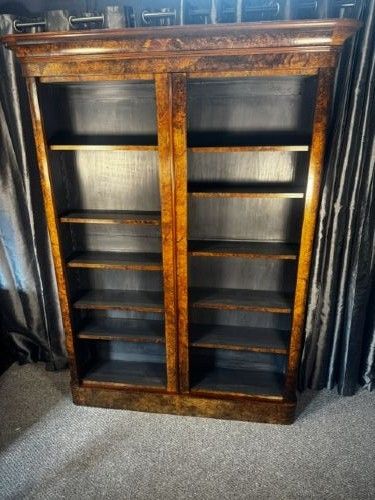
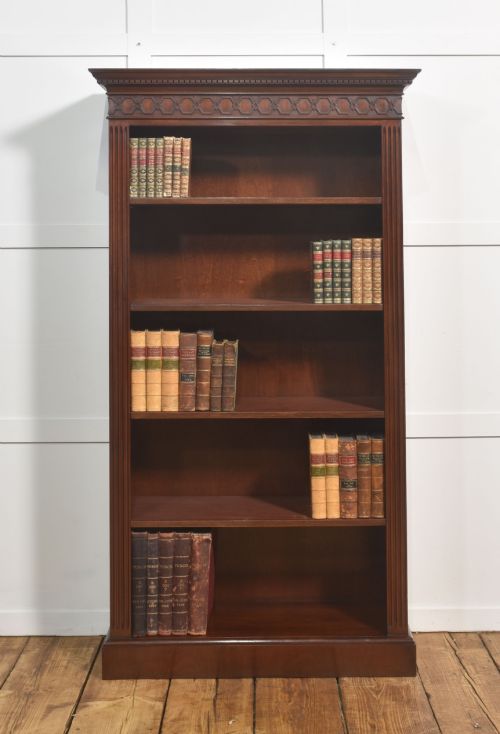
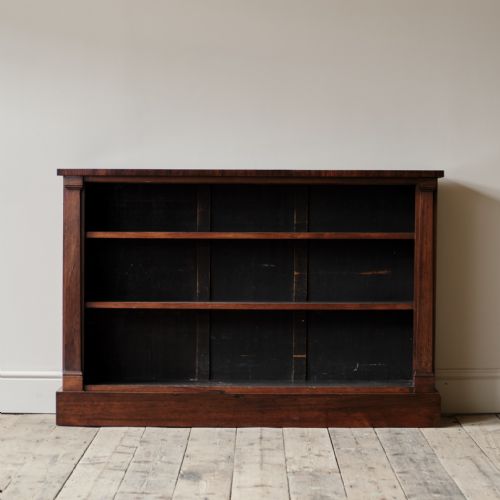
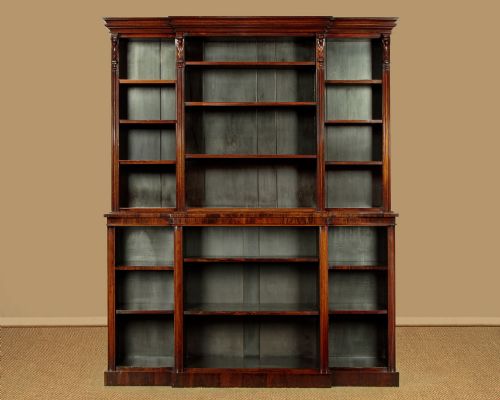
Open Front Bookshelf Unit
An open front bookshelf unit brings accessible organisation and rich timber warmth to a room, offering immediate display for a working library.
Open Front Bookshelf Unit
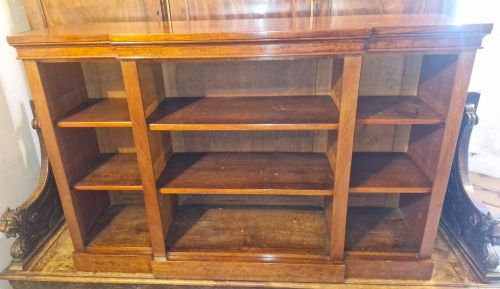
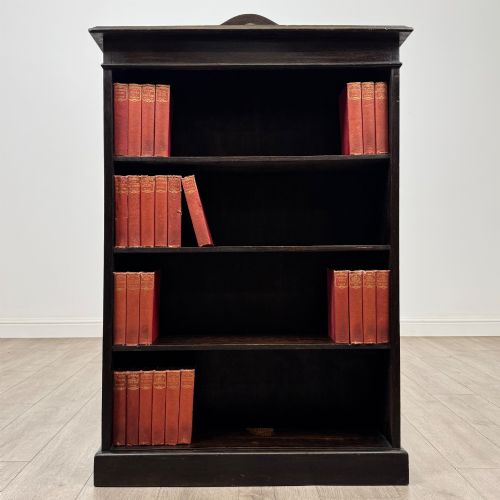
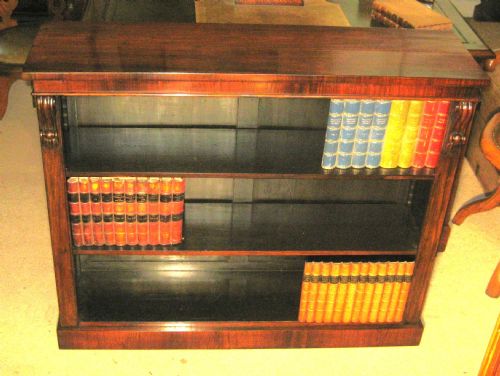
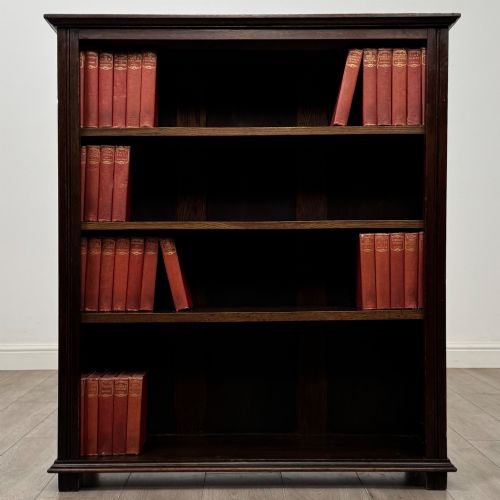
An open front bookshelf unit is a straightforward furniture form designed for the storage and display of books without the barrier of glass doors. These pieces range from modest three-shelf chambers to large breakfront library fixtures built to hold substantial collections.
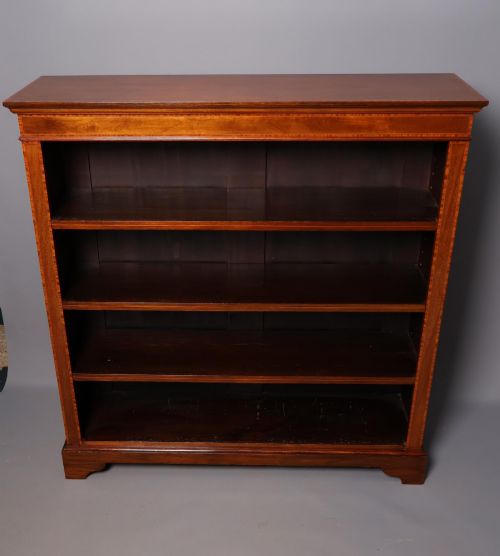
The versions most commonly met on this page date from the nineteenth and early twentieth centuries, spanning Victorian, Edwardian and later periods. Mahogany and oak dominate the selection, appearing alongside rich hardwoods such as rosewood and burr walnut.
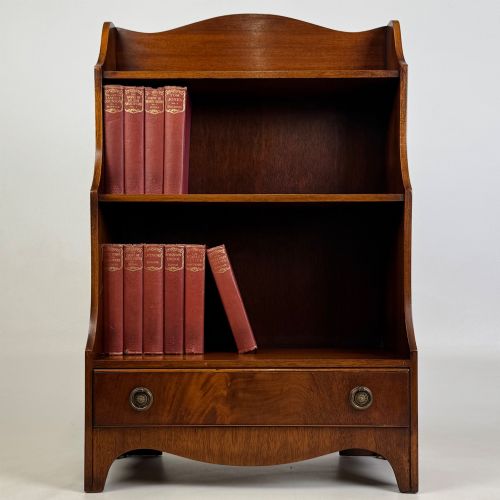
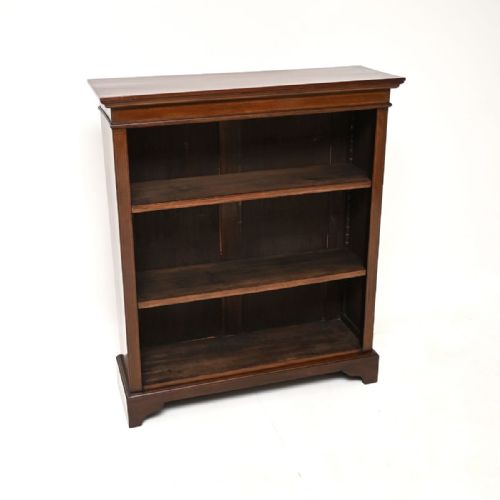
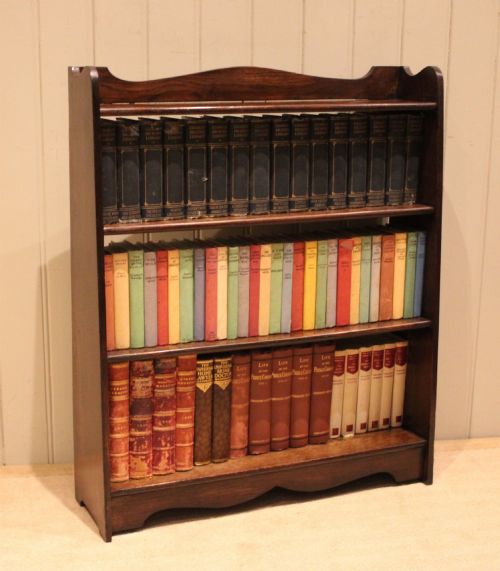
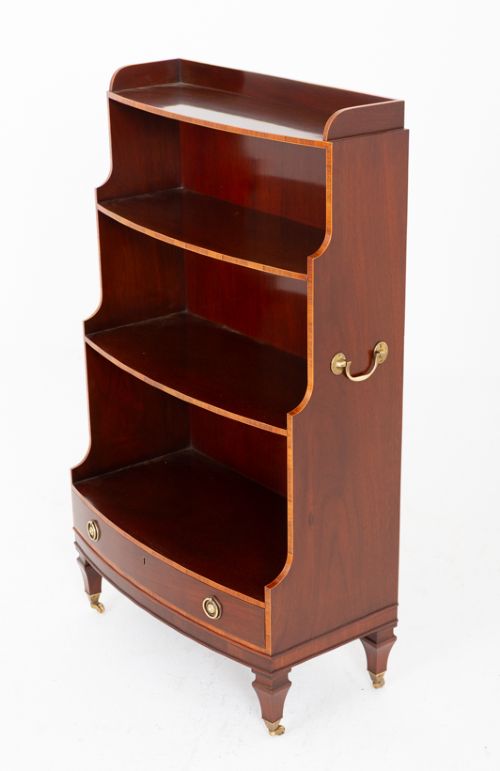
Makers constructed these units with fixed or adjustable timber shelves, sometimes incorporating raised galleries, shaped sides or lower drawers. Their straightforward format allows books to remain within arm's reach while showcasing the grain of the timber in a study or sitting room.
What varies in quality
Quality in an open front bookshelf unit rests on the selection of timber and the ambition of its construction. Pieces featuring figured veneers, dense rosewood or carefully chosen mahogany sit at a higher level than standard utility oak or pine examples.
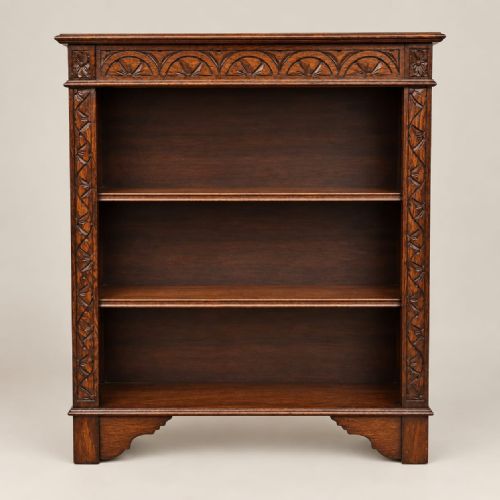
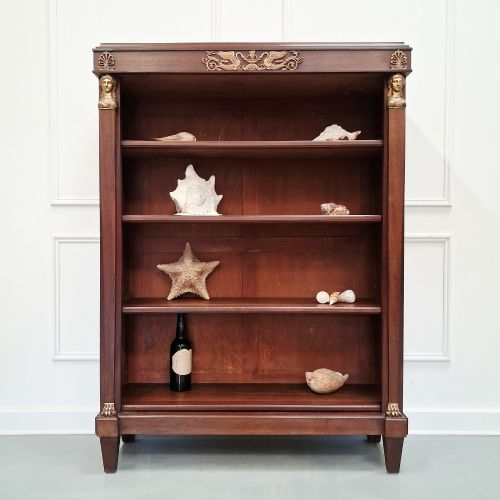
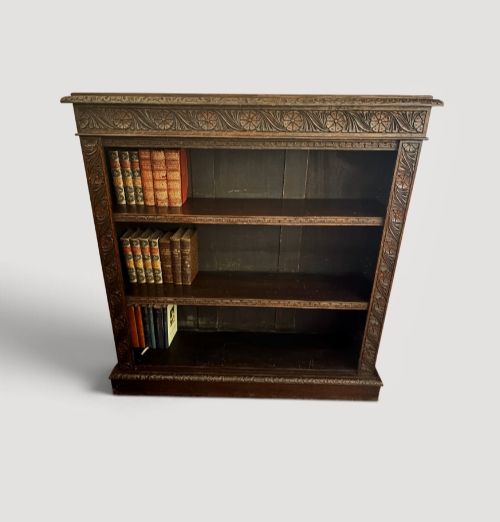
The sophistication of the joinery and detailing also separates standard production from finer cabinet work. Elements such as carved oak ornament, integrated brass mounts, well-executed inlay and sophisticated breakfront proportions distinguish the most accomplished workshop output.
One exceptional piece carries the design hand of the architect who rebuilt the Houses of Parliament.
Sir Charles Barry
The Open Front Bookshelf Unit Glossary
- Breakfront
- A cabinet or bookcase whose central section projects forward from the flanking outer sections. This architectural arrangement creates depth and visual rhythm across a wall.
- Adjustable shelves
- Shelves that can be moved to different heights using vertical racks, pegs or brass studs. This system accommodates volumes of varying sizes.
- Gallery
- A raised decorative border running along the top edge of a piece of furniture. It prevents items placed on top from sliding off.
- Ormolu
- Gilded bronze mounts applied as decorative ornaments to furniture carcases. The technique was particularly favoured during the nineteenth century.
- Inlay
- The technique of embedding contrasting strips of wood or other materials into the surface of a piece to form geometric or floral patterns.
Open Front Bookshelf Unit: Frequently Asked Questions
What is an open front bookshelf unit?
An open front bookshelf unit is a piece of case furniture designed with accessible, front-facing shelves for holding books and decorative objects. These items omit doors entirely to provide immediate access to the contents.
They appear across various periods from the nineteenth century onwards, serving as practical storage for everyday reading material.
How were these bookcases used historically?
Historically, these units served in libraries, studies and drawing rooms to house working reference collections and bound volumes. Their open format allowed scholars and readers to select books quickly without handling glass doors.
Larger breakfront examples anchored formal libraries, while smaller scaled pieces suited parlour rooms and private chambers.
How do I date an open bookshelf?
Dating relies on observing timber choices, construction methods and stylistic revival details. Nineteenth-century pieces frequently employ solid mahogany, rosewood or burr walnut with hand-cut joinery.
Edwardian and later iterations often introduce lighter inlaid stringing, standardised shelf adjustment systems and different secondary woods like pine.
How should I care for antique timber?
Antique timber requires stable indoor humidity levels away from direct heat sources and strong sunlight to prevent warping and fading. Regular dusting with a soft, dry cloth preserves the polished surface.
Applying occasional appropriate wax feeds the grain without building up heavy chemical residues on older polished finishes.