
Open Display Shelf
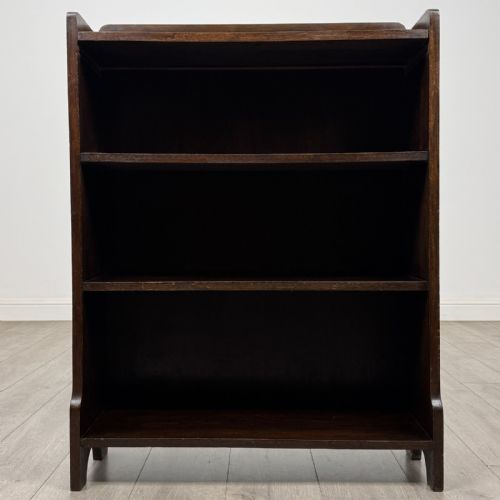
An open display shelf brings books and cherished objects into the room, holding the eye with timber grain and tiered arrangement.
Open Display Shelf
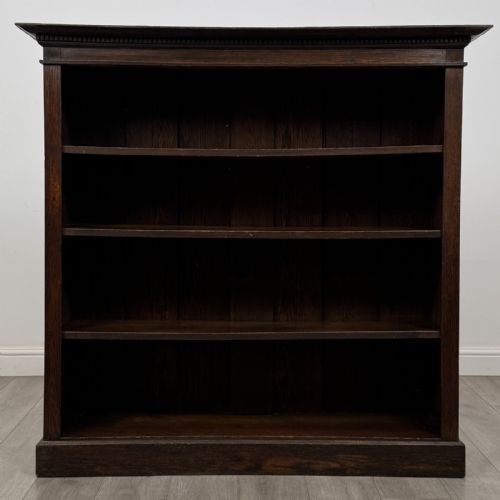
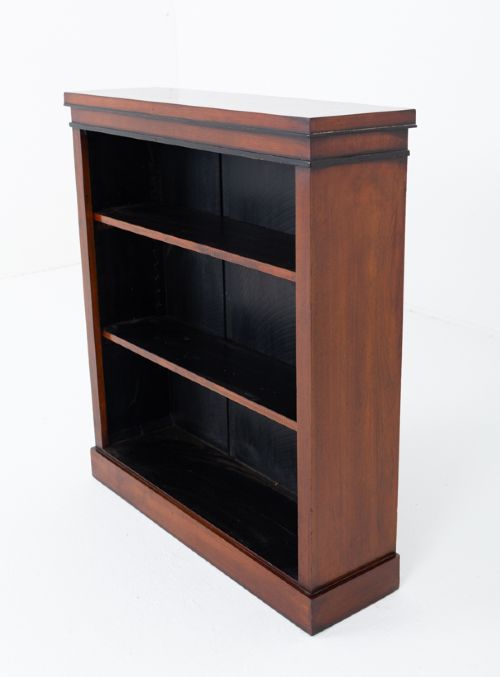
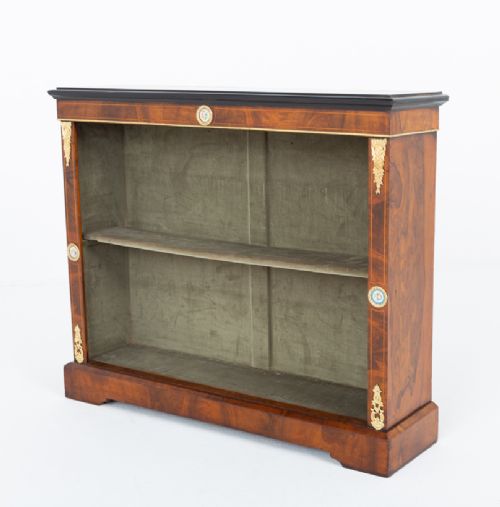
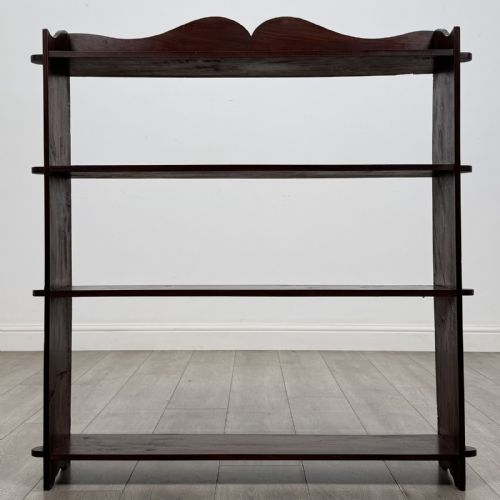
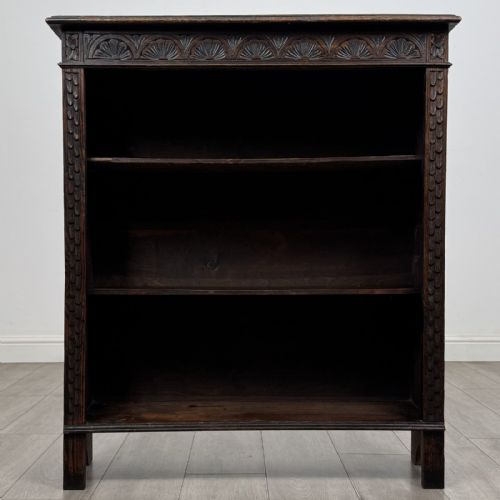
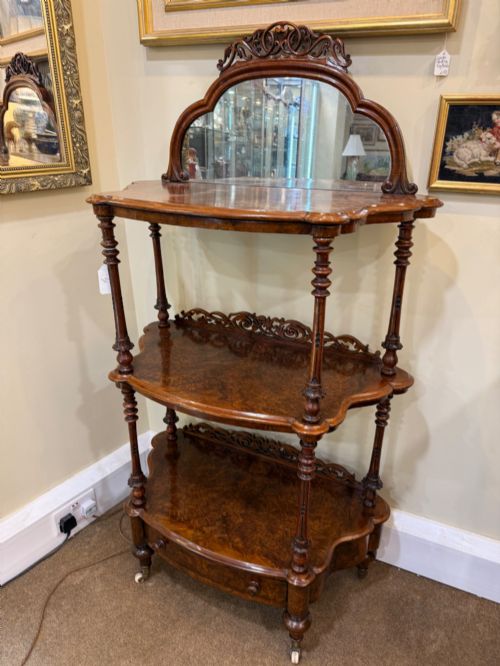
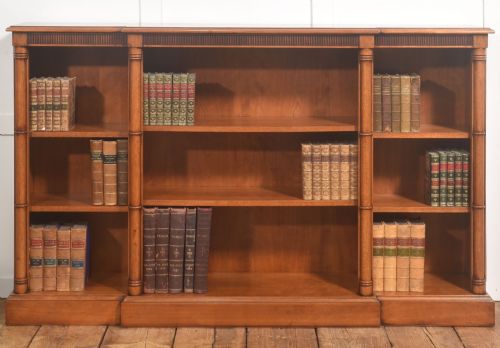
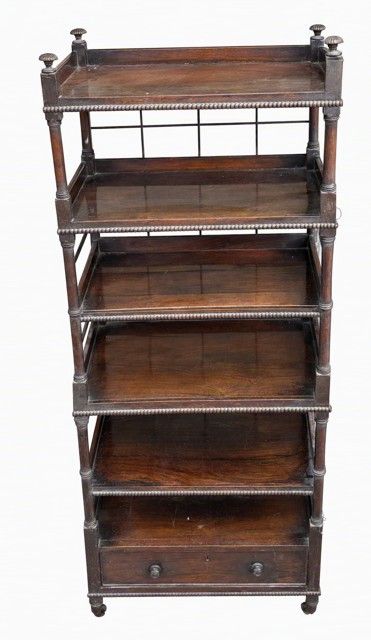
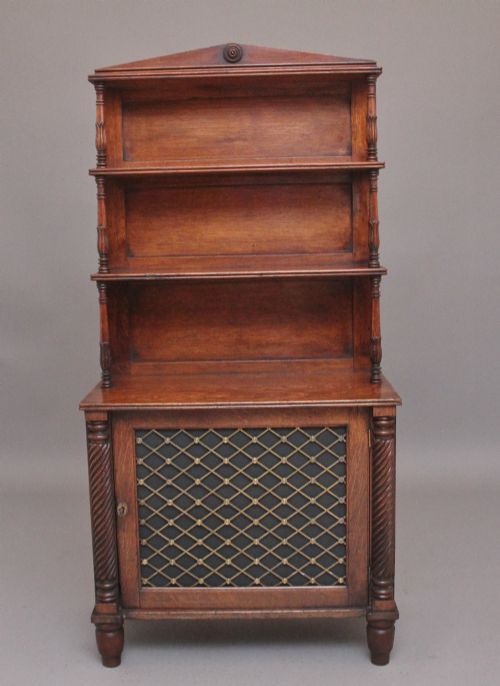
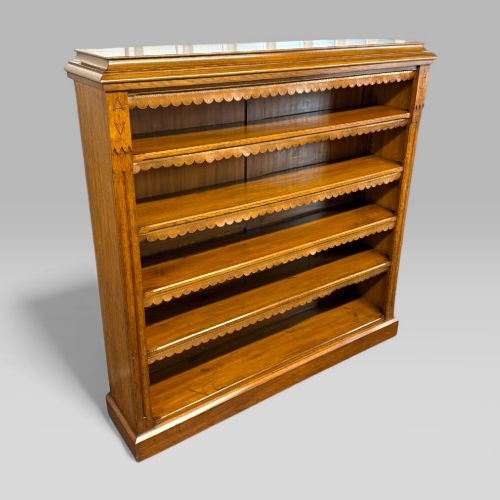
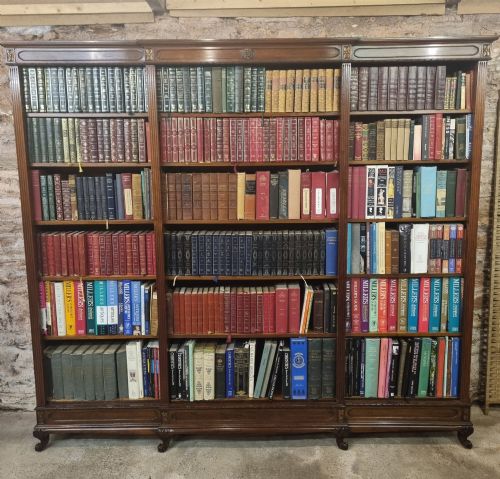
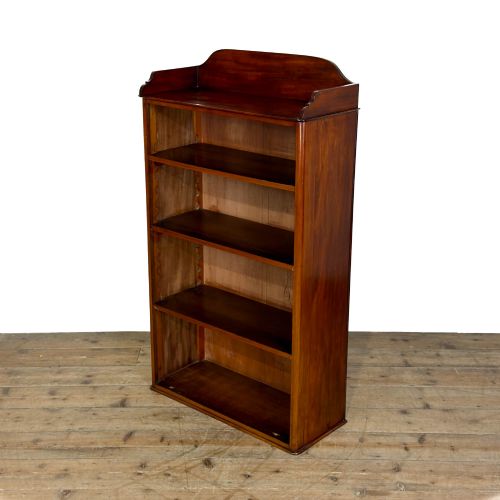
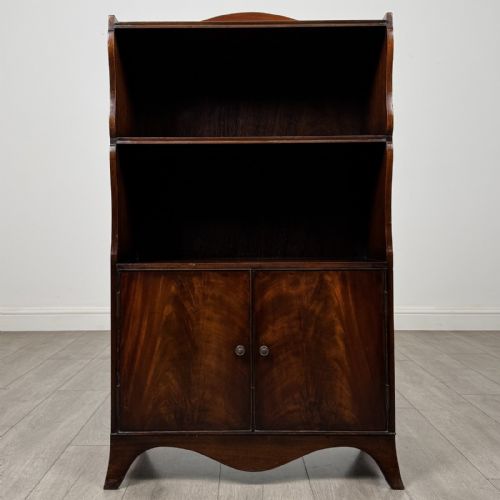
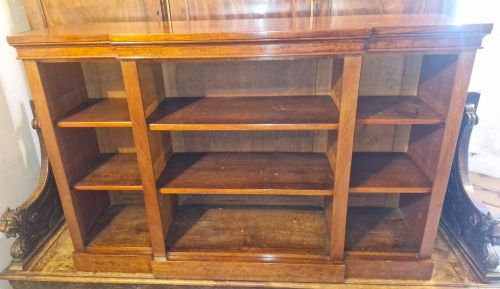
An open display shelf serves as a versatile furniture form for holding books and decorative objects without enclosing them behind glass or solid doors. When searching for an open display shelf, buyers encounter several variations ranging from multi-tiered whatnots to wall-hanging shelves and breakfront bookcases.
The pieces appearing on this page span the nineteenth century through the early twentieth century, taking in Victorian, Edwardian, and Regency periods. Makers and manufacturers of these eras built freestanding bookcases alongside cascading or tiered shelving units to suit domestic sitting rooms and libraries.
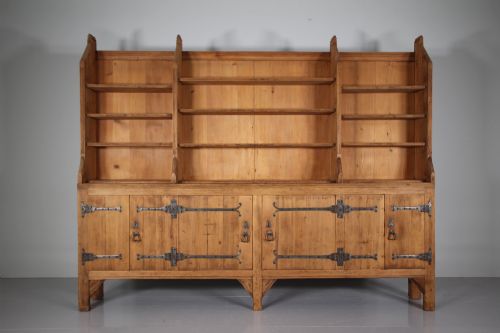
Mahogany and oak dominate the forms, accompanied by burr walnut, rosewood, and pine. Structural variations include raised galleries, adjustable shelves, and wall mounting fixtures designed to maximise display space in period interiors.
Materials and construction methods
Cabinet makers utilised dense hardwoods such as mahogany, oak, and walnut for strength, often selecting figured burr veneers for visual movement on tiered whatnots and breakfront bookcases. Pine served as a reliable secondary timber for internal shelving and backs, while rosewood and ebonised finishes appeared on more decorative pieces.
Joinery methods involved traditional dovetails for drawers and mortise and tenon joints for upright frames, ensuring stable support for heavy volumes. Brass fixtures, mother of pearl inlay, and hand-carved detailing added decorative emphasis to specific Arts and Crafts and Aesthetic Movement designs.
Listings feature oak, mahogany, walnut, and pine across Victorian, Edwardian, and Regency periods.
Assessing quality in construction and timber
The separation between standard pieces and exhibition quality work lies in timber selection and the precision of the joinery. Finely figured burr walnut veneers, intricate hand-carved enrichment, and robust adjustable shelving mechanisms distinguish superior examples from plain utility furniture.
Proportion and structural integrity dictate the standing of a piece within its period. Original finishes and untreated timber surfaces show the true age of the grain, whereas heavy alterations or poor repairs diminish the coherence of the design.
Bowman Brothers London
The Open Display Shelf Glossary
- Whatnot
- A tiered open shelving unit designed for displaying ornaments and small objects, popular throughout the nineteenth century.
- Breakfront
- A piece of furniture where the central section projects forward from the flanking outer sections, creating depth and architectural interest.
- Raised gallery
- A low decorative railing or spindlework border fitted around the top surface of a cabinet or shelf to prevent items from sliding off.
- Adjustable shelves
- Shelving supported by movable pins or ratchet strips that allow the interior vertical spacing to be altered.
- Ebonised
- Timber treated with a dark stain or finish to imitate ebony, commonly utilised in nineteenth-century decorative arts.
Open Display Shelf: Frequently Asked Questions
What is an open display shelf used for?
These pieces function primarily to store books while displaying ceramics, ornaments, and personal collections in domestic spaces. The lack of doors permits immediate access and visibility for everyday items.
Historically, multi-tiered versions stood in drawing rooms for small decorative pieces, whereas taller bookcases lined studies and libraries for heavy volumes.
How do I date an open display shelf?
Dating relies upon timber choice, stylistic cues, and construction methods characteristic of periods like the Victorian or Edwardian eras. Mahogany and rosewood frequently indicate earlier nineteenth-century manufacture, while lighter oak and simpler lines align with later Arts and Crafts influences.
Examine the backboards, fixing methods, and shelf supports for signs of period-correct hand tools and manufacturing techniques.
Are the shelves adjustable on these bookcases?
Many nineteenth and early twentieth-century examples feature adjustable shelving systems utilising wooden ratchets or metal pins. This adaptability accommodated varying book heights in private libraries.
Not all pieces possess this feature, as smaller wall shelves and specific whatnots were constructed with fixed tiers.
How do I care for antique wood shelves?
Maintain the timber by keeping pieces away from direct heat sources and fluctuating humidity that can cause wood to warp or split. Regular dusting with a dry, soft cloth preserves the polished surface without damaging the finish.
Avoid commercial silicone sprays and instead apply appropriate beeswax sparingly to nourish older hardwoods like mahogany and oak.