





Old Wool Rug
An old wool rug brings warmth and grounded character to a room through genuine village and city weaving traditions.
Old Wool Rug
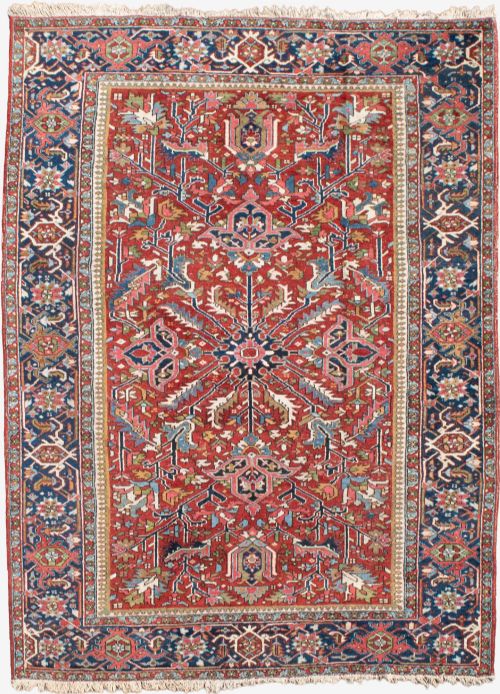
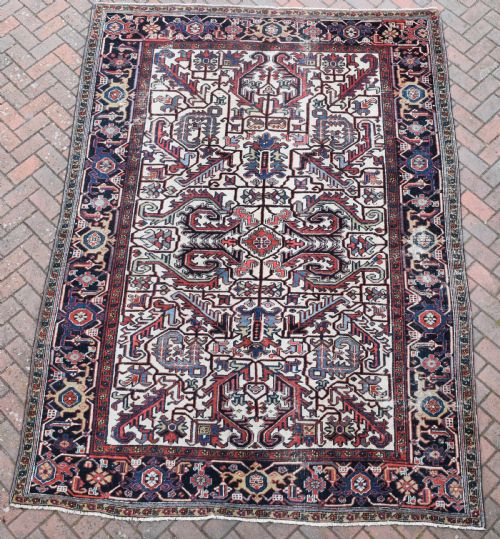
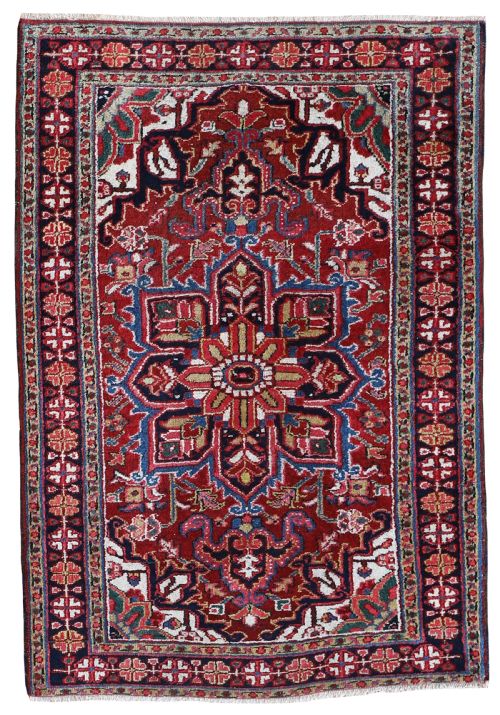
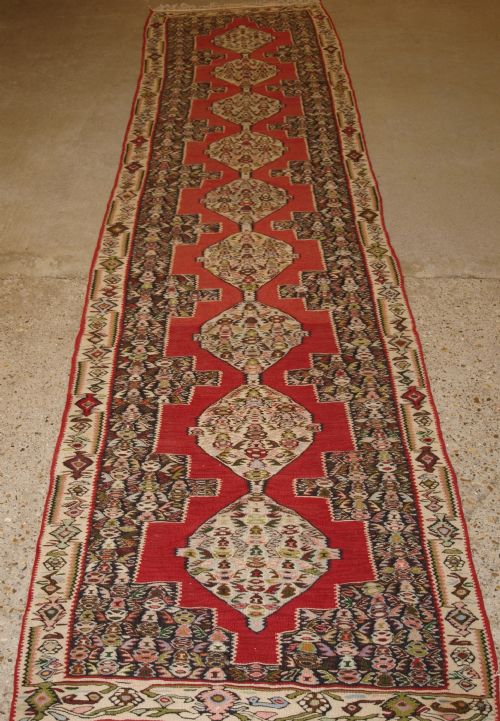
When searching for an old wool rug, buyers encounter floor coverings originating from Persia, Turkey, Afghanistan, India, China, Nepal, and Tibet. The inventory spans several decades into the early twentieth century and the nineteenth century, encompassing room-size carpets, narrow runners, square formats, and prayer rugs. Persian city workshops and village groupings form a large proportion of the available examples.
Village and tribal pieces display geometric patterns, medallions, and repeat lattice designs woven by regional groups such as the Baluch, Yomut Turkmen, and Kurdish weavers. City pieces from centres like Tabriz, Heriz, Kashan, and Kirman offer finer curvilinear layouts and large room proportions. Wall hangings and door tent decorations also appear alongside standard floor formats.
Materials and construction
These textiles rely primarily on sheep's wool, frequently hand-spun to create resilient pile and flat-woven kilim structures. Natural dyes impart varied colour palettes, while occasional cotton foundations and silk highlights provide structural stability and textural contrast in specific city carpets.
Weaving techniques vary from nomadic knotting on portable looms to fixed workshop setups producing dense piles. Glass beads appear as decorative additions on selected nomadic pieces, and skilled hand-weaving governs both the sturdy village runners and the expansive room-size carpets.
Old Wool Rug Retail Price Guide 2026
Typical asking prices for old wool rug among the pieces listed under this phrase on Sellingantiques today, from the lower quarter to the upper quarter. They describe what is for sale here now, not the wider market.
Listings feature pieces utilising hand-spun wool, cotton, silk, and glass beads across nineteenth and twentieth-century Persian, Turkish, and Afghan traditions.
Differentiating quality
Quality rests upon the fineness of the knotting, the integrity of the materials, and the stability of the foundation yarns. Tightly packed knots and robust hand-spun wool create greater resilience under foot, whereas looser structures exhibit softer piles and more flexible handling.
The sophistication of the design execution and the depth of the natural dye palette also distinguish finer examples. Harmonious colour ageing and precise symmetry in tribal or city motifs separate standard utility pieces from exceptional decorative specimens.
Maples
The Old Wool Rug Glossary
- Pile
- The vertical or slanted wool fibres forming the soft upper surface of a rug. It is created by knotting yarn around the warp threads.
- Warp
- The stationary vertical threads stretched onto a loom before weaving begins. All knots and wefts are built upon this foundational grid.
- Kilim
- A flat-woven textile produced without a raised pile. These pieces serve as floor coverings or hanging decorations.
- Prayer rug
- A small format textile featuring a mihrab or arch design indicating the direction of prayer. They are traditionally utilised for personal devotion.
Old Wool Rug: Frequently Asked Questions
How do I clean an old wool rug?
Gentle surface brushing and professional specialist washing preserve the natural lanolin within the wool fibres. Harsh chemical detergents must be avoided to prevent dye bleeding.
Regular light vacuuming without a rotating power head prevents dust accumulation in the pile. Keeping the textile away from direct, prolonged sunlight protects the natural dyes.
Can I use these rugs in high traffic areas?
Sturdy village and tribal weaves withstand moderate daily foot traffic due to durable hand-spun wool construction. Hallways and living rooms benefit from denser pile variations.
Fine city carpets with silk highlights or lighter foundations suit lower-traffic settings like bedrooms or formal parlours. A quality underlay adds physical support on hard floors.
How do I tell village rugs from city carpets?
Village and tribal rugs display bolder geometric motifs, asymmetrical quirks, and thicker hand-spun wool yarns. They reflect the independent traditions of nomadic and regional weavers.
City carpets exhibit refined curvilinear floral patterns, precise symmetry, and finer knot counts produced in established urban workshops. Materials in city pieces often incorporate finer cotton foundations.
What is a prayer rug used for?
Prayer rugs feature distinctive architectural arches or mihrab designs pointing toward a sacred direction. Historically, owners utilised them for daily devotional kneelings.
In modern settings, their smaller dimensions make them suitable as compact decorative floor accents or wall hangings. The concentrated designs offer intense focal points in smaller spaces.