

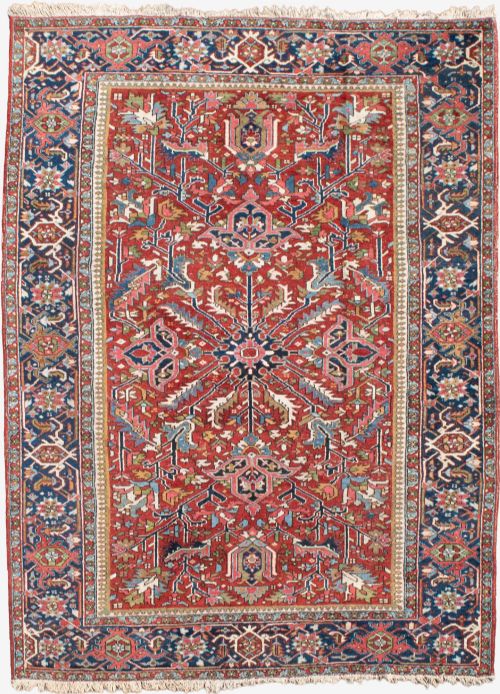


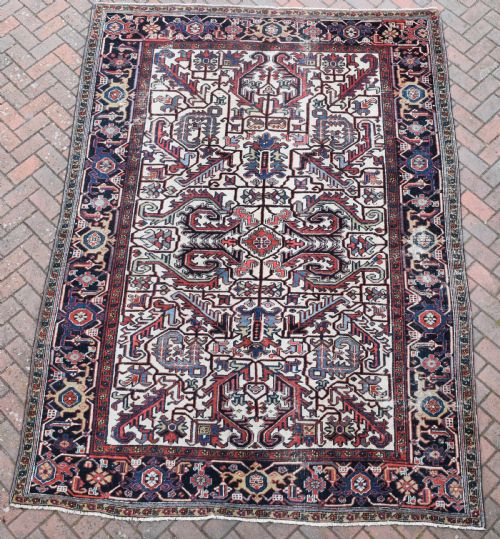


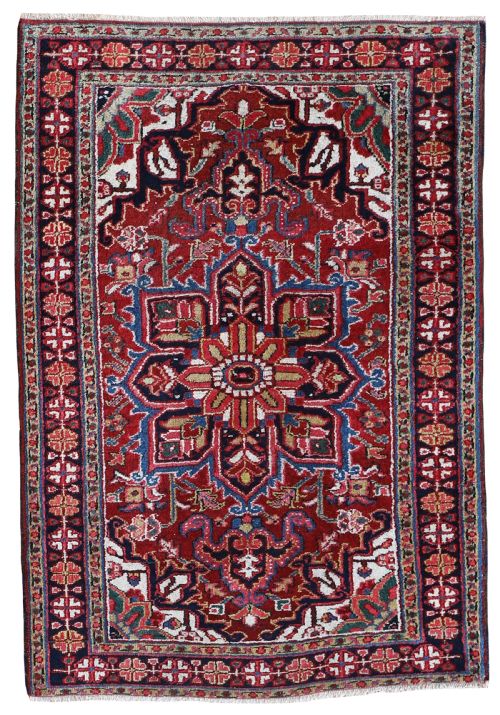
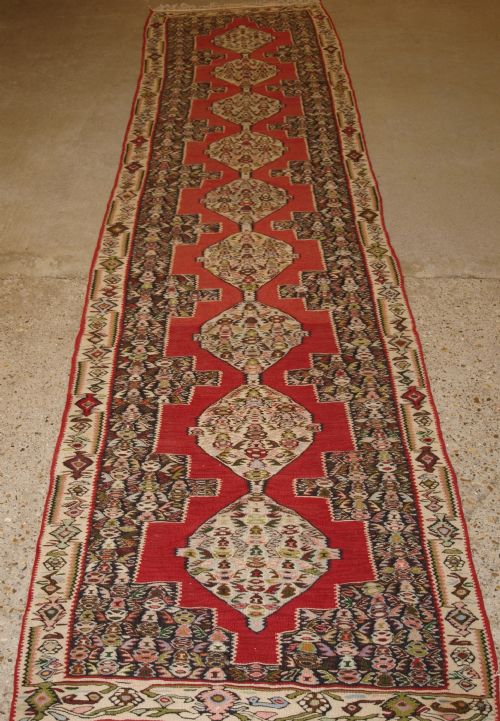
Old Wool Carpet
An old wool carpet brings the rich texture of Persian, Turkish, and tribal weaving into a room with genuine depth.
Old Wool Carpet
When you search for an old wool carpet, you encounter floor coverings woven across Persia, Anatolia, Central Asia, and the broader East, typically dating from the early twentieth century or the nineteenth century. These textiles encompass large room-size carpets, runner rugs, and smaller village or tribal pieces intended for domestic use.
The most common examples on this page are Turkish village rugs and Persian carpets from weaving centres such as Heriz, Tabriz, Veramin, and Sarouk. They arrive in formats ranging from compact prayer rugs to expansive floor coverings measuring over four metres in length.
Village and tribal pieces dominate the selection, including Afghan Baluch, Yomut Turkmen, and Anatolian Yagcebedir productions. These items reflect traditional regional designs, repeat lattice patterns, and medallion layouts passed down through generations of weavers.
How they were made
The construction relies predominantly on wool pile knotted onto cotton or wool foundations, occasionally incorporating hand-spun wool and natural dyes to achieve varied colour depths. Certain finer examples integrate silk highlights into the wool pile to accent specific design elements within the field.
Weavers utilised upright looms to tie individual knots by hand, creating dense surfaces designed to withstand heavy daily foot traffic. Edge finishes and ends received durable overcast stitching or flatwoven kilim web extensions to protect the structural integrity of the carpet.
Old Wool Carpet Retail Price Guide 2026
Typical asking prices for old wool carpet among the pieces listed under this phrase on Sellingantiques today, from the lower quarter to the upper quarter. They describe what is for sale here now, not the wider market.
Several carpets recorded here have travelled further than most modern commuters, quietly crossing continents from nomad tents to parquet floors.
What varies in quality
The sophistication of the design execution and the handling of natural colour palettes separate standard village work from finer workshop productions. Subtle tonal variations within the wool pile indicate the use of traditional dyestuffs, which mature gracefully over decades.
Knot density and structural tightness dictate the longevity and crispness of the geometric or curvilinear motifs. Tighter foundations ensure that intricate medallions and border details retain their structural definition through generations of use.
Maples Ushak
The Old Wool Carpet Glossary
- Medallion
- A central ornamental design motif placed in the middle of the carpet field. It frequently anchors the symmetrical geometry of Persian and Anatolian weaving.
- Prayer rug
- A smaller format rug featuring a mihrab or arch design indicating the direction of prayer. These pieces were historically used for personal devotion.
- Kilim
- A flatwoven textile produced without a pile by tightly interweaving warp and weft threads. They often appear as runners or supplementary border sections.
- Warp
- The vertical foundation threads stretched tightly on the loom before knotting begins. The exposed ends of these threads frequently form the fringe.
- Weft
- The horizontal threads passed alternately over and under the warp strings to lock the knots in place. They provide structural stability across the width of the carpet.
Old Wool Carpet: Frequently Asked Questions
How do I clean an old wool carpet?
Regular gentle vacuuming without a beater bar removes surface grit trapped in the wool pile. Professional specialist cleaning remains essential for deep washing to protect natural dyes and fragile foundations.
Water saturation and household detergents cause permanent damage to traditional wool and cotton materials. Consult a specialist experienced in antique textiles before attempting any liquid treatment.
Where were these carpets made?
Production spans traditional weaving regions across Persia, Anatolia, Central Asia, and parts of India, Nepal, and Tibet. Village communities and established urban workshops both contributed significantly to the surviving output.
Specific towns such as Heriz, Tabriz, and Ushak developed distinct local patterns and colour palettes. Tribal groups including the Baluch and Turkmen maintained unique geometric traditions distinct from city workshops.
Are these carpets suitable for heavy traffic?
Traditional village and workshop carpets utilise dense wool pile constructed to endure decades of domestic use. Placing a quality underlay beneath the rug prevents sliding and cushions the foundation against floor friction.
High-traffic hallways benefit from durable runner formats, while larger room-size carpets anchor living spaces. Regular rotation ensures even wear patterns across the wool surface over time.
How do I tell village rugs from city carpets?
Village and tribal rugs typically display more geometric motifs, asymmetric layouts, and saturated primary colours resulting from local dye practices. They reflect the personal expression of individual weavers working on portable looms.
City carpets from centres like Tabriz or Qum show finer knot counts, precise curvilinear floral designs, and symmetrical floral medallions. These urban pieces required fixed workshop setups and master draughtsmen.