




Old Wooden Bench
An old wooden bench brings enduring utility and rustic character to any room, offering robust seating shaped by decades of everyday use.
Old Wooden Bench
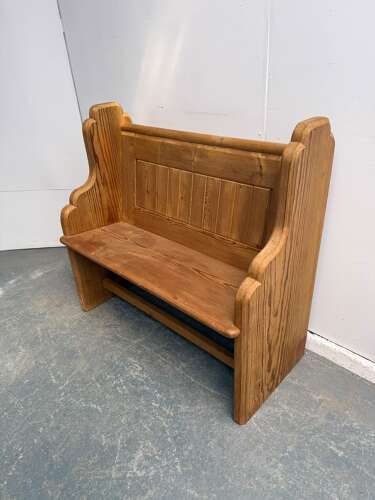
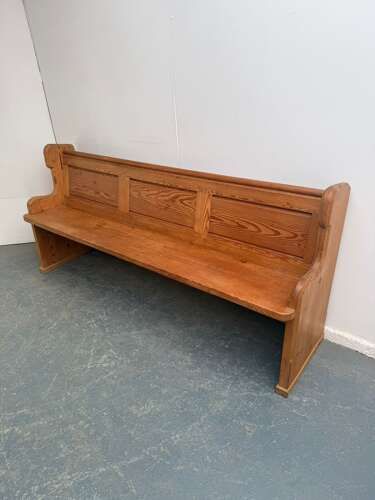
When you search for an old wooden bench, you encounter sturdy church pews, box settles, and farmhouse benches originating from Victorian and Georgian periods. These utilitarian seats often span multiple places of origin, encompassing English workshop traditions alongside regional European country variants.
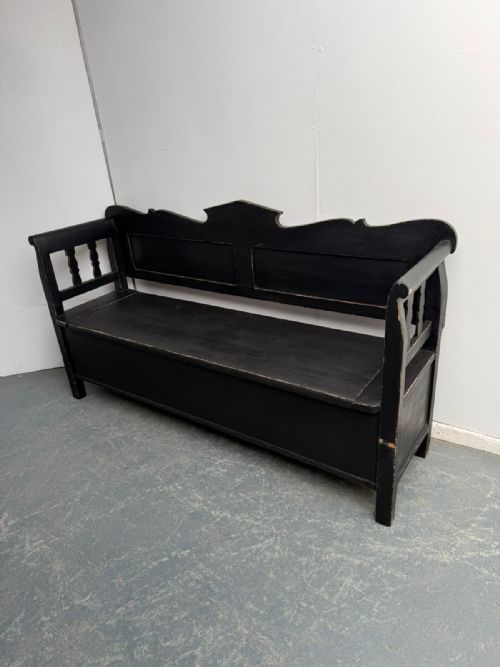
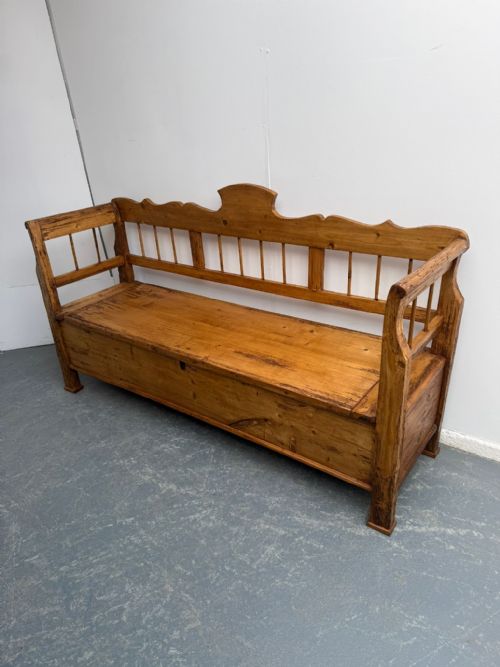
You are most likely to meet pine pews and box settles on this page, finished either with a clear wax or historic painted surfaces in grey and black. Many of these forms integrate enclosed storage beneath the seat, serving practical domestic roles in hallways and kitchens.
The selection also reaches into related domestic forms, including Arts and Crafts examples featuring leatherette upholstery and vernacular rustic farmhouse seating. Occasional works like watercolour paintings depict garden seating, broadening the visual record of these traditional forms.
How they were made
Makers built these pieces primarily from solid pine, utilising heavy timber boards joined to withstand generations of heavy sitting and daily household use. Construction methods relied on straightforward carpentry techniques, creating robust frames designed for longevity in churches, farmhouses, and domestic halls.
Surfaces received straightforward treatments, with many pieces coated in protective wax to highlight the natural grain of the pine. Alternatively, workshops applied layers of paint, resulting in characteristic grey or black painted finishes that weathered over years of service.
One lonely watercolour painting of a garden seat sneaks into the wooden bench listings to admire its own sturdy relatives.
What varies in quality
The distinction between standard examples and superior pieces rests on the integrity of the original construction and the preservation of authentic surface finishes. Original painted skins or untouched waxed patinas hold greater historical interest than later overpainting or aggressive sanding.
Proportion and scale also define the hierarchy, with longer multi-seater settles and church pews demonstrating more ambitious carpentry than smaller vernacular benches. The presence of integrated box storage with original hinges and timber floors elevates the structural completeness of a settle.
The Old Wooden Bench Glossary
- Box settle
- A high-backed wooden bench featuring enclosed storage beneath the seat, designed to block drafts in older homes. It combines seating with a secure compartment for blankets or household items.
- Church pew
- A long wooden bench traditionally built for ecclesiastical settings, often constructed from pine with straightforward joinery. These pieces provide stable, linear seating suited to communal spaces.
- Waxed finish
- A traditional protective coating rubbed into the timber to nourish the wood and impart a soft sheen. This treatment preserves the natural grain and colour of pine without forming a heavy gloss film.
- Arts and Crafts
- A design movement valuing handcraftsmanship and simple utility over mass production. Pieces from this tradition often display honest joinery and functional materials such as leatherette.
Old Wooden Bench: Frequently Asked Questions
What is a box settle?
A box settle is a wooden bench with a high back and sides, featuring an enclosed compartment beneath the seat for storage. This design originally helped block cold draughts in unheated rooms.
In daily use, the lift-up seat provides practical storage space for shoes or linens while maintaining a sturdy seating platform.
How do I care for pine furniture?
Pine furniture benefits from minimal interference, requiring only occasional dusting with a dry cloth and sparing applications of natural wax to maintain the finish.
Keep these pieces away from direct heat sources and strong sunlight to prevent the timber from drying out or splitting over time.
Where did these benches come from?
The pieces originate from various European and English workshops, spanning local vernacular traditions as well as institutional settings like churches.
Regional differences appear in the construction details and painted surfaces, reflecting the specific aesthetic preferences of English and Hungarian makers.
How do I date an old bench?
Dating relies on observing construction marks, timber types, and the wear patterns on the wood and paint surfaces. Georgian and Victorian pieces show distinct hand-tool methods and structural proportions.
Original painted finishes and patination accumulated through decades of use offer further clues to the age and history of each item.