






Old Persian Carpet
An old persian carpet brings rich history, deep wool and enduring tribal or workshop design straight to the floor.
Old Persian Carpet
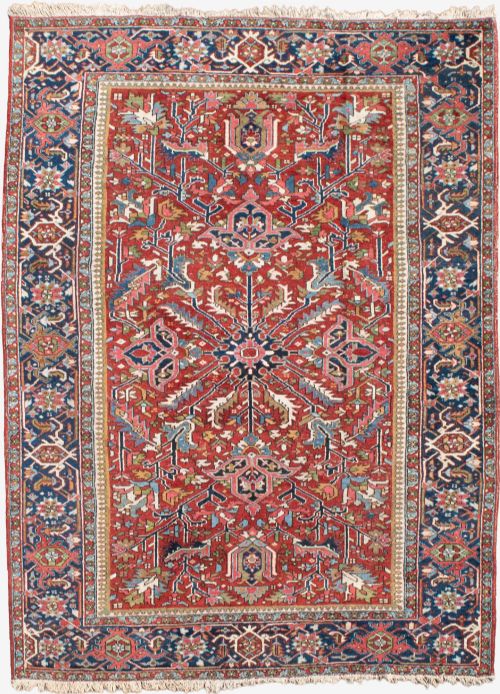
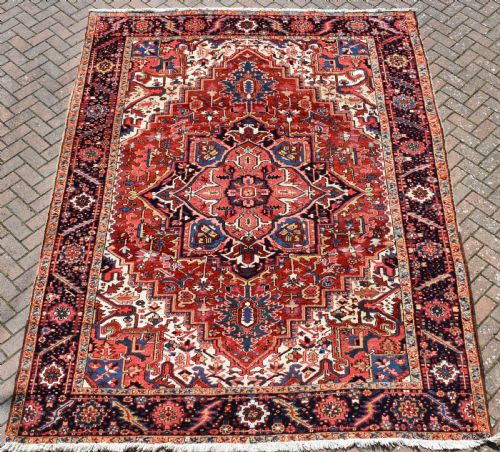
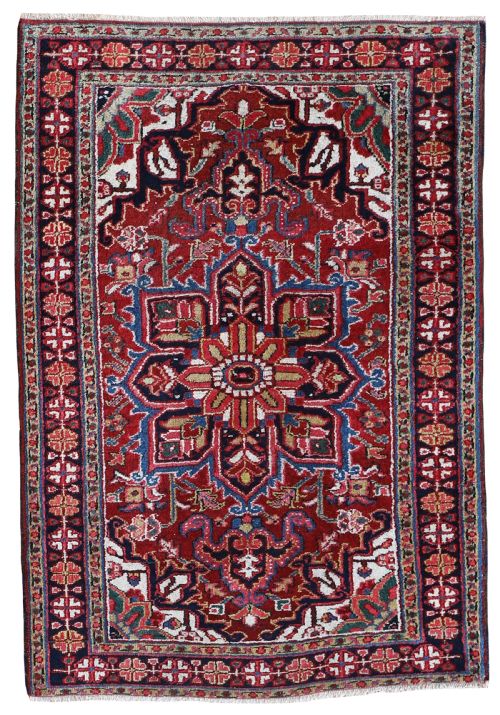
When searching for an old persian carpet, collectors encounter room-size carpets, large area rugs, narrow runners, and small prayer rugs woven across different regions. These textiles originate from major centres like Heriz, Tabriz, Sarouk, and Veramin, alongside tribal groups such as the Baluch and Qashqai.
The pieces on this page primarily date from the early twentieth century and the nineteenth century, reflecting classic village and city workshops. Buyers meet traditional floral medallion designs, geometric formats, and repeating all-over patterns rooted in Persian tradition.
Materials and Technique
Weavers constructed these rugs using wool, cotton foundations, and occasional silk highlights, employing hand-spun wool and natural dyes to achieve deep colour palettes. The structure relies on hand-woven techniques, combining knotted piles with flatweave kilim constructions on runners and smaller formats.
Village and workshop looms utilised sturdy cotton warps and wefts to anchor dense wool piles, ensuring structural integrity across large room-size dimensions and narrow runner proportions.
Old Persian Carpet Retail Price Guide 2026
Typical asking prices for old persian carpet among the pieces listed under this phrase on Sellingantiques today, from the lower quarter to the upper quarter. They describe what is for sale here now, not the wider market.
Materials recorded across these pieces include hand-spun wool, cotton foundations, natural dyes, and occasional silk highlights.
Judging Quality
Quality separates through the fineness of the knotting, the complexity of the design, and the depth achieved by natural dyes. Superior examples exhibit tightly packed foundations, precise geometric or floral drafting, and wool that retains its natural lanolin.
The integrity of the original borders, the crispness of the medallion outlines, and the balanced saturation of the colour palette distinguish master workshop carpets and fine village rugs from standard commercial output.
The Old Persian Carpet Glossary
- Medallion
- A large central ornamental motif set into the field of a carpet. This design element dominates the composition of many city and village rugs.
- Kilim
- A flat-woven carpet or runner produced without a pile. These pieces utilise interlocking weft techniques to create crisp geometric patterns.
- Prayer rug
- A small format rug featuring a mihrab or niche design used historically for daily prayer. These portable pieces often display distinct tribal or village iconography.
- Boteh
- A stylised floral or almond-shaped motif representing a sprouting bush or cypress tree. This ancient symbol appears frequently across Persian and tribal weaving.
Old Persian Carpet: Frequently Asked Questions
How do I clean an old carpet?
Professional specialist washing remains essential for fragile antique wool and silk textiles. Domestic cleaning methods risk damaging natural dyes and cotton foundations.
Regular gentle vacuuming without a beater bar removes surface grit safely between professional cleans.
Where were these carpets woven?
Weaving centres span distinct regions of Persia, including northern towns like Heriz and Tabriz, central workshops in Qum and Isfahan, and tribal areas in the east and south.
Each region developed specific palettes and knotting densities tied to local materials.
Can I place these rugs in heavy traffic areas?
Sturdy village carpets and thick wool pile room-size rugs handle moderate living room or hallway traffic well. Using a quality underlay prevents slipping and cushions the foundation against floor wear.
Delicate silk highlights or flat-weave kilims suit lower traffic placement to preserve their structure.
How do I identify a tribal rug?
Tribal pieces display asymmetrical geometric patterns, nomad motifs, and spontaneous colour shifts created by individual weavers using hand-spun wool. These rugs often feature simpler prayer niches or repeating animal and plant symbols rather than formal city floral layouts.
Village and tribal pieces show charming irregularities absent in rigid workshop production.