



Old Gold Brooch
An old gold brooch brings together nineteenth-century craftsmanship and period diamonds, offering a wearable piece of history for daily adornment.
Old Gold Brooch
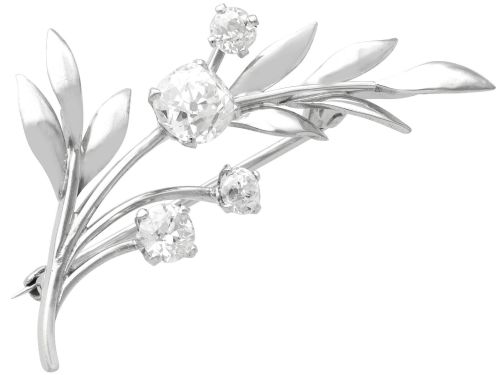
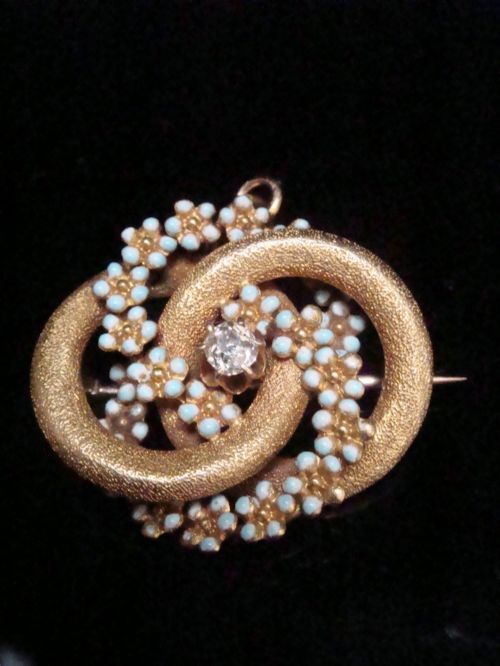
An old gold brooch encompasses Victorian, Edwardian, and Art Deco designs that utilise yellow gold, white gold, and platinum settings. Buyers examine pieces shaped as stars, floral clusters, bows, ribbons, and bar pins.
Edwardian and Art Deco examples introduce lighter mountings in platinum and 18ct white gold alongside yellow gold frames. Starburst configurations and tiara conversions appear frequently, pairing old cut diamonds with natural pearls and coloured gemstones.
Materials and construction
Maker construction relies on combinations of 9ct, 15ct, and 18ct yellow gold, often backed or set with silver to enhance the brilliance of early diamond cuts. Cannetille wirework and detailed pin mechanisms characterise the earlier Victorian output.
Platinum emerges in later Edwardian and Art Deco pieces, allowing for finer claw and millegrain settings that hold substantial old European cut diamonds securely. Natural pearls and calibré-cut stones are integrated with precision into these metallic frameworks.
Old Gold Brooch Retail Price Guide 2026
Typical asking prices for old gold brooch among the pieces listed under this phrase on Sellingantiques today, from the lower quarter to the upper quarter. They describe what is for sale here now, not the wider market.
Listings feature yellow gold, white gold, platinum, and silver alongside Victorian, Edwardian, and Art Deco periods.
Evaluating construction and design
Superior examples demonstrate crisp execution in floral or starburst motifs, where every old cut diamond is aligned to maximise light return within its gold or silver-topped setting. The integrity of the pin hinge and clasp remains vital for secure daily wear.
Finely balanced proportions and original convertible fittings distinguish the better pieces, ensuring that pendant loops and pin stems function without stress to the surrounding metalwork.
The Old Gold Brooch Glossary
- Old cut diamond
- A diamond cut by hand before the mid-twentieth century, featuring a small table, high crown, and open culet that produce a distinctive candlelight sparkle.
- Cannetille
- A form of ornate gold wirework popular in the nineteenth century, resembling fine embroidery or filigree thread.
- Millegrain
- A decorative technique featuring a row of tiny raised metal beads along the edge of a setting, common in Edwardian jewellery.
- Convertible brooch
- A versatile piece of jewellery designed to function interchangeably as a brooch pinned to clothing or suspended as a pendant on a chain.
- Starburst
- A celestial motif composed of radiating diamond points, frequently executed in Victorian silver-topped gold.
Old Gold Brooch: Frequently Asked Questions
How do I wear an old gold brooch today?
Pin the piece securely to the lapel of a tailored jacket, heavy wool coat, or cashmere cardigan. Ensure the fabric has enough weight to support the metal frame without sagging.
Many Victorian and Edwardian examples include integrated loops that allow the piece to suspend from a gold chain as a pendant, offering two distinct ways to wear the item.
Were these brooches meant to convert into pendants?
Numerous nineteenth-century and early twentieth-century designs incorporate hidden bails or removable pins. This dual functionality allowed the owner to transition the jewel from daytime bodice adornment to evening neckwear.
Examining the reverse side reveals these hinged loops and safety mechanisms.
What is the difference between Victorian and Edwardian styles?
Victorian pieces often utilise yellow gold, silver-topped settings, and warmer gemstone arrangements like tourmalines, peridots, and natural pearls. The motifs lean towards romantic knots, floral sprays, and substantial starbursts.
Edwardian design shifts toward platinum and white gold, prioritising airy lightness, millegrain edges, and monochromatic diamond arrangements with sapphires.
How do I care for antique gold and diamond jewellery?
Clean the metal and stones gently with a soft brush and warm soapy water, avoiding harsh chemical dips that can damage natural pearls or vulnerable soft stones. Store each piece separately in a lined box to prevent scratching.
Have a professional jeweller check the security of the old cut diamonds and pin hinges periodically.