

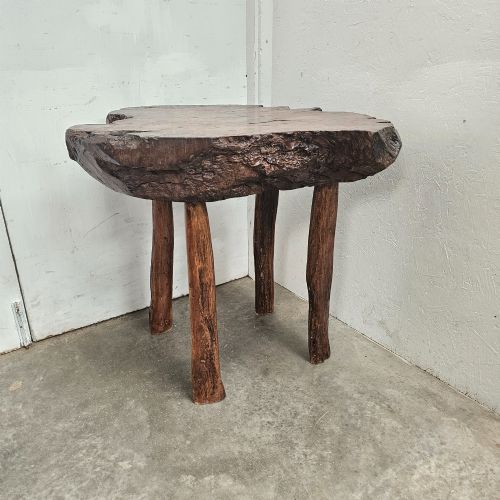


Occasional Living Table
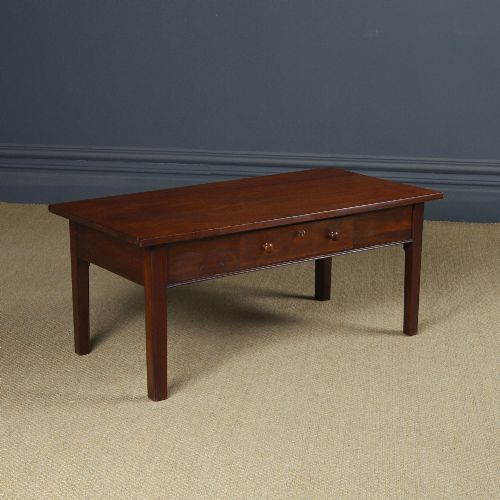
An occasional living table brings flexible surface space to a room, offering everything from nests of tables to coffee and centre tables.
Occasional Living Table
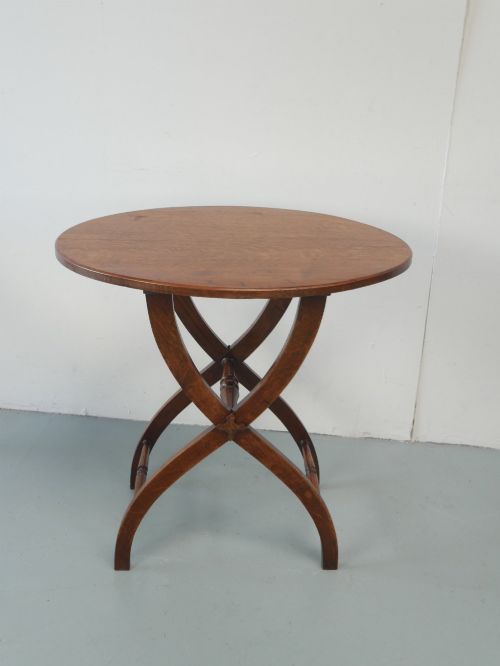
An occasional living table serves as a flexible surface piece within a room, encompassing forms such as nests of tables, side tables, coffee tables, occasional tables, and centre tables. When exploring an occasional living table, buyers encounter a variety of styles spanning the 19th Century, Edwardian era, and the 1930s. The selection includes traditional timber designs alongside distinct items like Art Deco pieces and primitive works.
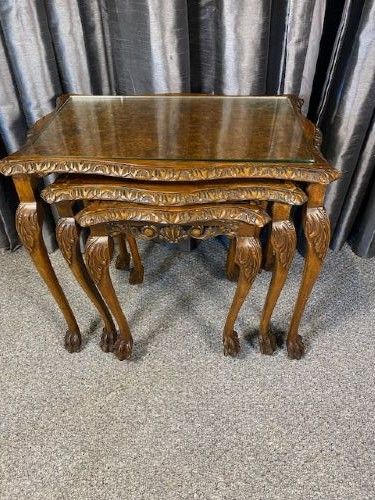
The most common formats on this page are nests of tables, often grouped in sets of three, four, or five. These practical pieces slide away neatly when floor space is needed and separate easily for service. Alongside nests, single side and coffee tables provide steady surfaces for lamps or books.
Origins and periods shape the character of these pieces, drawing on English traditional aesthetics, Queen Anne revival lines, Arts and Crafts simplicity, and industrial utility. Buyers select an occasional living table to fit specific spatial requirements while maintaining period character in a room scheme.
Judgements of quality
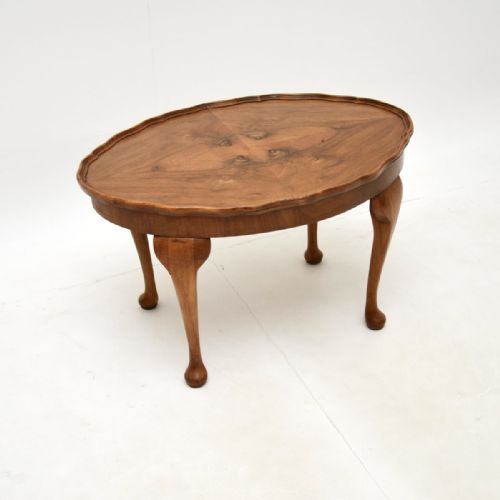
Quality rests in the selection of timber figures, such as figured walnut or yew veneer tops, which demonstrate greater care in material preparation. Finer examples display precise inlay work, balanced proportions, and careful shaping of edges like pie crust borders.
Construction integrity separates standard utility pieces from higher workshops. Well-made nests of tables slide smoothly within their frames without binding, and heavier centre tables maintain rigid joints across their pedestals and legs.
Occasional Living Table Retail Price Guide 2026
Typical asking prices for occasional living table among the pieces listed under this phrase on Sellingantiques today, from the lower quarter to the upper quarter. They describe what is for sale here now, not the wider market.
Some nests pack five tables into the footprint of one, proving Victorians and Edwardians understood small-space living completely.
Harry and Lou Epstein
The Occasional Living Table Glossary
- Nest of tables
- A set of graduated tables designed to fit neatly beneath one another to save floor space.
- Pie crust table
- A small table featuring a raised, carved, and scalloped edge resembling pastrywork around the top.
- Sutherland table
- A narrow drop-leaf table with hinged flaps that fold down steeply, supported by pivoting gate legs.
- Centre table
- A freestanding table finished on all sides, intended to stand away from walls in the middle of a room.
- Burr walnut
- Timber taken from the gnarled growth of a walnut tree, prized for its swirling, highly figured grain pattern.
Occasional Living Table: Frequently Asked Questions
What is an occasional living table?
An occasional living table is a general term for movable surface furniture used around sitting rooms, including nests, side tables, and coffee tables. They provide functional surfaces that adapt easily to changing domestic needs.
These pieces range from compact nests designed to tuck away to larger centre tables that anchor a room's layout. Their diverse forms reflect changing interior fashions from the late 19th century through the Art Deco period.
How do I choose between a nest and a single table?
Choosing between a nest and a single table depends on how much surface space you require day to day versus entertaining. Nests offer multi-tiered flexibility while occupying the footprint of one small table when stored.
Single side tables or coffee tables provide a permanent, stable surface for lamps or reading materials without the moving parts inherent in stacked table sets. Consider your room layout and daily habits when selecting the format.
How do I date an occasional living table?
Dating relies on observing construction methods, timber choices, and stylistic markers characteristic of specific eras. Edwardian pieces often display light mahogany framing with delicate inlay, while 1930s examples introduce bold geometric lines or Art Deco veneers.
Earlier 19th-century pieces typically show heavier timber construction and traditional hand-cut joinery. Comparing the overall silhouette and decorative details to known period styles clarifies the manufacturing era.
Where should I place a centre table?
A centre table requires open floor space where it can be viewed and approached from multiple sides. Because these pieces are finished all around, they work best away from walls in the middle of a room or a large hallway.
Ensure there is sufficient clearance to walk around the table comfortably. They serve well as display surfaces for decorative objects or floral arrangements.