





Oak Wood Clock
An oak wood clock brings honest timber and dependable timekeeping into a room, spanning modest mantel pieces and tall floor-standing longcase examples.
Oak Wood Clock
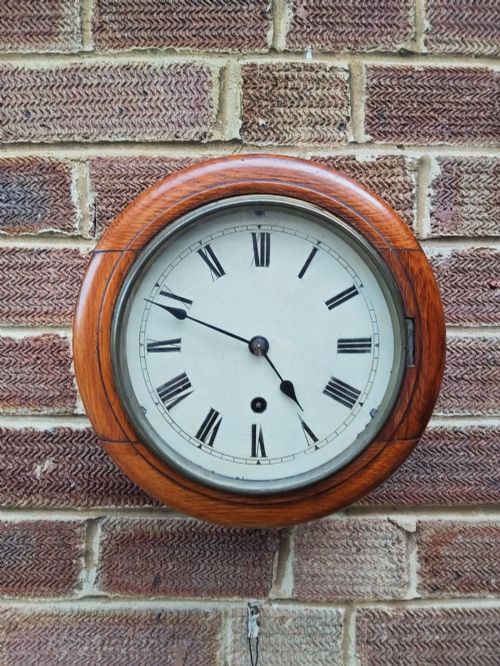
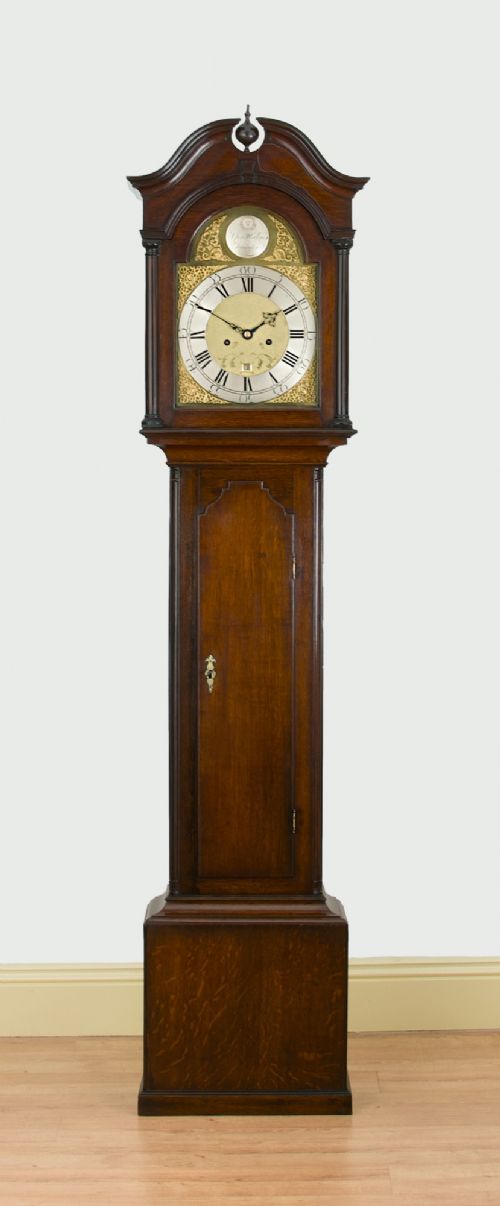
When searching for an oak wood clock, buyers encounter several distinct domestic forms spanning the eighteenth, nineteenth, and early twentieth centuries. The selection ranges from tall longcase and grandfather clocks to smaller mantel pieces, wall dials, and combined barometer instruments.
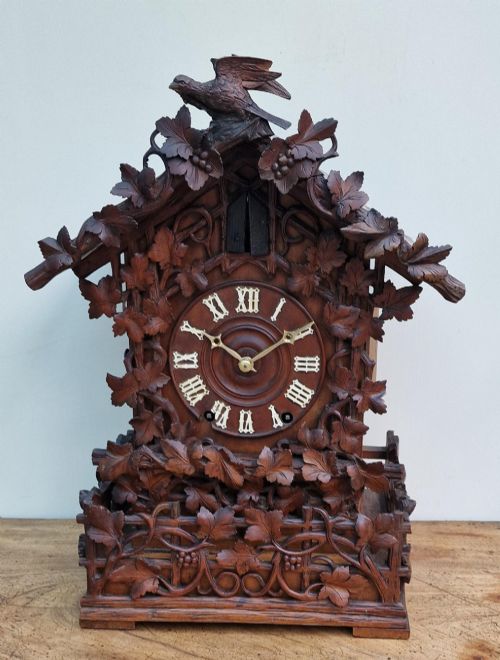
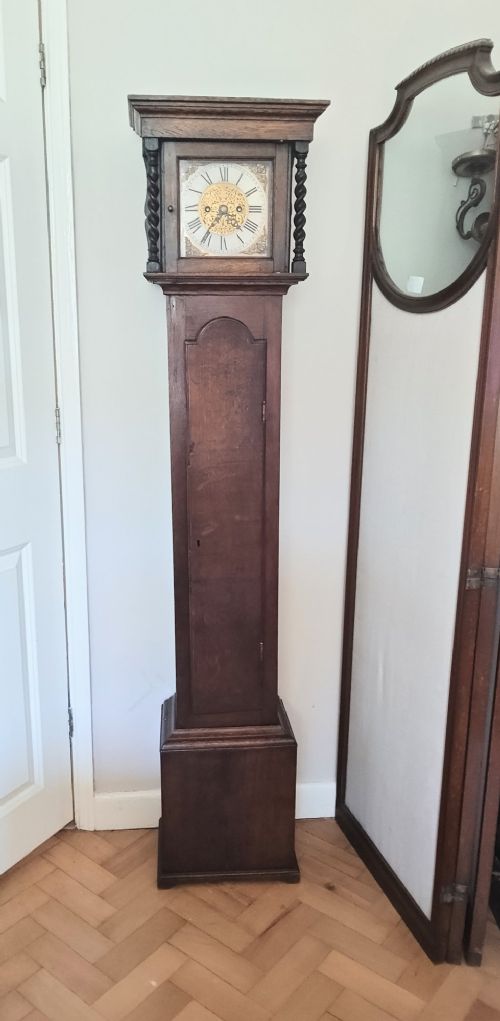
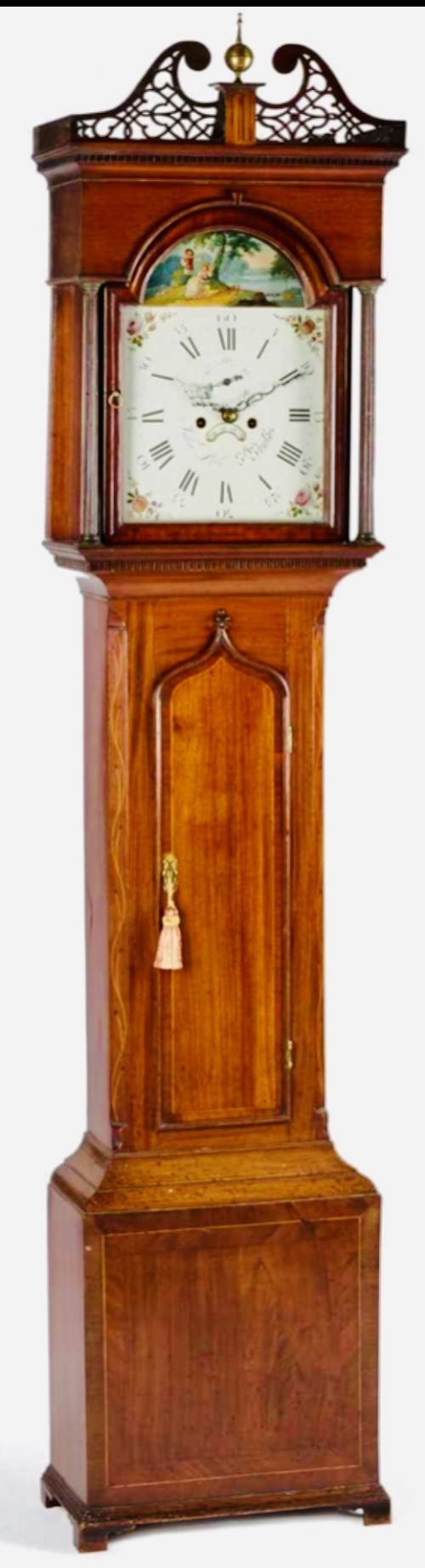
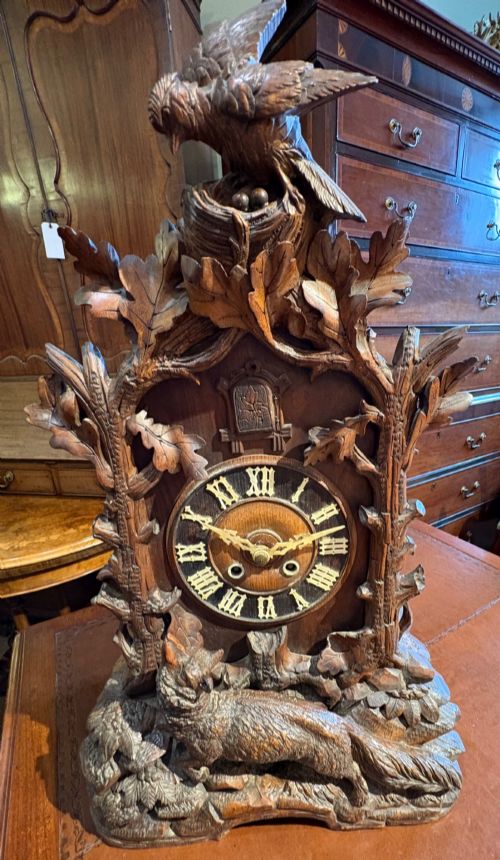
Longcase clocks dominate the taller architectural offerings, often incorporating mahogany details or regional dial signatures from makers across England and Scotland. Mantel pieces and bracket clocks provide smaller domestic options, frequently drawing on Gothic Revival, Jacobean Revival, or Black Forest carving traditions.
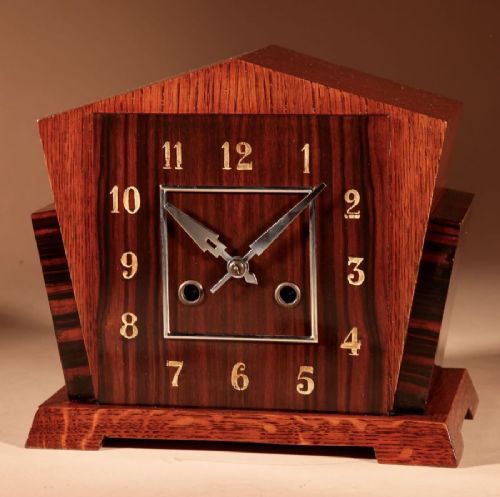
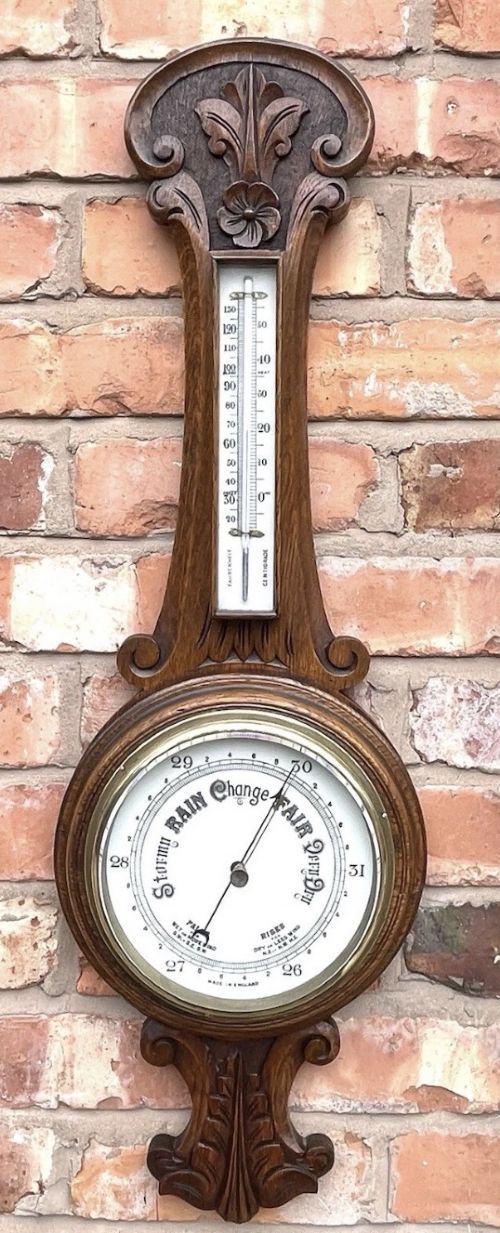
Barometers and wall-hung dial clocks also appear within this category, utilising oak alongside brass and glass to record atmospheric changes alongside daily hours. Pieces from the Edwardian period and the 1920s introduce Amsterdam School and Art Deco geometries to the traditional timber.
Materials and Construction
The construction relies heavily on solid oak timber, frequently paired with mahogany or walnut veneers, and accented by carved wood motifs. Dial faces incorporate brass bezels, white enamel chapters, and protective glass panels to house intricate mechanical movements.
Cabinetmakers shaped these housings using traditional joinery, while specialist carvers added detailed foliage, figures, or geometric panels depending on the prevailing style. Movements range from simple twin fusee mechanisms to eight-day striking trains developed by regional and metropolitan clockmakers.
Oak Wood Clock Retail Price Guide 2026
Typical asking prices for oak wood clock among the pieces listed under this phrase on Sellingantiques today, from the lower quarter to the upper quarter. They describe what is for sale here now, not the wider market.
Materials paired with the primary oak include brass, glass, mahogany, walnut, and carved wood, with regional movements originating from England and Scotland.
Markers of Distinction
Quality in these timepieces rests upon the crispness of the hand-carved wood elements and the structural integrity of the oak housing. Finer examples display balanced proportions, clean dial lettering, and harmonious integration of secondary timbers like macassar ebony or mahogany.
The sophistication of the internal movement and the clarity of the maker's signature on the dial further distinguish standard domestic pieces from superior workshop productions. Original matching components and well-preserved glass and brass fittings elevate the overall integrity of the piece.
George Hallifax Of Doncaster·Jas Whitelaw of Edinburgh·Richard Alexander Devizes·James Coster Of Henley·John Salmon Nantwich·W Prior Skipton·DeLa Salle And Christie·Pfeilkreuz Junghans
The Oak Wood Clock Glossary
- Fusee
- A conical pulley used in clock movements to maintain an even pull as the mainspring unwinds. This mechanism helps ensure more accurate timekeeping throughout the running cycle.
- Longcase clock
- A tall pendulum clock enclosed in a wooden case that rests upon the floor. Often referred to as a grandfather or grandmother clock depending on its overall height.
- Dial clock
- A wall-mounted clock featuring a prominent circular face protected by glass. These pieces were historically utilised in public rooms, taverns, and offices for clear legibility.
- Aneroid barometer
- An instrument that measures atmospheric pressure without using liquid. It relies on the expansion and contraction of a flexible metal box linked to an indicator hand.
- Bracket clock
- A portable table or shelf clock originating from the period when such items sat upon architectural wall brackets. They typically feature carrying handles and glazed side panels.
Oak Wood Clock: Frequently Asked Questions
What is a longcase clock?
A longcase clock is a tall, floor-standing timepiece that encloses a pendulum and weights within a protective wooden housing. These tall structures are commonly known as grandfather or grandmother clocks.
They serve as prominent architectural furnishings in a hallway or living space while recording the hours through mechanical weight-driven trains.
How do I identify a Victorian oak clock?
Victorian examples often display heavier carved decoration, drawing on Gothic Revival, Jacobean Revival, or Black Forest styles. The timberwork is robust, frequently combining solid oak with brass dials or glass viewing panels.
Examining the interior movement and the style of the timber carving helps distinguish nineteenth-century production from earlier Georgian or later Edwardian work.
Where should I place a mantel clock?
Mantel clocks are designed for stable, flat surfaces such as mantelpieces, sideboards, or dedicated shelves. Their compact proportions allow them to sit comfortably in smaller domestic rooms.
Ensure the surface is level so the pendulum or balance wheel operates evenly without interrupting the beat of the movement.
What is an aneroid barometer?
An aneroid barometer is a weather-measuring device that tracks changes in atmospheric pressure through a sealed metal chamber. It translates these pressure shifts into movement on a visible dial face.
Many antique oak instruments combine this barometer function with a thermometer or a clock dial within a single carved wooden frame.