

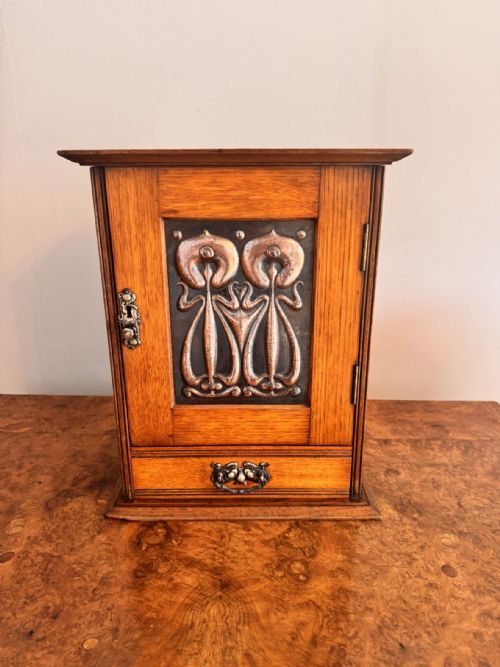
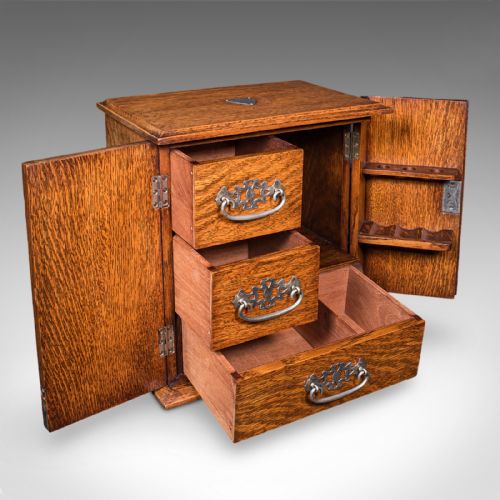
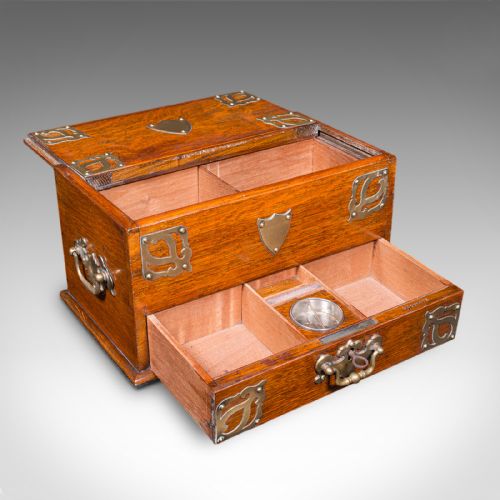


Oak Tobacco Cabinet
These oak tobacco cabinet pieces keep smoking gear tidy in compact, tabletop forms that collectors prize for their rich golden tones and clever internal fittings.
Oak Tobacco Cabinet
An oak tobacco cabinet brings together tabletop storage boxes and smokers cabinets designed to hold pipes, cigars, and tobacco securely in domestic or club settings. When you search for oak tobacco cabinet, you find forms that range from simple Victorian and Edwardian boxes to elaborately detailed smoker's cases.
The pieces on this page appear most frequently from the Edwardian period and the early 20th century, alongside 19th century examples. Common formats include tabletop cabinets, desktop smoker's cabinets, humidors, and specialised pieces shaped like coal wagons or cigarette vending units.
Origins span standard English domestic workshop production to distinct regional expressions such as Anglo-Indian design. Buyers encounter variations that include tambour doors, fitted interiors, and glazed panels suited for displaying pipes and tobacco jars.
How they were made
Cabinetmakers built these pieces primarily using solid oak and golden oak, often selecting quartersawn timber to highlight characteristic medullary ray figuring. The primary woodwork frequently incorporates panelled construction and tightly fitted joinery suitable for tabletop items.
Metal fittings in brass, copper, and cast iron provide hinges, locks, handles, and internal tobacco jar mounts. Some examples integrate glass viewing panels or chrome details, particularly in pieces from the later Edwardian and 1930s periods.
Oak Tobacco Cabinet Retail Price Guide 2026
Typical asking prices for oak tobacco cabinet among the pieces listed under this phrase on Sellingantiques today, from the lower quarter to the upper quarter. They describe what is for sale here now, not the wider market.
Listings span periods from the 19th century through the Edwardian era to 1930, utilising oak alongside brass, copper, glass, ceramic, and cast iron.
What varies in quality
The distinction between standard production and superior examples rests on the choice of timber and the ambition of the internal arrangement. Golden oak with pronounced figuring and well-executed tambour mechanisms represents a higher tier of craftsmanship than plain utility boxes.
Hardware execution and decorative detailing also divide the range, from simple brass hinges to complex Art Nouveau mounts or novelty forms like coal wagons. Intricate carving and specialised interior fittings for pipes and jars elevate the standing of an individual piece.
The Oak Tobacco Cabinet Glossary
- Humidor
- A moisture-controlled box designed to keep cigars fresh. These pieces often feature inner linings of specific woods and secure seals.
- Tambour
- A flexible door constructed from narrow strips of wood glued to a fabric backing. It slides in a track to conceal the cabinet interior.
- Smoker's Cabinet
- A dedicated tabletop piece fitted with racks for pipes, drawers for tobacco, and holders for jars or matches.
- Golden Oak
- A light, warm-toned oak finish popular in furniture production around the turn of the twentieth century. It accentuates the natural grain of the timber.
Oak Tobacco Cabinet: Frequently Asked Questions
What is an oak tobacco cabinet?
An oak tobacco cabinet is a small tabletop storage piece designed to keep smoking paraphernalia, including pipes, cigars, and loose leaf tobacco, organised and protected. These items date primarily from the Victorian, Edwardian, and early twentieth-century periods.
They typically feature hinged doors, drop fronts, or tambour shutters that open to reveal internal drawers, pipe racks, and spaces for ceramic or glass tobacco jars.
How were these cabinets used?
Victorian and Edwardian gentlemen placed these cabinets on desks, sideboards, or club lounge tables to store their daily smoking supplies. The locking mechanisms kept valuable tobacco and pipes secure from household staff or guests.
Specialised versions included built-in humidors for cigars or vending setups for cigarettes, serving both domestic and commercial environments.
How do I date an oak tobacco cabinet?
Dating relies on stylistic clues, materials, and construction techniques visible in the cabinet. Edwardian and Art Nouveau examples often display characteristic organic metal mounts or lighter golden oak finishes.
Nineteenth-century pieces tend to feature heavier proportions, darker patination, or regional influences such as Anglo-Indian carving work.
How do I live with an oak tobacco cabinet today?
These cabinets work well on desks, sideboards, or bookshelves as compact storage for small accessories, stationery, or collections. Their small tabletop footprint makes them versatile for modern interiors.
Maintenance involves simple dusting and occasional treatment with appropriate wood wax to preserve the finish of the oak.