

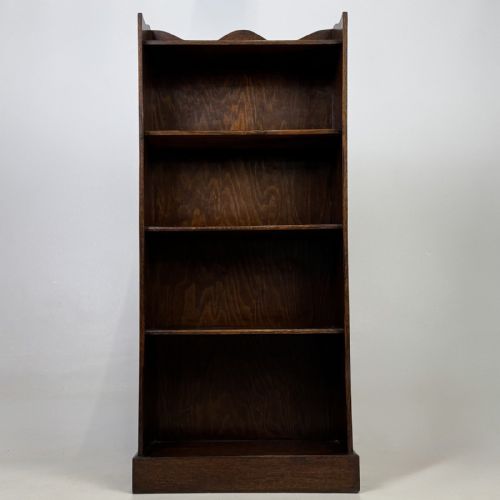
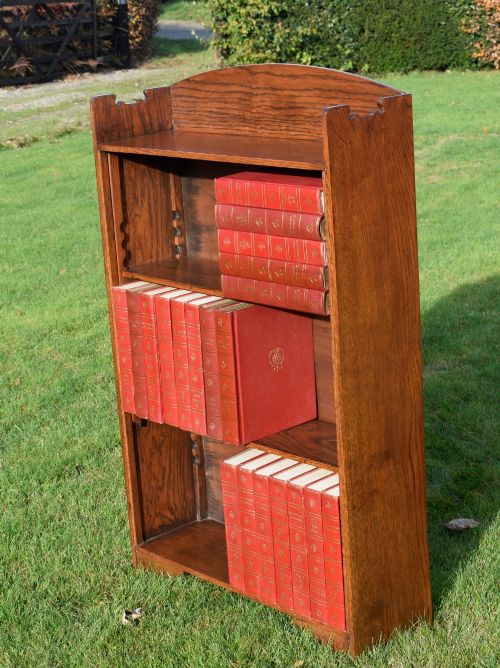
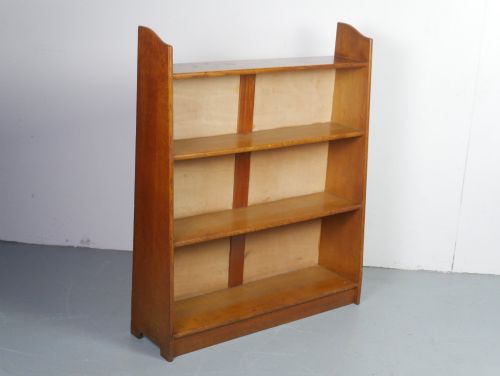
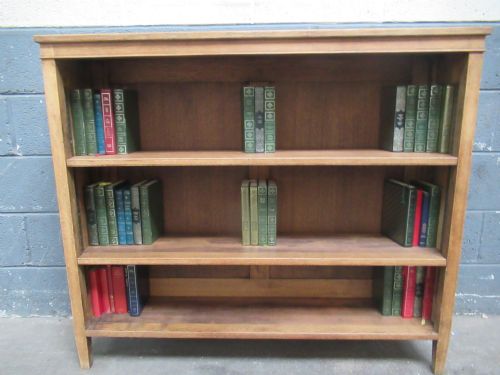
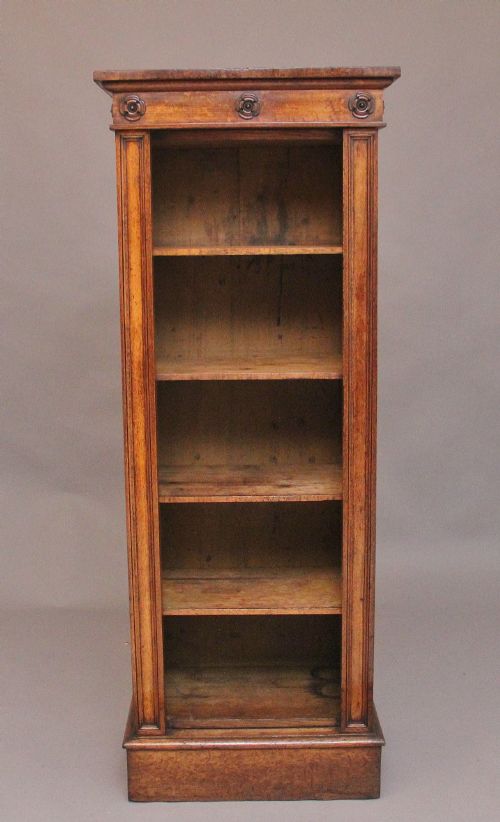
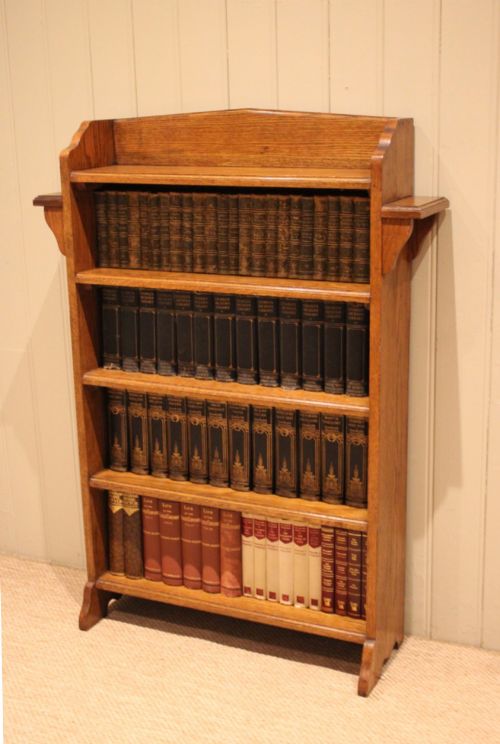
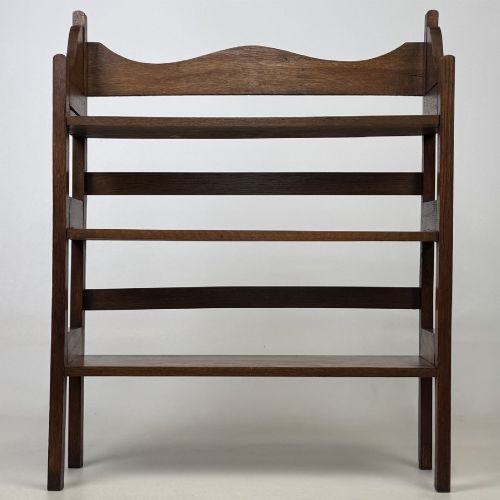
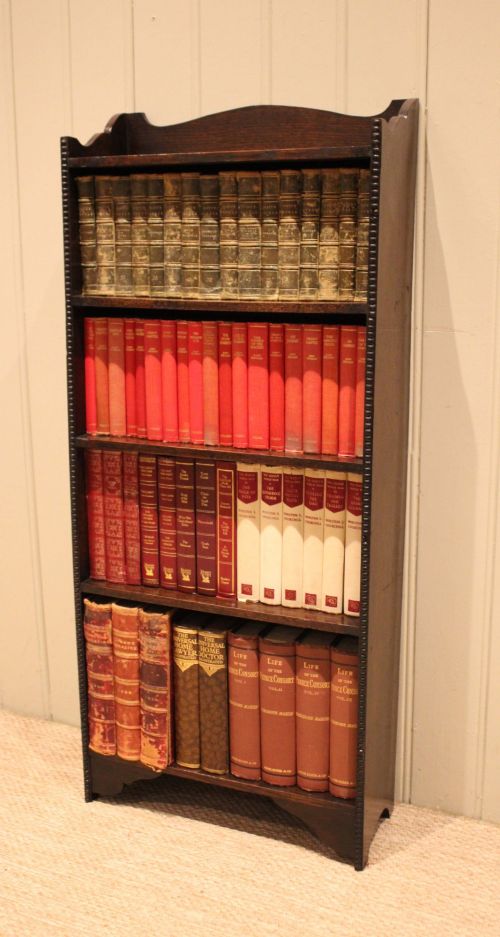

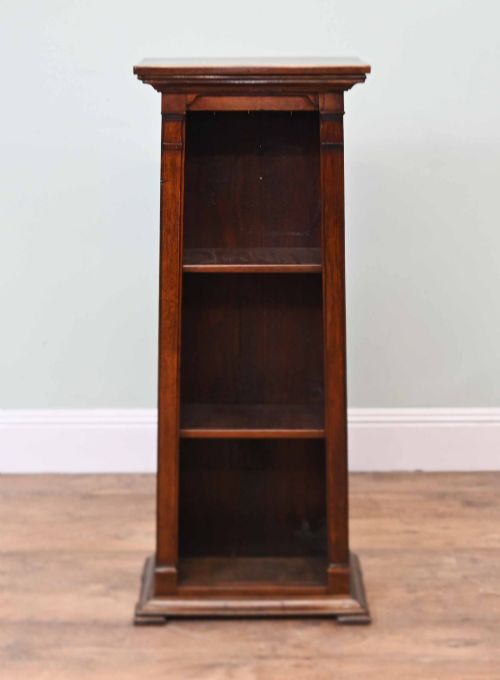
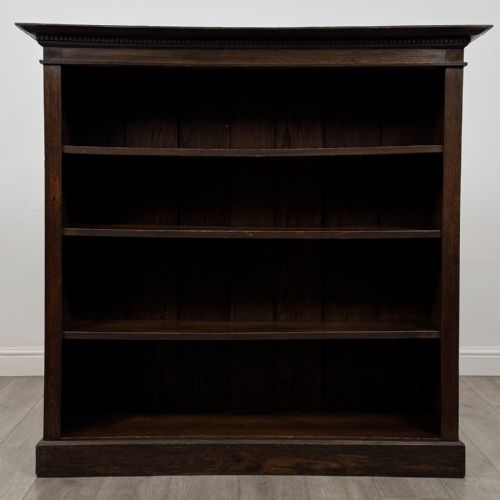

Oak Book Display Shelf
An oak book display shelf offers a sturdy home for volumes while keeping titles visible, spanning Edwardian and Victorian forms.
Oak Book Display Shelf
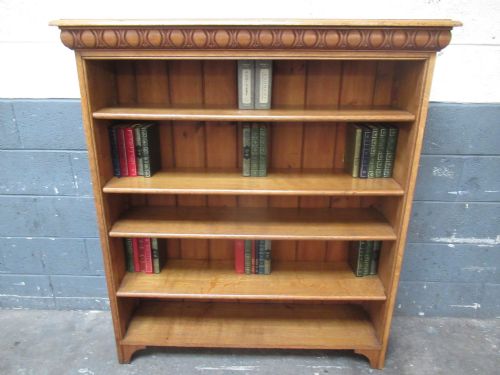
An oak book display shelf combines open shelving with display utility, appearing most often on this page in Edwardian and Victorian variations. Buyers search for these pieces to hold working libraries while showing off bindings in domestic rooms.
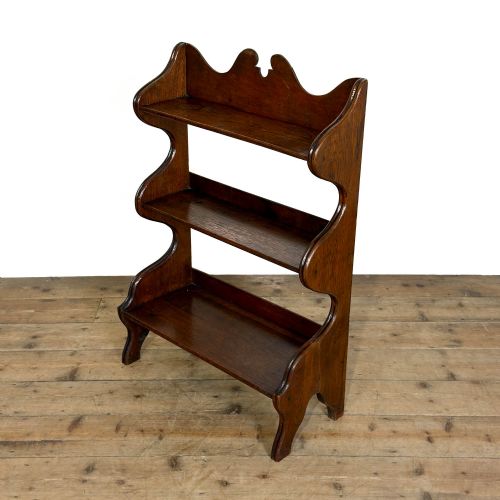
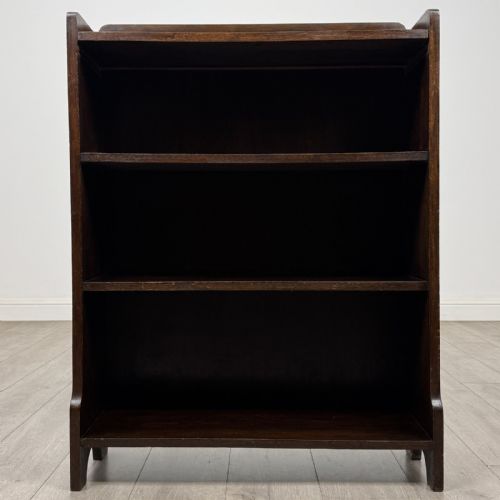
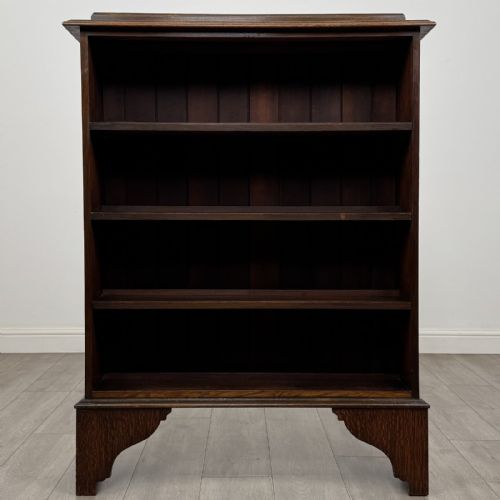
The selection ranges from small open bookcases and waterfall designs to Arts and Crafts pieces and tall library shelving units. Most examples rely on straightforward open fronts, occasionally supplemented by adjustable shelves, brass fittings, or glass elements.
Origins stretch from the late nineteenth century through the nineteen-thirties, taking in Jacobean Revival and Art Deco influences alongside plain English country styles. This variety ensures an oak book display shelf fits rooms that balance traditional joinery with simpler twentieth-century lines.
Materials and Construction
Solid oak and golden oak form the structural core of these items, selected for durability and pronounced grain patterns. Cabinetmakers often integrated mahogany and walnut accents or added brass hardware to secure joints and shelves.
Joinery techniques on these pieces involve open shelving frames, beaded edges, and carved decorations typical of Arts and Crafts workshops. Many examples incorporate adjustable shelf mechanisms, allowing the interior space to accommodate volumes of varying heights.
Oak Book Display Shelf Retail Price Guide 2026
Typical asking prices for oak book display shelf among the pieces listed under this phrase on Sellingantiques today, from the lower quarter to the upper quarter. They describe what is for sale here now, not the wider market.
Listings feature oak alongside walnut and mahogany, spanning Victorian, Edwardian, and Art Deco periods.
Assessing Craftsmanship and Condition
The distinction between standard utility items and superior examples lies in the depth of carved detailing, the presence of decorative cut-outs, and the overall substance of the timber. Finer pieces demonstrate careful timber selection, showing consistent grain and uncompromised structural integrity across the frame.
Attention to functional elements such as adjustable shelving brackets and the crispness of beaded edges separates standard workshop production from finer cabinet work. Original surface patination on the oak further distinguishes pieces that have retained their character over generations.
The Oak Book Display Shelf Glossary
- Open bookcase
- A piece of furniture designed for storing books without front doors, allowing direct visibility of the spines.
- Arts and Crafts
- A design movement prioritising traditional craftsmanship, simple forms, and visible construction methods over mass-produced ornamentation.
- Waterfall bookcase
- A stepped shelving unit where each tier recedes from the one below, creating a cascading profile.
- Adjustable shelves
- Internal boards supported by movable pegs or ratchets, permitting varied vertical spacing for different book sizes.
- Golden oak
- A bright, warm timber finish popular on furniture produced during the Edwardian period.
Oak Book Display Shelf: Frequently Asked Questions
How do I date an oak bookcase?
Dating relies on combining stylistic clues with structural markers, noting that Edwardian and Victorian pieces often display distinct carving styles and hardware choices.
Examining the backboards, timber selection, and joint construction helps narrow the decade of production when maker marks are absent.
Are shelves usually adjustable?
Many examples feature adjustable shelves supported by traditional wooden or metal tracks, though fixed shelving remains common in simpler domestic models.
Checking the interior walls reveals whether the vertical slots or peg holes are original additions or later modifications.
What is golden oak?
Golden oak refers to a specific warm, light tone achieved through finishing techniques applied to plain or quarter-sawn oak timber during the early twentieth century.
This finish highlights the medullary rays in the wood, giving the surface a distinct flaked appearance.
How do I care for antique oak?
Maintenance involves keeping wooden furniture away from direct heat sources and sudden humidity changes to prevent the timber from splitting.
Applying occasional wax polish helps maintain the lustre of the grain without building up heavy residue on the surface.