
Narrow Wooden Shelving
Narrow wooden shelving delivers compact book storage and display through slim proportions suited to tight domestic spaces.
Narrow Wooden Shelving
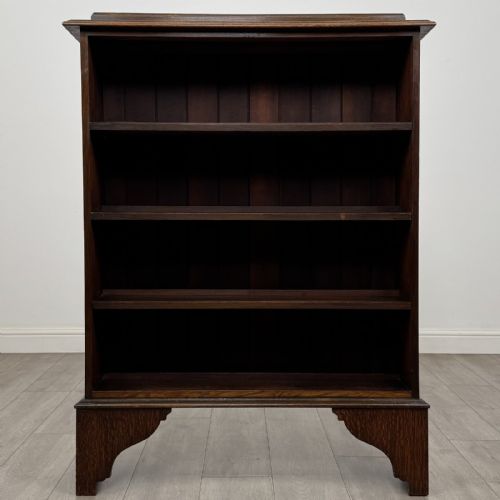
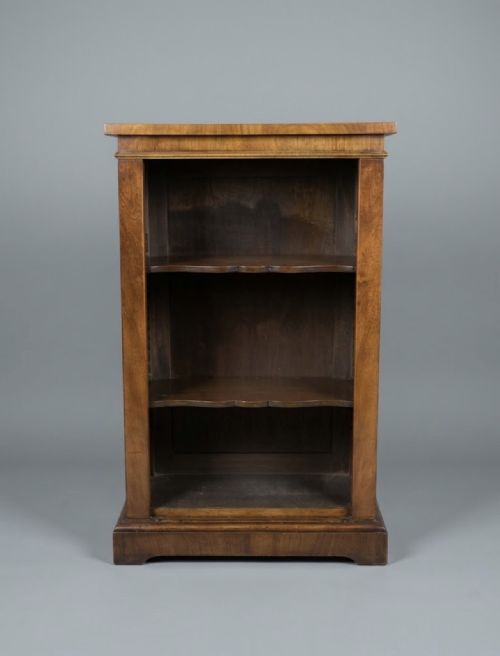
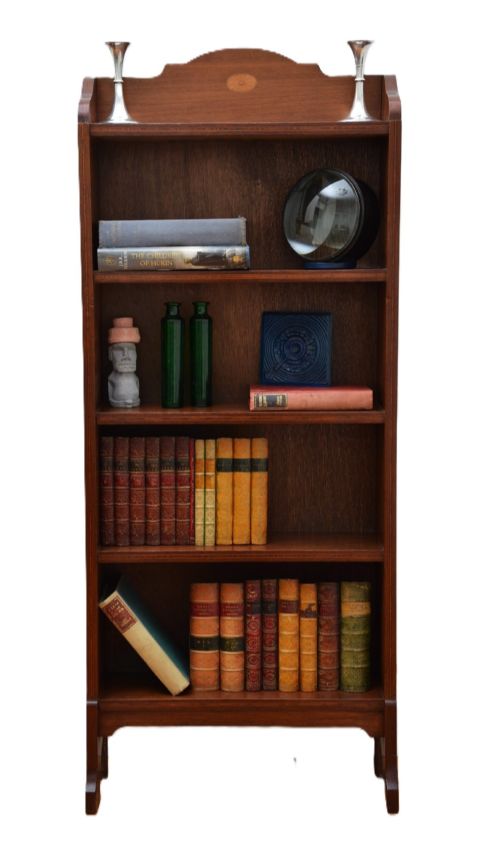
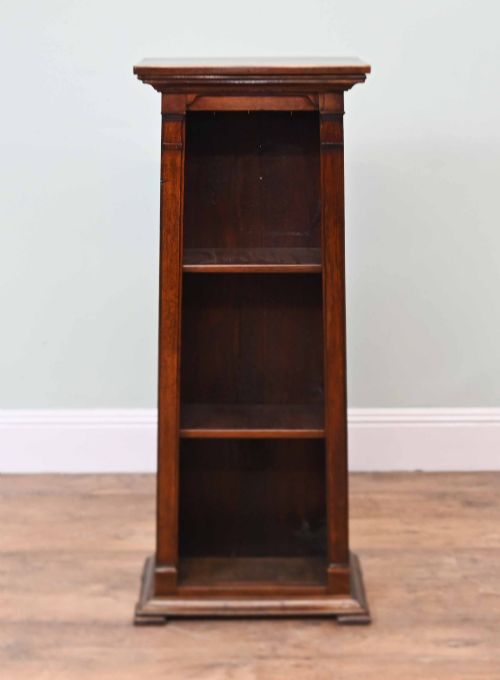
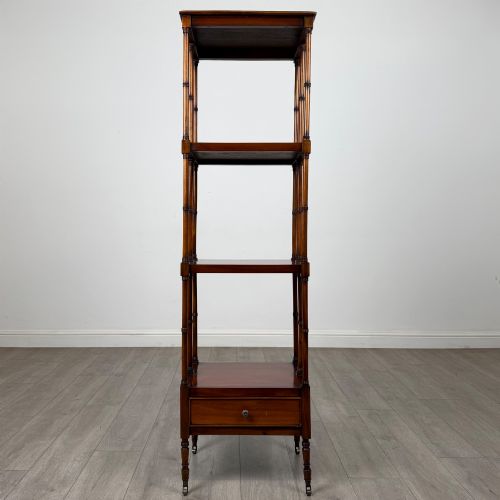
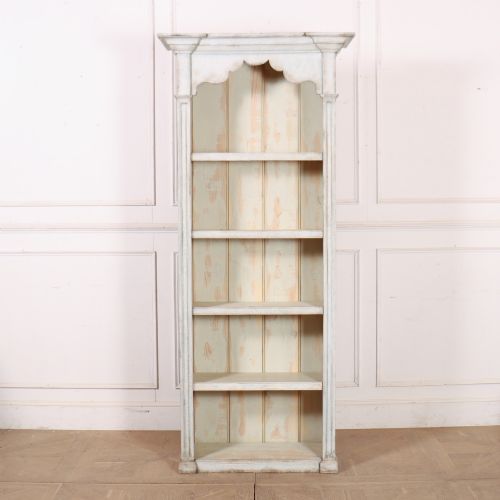
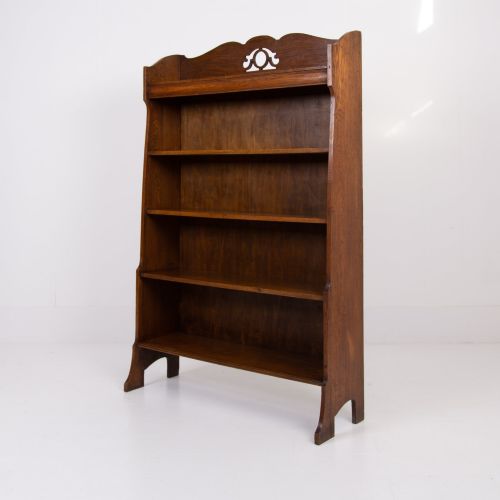
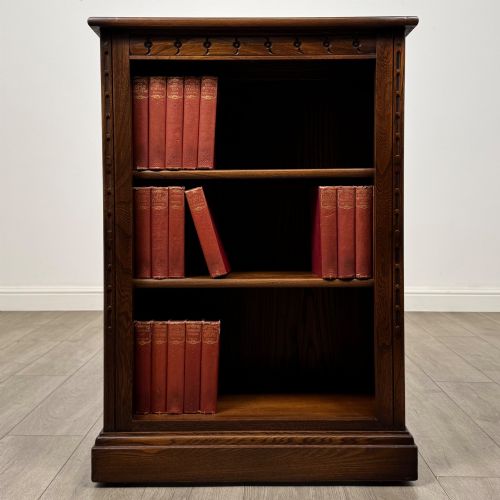
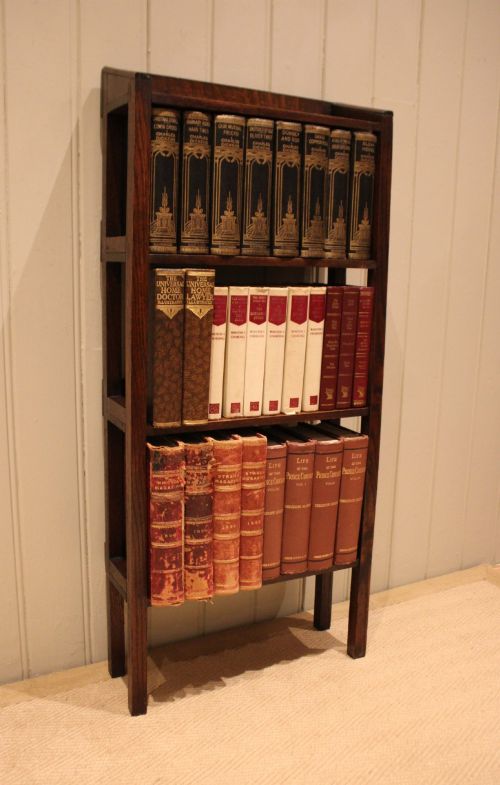
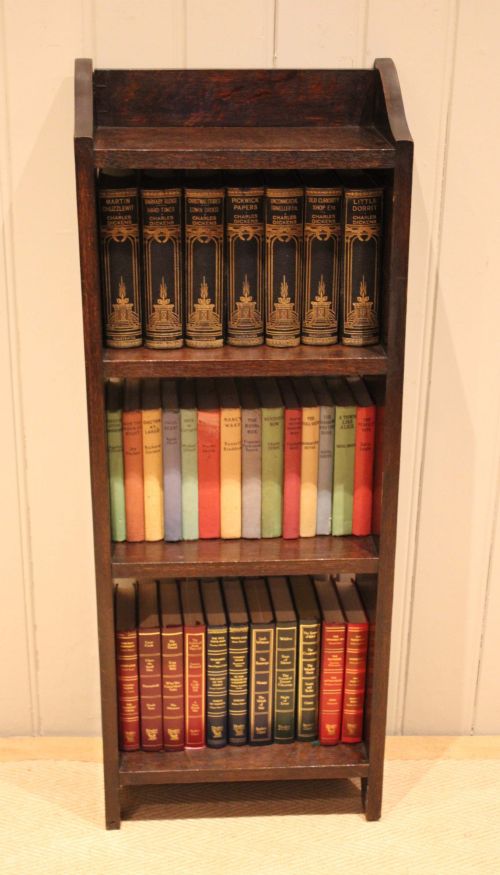
Narrow wooden shelving primarily comprises compact open bookcases, bookcases and shelving combinations, whatnots, and display shelves designed for smaller floor footprints. These items span from the nineteenth century through the Edwardian period and into the nineteen-thirties, reflecting diverse regional and domestic uses.
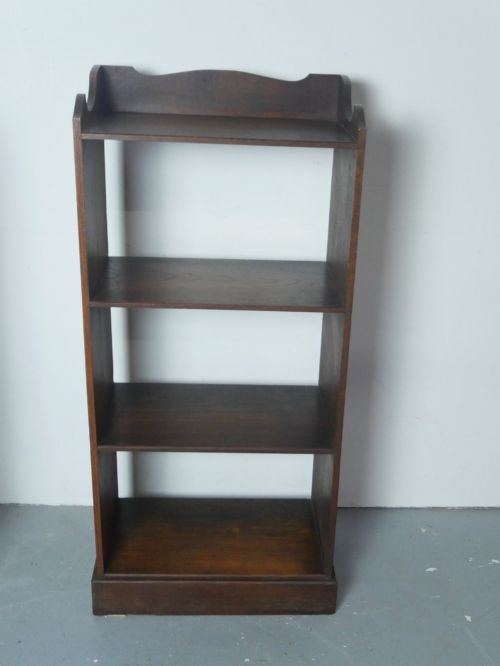
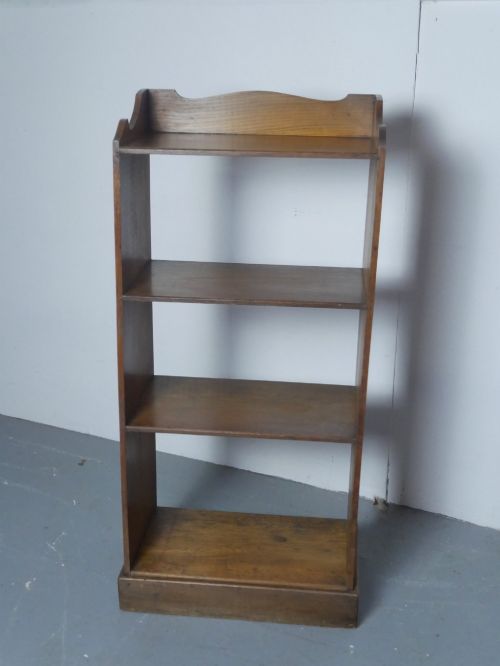
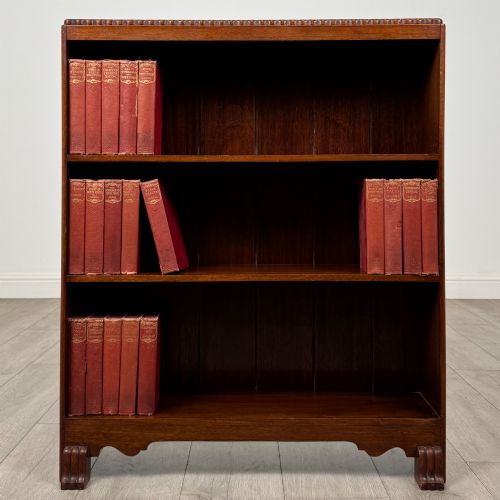
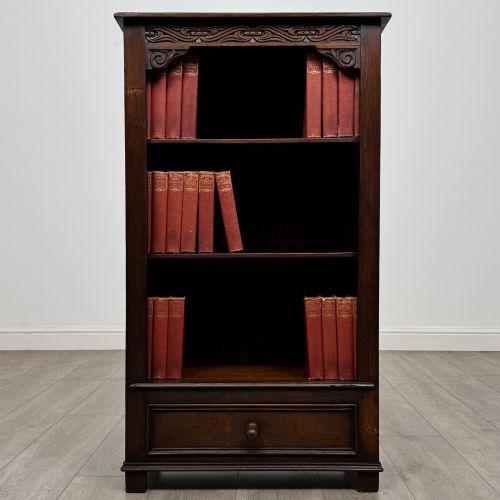
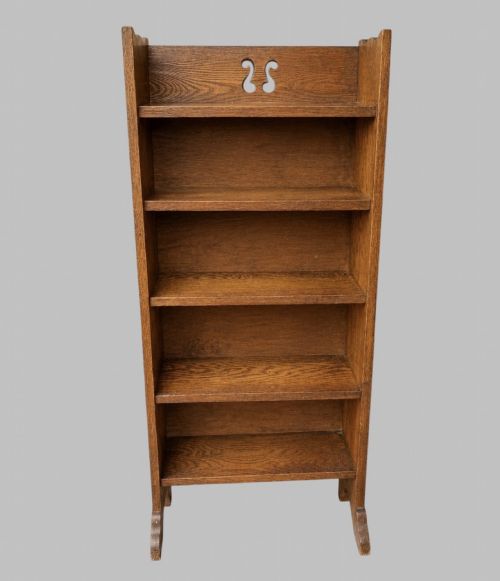
The versions most commonly met on this page are Edwardian and nineteenth-century open bookcases, alongside robust oak pieces from the early twentieth century. Formats range from low standing units to taller, slender configurations featuring open backs or single lower drawers.
Makers and workshops across these decades produced practical shelving that balanced upright vertical capacity with restrained lateral measurements. Such pieces satisfy contemporary needs for space-efficient furniture by utilising vertical wall areas without dominating a room.
Materials and construction methods
Makers relied principally upon native oak and imported mahogany, while pine, elm, yew wood, and rosewood appear alongside painted finishes and faux burr walnut surfaces. Structural integrity in these slim items often depended on solid timber framing, sometimes enhanced with decorative satinwood inlay, ebonised details, or brass fixtures.
Joinery techniques ranged from traditional hand-cut joints in nineteenth-century examples to early twentieth-century workshop production methods. Slender pillars, carved top edges, and decorative cut-outs demonstrate how cabinetmakers refined structural uprights to maintain stability despite restricted widths.
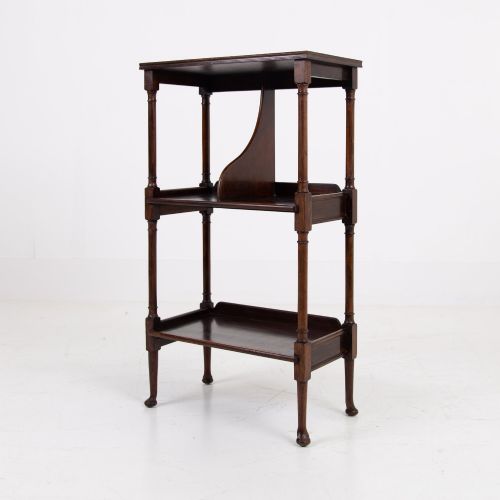
One unexpected nineteenth-century survivor doubles as a whatnot, bookshelf, and side table all at once.
Distinguishing quality across periods
Quality in narrow wooden shelving rests upon the selection of timber and the precision of the joinery rather than mere decorative elaboration. Superior examples demonstrate thoughtful grain matching, stable standing posture, and integrated architectural mouldings that respect the slender proportions of the piece.
Finer items exhibit careful proportioning between shelf depth and overall height, ensuring that narrow units remain robust when loaded with volumes. Simpler vernacular versions rely on honest utility, whereas period-revival pieces often incorporate refined stringing, inlay, or carved detailing executed with greater hand craftsmanship.
Ercol
The Narrow Wooden Shelving Glossary
- Open bookcase
- A freestanding shelving unit without doors, providing immediate access to books and objects from the front.
- Whatnot
- A multi-tiered piece of furniture designed for displaying ornaments, small books, and curiosities.
- Waterfall bookcase
- A shelving unit featuring shelves that step back progressively from bottom to top, creating a cascading profile.
- Satinwood inlay
- A decorative technique embedding contrasting light-coloured wood veneers into the primary timber surface.
- Ebonised
- Wood treated with a dark stain or finish to imitate the appearance of ebony.
Narrow Wooden Shelving: Frequently Asked Questions
What periods do these bookcases span?
The pieces available range from nineteenth-century examples through the Edwardian era up to the nineteen-thirties. This covers both Victorian production and early twentieth-century traditional workshop output.
Buyers encounter various stylistic revivals, including Regency and Arts and Crafts influences, embedded within these broad chronological brackets.
How were narrow bookcases used historically?
These compact units served as practical storage solutions for parlours, studies, and bedrooms where floor space was restricted. They held working libraries or displayed decorative ceramics and small volumes.
The inclusion of lower drawers or open shelf tiers allowed households to combine book storage with ornamental display.
Are these shelves suitable for modern alcoves?
Their restrained widths and slender proportions make them well suited for placement in awkward corners or beside chimney breasts. The compact footprints prevent them from overwhelming smaller contemporary rooms.
Open-back designs further help maintain a sense of light and space against painted walls.
How do I distinguish Edwardian oak from earlier styles?
Edwardian pieces often display lighter golden oak tones and simplified functional lines influenced by the Arts and Crafts movement. Nineteenth-century variants tend to employ denser mahogany or heavily figured timbers with deeper patination.
Detailing such as carved top edges or geometric cut-outs typically points towards the turn of the twentieth century.