

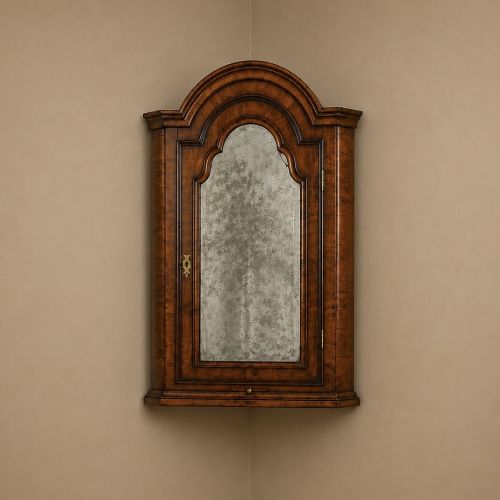
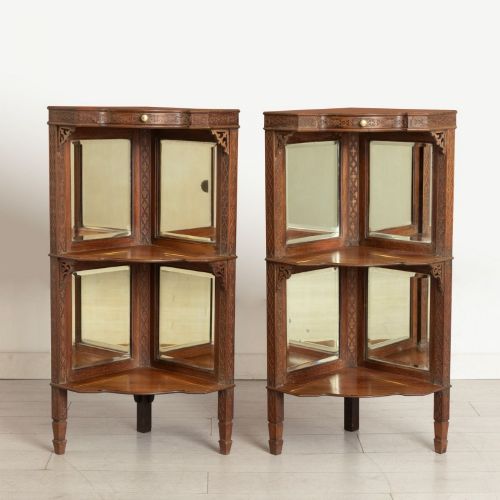
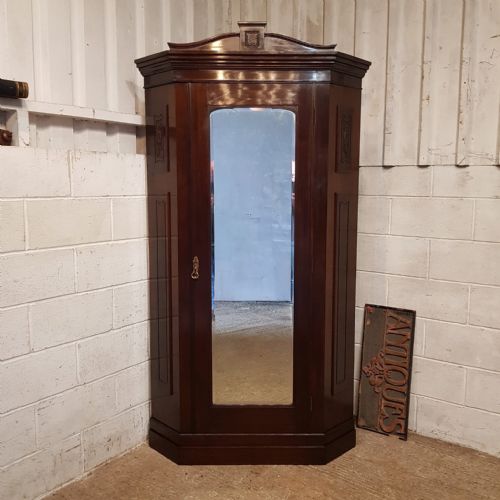


Mirrored Corner Cupboard
A mirrored corner cupboard makes intelligent use of awkward angles, reflecting light while keeping treasured items secure.
Mirrored Corner Cupboard
A mirrored corner cupboard sits neatly into the junction of two walls, making efficient use of floor or hanging space while providing display or storage. These pieces combine timber cabinetry with reflective glass, creating depth and brightening darker corners of a room.
How they were made
Cabinet makers utilised dense hardwoods such as mahogany, walnut, and rosewood for the structural frames, often applying delicate marquetry and satinwood inlay to enrich the exterior surfaces. Brass hardware, including hinges and escutcheons, secures the doors and supports the hanging mechanisms.
Mirrored Corner Cupboard Retail Price Guide 2026
Typical asking prices for mirrored corner cupboard among the pieces listed under this phrase on Sellingantiques today, from the lower quarter to the upper quarter. They describe what is for sale here now, not the wider market.
Early cabinet makers thoughtfully added sliding shelves just so owners wouldn't burn their wigs off while hunting for gin in the dark.
What varies in quality
Quality rests upon the selection of timber and the precision of the cabinet work, particularly around the tight angles required for corner placement. Finer examples display harmonious grain matching, refined inlay work, and robust structural joinery that maintains rigidity over centuries.
The integration of the mirror glass and original brass fittings dictates the overall integrity of the piece. Superior items retain their original glass and candle slides, whereas altered or later replacements shift the balance of authenticity.
Edwards & Roberts
The Mirrored Corner Cupboard Glossary
- Hanging corner cupboard
- A wall-mounted storage unit designed to fit squarely into a room intersection without touching the floor. These often include internal shelving and candle slides.
- Marquetry
- Decorative woodwork where pieces of veneer are fitted into a ground material to form geometric or floral designs. This technique frequently enhances mahogany surfaces.
- Aesthetic period
- A late nineteenth-century design movement focusing on art for art's sake, which introduced lighter materials like bamboo and distinctive geometric forms. It marked a departure from heavier Victorian styles.
- Satinwood
- A lustrous, durable timber with a golden yellow sheen, frequently used for contrasting stringing and inlay on darker cabinets. It provides bright visual detail against walnut or mahogany.
- Candle slide
- A small pull-out wooden shelf positioned beneath the door, originally used to hold a taper for lighting the room while selecting contents.
Mirrored Corner Cupboard: Frequently Asked Questions
How do I hang a wall cabinet?
Hanging corner cupboards require secure fixing to solid wall studs or masonry using appropriate brackets to bear the weight of the timber and glass.
Because these units concentrate weight at an angle, professional installation ensures the cabinet remains stable and level over time.
What periods are these cabinets from?
The listings span from the early eighteenth century, represented by Queen Anne walnut examples, through the Victorian and Aesthetic periods.
Later variations include Edwardian rosewood and mahogany designs dating up to nineteen hundred.
How were candle slides used?
Candle slides pulled out from beneath the main door to hold a small light source while the owner examined the interior contents in dim rooms.
This practical feature is a key indicator of eighteenth-century craftsmanship.
Are all corner cabinets mirrored?
Not all examples feature glass panels; many rely solely on timber panel doors for enclosed storage.
Mirrored versions were specifically designed to bounce light into darker parts of a room while displaying ceramics or glassware.