
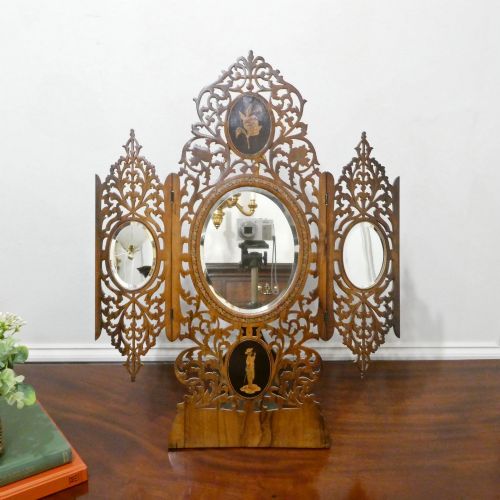
Marquetry Table
A marquetry table brings pictorial wood inlay into domestic spaces, offering intricate surface patterns across various historical periods.
Marquetry Table
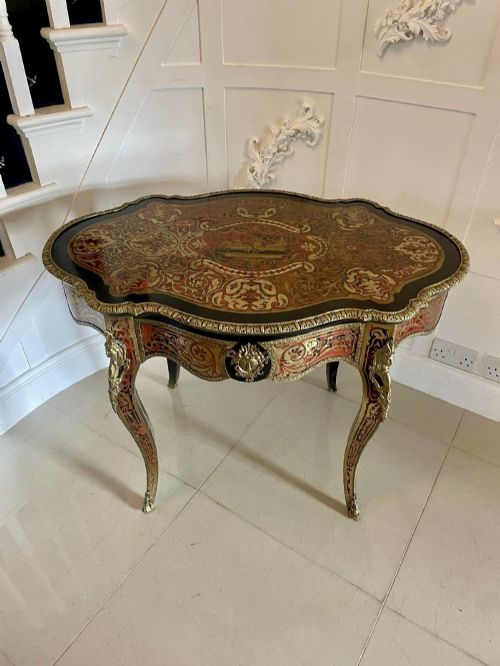
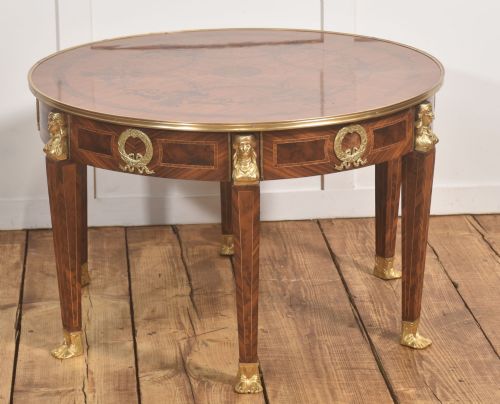
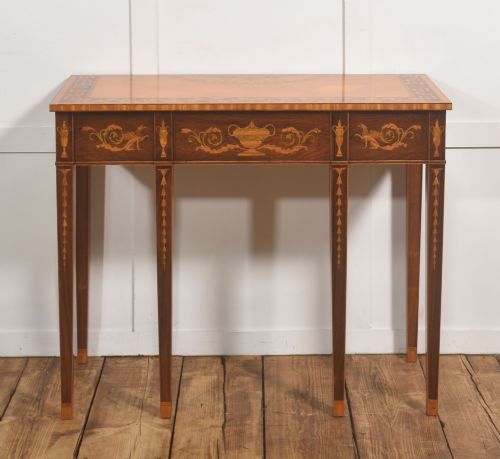
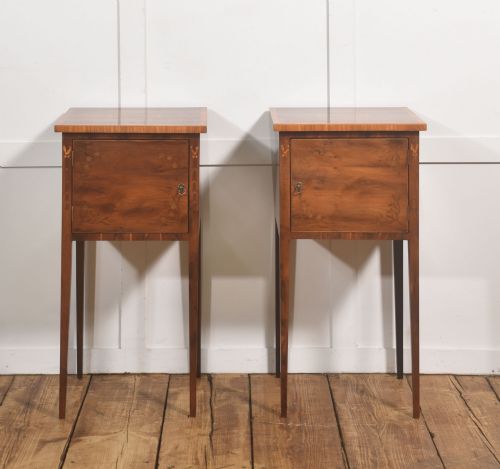
A marquetry table functions as a decorative surface for occasional use, writing, or display within a room. Buyers searching this phrase encounter numerous forms spanning the nineteenth century and the Edwardian era, alongside occasional Georgian pieces.
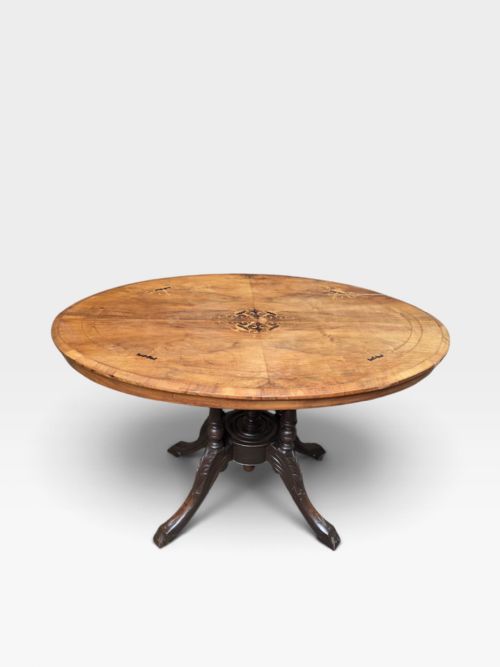
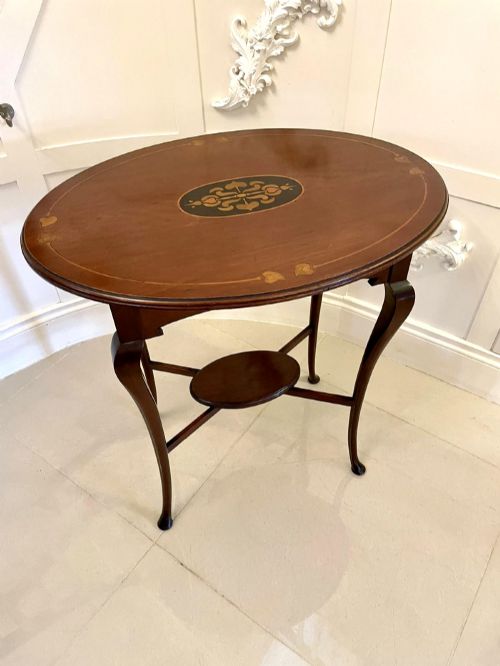
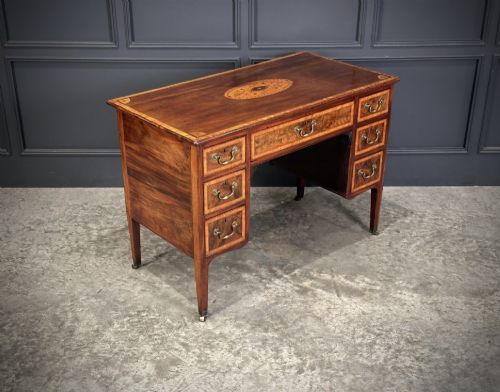
Occasional tables, coffee tables, and desks dominate the available selections, frequently taking oval, octagonal, or serpentine shapes. Walnut, mahogany, and satinwood form the primary structural timbers for these decorative surfaces.
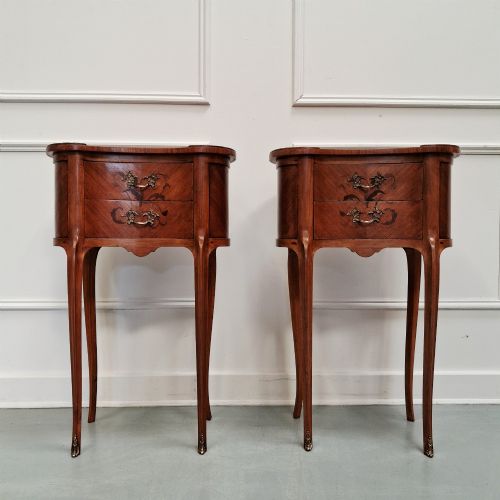
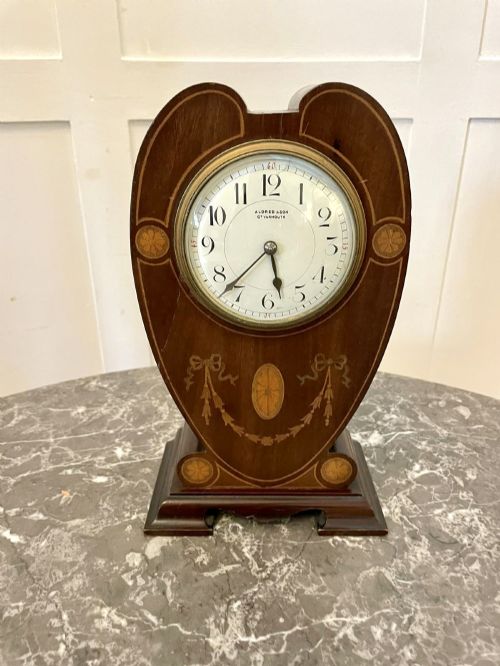
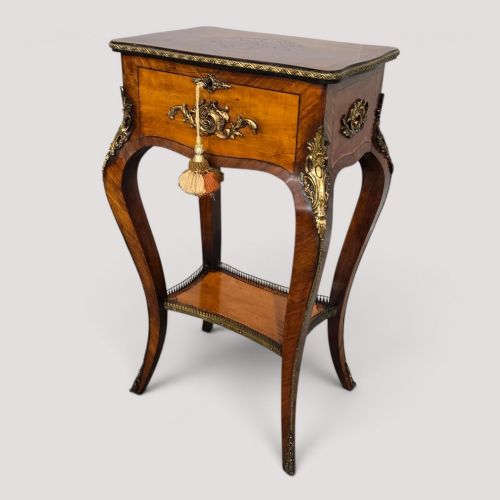
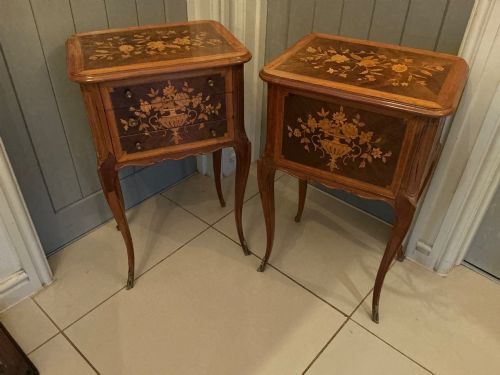
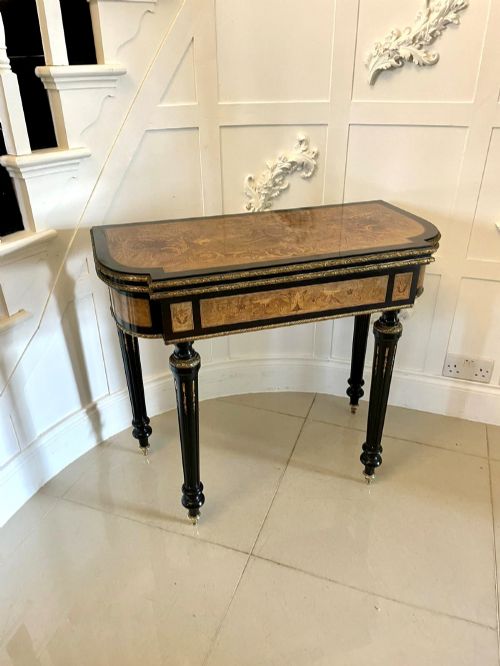
Stylistic influences range from French Louis XV and Louis XVI revivals to English Sheraton Revival interpretations. Pieces often incorporate floral or geometric patterns executed in contrasting timbers.
Materials and construction
Cabinet makers utilised a foundation of solid timbers such as mahogany, walnut, or oak, applying fine veneers to the visible planes. Contrasting woods including satinwood, kingwood, and rosewood were hand-cut to create detailed pictorial and geometric motifs.
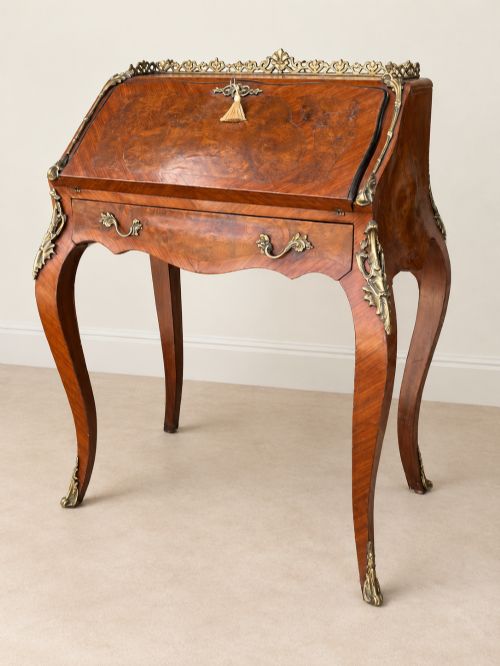
Metal mounts in ormolu and gilt brass frequently embellished the corners, edges, and legs of French-influenced designs. Secondary elements like brass hardware and leather inserts completed the functional surfaces of desks and writing tables.
Listings feature items built from walnut, mahogany, satinwood, rosewood, and kingwood across the nineteenth and early twentieth centuries.
Judging execution and finish
The precision of the veneer cutting and the tightness of the joints determine the primary standard of execution in a marquetry table. Finer examples display seamless integration of contrasting timbers without noticeable gaps or excessive filler.
The selection of secondary woods and the refinement of the underlying carving or mounts separate standard production from superior workshop output. Well-balanced proportions and harmonious timber selection indicate higher tier cabinet work.
Edwards & Roberts
The Marquetry Table Glossary
- Marquetry table
- A decorative table decorated with fitted wood veneers forming pictorial or geometric patterns on the surface.
- Satinwood
- A durable timber with a characteristic golden-yellow sheen, frequently utilised for contrasting inlay work in English furniture.
- Ormolu
- Gilded bronze mounts applied to furniture edges and legs, characteristic of mid to late nineteenth-century French pieces.
- Parquetry
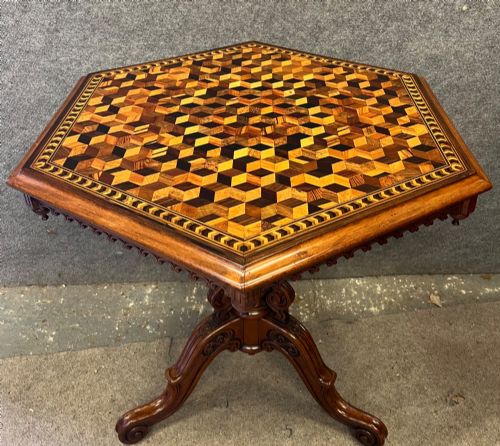
- Geometric wood inlay forming repetitive patterns such as cubes or chequers, distinct from pictorial floral marquetry.
- Étagère
- A multi-tiered open shelving table designed for display, often incorporating inlaid surfaces during the Sheraton Revival period.
Marquetry Table: Frequently Asked Questions
What is a marquetry table used for?
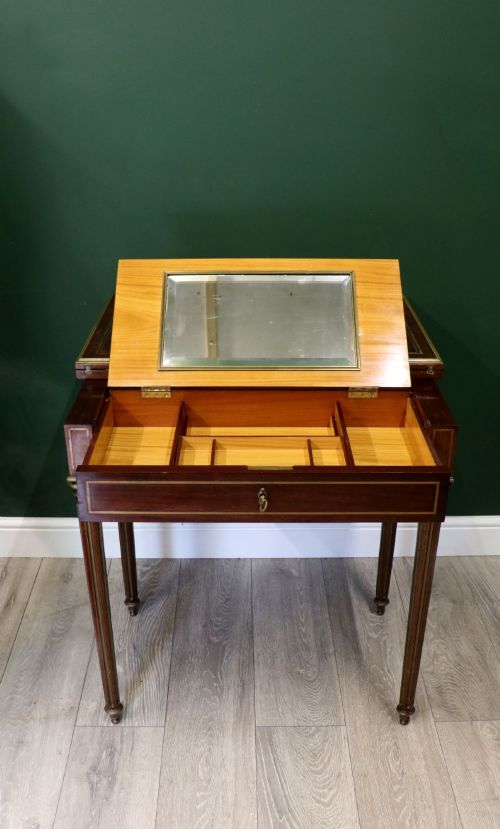
These pieces serve as functional surface furniture including writing desks, card tables, and occasional lamp tables. They place decorative wood veneers on display in reception rooms and studies.
Historically, owners utilised them for letter writing, playing games, or displaying small ornaments. Today, they function similarly while acting as focal points within interior schemes.
How do I identify a Victorian marquetry table?
Victorian examples often employ walnut or mahogany bases with elaborate floral inlay and occasionally incorporate ormolu mounts influenced by French styles. Construction methods reflect industrial mechanisation alongside traditional hand-finishing.
Examining the secondary timbers underneath and the style of the legs provides further clues to the period. Revival styles frequently emulate earlier French or Sheraton aesthetics during this era.
What is the difference between marquetry and parquetry?
Marquetry involves cutting and assembling wood veneers to create pictorial representations, such as flowers, figures, or scrolls. Artisans fit these varied shapes together like a puzzle.
Parquetry relies on geometric patterns, arranging regular shapes like squares, triangles, or diamonds into repeating motifs. Many tables combine both techniques across different surface panels.
How do I care for an antique inlaid table?
Maintenance requires keeping wooden surfaces away from direct sunlight and extreme humidity changes to prevent the veneers from lifting. Regular dusting with a soft, dry cloth preserves the polished finish.
Avoiding harsh chemical cleaners protects the delicate line between the contrasting timbers. Occasional gentle waxing maintains the moisture content of the antique woods.