



Marine Carving
Marine carving brings the sea straight into a room through hand-shaped wood, bone and glass.
Marine Carving
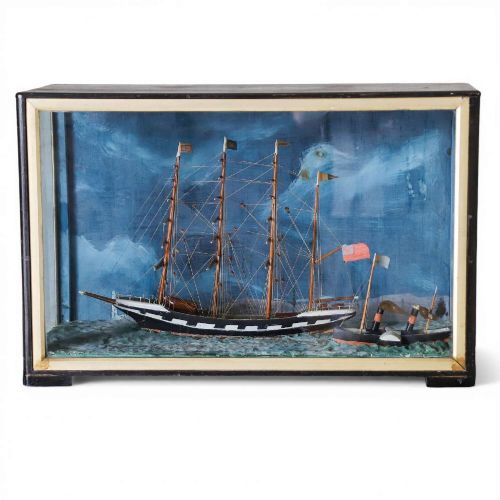
When someone searches for marine carving, they look for objects shaped by hands connected to the sea, spanning wall art, sculptures, barometers and dioramas. The pieces appearing here cross the nineteenth century, Victorian, Edwardian and early twentieth eras, taking forms from ship half-hulls to intricate dioramas and walking sticks.
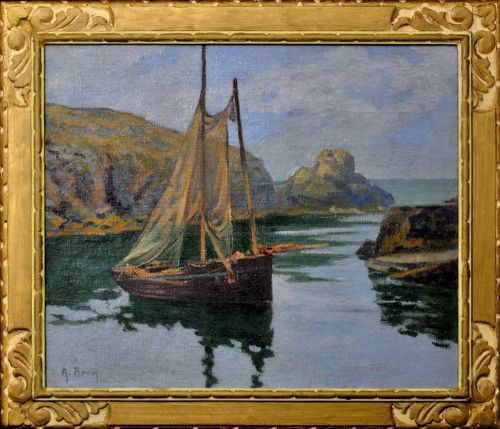
Buyers most frequently meet nineteenth-century dioramas and nautical wall pieces, often framed with painted seascapes or constructed with detailed model vessels inside. These items reflect maritime heritage, touching both folk art traditions and functional nautical instruments like barometers and hour-glasses.
The materials span wood, pine, mahogany, bone, whalebone, glass, brass and oil paint, showing how makers utilised whatever came to hand near the coast. From Pitcairn carved flying fish to Inuit tribal whalebone statues, the variety reflects global maritime connections and local coastal craftsmanship.
How they were made
Makers shaped these pieces using traditional woodworking and carving techniques applied to timber, pine, mahogany and bone. Tools such as knives, saws and sail makers' seam rubbers transformed raw materials into half-model hulls, fairground figures and walking sticks.
Paint and oil paint added colour and detail to wooden hulls, dioramas and coastal scenes, while glass protected delicate internal ship models from dust and damage. Brass components often reinforced barometers, hour-glasses and instruments intended for daily use at sea or ashore.
Marine Carving Retail Price Guide 2026
Typical asking prices for marine carving among the pieces listed under this phrase on Sellingantiques today, from the lower quarter to the upper quarter. They describe what is for sale here now, not the wider market.
Listings span the nineteenth century, Victorian, Edwardian and mid-twentieth periods, incorporating wood, glass, bone, paint and brass.
What varies in quality
The distinction between ordinary and superior marine carving lies in the precision of the handwork and the realism of the maritime subject. A finely detailed model ship inside a diorama, with rigging correctly proportioned and painted backgrounds showing depth, separates better examples from simpler ones.
Material selection also dictates quality, where dense bone, well-seasoned mahogany or genuine whalebone display a finer finish than basic pine. The integrity of the original paint, glass and structural mounts preserves the historical honesty of the piece.
The Marine Carving Glossary
- Diorama
- A three-dimensional scene enclosed in a box, often featuring model sailing ships set against painted seascapes. Glass panels usually protect the interior composition.
- Half model
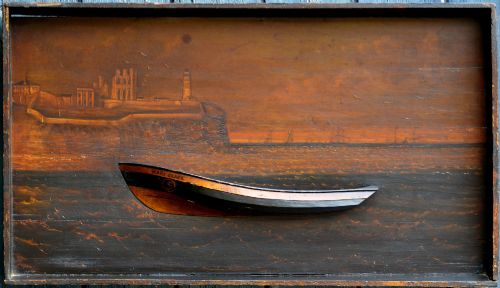
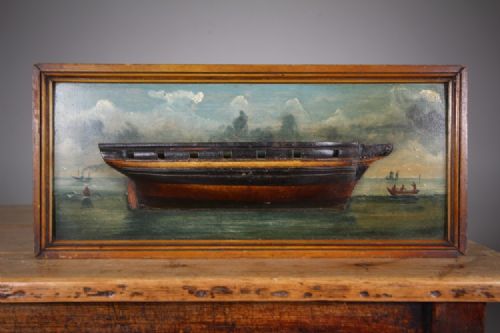
- A representation of one side of a ship hull, mounted on a board to display the vessel lines. These were often hung on walls in maritime homes.
- Seam rubber
- A smooth tool utilised by sailors and sail makers to flatten seams in canvas. Bone versions were frequently carved with decorative details.
- Whalebone
- Material sourced from baleen whales, utilised by sailors and indigenous carvers for walking sticks and statues. It provides a dense, smooth surface for intricate work.
Marine Carving: Frequently Asked Questions
How are half-model hulls displayed?
Half-model hulls are mounted directly onto wooden backboards, designed to hang flat against a wall. They present the starboard or port profile of a vessel as if it were emerging from the water.
These pieces originally served practical purposes in shipyards or homes, but today function primarily as decorative wall art celebrating historic shipbuilding forms.
What materials were used in marine carvings?
Carvers utilised local and marine materials including pine, mahogany, bone, whalebone, brass and glass. Paint and oil paint added surface colour to wooden hulls, figures and backdrops.
Sailors and coastal craftspeople worked with whatever medium was accessible, resulting in varied textures from dense bone walking sticks to painted wooden fish and fairground figures.
How do I date a marine carving?
Dating relies on identifying the vessel type, material usage, framing style and recorded historical periods such as Victorian or Edwardian. Specific ship names or riggings often link items to known eras.
Changes in construction methods, glass types and paints help distinguish nineteenth-century examples from later twentieth-century pieces.