
Marble Topped Cabinet
A marble topped cabinet brings a cool, heavy stone surface to rooms that need utility paired with refinement.
Marble Topped Cabinet
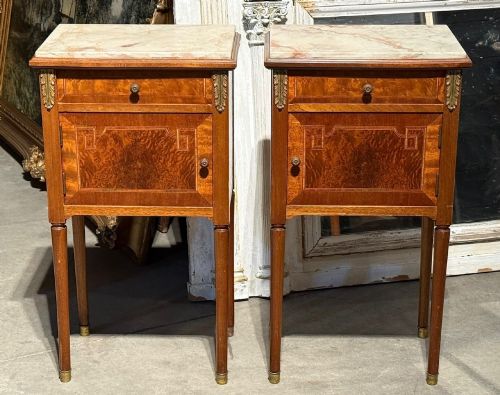
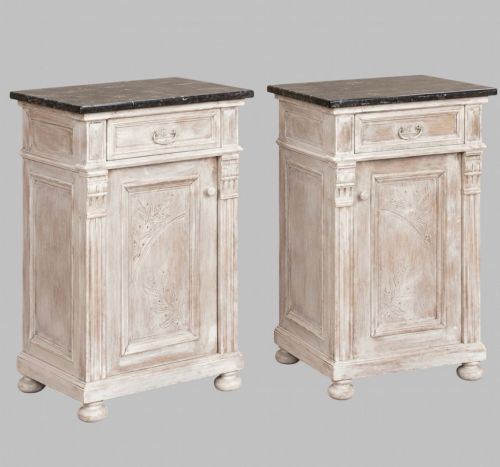
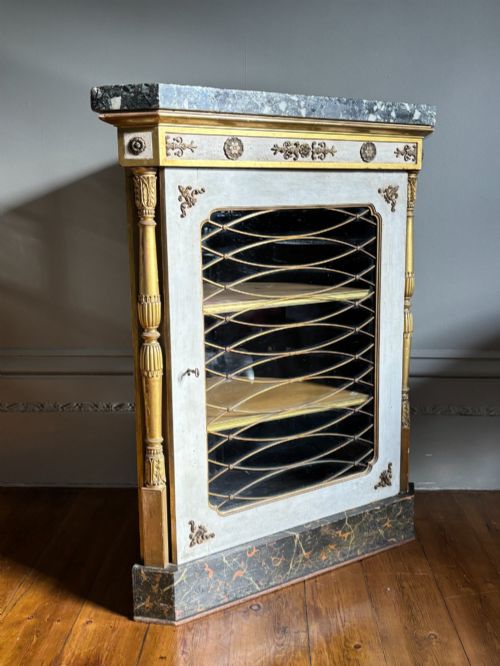
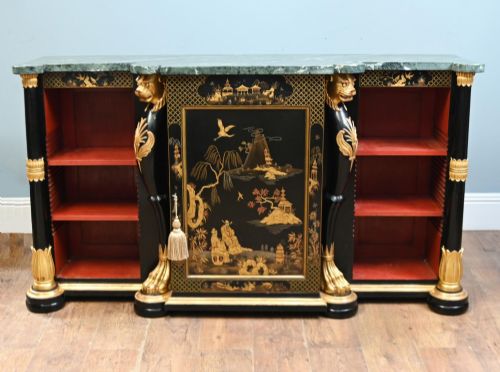
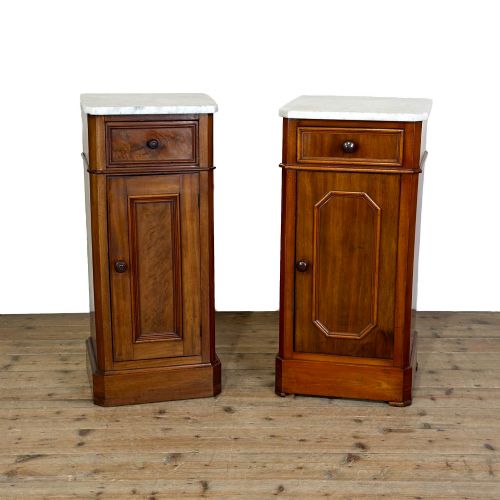
A marble topped cabinet brings together timber carcases and cold stone slabs to serve as bedside storage, washstands, and corner cupboards. You will find these pieces largely spanning the nineteenth century through the early twentieth century, drawing on Victorian and continental traditions.
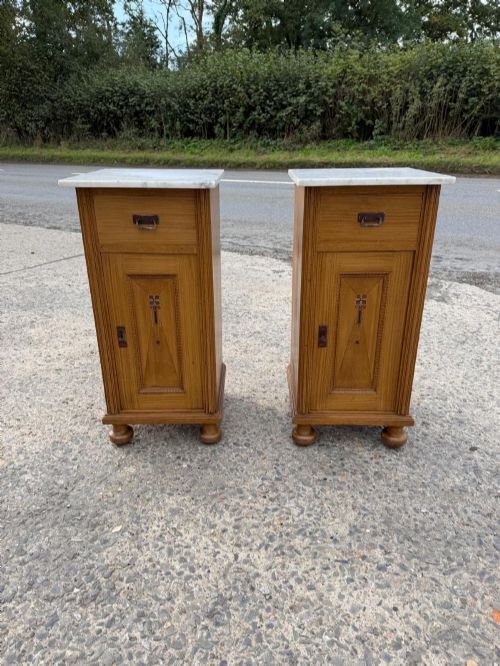
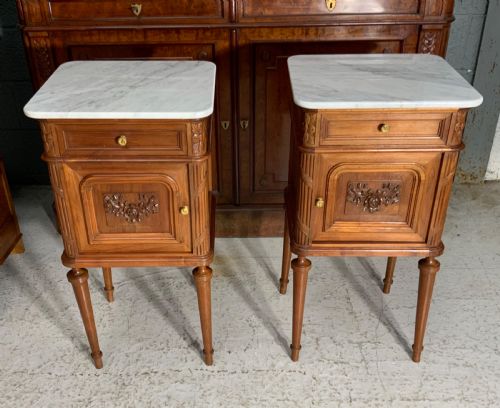
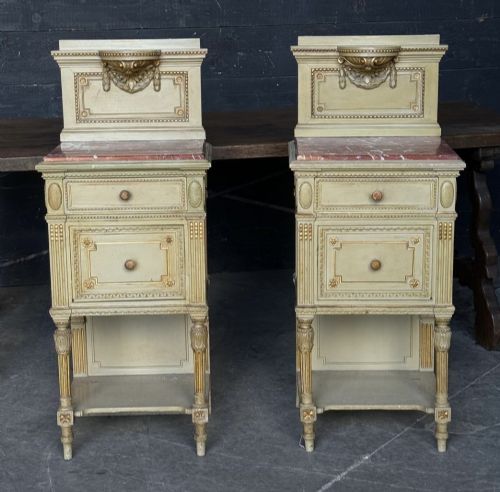
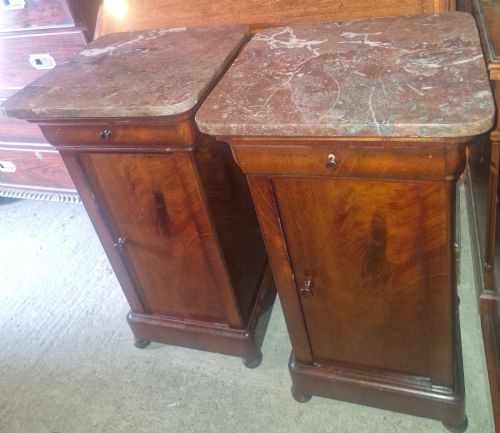
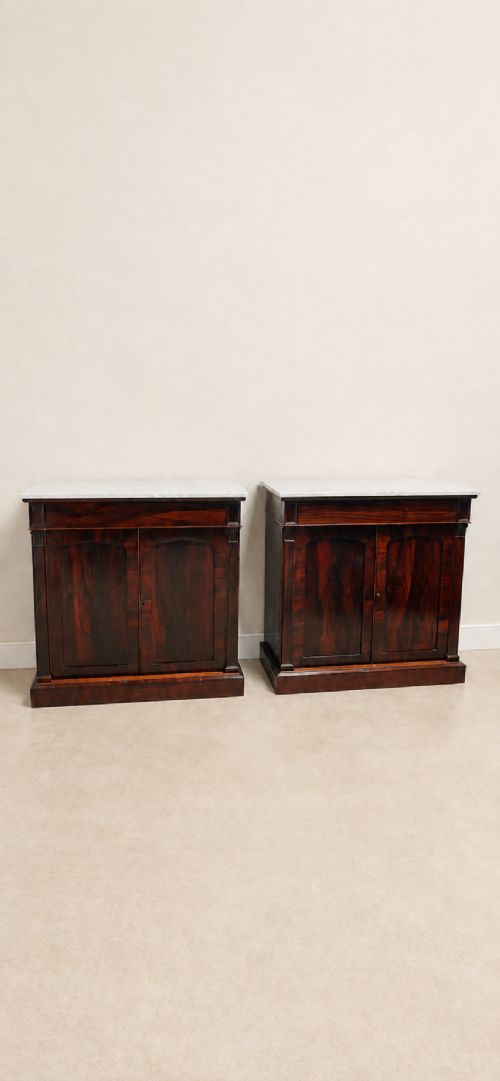
The most common formats on this page are pairs of bedside tables and freestanding commodes. These compact pieces offer enclosed storage beneath heavy stone surfaces designed to resist water and wear.
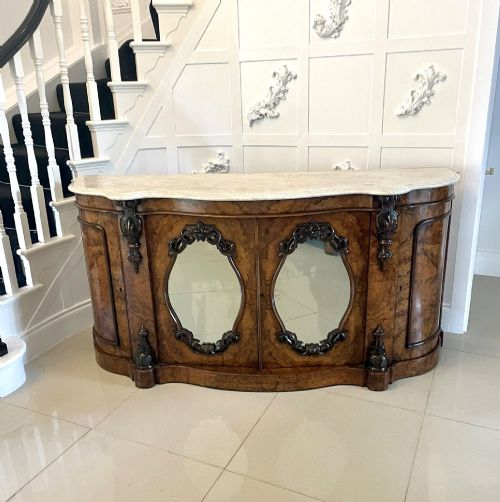
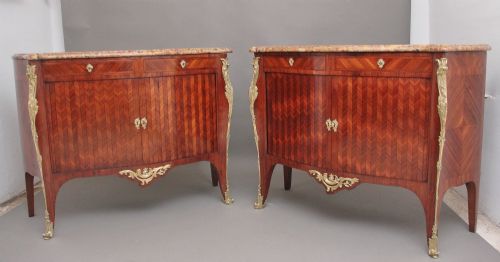
Originating largely from French and English workshops, these items incorporate styles ranging from Louis XV and XVI revivals to straightforward Victorian domestic utility. They range from small bedside chests to grand credenzas and sideboards.
Materials and Construction
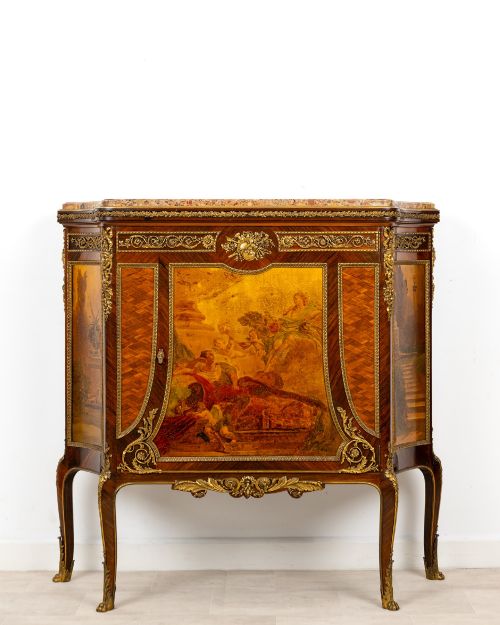
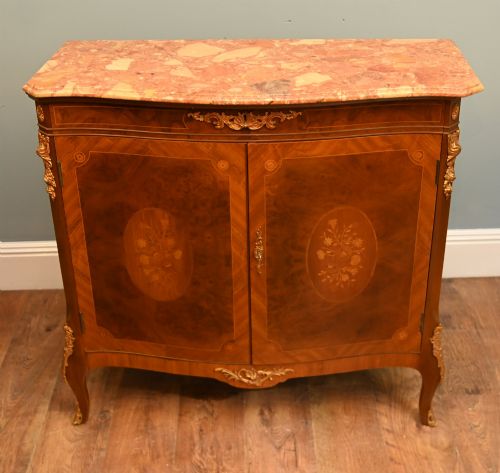
Makers built the foundational carcases using dense hardwoods such as mahogany, walnut, and kingwood, frequently applying burr walnut or amboyna veneers to create patterned surfaces. Marquetry inlays and hand-carved details appear across French and English examples from the nineteenth century.
Heavy marble slabs, often cut with moulded edges or serpentine curves, sit loose or fixed upon the timber tops. Ormolu mounts and brass hardware finish the corners and drawer pulls on continental revival pieces.
Listings span the nineteenth and early twentieth centuries, featuring walnut, mahogany, and kingwood paired with marble.
Craftsmanship and Proportion
Quality rests in the precision of the timber joinery and the selection of veneer figures, such as matched burr walnut or intricate marquetry. Heavier ormolu mounts that display crisp chasing rather than soft casting indicate finer workshop production.
The thickness, colour, and matching of the marble slab dictate much of the visual weight. Slabs featuring natural veining cut specifically to follow the serpentine or breakfront contours of the timber carcase show higher ambition in manufacture.
Walker And Sons·Jacques Birckle·Epstein
The Marble Topped Cabinet Glossary
- Commode
- A low chest of drawers or cabinet, frequently associated with eighteenth and nineteenth-century French design. These pieces often feature marble tops and elaborate veneer work.
- Ormolu
- Gilded bronze mounts applied to furniture for decoration. This technique gained widespread use during French revival periods in the nineteenth century.
- Marquetry
- The art of applying pieces of veneer to a structure to form decorative patterns. Craftsmen utilised woods of various natural colours to build pictorial or geometric designs.
- Serpentine
- A furniture front or marble top curving inward centrally and outward at the ends. This shape requires skilled timber bending or precise stone cutting.
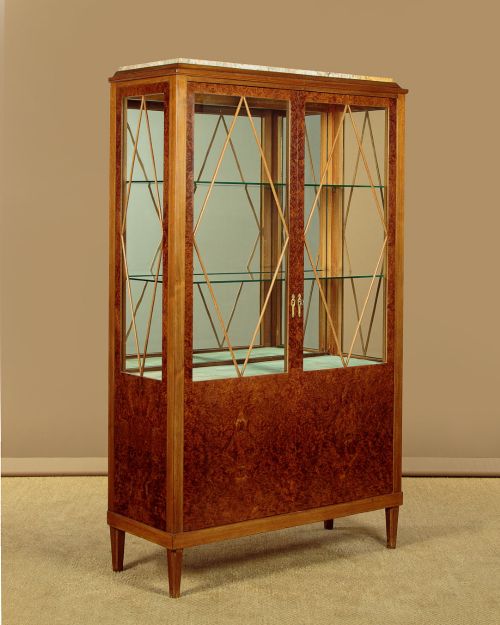
- Vitrine
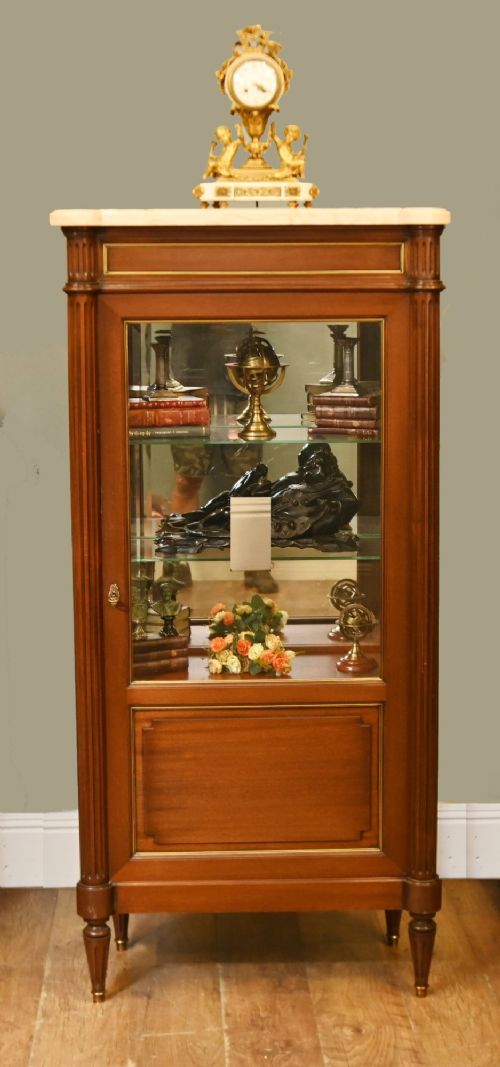
- A glass-displayed cabinet designed for showing porcelain and ornaments. They frequently incorporate fine woodwork and delicate leg supports.
Marble Topped Cabinet: Frequently Asked Questions
How do I clean a marble top?
Use warm water and a soft cloth to wipe down the stone surface. Avoid acidic cleaners that etch the polished finish.
Dry the marble thoroughly after washing to prevent water spotting.
Were these cabinets used for washing?
Many examples functioned as washstands holding basins and ewers above the stone. The marble protected the timber from splashes during morning routines.
Later pieces adapted the stone surface simply for general bedroom or living room utility.
Are the marble slabs fixed down?
Most marble tops rest freely on the timber carcase under their own heavy weight. This allowed nineteenth-century makers to lift the stone off for easier transport.
Check whether the marble is secured with historical brackets or simply sits loose within a rebated wooden frame.
How do I distinguish French from English pieces?
French cabinets frequently employ kingwood, ormolu mounts, and serpentine marble slabs following Louis styles. English examples lean towards walnut, mahogany, and straightforward Victorian proportions.
Look at the internal drawer construction and locking mechanisms to identify regional joinery methods.