

Mahogany Topped Table
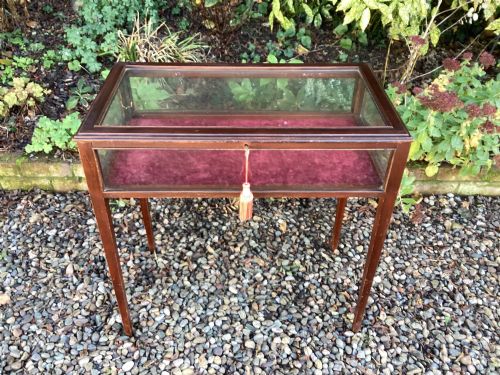
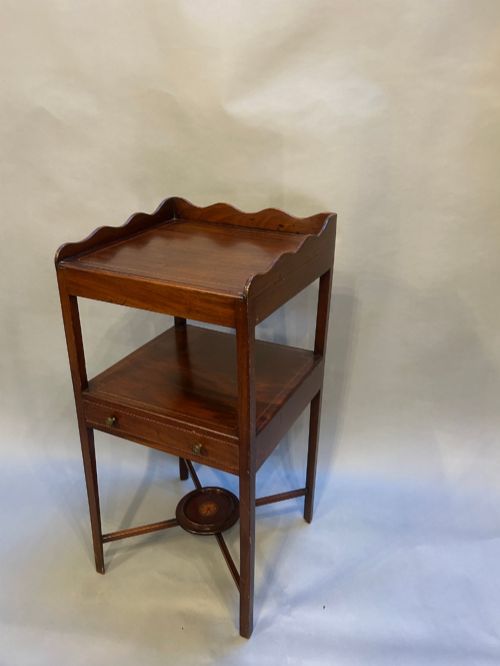
A mahogany topped table brings rich timber grain and classic proportion to a room, ranging from compact tea tables to large dining pieces.
Mahogany Topped Table
A mahogany topped table encompasses a wide variety of domestic furniture built across the eighteenth and nineteenth centuries, including dining tables, breakfast tables, writing desks, and tripod wine tables. These pieces utilise solid timber surfaces supported by pedestals, tripod legs, or traditional four-legged frames.
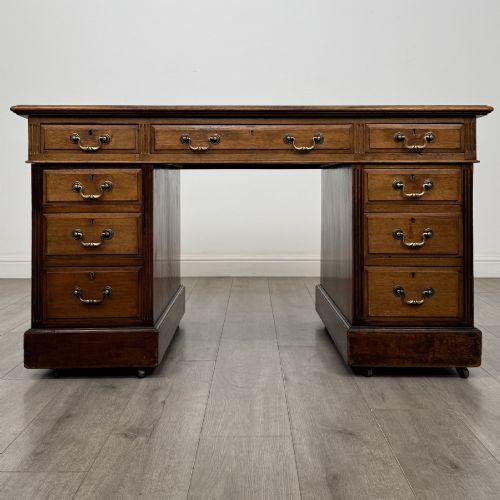
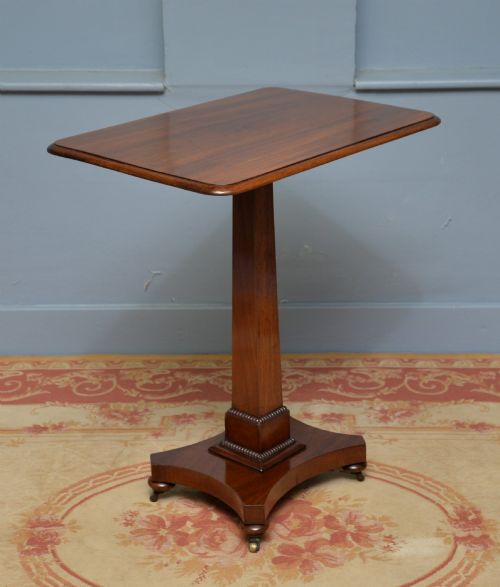
The most common examples on this page date from the Georgian and Regency periods through to the Victorian era. Buyers encounter everything from small tilt-top occasional tables to large partners desks and centre tables designed for central placement in a room.
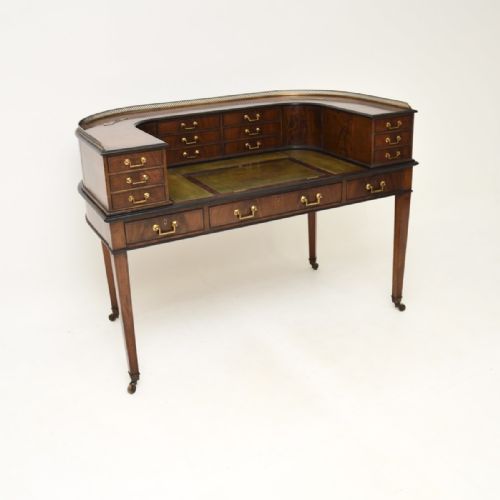
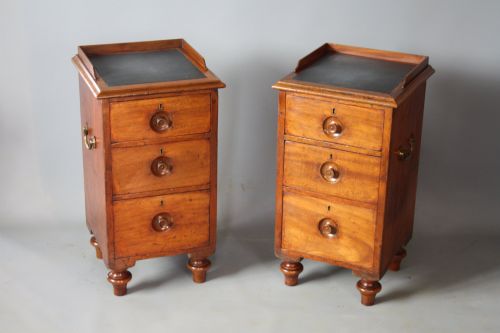
Makers often shaped the timber top into circular, oval, or rectangular formats, sometimes incorporating leather inserts, tilt mechanisms, or drop leaves. The selection reflects how domestic habits shifted from formal dining and tea service to dedicated library and writing spaces.
How they were made
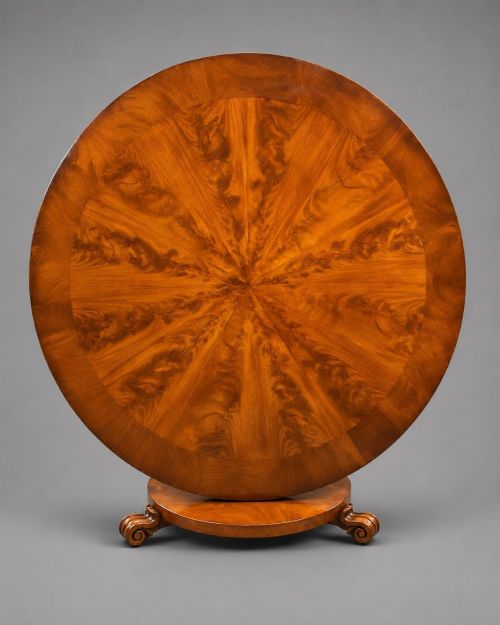
Cabinet makers constructed these surfaces using dense tropical hardwoods, frequently selecting Cuban mahogany or flame mahogany veneer for its deep grain pattern and rich colour. They applied these veneers over secondary softwood or hardwood bases to create stable, expansive surfaces that resisted warping.
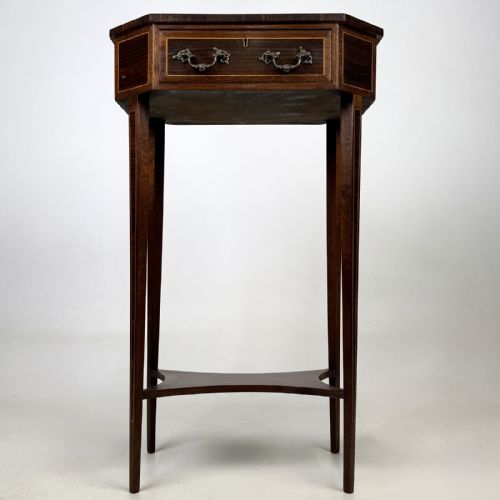
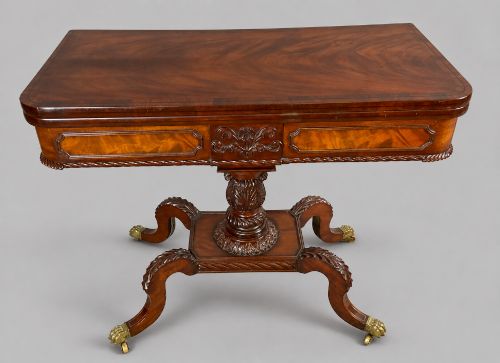
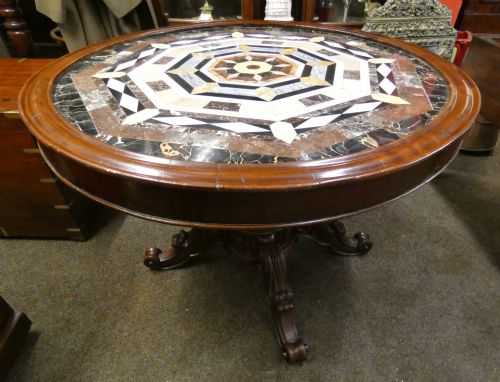
Many examples incorporate secondary materials such as brass fittings, tooled leather writing surfaces, and satinwood inlay to accent the primary mahogany timber. Tripod tables and pedestal dining tables rely on sturdy central pillars secured with iron or brass brackets beneath the top.
Mahogany Topped Table Retail Price Guide 2026
Typical asking prices for mahogany topped table among the pieces listed under this phrase on Sellingantiques today, from the lower quarter to the upper quarter. They describe what is for sale here now, not the wider market.
Listings feature mahogany topped tables across eight distinct historical periods, spanning from eighteenth-century Georgian designs to 1930s campaign styles.
What varies in quality
The quality of a mahogany topped table depends heavily on the selection of the timber and the depth of the grain figure. Pieces featuring premium Cuban mahogany or symmetrical flame veneer display a natural lustre and richness that plain stock simply lacks.
Construction methods also dictate value, notably the precision of the joinery in the underframe and the crispness of any hand-carving along the edge or legs. Finer examples maintain original brass hardware, stable tilt mechanisms, and undamaged leather inserts that integrate seamlessly with the surrounding wood.
The Mahogany Topped Table Glossary
- Flame mahogany veneer
- A thin slice of wood cut from the fork of the tree where branches meet, producing a distinct, fiery pattern. Cabinet makers used it on prominent surfaces to catch the eye.
- Tilt-top table
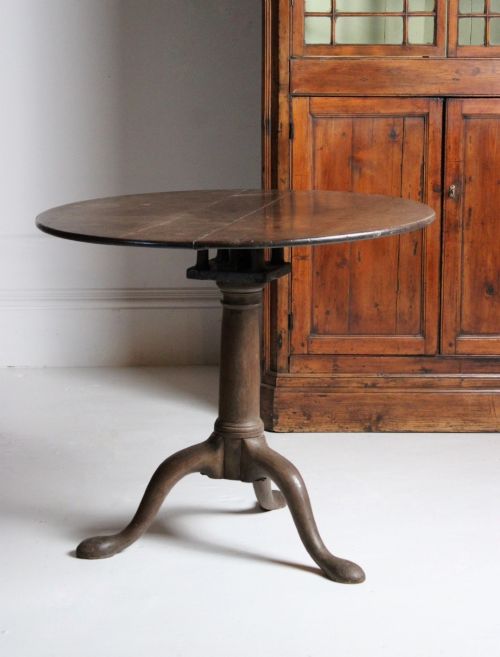
- A small table featuring a mechanism that allows the timber top to pivot vertically when not in use. This design saved floor space in smaller eighteenth-century rooms.
- Tripod table
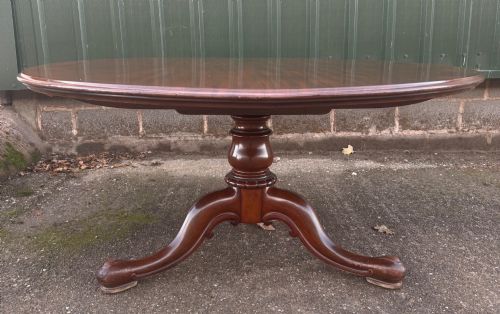
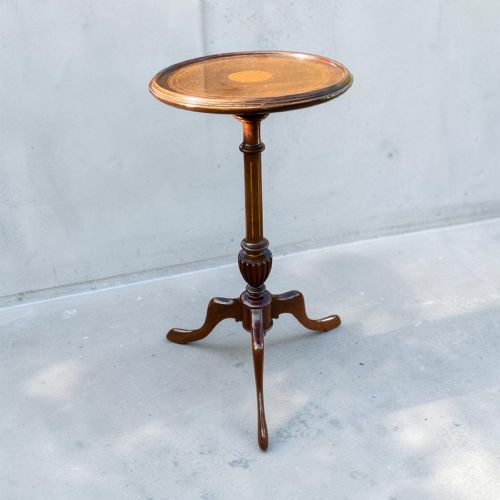
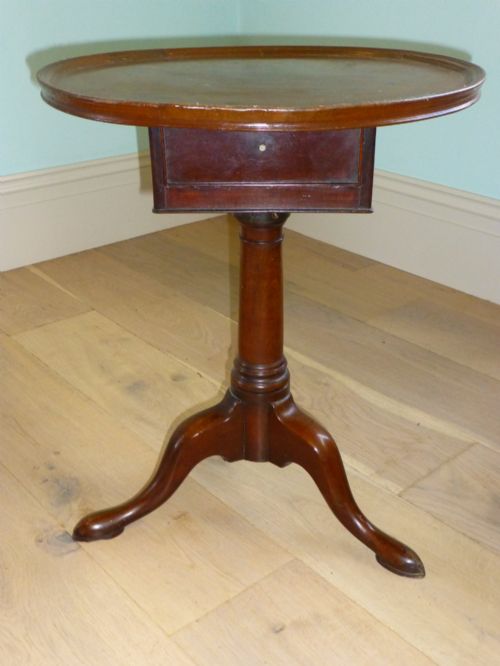
- A standalone table supported by a central pillar resting on three curving legs. They appeared frequently as wine or tea tables.
- Drum table
- A circular library or writing table with a deep top containing a ring of drawers around the perimeter. They sat on central pedestals with splayed legs.
- Partners desk
- A large double-sided writing table fitted with drawers and cupboards accessible from both faces. Two people could work opposite each other at the same time.
Mahogany Topped Table: Frequently Asked Questions
How do I identify a Georgian mahogany table?
Look for timber with a deep, warm patina and hand-cut dovetails within the drawer structures if the piece has storage. Georgian makers often utilised solid mahogany or fine veneers over oak carcasses rather than modern composite boards.
Examine the underframe for traditional peg joinery and signs of manual shaping. Proportion and weight serve as reliable indicators of age, as eighteenth-century tables were built for specific domestic rituals like tea service or dining.
Can I use a mahogany topped table every day?
These tables served active domestic roles for centuries, meaning they handle daily use well if treated with basic care. Use coasters and mats to protect the polished surface from moisture and heat.
Keep the timber away from direct heat sources and strong sunlight to prevent the mahogany finish from fading or drying out. Regular dusting with a soft cloth maintains the natural lustre of the wood.
What is the difference between a breakfast table and a dining table?
Breakfast tables generally feature a single central pedestal with a tilt-top mechanism, allowing servants or residents to fold the surface away against a wall when morning dining concluded. They were scaled for smaller morning meals in private rooms.
Standard dining tables relied on multiple pedestals or folding gatelegs to support much larger surfaces for formal evening gatherings. Their tops remained fixed in place rather than tilting.
How should I care for the leather insert on a writing table?
Leather writing surfaces require gentle cleaning with a slightly damp cloth followed by immediate drying. Avoid harsh chemical cleaners that strip the original dye and dry out the hide.
Applying a specialist leather cream periodically helps maintain flexibility and prevents cracking. Keeping sharp objects away preserves the smooth writing texture.