




Mahogany Telescope
These mahogany telescope pieces combine polished brass optics with rich timber barrels, offering a tactile piece of scientific history for your study or desk.
Mahogany Telescope
A mahogany telescope represents precision optical equipment encased in turned timber, originating primarily from the eighteenth and nineteenth centuries. Buyers searching for a mahogany telescope encounter portable two or three draw hand-held instruments alongside larger library variants mounted on stands.
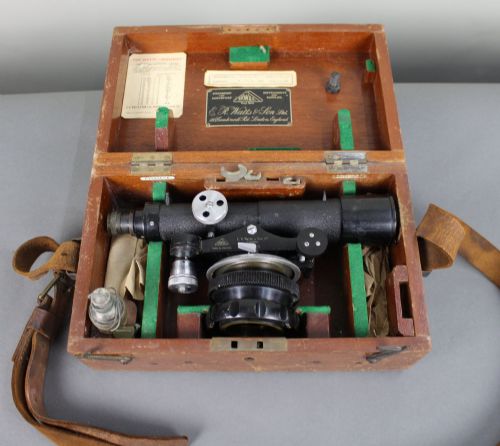
The selections span Georgian, Regency, and Victorian periods, often emerging alongside related scientific instruments such as levels and theodolites. Most instruments are configured for terrestrial or maritime viewing, featuring brass draw tubes and protective wood housings.
What varies in quality
Optical clarity and the precision of the brass draw action separate standard utility instruments from fine workshop productions. Finer examples display crisp maker signatures engraved onto the brass body tubes alongside complex multi-draw configurations.
The condition of the timber housing and the integrity of the original glass lenses dictate the desirability of each piece. Superior items retain their fitted mahogany cases and smooth mechanical adjustments without excessive play in the joints.
Mahogany Telescope Retail Price Guide 2026
Typical asking prices for mahogany telescope among the pieces listed under this phrase on Sellingantiques today, from the lower quarter to the upper quarter. They describe what is for sale here now, not the wider market.
Listings feature scientific instruments spanning the eighteenth, nineteenth, and twentieth centuries, incorporating brass, mahogany, glass, and leather materials.
Nairne and Blunt·W and T Gilbert·Clarkson London·Steward of London·L Casella and Co·Alexander Adie·Matthew Berge·G Adams·John Gilbert·WF Stanley
The Mahogany Telescope Glossary
- Draw tube
- A sliding section of brass tubing that extends from the main barrel to alter the focal length. Multiple draws allow the instrument to collapse into a compact size for travel.
- Terrestrial telescope
- An optical instrument designed for viewing objects on land rather than astronomical bodies. These systems incorporate erecting lenses to ensure the image appears right side up.
- Altazimuth
- A mounting that allows an instrument to move freely in both horizontal and vertical planes. This system facilitates precise tracking across land or sky.
- Achromatic
- An optical design that corrects for colour fringing by combining different types of glass. This improvement delivers sharper and more colour-accurate viewing.
Mahogany Telescope: Frequently Asked Questions
How do I use a draw telescope?
Gently pull each brass section outward until fully extended while holding the mahogany barrel steady. Adjust the final draw tube slowly until the distant subject comes into sharp focus.
Keep the optical lenses clean using a soft cloth and collapse the tubes carefully before storing the instrument back in its fitted case.
What is a library telescope?
A library telescope is a larger optical instrument designed for stationary use indoors rather than portable maritime navigation. These pieces typically rest upon dedicated table stands for stability.
Craftsmen often mounted them with brass fittings and mahogany barrels suited to gentleman's studies and home observatories.
How do I date an antique telescope?
Examine the engraved maker signature on the brass draw tubes and compare the address with historical trade directories. The construction style, such as the number of draw sections and the timber finish, also indicates the period.
Georgian and Regency examples tend to feature simpler multi-draw designs, while Victorian iterations often include detailed brass sunshades and protective leather grips.
Can I view stars with these instruments?
Most antique terrestrial telescopes are built for viewing objects on land and use erecting lenses that orient the image correctly for the viewer. While bright celestial bodies remain visible, their primary design suits landscape observation.
Day or night variants offer versatile utility across different lighting conditions, though they differ from dedicated astronomical equipment.