
Mahogany Style Bookcase
A mahogany style bookcase offers sensible storage for libraries and reception rooms, spanning traditional revival forms and late period craftsmanship.
Mahogany Style Bookcase
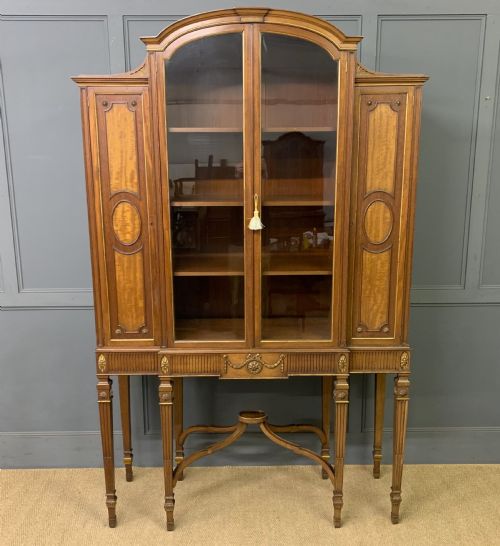
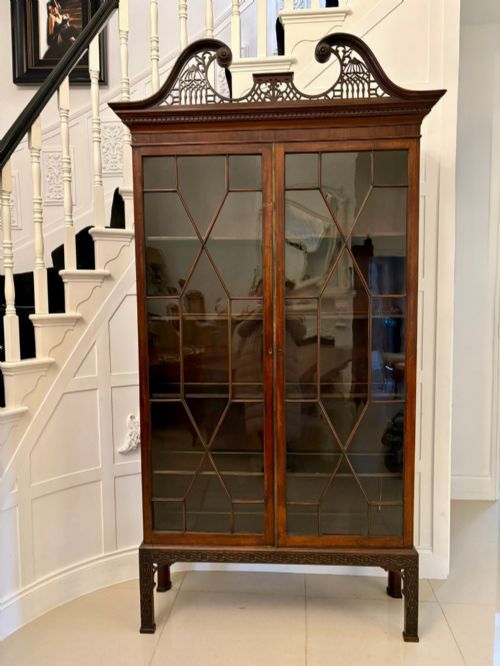
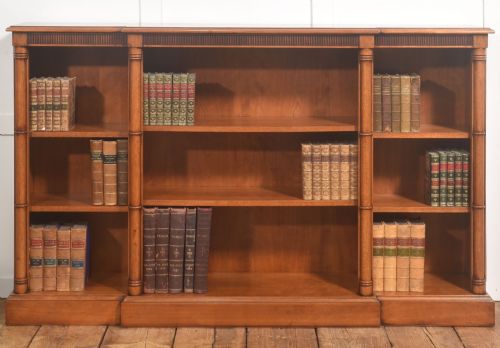
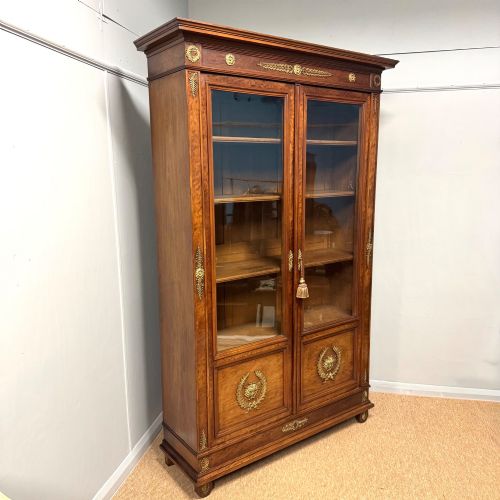
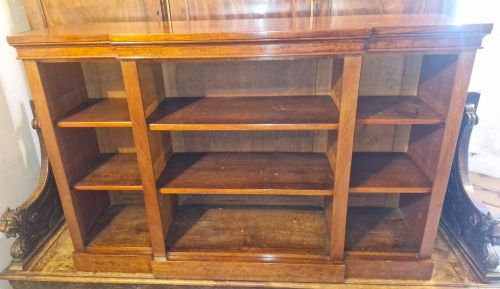
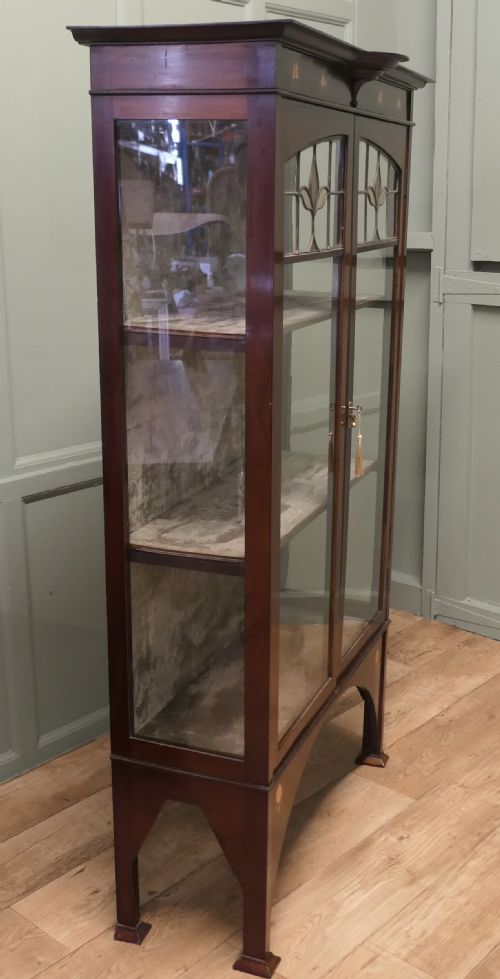
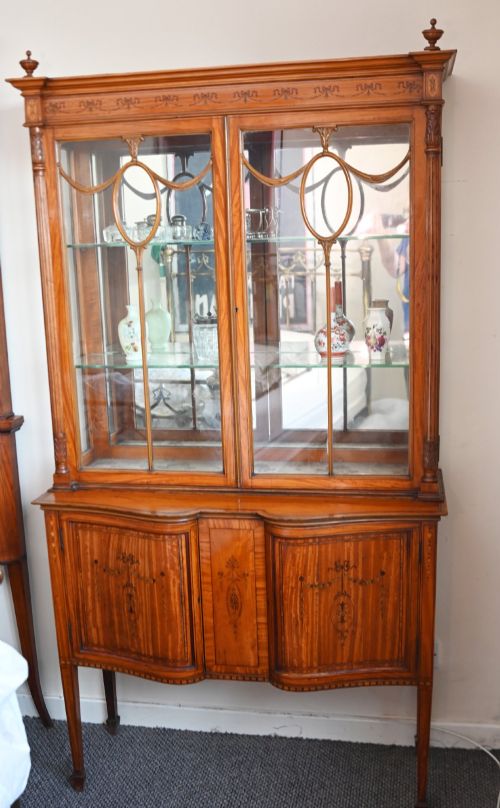
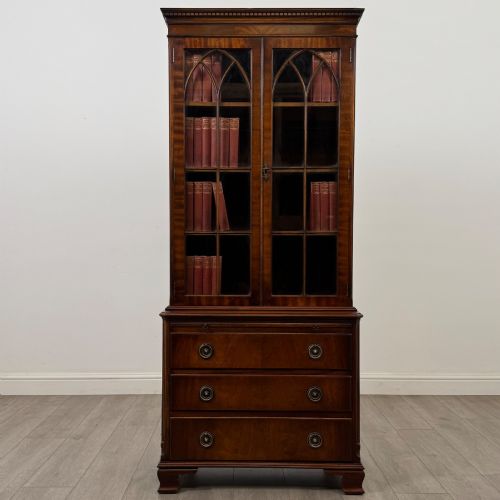
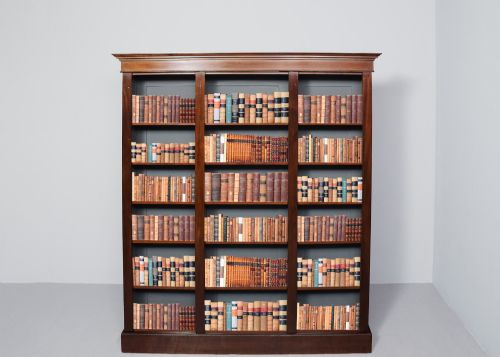
A mahogany style bookcase encompasses a range of domestic storage furniture designed to hold books and display china, running from open shelf units to glazed cabinets and bureau bookcases. Buyers searching this phrase will find pieces spanning the nineteenth and early twentieth centuries, including Victorian, Edwardian, and revival iterations such as Sheraton and Chippendale designs.
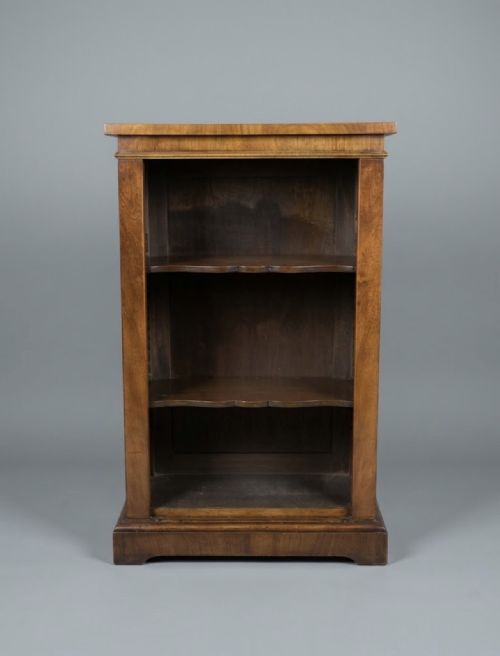
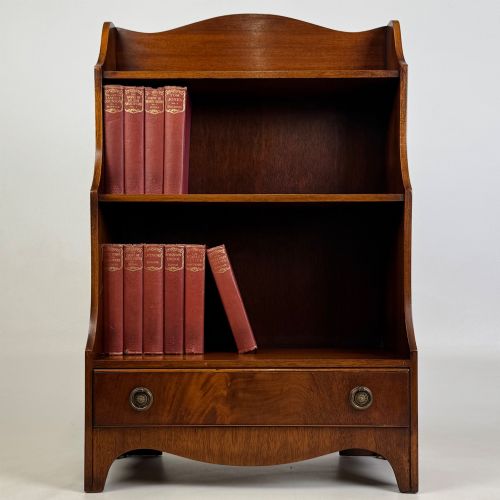
The objects take many structural forms, from tall breakfront and sectional bookcases to compact revolving models, waterfall shelves, and wall-hanging units. Pieces frequently incorporate glazed doors, glass panels, and adjustable shelving to protect volumes while keeping titles visible.
Origins stretch across standard nineteenth century cabinet making through to early twentieth century firm production, drawing on Georgian and Regency design idioms. Makers utilised established revival styles to produce functional furniture suited to period and traditional interiors.
Materials and Construction
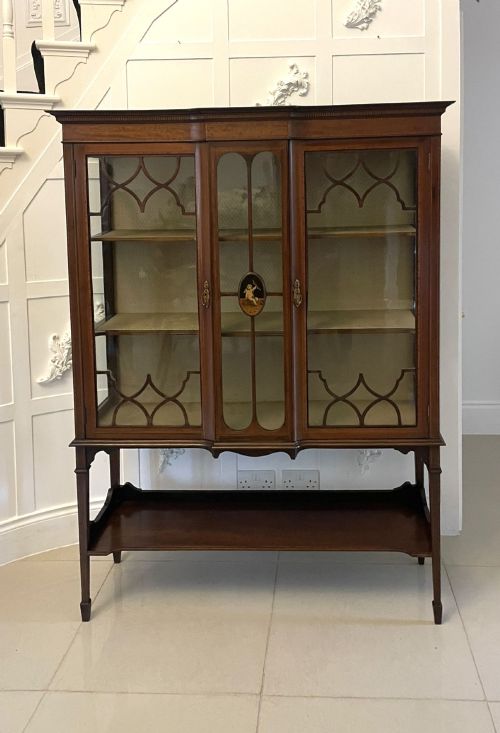
Makers built these pieces primarily from solid mahogany and mahogany veneers, often embellished with satinwood inlay, brass fittings, and ormolu accents. Glazed doors utilised timber frames around glass panes, while internal components frequently featured adjustable wooden shelving supported by simple track systems.
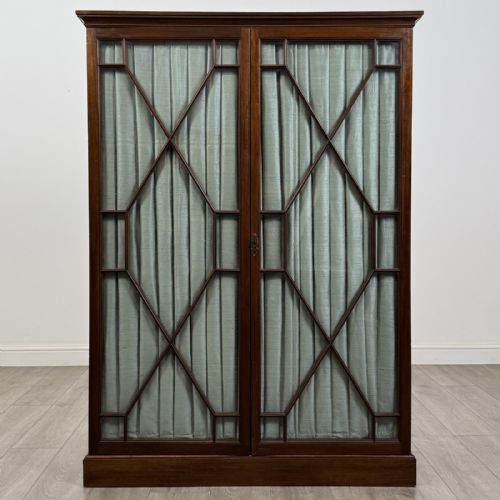
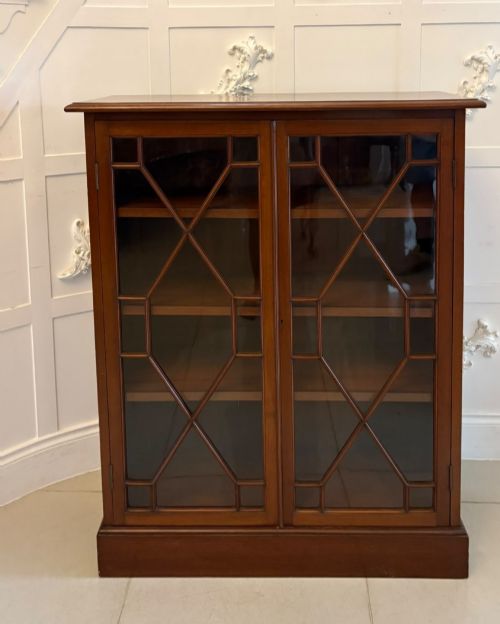
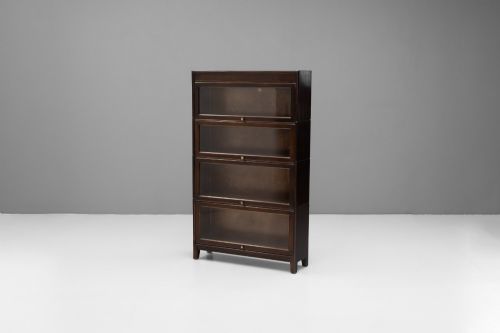
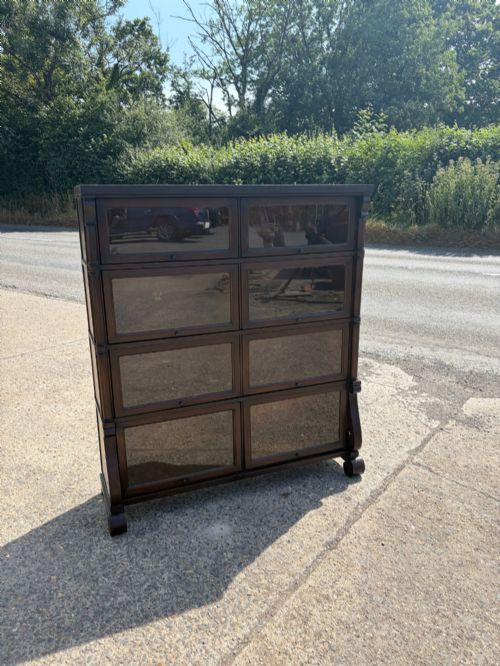
Construction methods combined traditional joinery with period hardware, including brass castors on low rolling cabinets and specialised up and over mechanisms on sectional barrister style cases. Decorative elements relied on carved details, painted satinwood highlights, and astragal glazing bars dividing the glass.
Up and over doors let barristers slam shut their entire library in one swift motion before running to court.
Craftsmanship and Proportion
Quality separates standard utilitarian shelving from finer cabinet work through the crispness of timber selection, the precision of inlay, and the integrity of structural proportions. Superior examples demonstrate careful book matching of mahogany veneers and finely executed stringing in satinwood.
Hardware and secondary materials also distinguish the range, where original brass fittings, smooth operating glazed doors, and solid internal framing indicate higher grade workshop production rather than mass output.
Waring and Gillow·Gunn Furniture·Macey·Hille
The Mahogany Style Bookcase Glossary
- Astragal glazed
- A method of framing glass doors where narrow timber mouldings divide individual panes into smaller geometric sections. This technique appears frequently on traditional display cabinets and breakfront bookcases.
- Breakfront
- A large cabinet design featuring a central section that projects forward from the flanking wings. This architectural arrangement creates depth and visual interest in substantial library pieces.
- Bureau bookcase
- A multi-function piece combining a sloping writing flap or desk drawer section below open shelves or glazed cabinet doors. It provides both enclosed workspace and prominent book storage.
- Sectional bookcase
- Modular storage units built in stacking tiers with individual glass doors that lift and slide back into the case. These items gained popularity during the early twentieth century for flexible office and home library use.
- Sheraton revival
- A decorative style popular around nineteen hundred that reinterprets eighteenth century neoclassical designs. Pieces display light proportions, symmetrical geometry, and contrasting satinwood inlay.
Mahogany Style Bookcase: Frequently Asked Questions
How do I adjust the shelves?
Most period bookcases use either traditional wooden support slips or metal rack strips set into the interior sides. Shelves lift out entirely and relocate into alternative slots depending on book heights.
Ensure timber shelves do not bind against the sides when repositioning them within older cabinets.
What rooms suit these bookcases?
These pieces fit naturally into studies, libraries, and sitting rooms where traditional wooden furniture provides warmth. Slim open versions and wall-hanging shelves work well in compact spaces.
Larger breakfront and glazed cabinets require adequate wall space and clearance for swing doors.
How do I care for mahogany?
Keep wooden surfaces away from direct sunlight and steady heat sources to prevent the timber from drying and the finish from fading. Dust regularly with a dry cloth and apply occasional wax formulated for antique furniture.
Avoid liquid polish containing silicone which can build up on older polished finishes over time.
How are different periods identified?
Victorian examples tend to feature heavier proportions, dark rich timber tones, and robust carvings. Edwardian and revival pieces often display lighter frames, satinwood inlay, and delicate cabriole or bracket feet.
Hardware styles, construction methods, and label tags inside drawers or backing boards also help confirm the era of production.