

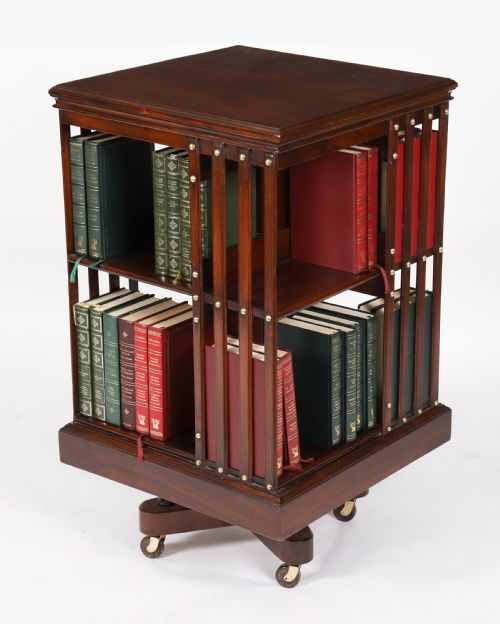


Mahogany Revolving Bookstand
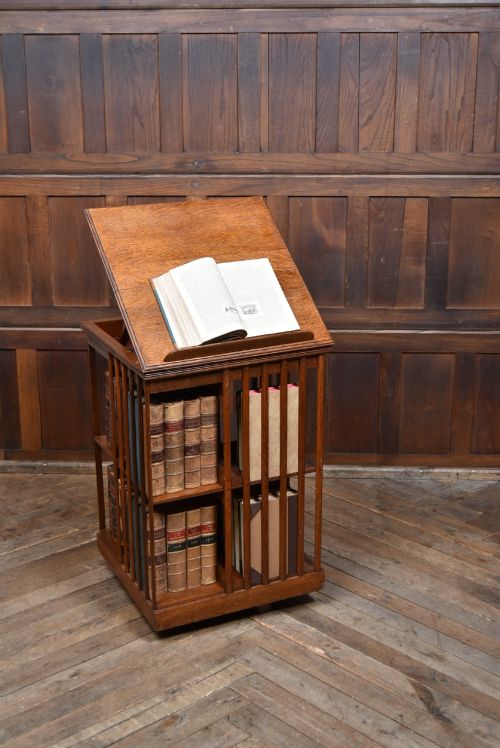
A mahogany revolving bookstand offers a clever way to keep volumes within reach, turning smoothly on its base to save space in a study.
Mahogany Revolving Bookstand
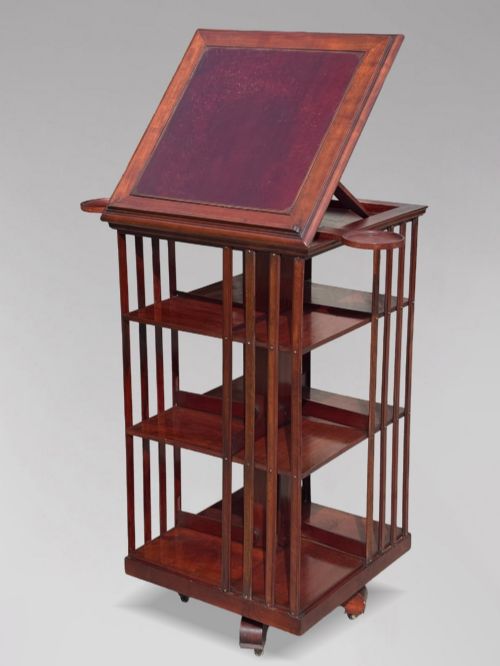
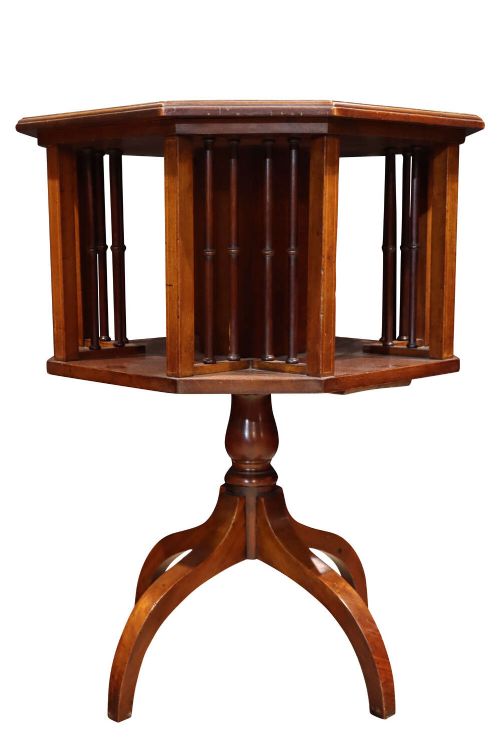
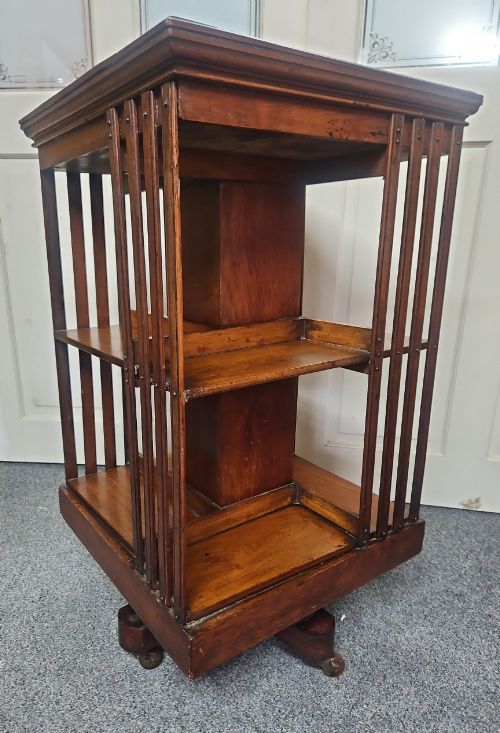
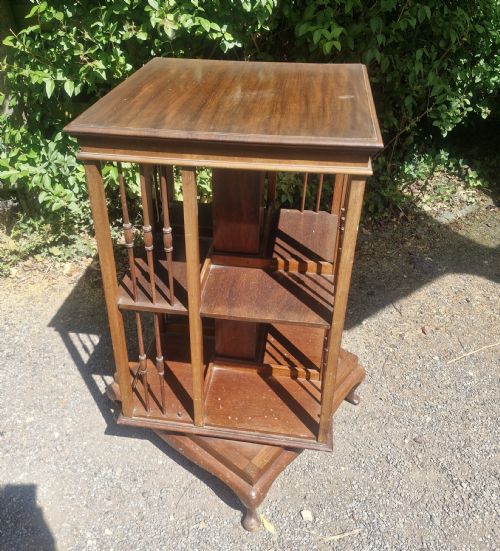
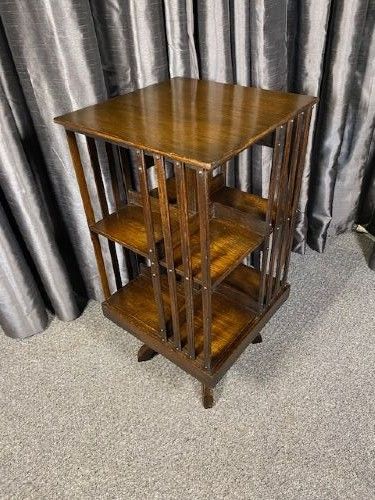
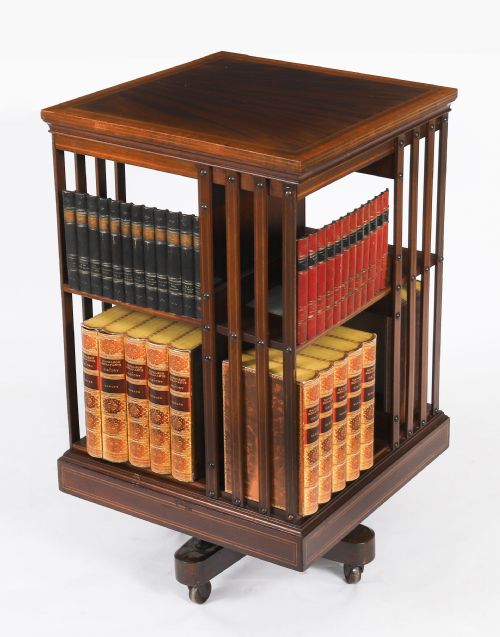
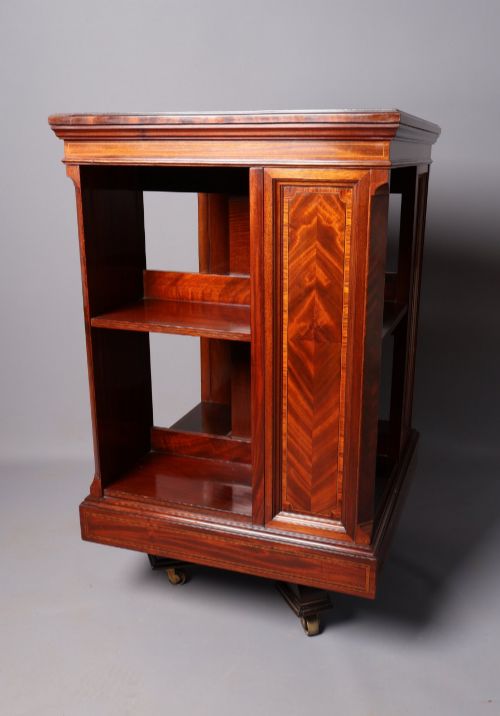
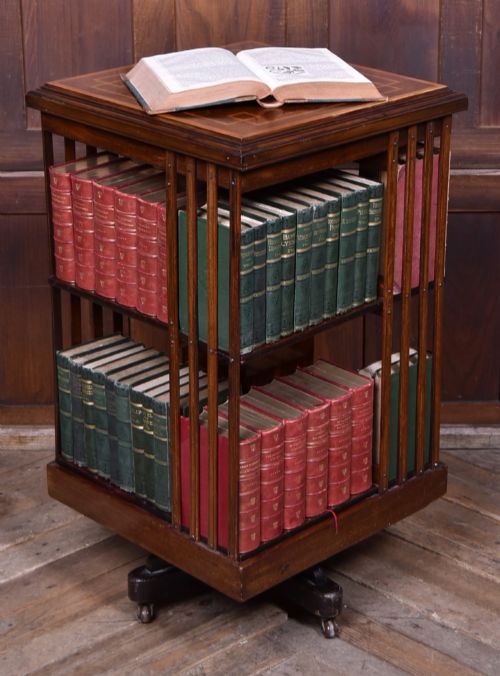
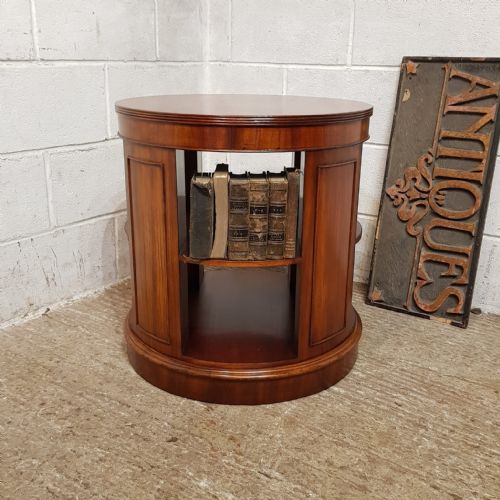
When you search for a mahogany revolving bookstand, you find a practical piece of furniture designed to hold a collection of books upright while allowing easy access from any seated position. The most common examples seen here date from the Edwardian period and the late nineteenth century, taking the form of square, round, or octagonal tiers that spin on a concealed mechanism.
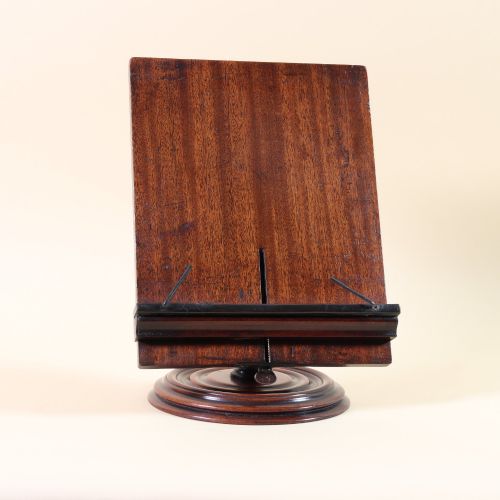
Most pieces stand directly on the floor with slatted sides to protect the volumes, though smaller table-top versions also appear. Makers built these stands in various heights, from low desk-top book rests to tall multi-tiered structures capable of holding substantial reference libraries.
How they were made
Cabinetmakers constructed these stands using solid mahogany and mahogany veneers, often incorporating contrasting satinwood inlay to add decorative detail around the tiers. The revolving action relied on internal metal ball bearings or iron pivots housed within a sturdy wooden base.
Selected pieces feature structural elements in oak or cast iron hidden beneath the mahogany exterior to provide necessary weight and stability. Brass fittings occasionally appear on castors or hinges, complementing the rich red-brown tones of the timber.
Mahogany Revolving Bookstand Retail Price Guide 2026
Typical asking prices for mahogany revolving bookstand among the pieces listed under this phrase on Sellingantiques today, from the lower quarter to the upper quarter. They describe what is for sale here now, not the wider market.
Some Edwardian models include secret compartments for hiding spare keys behind the spinning book slats.
What varies in quality
The smoothness of the rotation distinguishes standard pieces from superior examples, as a well-balanced mechanism turns silently without wobble. Timber selection also defines the tier, with figured flame mahogany and crisp satinwood banding marking out the finest workshops.
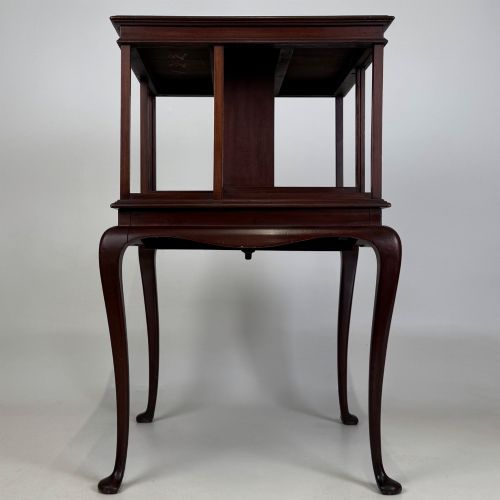
Joinery detail separates simpler utility stands from elaborate creations, particularly where cabinetmakers shaped cabriole legs or applied precise Sheraton-style inlay.
Maple and Co
The Mahogany Revolving Bookstand Glossary
- Revolving bookcase
- A freestanding or table-top tier designed to spin on a central spindle. This allows access to volumes stored on multiple sides without moving the furniture.
- Flame mahogany
- A veneer cut from timber where the grain creates a distinctive flickering pattern. Cabinetmakers reserved this decorative wood for the top surfaces of better pieces.
- Satinwood inlay
- Contrasting light-coloured timber inserted into recesses in the mahogany surface. It forms geometric lines or delicate decorative motifs.
- Cabriole leg
- A furniture support curving outward at the knee and inward at the ankle. This style appears on select Edwardian examples.
- Sheraton Revival
- A late nineteenth-century design movement copying the light, neoclassical style of the eighteenth-century maker. Pieces often incorporate slender proportions and fine stringing.
Mahogany Revolving Bookstand: Frequently Asked Questions
How do I make a revolving bookcase turn smoothly?
Most revolving bookcases rely on a concealed metal pivot or ball-bearing mechanism hidden beneath the centre of the lowest tier. Over decades, dust and dried lubricant can accumulate inside this housing, causing stiffness or resistance when turned.
Lifting the upper section off its base allows access to the central spindle and bearings for gentle cleaning. Applying a light machine oil or graphite lubricant to the moving parts restores the smooth rotation.
Can these stands hold heavy books?
These pieces were built to support standard octavo volumes, novels, and reference books across their divided sections. The slatted wooden partitions provide solid structural support for everyday libraries.
Extra care is needed with very heavy art folios or encyclopaedias, particularly on tall multi-tiered stands where excessive weight at the top can affect stability. Distributing heavy volumes across the lower tiers keeps the structure balanced.
How do I tell an Edwardian stand from a Victorian one?
Victorian examples tend to display heavier proportions, darker timber finishes, and simpler functional lines. They often date from the late nineteenth century and focus on sturdy utility.
Edwardian stands frequently incorporate lighter mahogany tones, satinwood inlay, and decorative influences such as Sheraton Revival or Art Nouveau styles. Cabriole legs and cross-banding also point toward the Edwardian period.
Where should I place a revolving bookstand in a room?
Because these stands rotate freely, they work well beside an armchair or desk where multiple books need to remain within arm's reach. Placing them near a seating area lets you access every side without repositioning the furniture.
They also function effectively as freestanding pieces in the centre of a study or library room. Keeping them away from direct heat sources protects the polished mahogany surface and prevents the timber from drying out.