



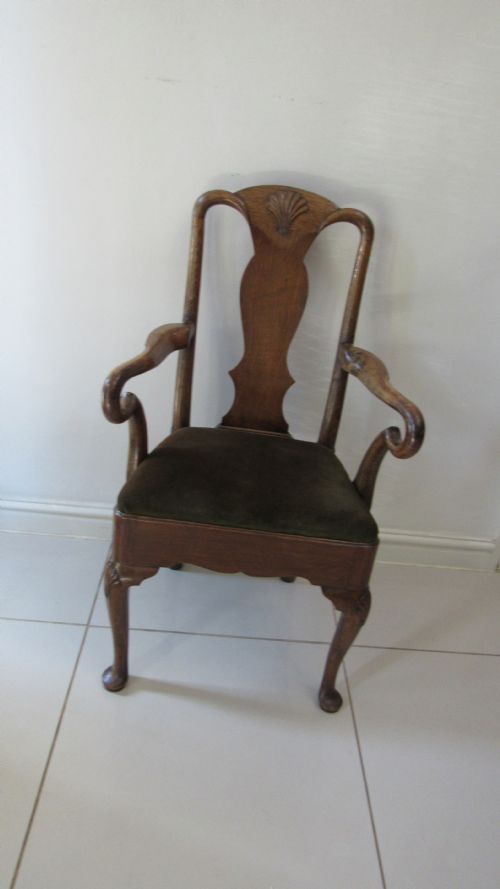


Mahogany Nursery Seat
These mahogany nursery seat examples range from compact low chairs to ingenious metamorphic high chairs that served domestic family life across several centuries.
Mahogany Nursery Seat
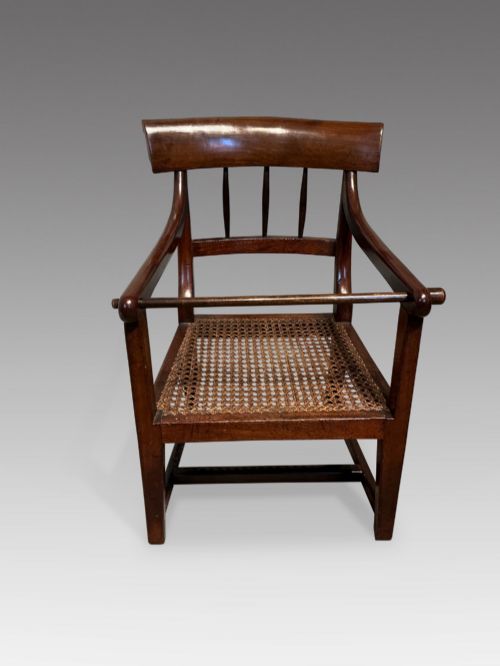
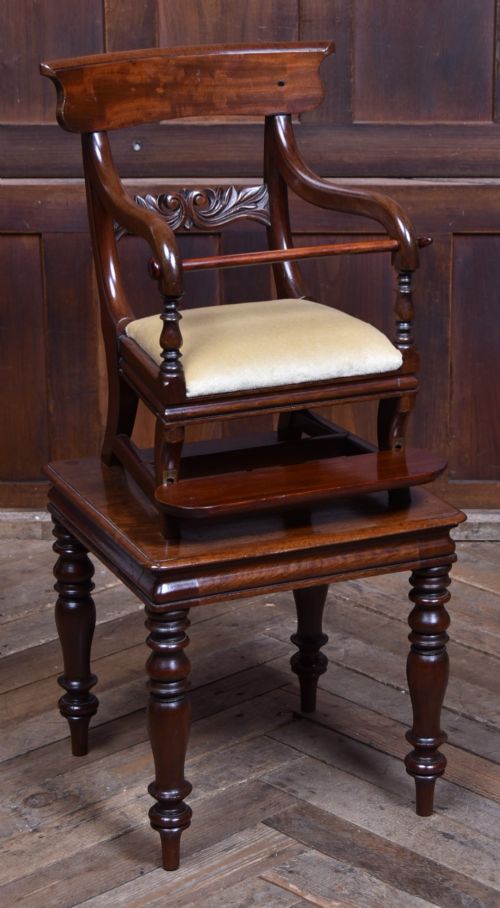
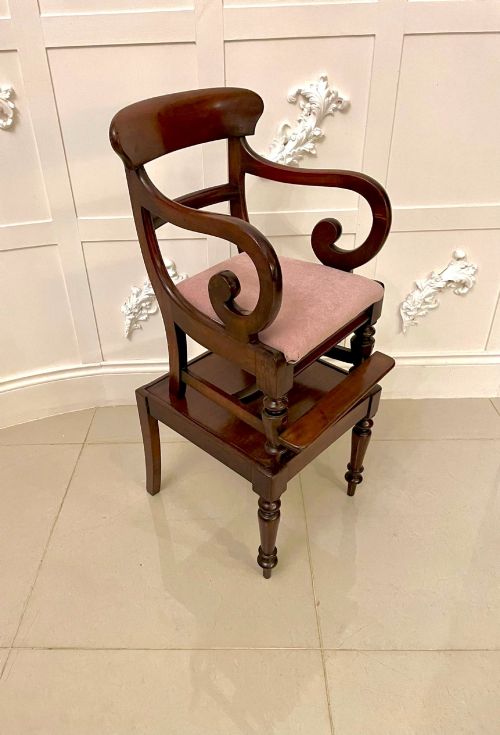
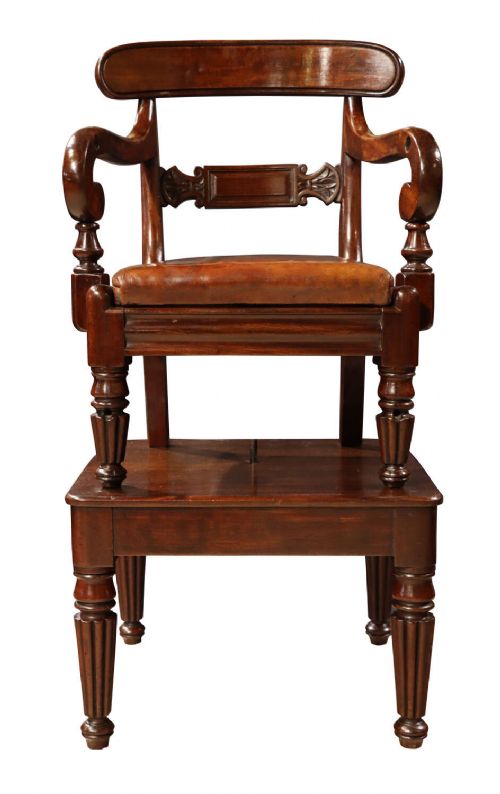
A mahogany nursery seat encompasses a variety of children's furniture, from simple armchairs and rocking chairs to elaborate chairs on stands and metamorphic high chairs. These items date from the Georgian, Regency, Victorian and Edwardian periods, reflecting the shifting domestic needs of past households.
The most common forms on this page are high chairs and child's armchairs constructed in solid mahogany, frequently designed to convert into low seating or attach to a separate base table. Many examples incorporate cane work, leather, velvet, or fabric upholstery to provide comfort for the child.
How they were made
Makers utilised solid mahogany as the primary framing timber, selecting it for its strength and rich grain. Brass fittings and hinges frequently appear on metamorphic pieces to facilitate the transformation from high chair to table or low chair.
Seating areas rely on traditional techniques including caning, bergère weave, and padded upholstery covered in leather, velvet, or textile. These materials were chosen to withstand daily use while offering suitable support within the nursery.
Mahogany Nursery Seat Retail Price Guide 2026
Typical asking prices for mahogany nursery seat among the pieces listed under this phrase on Sellingantiques today, from the lower quarter to the upper quarter. They describe what is for sale here now, not the wider market.
The listings span the 18th, 19th, and early 20th centuries, demonstrating the evolution of domestic child seating from George II styles through to Edwardian interpretations.
What varies in quality
Quality rests upon the cleverness of the mechanics in metamorphic items and the crispness of the joinery and timber selection. Pieces that retain their original stands, cane panels, or upholstery demonstrate greater integrity and survival of form.
Fine craftsmanship shows in the proportion and detailing of the mahogany frame, distinguishing standard utilitarian nursery furniture from superior workshop productions designed for prosperous households.
The Mahogany Nursery Seat Glossary
- Metamorphic
- A term for furniture designed to transform into another object, such as a high chair converting into a low chair and table combination. This ingenuity allowed domestic spaces to serve multiple functions.
- Bergère
- An upholstered armchair with an enclosed cane back and sides, offering both ventilation and resilient support. In children's seating, this technique provides a lighter visual weight.
- Mahogany
- A durable tropical hardwood valued for its deep reddish-brown colour and stability. It forms the structural foundation for the majority of these nursery pieces.
- Caning
- A weaving technique utilising split rattan to form patterned seats and backs. This method creates a flexible yet supportive surface frequently seen on Georgian and Victorian examples.
Mahogany Nursery Seat: Frequently Asked Questions
How do metamorphic high chairs function?
These pieces use clever pivot mechanisms, sliding joints, or detachable bases to transform from an elevated dining seat into a low chair combined with a small play table. The design allowed growing children to use the same piece of furniture for multiple daily activities.
Such adaptability was particularly prized in domestic settings where conserving space and investing in versatile nursery equipment mattered to families.
What is the difference between a chair on stand and a standard high chair?
A chair on stand consists of a separate lower table or frame that elevates a standard child's armchair to dining height. When lifted off the stand, the chair functions at floor level.
Standard high chairs generally feature fixed tall legs, sometimes braced with stretchers, keeping the child permanently elevated above the floor.
How should I care for antique mahogany nursery furniture?
Keep these pieces away from direct heat sources and strong sunlight to prevent the mahogany timber from drying out or splitting. Gentle dusting with a dry cloth and occasional application of appropriate wax will maintain the finish.
Inspect cane and upholstery periodically to ensure the historical materials remain stable under normal environmental conditions.
Are these chairs suitable for daily use with children today?
While many of these items remain structurally robust, their primary value lies in their historical craftsmanship and decorative presence. Contemporary safety standards for children's furniture differ significantly from those of the Georgian and Victorian eras.
Collectors generally appreciate them as historical artefacts or display pieces rather than relying on them for active nursery use.