




Mahogany Hanging Rack
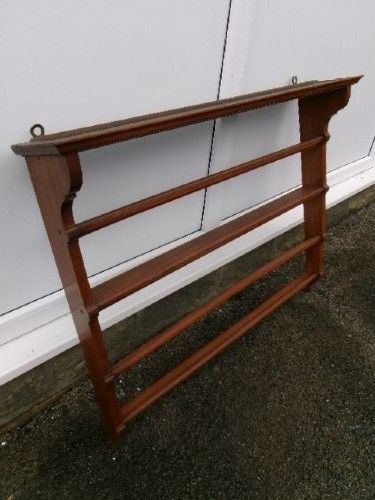
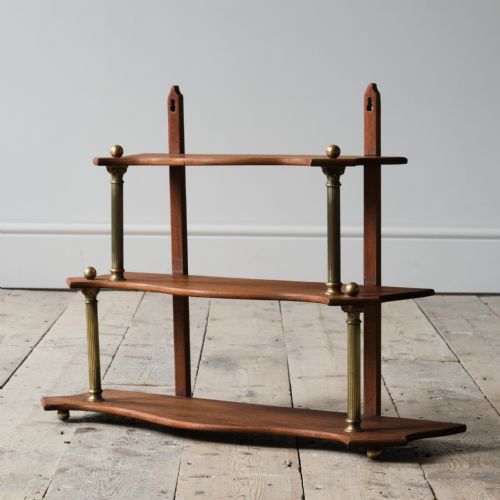
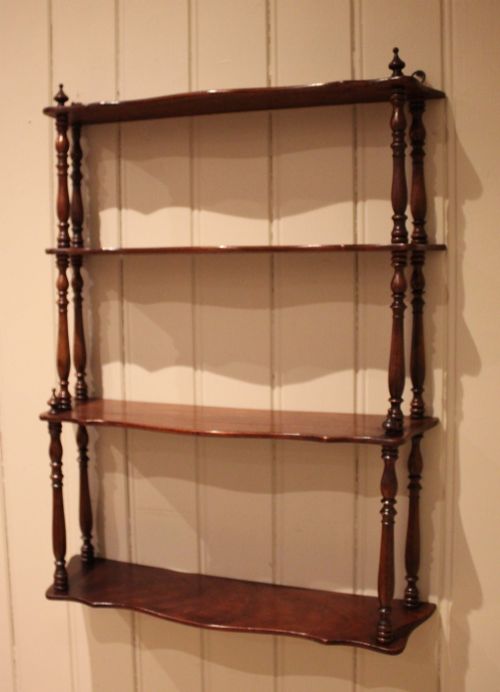
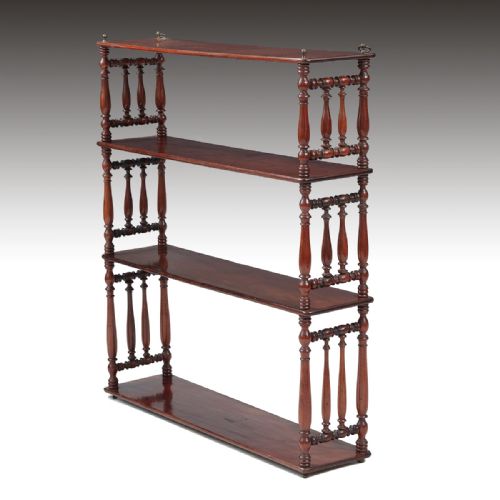
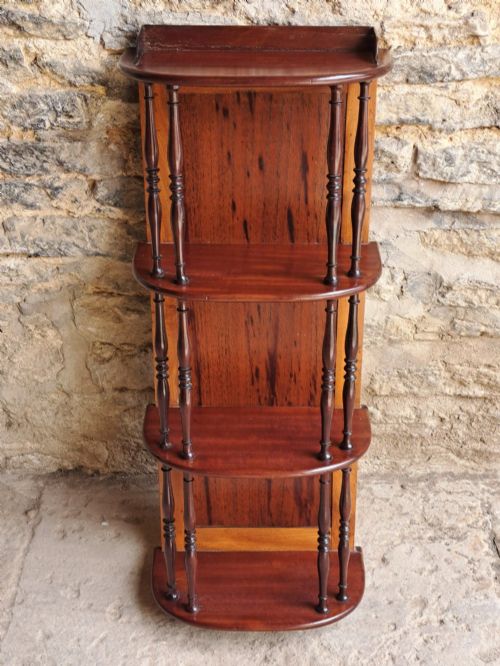
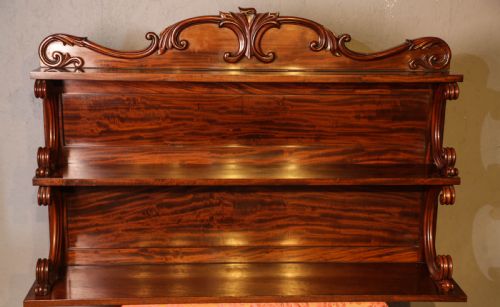
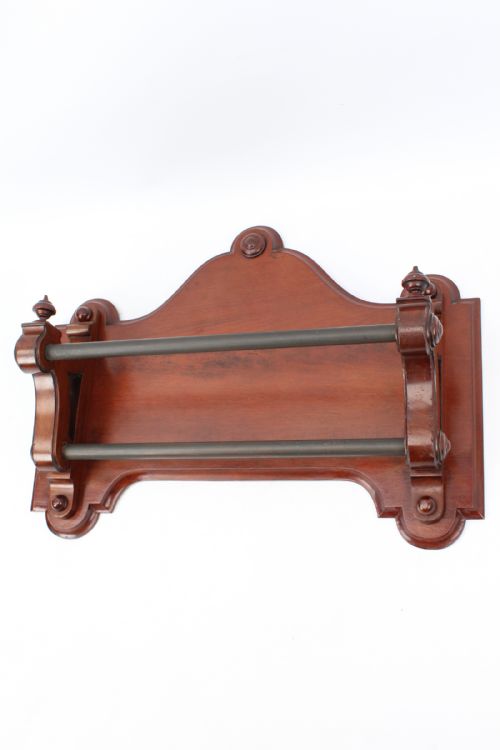
These mahogany hanging rack selections provide practical wall storage, ranging from multi-tiered display shelves to coat and towel rails.
Mahogany Hanging Rack
A mahogany hanging rack functions primarily as wall-mounted storage or display, incorporating tiers of shelves, hooks, or rails to utilise vertical space in domestic interiors. Buyers searching for a mahogany hanging rack typically encounter wall shelves, plate racks, and hanging towel or coat rails spanning several historical periods.
The selections on this page bridge multiple eras, stretching from Georgian and Regency examples through to Victorian and Edwardian variations. Pieces range from simple two-tier ship shelves and desktop pigeon holes to ornate fretwork Chippendale style units and French waterfall wall shelves.
How they were made
Construction relies heavily on solid timber and flame mahogany veneers applied to secondary woods, often complemented by brass elements such as hanging brackets, support rods, and protective galleries. Joinery techniques reflect the period of manufacture, incorporating traditional framing to support varying weights of books, plates, and linens.
Mahogany Hanging Rack Retail Price Guide 2026
Typical asking prices for mahogany hanging rack among the pieces listed under this phrase on Sellingantiques today, from the lower quarter to the upper quarter. They describe what is for sale here now, not the wider market.
Listings feature items spanning the Georgian, Regency, Victorian, and Edwardian periods, utilising solid mahogany, flame veneer, brass, and iron.
What varies in quality
Quality differentiates through the selection of timber figure, such as richly grained flame mahogany veneer, and the crispness of carved details like fretwork or applied mouldings. Superior examples demonstrate refined proportions and careful matching of grain across visible surfaces.
The grade of metal components, including substantial brass galleries and original hanging hardware, further separates standard utilitarian items from finer decorative pieces produced during the Georgian, Victorian, and Edwardian eras.
The Mahogany Hanging Rack Glossary
- Flame mahogany
- A veneer cut from timber where the grain creates a distinctive flickering flame pattern. This decorative figuring is prized for high-end cabinet work.
- Brass gallery
- A low metal rail fitted around the edge of a shelf to keep items from sliding off. These fixtures are frequently found on marine and display pieces.
- Fretwork
- Openwork ornamentation cut into thin wood using a scroll saw or piercing technique. It appears frequently on Chippendale style wall shelves.
- Waterfall shelves
- A set of open shelves stepped back in a cascading formation from top to bottom. This form gained popularity during the nineteenth century.
- Pigeon holes
- Small compartments arranged in a tier for sorting documents or letters. Desktop versions appear alongside wall-mounted variations.
Mahogany Hanging Rack: Frequently Asked Questions
How do I hang a heavy mahogany shelf?
Wall-mounted racks require secure fixings into structural wall studs or solid masonry using appropriate screws and rawlplugs to bear the weight of the timber and stored objects.
Ensuring the brass hanging brackets or screw eyes are firmly anchored prevents the unit from pulling away under load.
What is the difference between Georgian and Victorian racks?
Georgian and Regency pieces tend to exhibit restrained classical proportions, often featuring clean lines or subtle satinwood stringing.
Victorian and Edwardian items frequently display heavier mouldings, turned spindles, or more elaborate fretwork and gallery details.
Can these racks support heavy books?
Smaller portable bookshelves and multi-tier wall shelves are generally designed for lighter volumes or decorative display rather than dense encyclopedias.
Checking the depth of the shelves and the strength of the back panel fixings helps determine suitability for book storage.
How do I clean mahogany wood?
Dusting with a soft, dry cloth preserves the polished finish and prevents a buildup of particulate matter in carved crevices and fretwork.
Abrasive cleaners and excessive moisture should be avoided to protect the vintage timber and any veneer surfaces.