
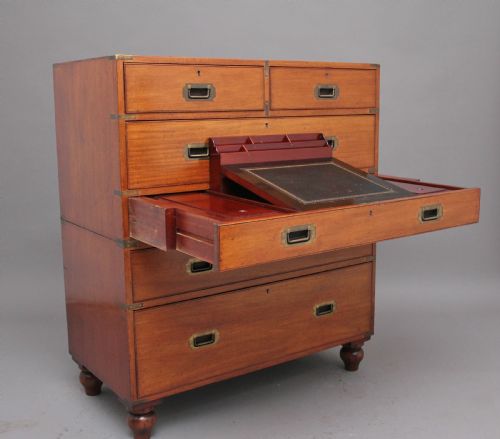


Mahogany Flush Handle Drawers
Mahogany flush handle drawers are utilitarian campaign chests and cabinets built for travel, offering compact storage with recessed brass fittings.
Mahogany Flush Handle Drawers
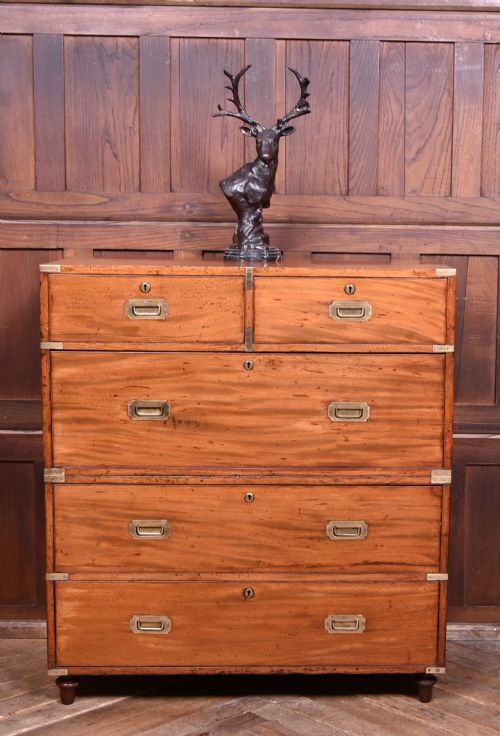
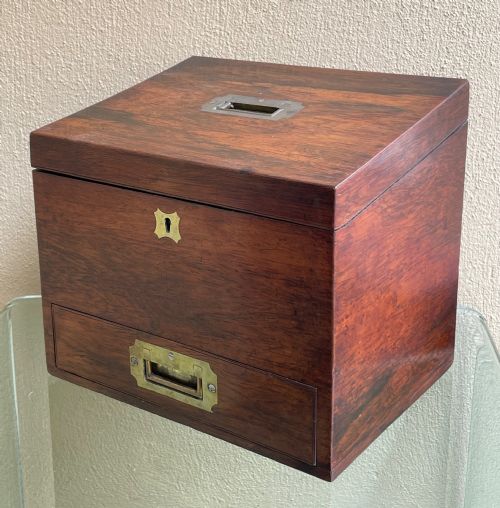
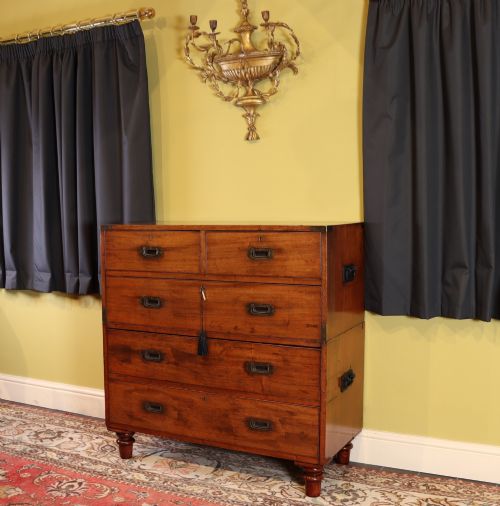
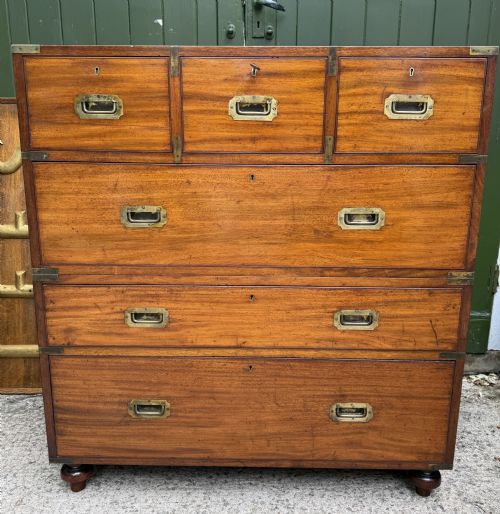
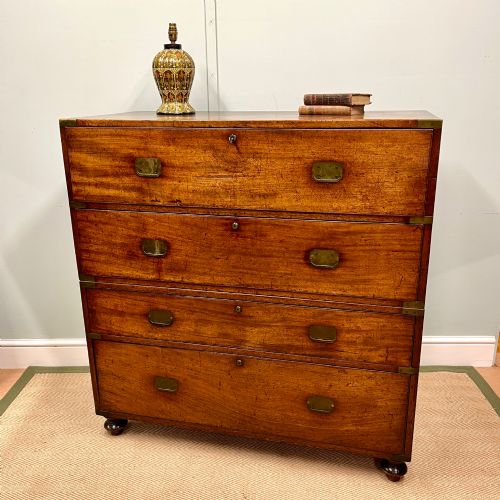
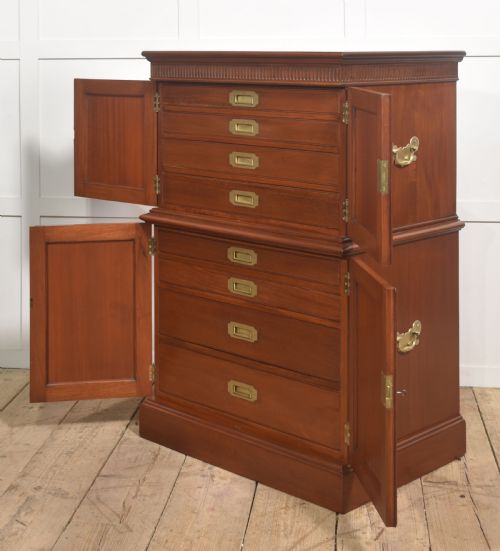
Mahogany flush handle drawers are practical items of campaign furniture designed to be packed and moved easily by officers and travellers during the nineteenth century. These pieces include two-part chests of drawers, secretaire chests fitted with writing compartments, and smaller desktop storage units.
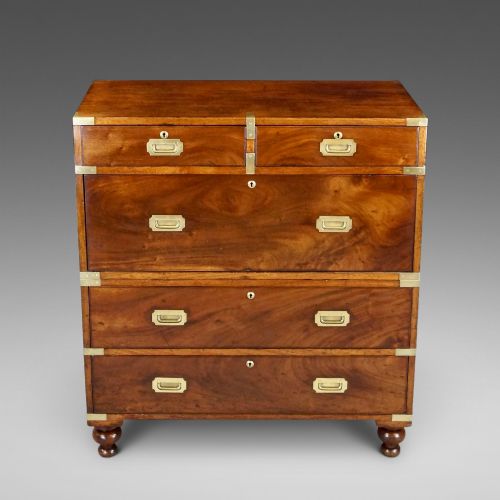
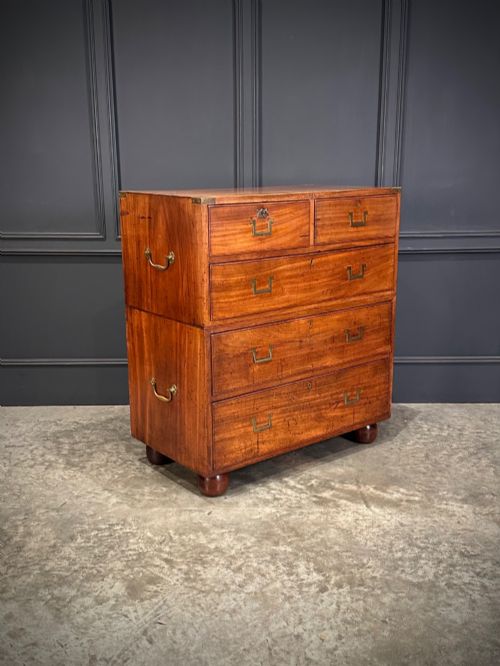
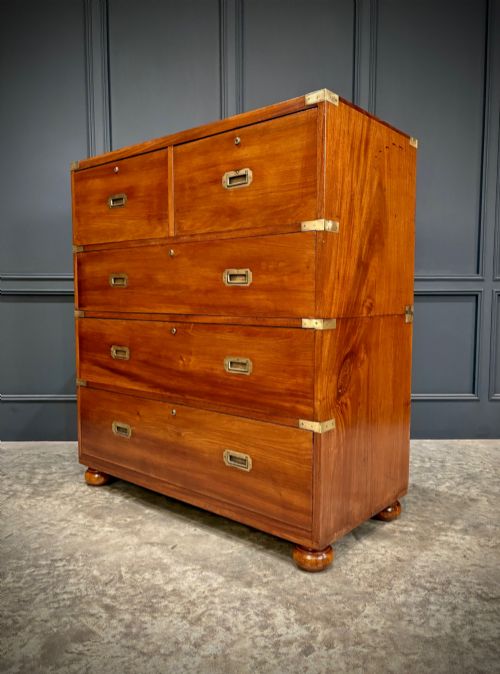
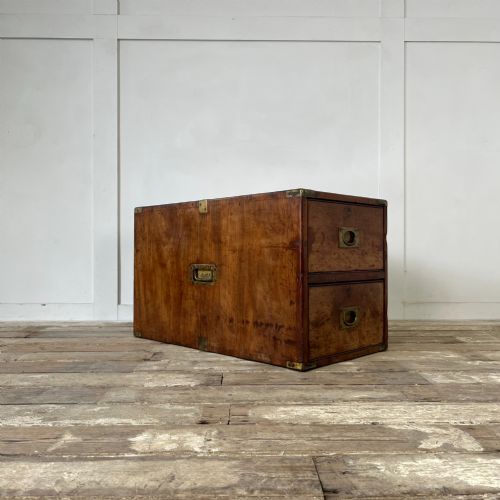
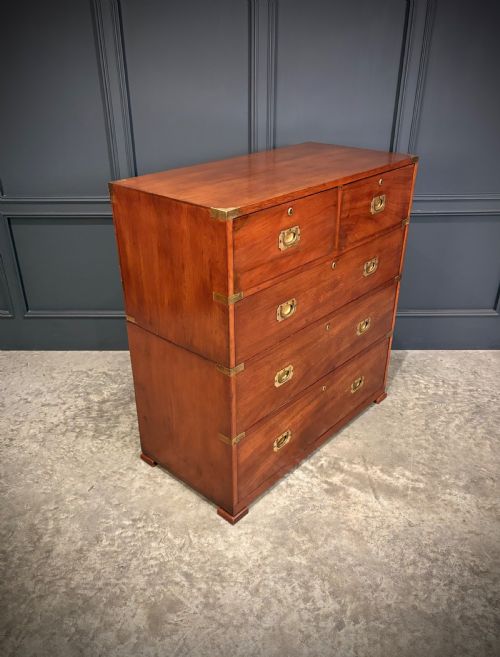
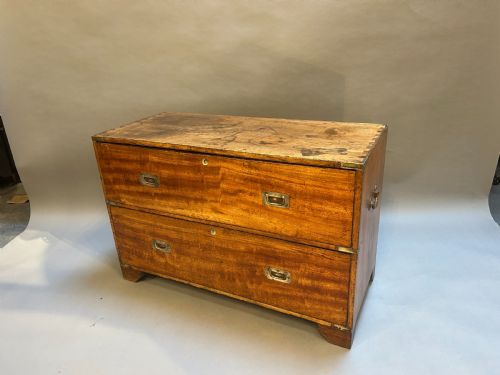
You will most frequently meet Victorian military campaign chests on this page, constructed in two separate sections with brass binding and inset flush handles to prevent snagging during transport. The timber is predominantly mahogany, often paired with brass corners, strapwork, and recessed drawer pulls.
How they were made
The construction relies on solid mahogany frames and drawer carcases, chosen for stability and resistance to warping in variable climates. Timber surfaces are combined with brass for corner reinforcement, strapwork, and flush-fitting drop handles.
Makers inset the brass hardware squarely into the wood so that handles rest level with the drawer fronts when not in use. Some variations also incorporate leather writing surfaces inside secretaire drawers and glass elements in specialist collectors cabinets.
Scottish listings include a gentleman's sporran chest designed specifically to store Highland accessories.
What varies in quality
Quality depends on the precision of the joinery and the integration of the brass hardware into the mahogany body. Better examples display careful alignment in the two-part construction, ensuring that stacked sections fit together securely without gaps.
The calibre of the internal drawer layout and the presence of makers' stamps or numbered components distinguish superior pieces. Robustness of the recessed brass handles and the depth of the mahogany grain further divide standard utilitarian boxes from finer commissioned work.
S. W. Silver & Co. London & Liverpool·Ross & Co.
The Mahogany Flush Handle Drawers Glossary
- Campaign chest
- A piece of portable furniture made in sections so it could be packed into transit chests for military officers. These items feature recessed brass handles to withstand travel.
- Secretaire chest
- A chest of drawers containing a fitted writing drawer with a drop-front panel. Inside, you find small pigeonholes and letter compartments.
- Flush handle
- A hardware fitting sunk level into the face of a drawer or door. This design avoids protruding parts that might catch or break during transit.
- Brass-bound
- Furniture reinforced with brass corners, straps, and edges to protect the wood from heavy knocks. This metalwork is screwed directly into the mahogany exterior.
Mahogany Flush Handle Drawers: Frequently Asked Questions
What is a campaign chest?
A campaign chest is a portable set of drawers built in separate stacked sections for military officers on active service abroad. They use brass corners and flush handles to endure rough transit.
These chests separate into two or more parts and feature inset carrying handles on the sides. This modular build made them simple to load onto carts or ships.
Why do the drawers have flush handles?
Flush handles are countersunk into the wood so they do not protrude from the front of the drawers. This prevents the hardware from catching on ropes, clothing, or other pieces during transit.
When needed, the ring or drop handle pivots outward from its recessed pocket. Once released, it drops back flat against the drawer face.
How do you use a secretaire chest?
A secretaire chest combines a standard set of drawers with a pull-out or drop-front writing desk at the top. The upper drawer front hinges downward to reveal small compartments and a leather-lined writing surface.
This provides a compact desk space without occupying extra floor room. Officers used these internal compartments for correspondence and documents while travelling.
How do you spot a two-part chest?
A two-part chest divides horizontally across the middle into an upper and lower cabinet of roughly equal height. Side carrying brackets and brass securing plates mark the dividing seam.
This split construction allowed servants to lift and pack each half independently. The sections lock together firmly when stacked one atop the other.