
Mahogany Dining Pedestals
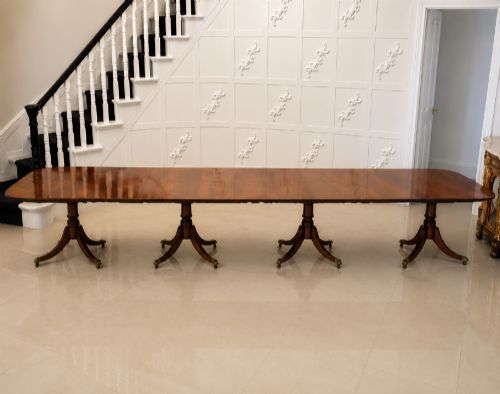
Mahogany dining pedestals are substantial timber supports and extending multi-pillar tables built to anchor large dining rooms with functional elegance.
Mahogany Dining Pedestals
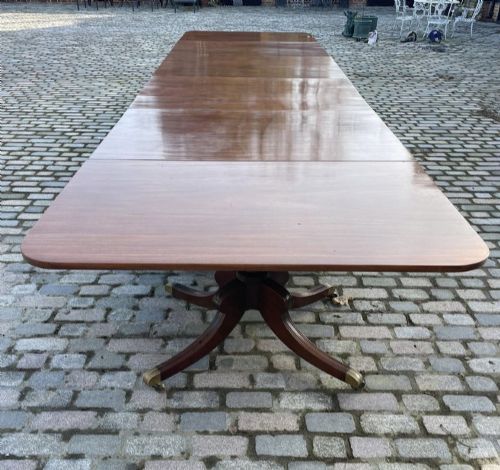
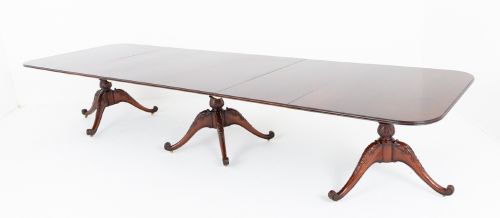
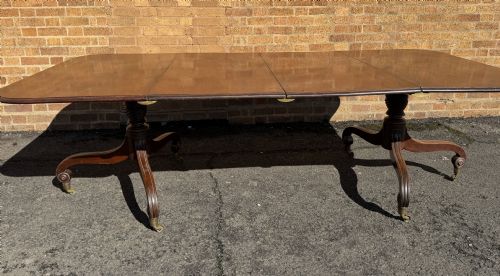
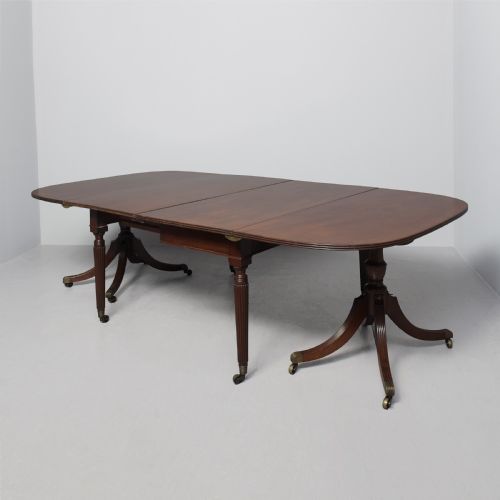
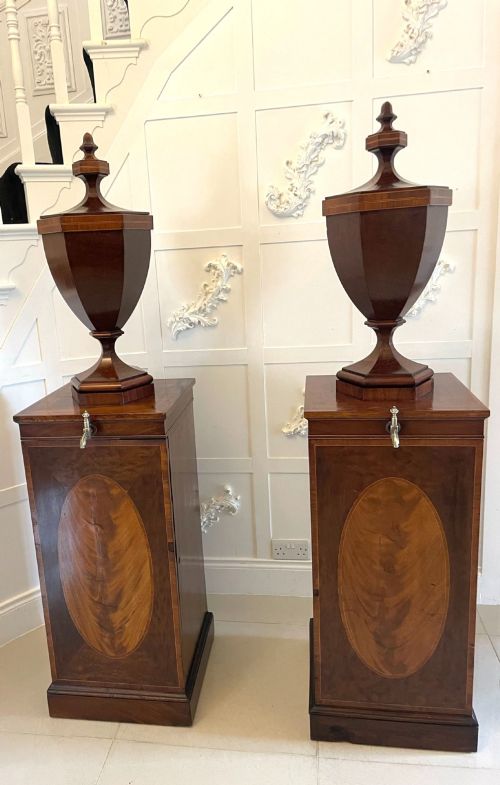
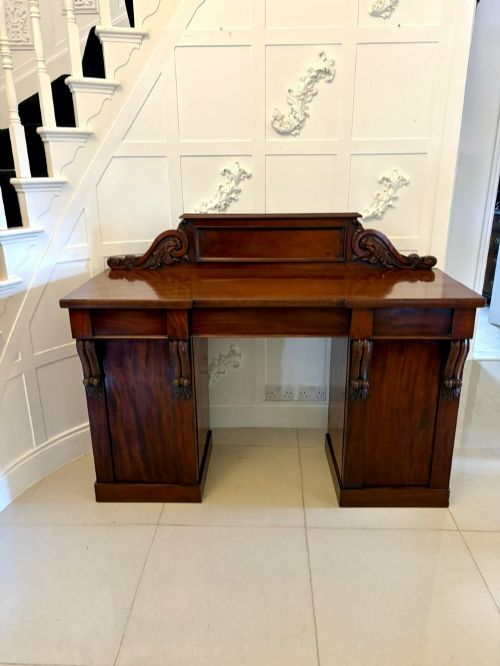
Mahogany dining pedestals primarily encompass multi-pillar extending dining tables and paired pedestal cupboards or wine urns originating from the Georgian, Regency, and Victorian eras. These large pieces are designed to host numerous diners by utilising removable leaves supported on sturdy central columns.
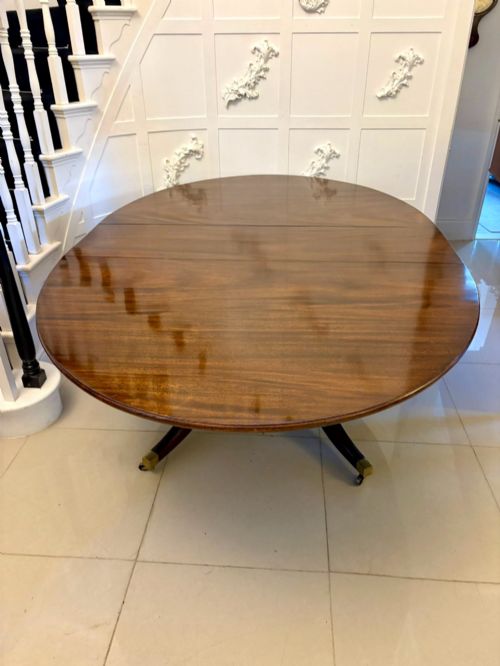
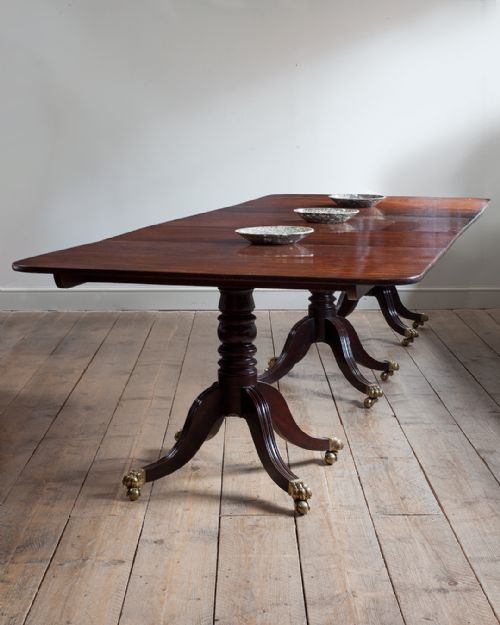
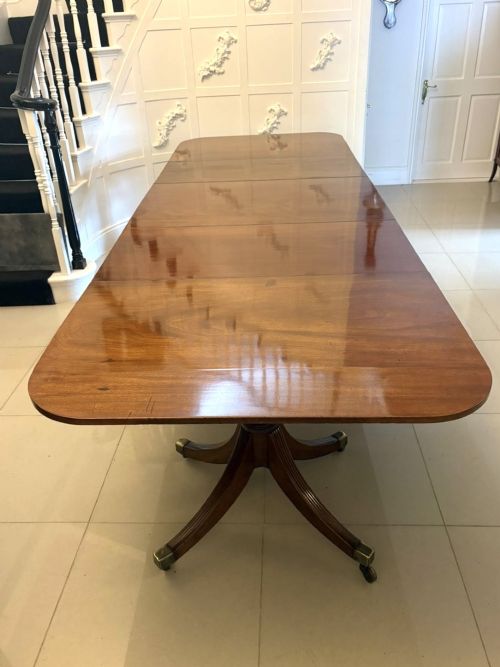
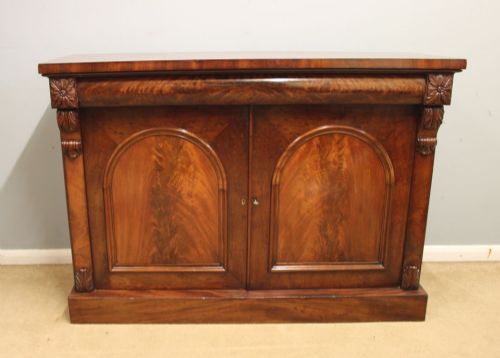
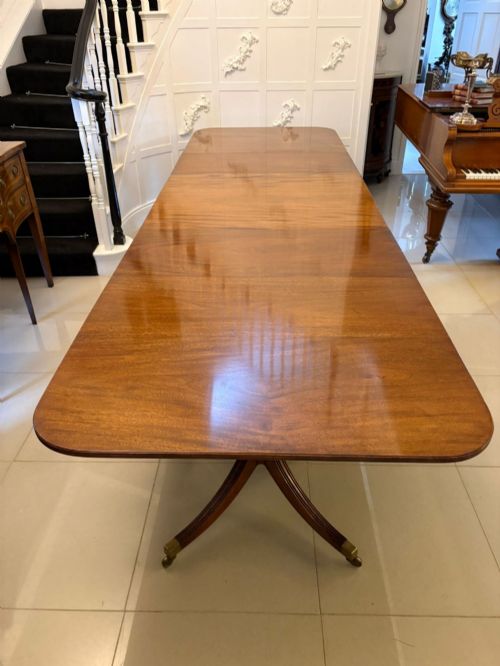
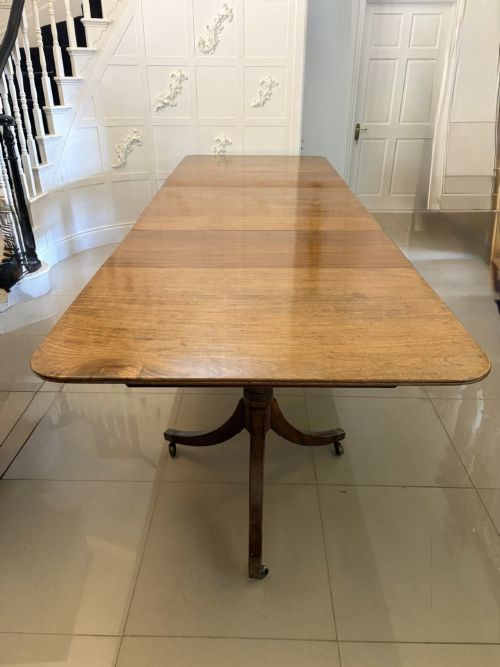
The most common versions met on this page are twin-pillar and triple-pillar extending dining tables from the nineteenth century, alongside Regency pedestal sideboards. They display rich timber grain and solid pillar supports fitted with brass castors.
Materials and construction
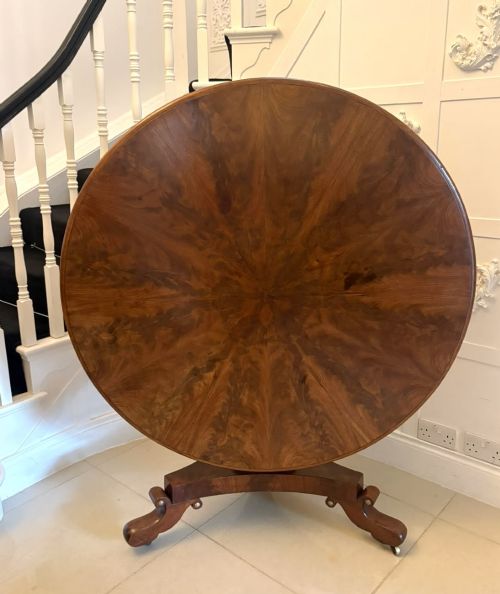
Cabinet makers utilised solid mahogany and figured mahogany veneers over secondary timbers, often accentuating the surfaces with satinwood or boxwood inlay and marquetry. Flame mahogany veneer provides distinctive patterned figuring across table tops and sideboard fronts.
Structural strength relies on turned or reeded pedestals fitted into brass castors, sometimes accompanied by brass details. Tables incorporate pull-out mechanisms and extra leaves to allow flexible extension for seating guests.
Some wine urns sit quietly on original pedestal cupboards, ready to keep historic dinners properly watered.
Assessing quality and finish
Quality rests upon the selection of the timber, particularly the depth of figured or flame mahogany and the crispness of inlay work such as boxwood and satinwood. Superior examples display seamless grain matching across added leaves and well-executed carving on the pillar supports.
Construction integrity defines the upper tier, seen in original mechanism function, heavy brass castors, and robust pillar joints that maintain stability when fully extended. Maker attribution to known workshops further distinguishes exceptional pieces.
Gillows of Lancaster·Hewetsons London·Thomas Butler of London
The Mahogany Dining Pedestals Glossary
- Flame mahogany
- A veneer cut from timber where the branch meets the trunk, creating a fiery, undulating grain pattern. This decorative surface is prized on table tops and cabinet fronts.
- Pedestal
- A central supporting column beneath a table top or sideboard, often turned or reeded. Multiple pedestals distribute weight on large extending dining tables.
- Inlay
- Contrasting woods such as boxwood or satinwood set flush into the mahogany surface to form geometric or floral patterns. It marks finer cabinet work.
- Extending table
- A dining table designed with removable leaves and central pillars that separate to accommodate extra guests. This format became popular during the Georgian and Regency periods.
- Castors
- Small wheel attachments fitted beneath table pedestals or sideboard feet to ease movement. Brass is the standard metal used on better pieces.
Mahogany Dining Pedestals: Frequently Asked Questions
How do I seat more guests?
Multi-pillar dining tables utilise removable wooden leaves supported by the central pedestals. You simply pull the table apart and drop the extra sections into the middle.
This modular design allows the table length to adjust according to the number of diners you host.
How do I care for mahogany?
Keep mahogany furniture away from direct sunlight and heat sources to prevent the timber and veneer from drying out. Regular dusting with a soft, dry cloth preserves the polished surface.
Apply quality beeswax periodically to nourish the wood grain.
How do I date these pieces?
Dating relies on stylistic clues such as reeded pedestals, brass castors, and inlay materials that align with Georgian, Regency, or Victorian cabinet making traditions. Construction methods underneath the table tops also reveal the era of manufacture.
Documentation or maker stamps provide definitive timelines.